Russia–Azerbaijan Relations Remain in State of Limbo
Russia–Azerbaijan Relations Remain in State of Limbo
Executive Summary:
- Azerbaijani President Ilham Aliyev’s decision to skip Commonwealth of Independent States (CIS) and Eurasian Economic Council meetings in December 2025 signaled renewed strain with Moscow, surprising observers who believed the October 2025 Dushanbe summit had stabilized relations after the December 2024 Azerbaijan Airlines (AZAL) crash.
- Tensions resurfaced after Azerbaijan learned Russia had closed the crash’s criminal investigation, which contradicted Russian President Vladimir Putin’s Dushanbe assurances of missile-related responsibility, legal accountability, and compensation, instead attributing the crash to weather and pilot error.
- Conflicting Russian narratives and public criticism in Azerbaijan highlight a widening gap between Moscow’s political statements and legal actions, leaving normalization stalled and Russia–Azerbaijan relations suspended in distrust rather than reconciliation.
On December 22, 2025, the administration of Azerbaijani President Ilham Aliyev denied earlier media reports stating that the president would attend the meeting of the Supreme Eurasian Economic Council or the informal summit of the heads of state of the Commonwealth of Independent States (CIS) (Azertag, December 22, 2025). The administration explained the decision by citing Azerbaijan’s non-membership in the Eurasian Economic Union (EAEU) and Aliyev’s tight schedule.
The announcement came a day after Russian Presidential Spokesperson Dmitry Peskov told the media that Aliyev was expected to attend the summit and added that a bilateral meeting with Russian President Vladimir Putin was possible (TASS, December 21, 2025). Aliyev’s subsequent announcement took observers by surprise, as it had been widely believed that the Dushanbe meeting on October 9, 2025 between the two leaders had put an end to the deterioration in bilateral relations triggered by the crash of an Azerbaijan Airlines (AZAL) aircraft in Grozny, Russia, in December 2024 (see EDM, November 12, 2025).
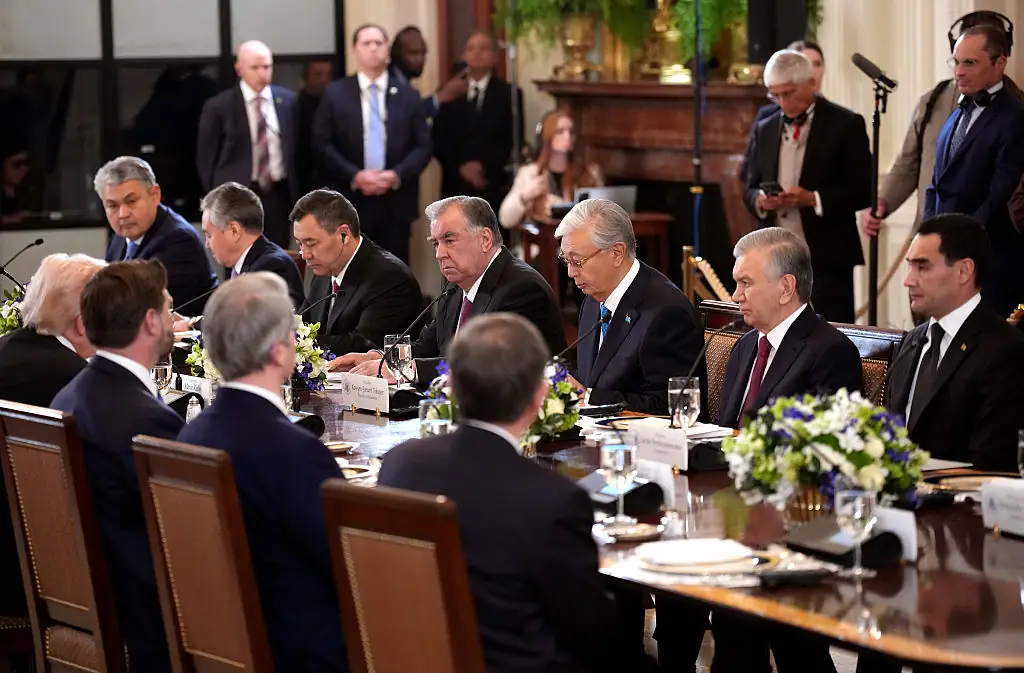
In Dushanbe, where the two leaders met on the sidelines of the CIS summit, Putin had apologized for the airplane crash. The Russian president stated that, according to the investigation that was “nearing completion,” the crash was caused by a combination of the presence of Ukrainian drones in Russian airspace and a technical malfunction of Russia’s air defense system, whose missiles exploded near—rather than directly hitting—the aircraft (President of Azerbaijan, October 9, 2025). He claimed that the damage was most likely caused by missile debris, not a direct strike. Addressing Azerbaijan’s earlier demands to prosecute those responsible for the attack and compensate the families of the victims, Putin stated that Russia would provide full assistance to the investigation and give “a legal assessment to the actions of all officials” involved (President of Azerbaijan, October 9, 2025). Putin emphasized that this process would take time but assured the case would be brought to a proper legal conclusion and that compensation would be provided to the victims’ families.
That expectation was soon called into question by a statement from Azerbaijan’s foreign minister, Jeyhun Bayramov. Speaking at a year-end press conference in late December 2025, Bayramov confirmed that Baku had received an official letter from Moscow regarding the investigation into the AZAL crash (Apa.az, December 26, 2025). He said that the content of the letter came as a serious surprise. According to the minister, the most troubling element was that the Russian Investigative Committee had terminated the criminal case, a step that, in his words, “raises very serious questions” and contradicts earlier assurances given at the highest political level. Azerbaijani authorities, Bayramov noted, had already sent a formal response, reiterating their expectation that the process be completed in line with Putin’s statements and apology in Dushanbe.
Azerbaijan’s ambassador to Russia also delivered the protest. In late December 2025, Ambassador Rahman Mustafayev, meeting with Deputy Russian Minister of Foreign Affairs Mikhail Galuzin, underscored that the October 2025 Dushanbe meeting between Aliyev and Putin had been perceived in Baku as a turning point toward normalization after the plane crash (Azertag, December 30, 2025). Mustafayev stressed the importance of promptly implementing the understandings reached at that meeting, particularly Putin’s pledge that Russia would ensure compensation and a fair legal assessment of the actions of all responsible officials. The Azerbaijani side made it clear that no procedural decisions could substitute for the fulfillment of those political commitments.
On January 6, the situation took on a new dimension when the letter from the Russian Investigative Committee was leaked to the media (Qafqazinfo.az, January 6). Signed by the Committee’s chairman, Alexander Bastrykin, and addressed to Azerbaijan’s Prosecutor General, the document presented a version of events that diverged sharply from what had been said in Dushanbe. The letter attributed the crash to adverse weather conditions and unsuccessful landing attempts in Grozny, concluding that the aircraft collided with the ground during its approach to Aktau. Notably absent were any references to Ukrainian drones, air defense malfunctions, missile launches, or shrapnel damage—the elements Putin explicitly mentioned in Dushanbe.
This discrepancy raised eyebrows in Baku. Azerbaijani officials and commentators pointed out that Bastrykin’s account directly contradicts Putin’s detailed explanation in Dushanbe, where the Russian president stated that missiles detonated near the aircraft and debris damaged its fuselage (Caliber.az; The Caspian Post, January 7). The coexistence of two mutually exclusive narratives has deepened doubts about Moscow’s readiness to translate political acknowledgment into legal responsibility, undermining trust at a sensitive moment in bilateral relations.
Public reaction in Azerbaijan was swift and increasingly vocal. The National Forum of Non-Governmental Organizations (NGOs) issued an open letter to Russia’s ambassador in Baku, describing the closure of the investigation as “incomprehensible and unacceptable” (News.az, January 7). The forum accused the Russian Investigative Committee of attempting to leave the tragedy unpunished and stressed that the incident constitutes a violation of the Chicago Convention on International Civil Aviation. Echoing official concerns, the NGOs emphasized that Bastrykin’s position contradicts Putin’s statements and demanded clarity on who represents Russia’s official stance.
The broader Azerbaijani media echoed this sentiment. Commentaries across major outlets framed the episode as evidence of a persistent gap between Moscow’s political rhetoric and institutional practice (Report.az; Qafqazinfo.az, January 6). While Putin’s remarks in Dushanbe had briefly raised hopes for a reset, the leaked letter revived skepticism and reinforced the perception that normalization remains incomplete and fragile.
The AZAL crash continues to cast a long shadow over Russia–Azerbaijan relations. The episode illustrates that symbolic gestures and verbal acknowledgments, however important, are insufficient without consistent legal follow-through. Until Moscow aligns its investigative conclusions with its political commitments, the normalization anticipated after Dushanbe is likely to remain elusive, keeping bilateral ties in a state of uneasy suspension rather than genuine reconciliation.