West African Militants turn to Social Media
West African Militants turn to Social Media
Executive Summary:
- West African militant groups—such as the Group for Supporters of Islam and Muslims (JNIM) and Boko Haram—are increasingly utilizing TikTok to recruit supporters, debate civilians, and publicize their rule and implementation of Sharia Law.
- Militants exploit perceived lapses in censorship to host live shows and post videos justifying violence, threaten critics, and demonstratе governance to boost recruitment efforts.
- Nigerian security forces have used social media monitoring to arrest prominent bandits such as Abubakar Usman, but militants may dominate the online battlespace without sustained, large-scale countermeasures.
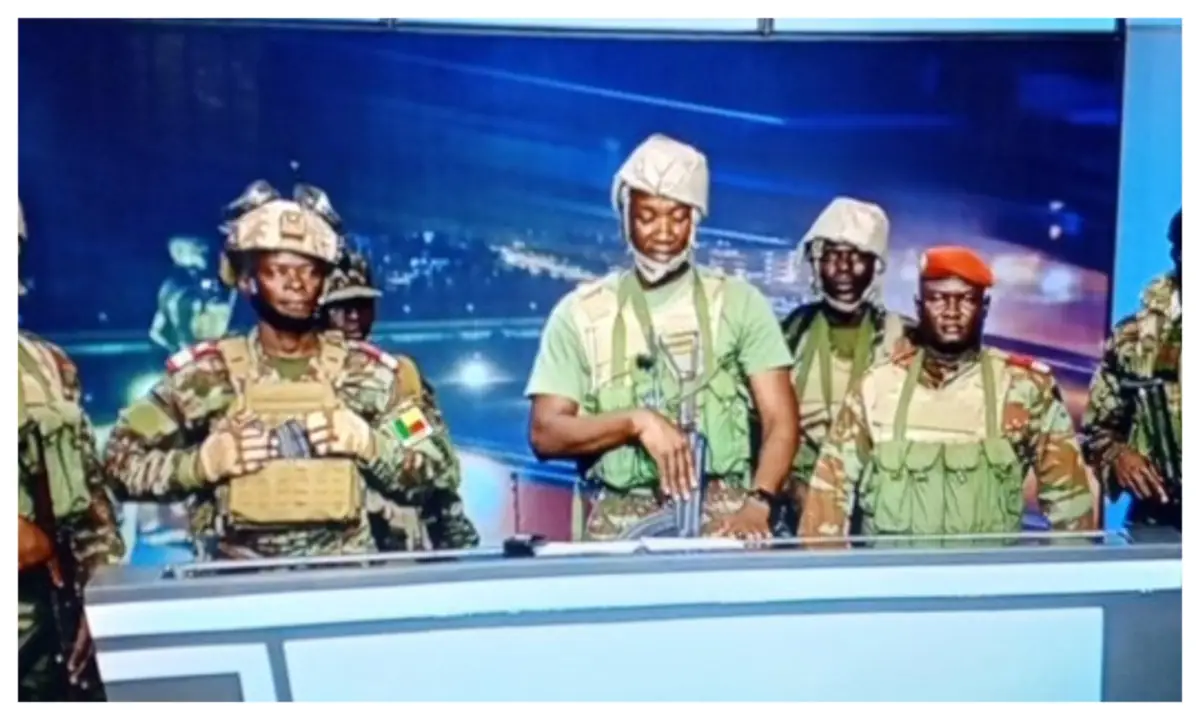
Jihadist and bandit groups in West Africa have expanded and become increasingly bold in their online activities (YouTube/@LeMonde, November 14, 2021). This is necessary to stand out, as the territories and memberships of these groups often overlap. Members of Group for Supporters of Islam and Muslims (JNIM), for example, have opened TikTok channels, where they debate civilians on matters related to their rule and Sharia implementation. This also presents JNIM with opportunities to engage online supporters who seek “liberation” from military junta control (X/@BrantPhilip, December 20, 2025).
JNIM—which conducted its first claimed attack in Nigeria last October—is now officially operational in the country, which is not only the continent’s most populous, but also its third most active population on social media (africa.businessinsider.com, November 4, 2024). Given JNIM’s use of social media, it is not surprising that Boko Haram members, or at least supporters in Nigeria, are also exploiting the app to recruit. One Boko Haram online personality, for example, posted on TikTok last May to praise Bakura Doro, one of the leaders who succeeded the late Abubakar Shekau after his death in 2021. The supporter’s praise of Islamic State in West Africa Province (ISWAP) raised suspicions about whether he was truly a member of Doro’s faction, as ISWAP and Doro are rivals, or whether he was simply “pro-jihad” and promoted any jihadist group in Nigeria regardless of affiliation (X/@ZagazOlaMakama, May 18, 2025). Another more substantiated video of a Boko Haram member emerged one month later in June. He was recorded whipping a fisherman on Lake Chad who had violated the group’s rules, and it was subsequently uploaded on TikTok to show how the group implements Sharia (X/@secmxx, June 7, 2025).
That jihadist groups are now openly propagandizing on TikTok indicates online social media censorship of jihadist media—at least on TikTok in West Africa—is not as stringent now as it has been over the past decade, which could result in recruitment boosts for JNIM, ISWAP, Boko Haram, and other groups as they exploit this social media openness (eff.org, July 12, 2017). In 2013, as Boko Haram began conquering territory in northeastern Nigeria, the group set up a YouTube account in which it released videos of its massacres, including killing dozens of boys in a school dormitory and throwing men down a well and off a bridge after killing them (Unmasking Boko Haram, April 28, 2019. Moreover, the group used Twitter (now X) to advertise its then-growing loyalty to Islamic State (IS), as well as Shekau’s March 2015 pledge of allegiance to caliph Abubakar al-Baghdadi (Unmasking Boko Haram, April 10, 2019). Within a year or two, however, ISWAP was no longer present on mainstream social media platforms and was instead confined to Telegram and other harder-to-access online forums. Yet now, as Bulama Bukarti—a Nigerian lawyer and security analyst who had once been directly threatened by Shekau—noted, “Boko Haram, and other bandit groups, are hosting live TikTok shows – spreading propaganda, justifying their violence and threatening anyone who dares speak against them” (rfi.fr, May 25, 2025).
In Nigeria—in contrast to the Sahel—the security services appear to take the threat of jihadist and bandit exploitation of social media to propagandize and recruit seriously. Evidence that Nigerian security services are monitoring militants’ social media came when they captured one of the northwest’s most violent bandits, Abubakar Usman, in Kwara State on December 19. Although Usman has not been publicly associated with JNIM, the arrest location was near the same village where JNIM carried out its first-ever claimed attack in Nigeria in October (premiumtimesng.com, October 31, 2025).
The weapons and vast sums of money that Usman was seen holding in photos he posted online appear to have prompted the security forces to pay attention to him. Nonetheless, the arrest of Usman may prove to be a one-off even in Nigeria. If not replicated on a larger scale, this will mean bandits and jihadists in Nigeria and further afield in the Sahel will be ceded control over the online battlespace.