A Portrait of Azam Cheema: LeT’s India Strategist
A Portrait of Azam Cheema: LeT’s India Strategist
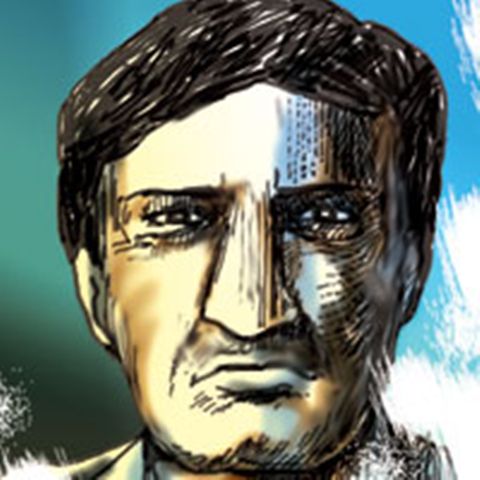
Mohammed Azam Cheema (a.k.a. Baba/Babaji) is widely regarded as the “number three” of Lashkar-e-Taiba’s (LeT) anti-Indian operations. Azam Cheema has masterminded several high-profile attacks against India over the years from his safe haven in the dusty city of Bahawalpur in Pakistan’s southern Punjab Province on the edge of the Cholistan Desert.
With an Interpol red corner notice pending (A-612-4-2004) [1] for trafficking illegal arms and explosives into India, his name was also brought up in the UN al-Qaeda and Taliban Sanctions Committee- also referred to as resolution 1267 (1999)- in May 2005. On November 4, the US Department of the Treasury imposed sanctions against Azam Cheema along with LeT’s Abdur Rahman Makki, adding both LeT leaders to the Office of the Foreign Assets Control Special Designated Nationals list. The Treasury press release cites Cheema as a “key commander in the operations of LeT.” Stuart Levey, under secretary for terrorism and financial intelligence, stated, “Today’s action – including the designation of Azam Cheema, one of LeT’s leading commanders who was involved in the 2008 and 2006 Mumbai attacks – is an important step in incapacitating the operational and financial networks of these deadly organizations.” [2] On November 23, famed Lockerbie lawyer James Kreindler filed a complaint against Pakistan’s Inter-Services Intelligence officials past and present and listed LeT operatives for singling out Azam Cheema as a defendant (Press Trust of India, November 24). Cheema, according to the court document, “trained the attackers to make bombs and taught them how to infiltrate India” (Courthouse News Service, November 23).
Cheema, whose name is often transliterated as Azzam Cheema, Azim Cheema or Asim Chima in the press, ranked among India’s 40 most-wanted terrorists for some time along with LeT head Hafiz Saeed and D-Company don Dawood Ibrahim (Indo-Asian News Service, December 11, 2008; see also Militant Leadership Monitor, June 2010). He first surfaced on Indian intelligence’s radar in 1998 during an investigation into terror plots targeting Delhi. He reportedly plotted to perpetrate a number of attacks in the Indian capital along with his immediate superior within LeT, Zaki-ur Rahman Lakhvi, and LeT’s field operative in India at the time, Abdul Karim Tunda (Redff.com, August 1, 1998). The three men had led LeT’s so-called “Dasta Mohammad bin Qasim” wing which primarily targeted Northern India between 1997 and 1998 and had a “pan-India focus.” [3]
His encounters with Hafiz Muhammad Saeed, leader of the Jama’at-ud-Da’wah/ Lashkar-e-Taiba in the late 1980s, at the University of Engineering and Technology in Lahore may have influenced Cheema to join the Kashmir-centered jihadi “caravan.” During the deteriorating political situation in India after the destruction of the Babri Masjid and the ensuing communal tensions in the early 1990s, Saeed assigned Cheema to establish a second front in India proper that sought targets beyond the traditional objectives in contested Kashmir (The Hindu, December 9, 2008; see also Militant Leadership Monitor, September, 2010).
There is scant information available regarding Cheema’s role in Soviet-Afghan war, however most knowledge of his jihadi role within Pakistan came to light as a result of the declarations of arrested LeT operatives in India. Previously an explosives and arms trainer to new recruits, Cheema, more importantly, looks after LeT’s intelligence wing. A former LeT divisional commander, Mohammad Rafi Sheikh (a.k.a. Abu Rafi), who was arrested by Jammu and Kashmir police in Indian-occupied Kashmir, provided details about Azam Cheema’s personal traits and life style during his interrogation. According to Rafi Sheikh, Cheema speaks Punjabi, sports a long-beard and holds the position of surveillance or intelligence chief in LeT. He lives openly in Bahawalpur with his wife and two children and travels freely in a Land Cruiser accompanied by bodyguards (Times of India, October 5, 2006). According to Sheikh, Cheema was in direct contact with top-tier ISI and Pakistani Army officials and often receives financial assistance to run training camps at various locations in Pakistan from the likes Hamid Gul, Brigadier Riyaz and Colonel Mohammad Rafiq, who Rafi Sheikh claimed were present during the process of indoctrination of new recruits in the Bahawalpur camp (Times of India, October 5, 2006).
India’s terror dossier handed over to Pakistan in February indicates that Cheema owns properties in the Hashmi garden area of Bahawalpur and second home in Faisalabad in central Punjab Province (Indian Express, March 12).
Cheema was believed to have played an instrumental role in bringing al-Qaeda’s logistics chief, Zain al-Abidin Muhammed Hussein (a.k.a. Abu Zubayda), into a safe house in Faisalabad in March 2002 at the behest of Pakistani intelligence. Pakistani agents later handed over Zubayda, an Arab born in Saudi Arabia but raised in Palestine, to the CIA after the Agency paid $10 million to the ISI during the affair. [4] The capture of Zubayda was hailed as an early victory for the Americans in the War on Terror.
Azam Cheema’s name appeared as key facilitator in the Aurangabad arms bust in May 2006. Three LeT operatives were arrested by the Maharashtra police, who intercepted the consignment and seized ten AK-47 series assault rifles, 2,000 rounds of ammunition, 40 magazines, six magazine pouches and around 30 kgs of RDX explosives in the central Maharashtrian city of Aurangabad. An LeT man named Feroz Abdul Latif Ghaswala was arrested along with his associates in New Delhi on May 8, 2006, while carrying 4 kg of RDX, detonators and 50, 000 Indian Rupees (approximately $1000). Delhi police named Cheema responsible for the transshipment of arms and ammunitions from Pakistan through the border with northwestern India’s Gujarat State following interviews with these detainees. [5] During their interrogations, the men also revealed information regarding new terror routes to India from Iran and Bangladesh when questioned about Cheema and LeT’s Bahawalpur training camp.
Azam Cheema’s role in the July 11, 2006, coordinated train bombings in Mumbai that killed close to 200 people is also worth mentioning. Cheema alone planned the seven explosions from scratch and trained all four of the prime accused, Muzammil Sheikh, Zameer Sheikh, Sohail Sheikh and Dr. Tanvir Ansari, in the Bahawalpur camp. Most of the detained LeT men confessed to having meetings with Cheema and purportedly acted upon his detailed instructions throughout the operation. If the findings of Indian intelligence agencies are accurate, Cheema personally oversaw the attacks and entered India circuitously, transiting Nepal and Bangladesh, and went back using the same route to Pakistan. Two of the wanted men based in Nepal identified as Hafeez Zubair, an Indian national, and Abdul Rehman, a Pakistani national, are believed to have aided Cheema throughout the operation and have been described as “masterminds still out of reach” (Sakal Times, May 19).
Prior to the 2006 Mumbai train attacks, Cheema and the LeT’s Mumbai cell chief, Mohammed Faisal Ataur Rehman Sheikh, set up three terror cells in Nasik and Nagpur (Maharashtra) with the aim of attacking Mumbai and various right-wing Hindu political targets in the state. Faisal Sheikh underwent jihadi training in Pakistan between October 2003 and November 2004.
Cheema had handled most of the finances from the Gulf states for terror plots targeting the Indian heartland, with the communal rage still lingering in the aftermath of the Gujarat operations of 2002 acting as an important driver for recruitment. Using funds raised and channeled from abroad, he launched a massive jihadi enlistment campaign in Maharashtra State with the help of a 32-year-old Indian Muslim named Faisal Sheikh. Sheikh admitted in a confession to Mumbai’s Deputy Police Commissioner that he received, in one instance, 180,000 Indian Rupees (approximately $24,000) from Azam Cheema to recruit and send young men from the Mumbai area to Pakistan for militant training (Times of India, December 17, 2006).
Following the 2006 Mumbai commuter train blast, Mumbai’s Anti-Terrorist Squad seized 26,000 Saudi riyals from the residences of Faisal Sheikh. The funding reportedly emanated from Pakistan with Saudi Arabia’s banking and hawala networks functioning in conjunction as an untraceable conduit. The hawala scheme was operated by Faizal’s London-based brother, Rahil Sheikh, and another Lashkar operative identified as Rizwan Ahmed Davre, an Indian IT professional originally from Pune, Maharshtra and based in Riyadh, Saudi Arabia. Rizwan acted as a middleman between Azam Cheema and LeT operatives in Mumbai, particularly Faisal Sheikh (Indian Express, September 30, 2006). [6] Mumbai’s police commissioner stated that Sheikh suspiciously received upwards of 37,000 Saudi riyals in the days leading up to and following the July 2006 assault on Mumbai’s railways (Press Trust of India, August 3, 2006).
According to Indian investigators, Azam Cheema along with Asif Khan Bashir Khan (a.k.a Junaid) and Faizal Sheikh had been contemplating the Mumbai train attacks perhaps as far back as 1999 (Indian Express, August 8, 2007). The arrest of Ehtesham Siddiqui, purported to be the Maharashtra “general secretary” of the proscribed Student Islamic Movement of India (SIMI) (Indo-Asian News Service, May 23), substantiated the fact that SIMI foot soldiers, with their local knowledge, were crucial in carrying out the attacks.
Though it has been widely documented in India by the Mumbai Anti Terrorism Squad (ATS) investigations that Azam Cheema is the chief conspirator of the July 2006 attacks, LeT’s Chicago-based operative David Coleman Headley’s confessions placed a new twist in the investigations. During recent interrogations by American officials, Headley named Muzzamil Bhat as one of the key conspirators of the 2006 Mumbai train attacks. Muzzamill Bhat (a.k.a. Yusuf/ Abu Gurera), LeT’s launching commander in Muzaffarabad in Pakistan-occupied Azad Jammu & Kashmir, is believed to be one of the key conspirators of the November 2008 Mumbai attacks. He and another LeT strategist known as Abu al-Qama had reportedly taken over Azam Cheema’s role prior to the 2008 operation due to complications he was suffering from diabetes (Reddff.com, January 19, 2009). According to India’s Intelligence Bureau, the last known attack carried out in India under Cheema’s orders was an assault on a police encampment in the northern state of Uttar Pradesh which killed seven officers and one civilian in the town of Ramur (Rediff.com, January 1, 2008). It was later detailed, after increased cooperation between the FBI and Indian authorities in the wake of the 2008 Mumbai attack, that Abu al-Qama’s true identity is that of a Pakistani Punjabi named Mazhar Iqbal (Rediff.com, March 4, 2009).
While the investigation is still open on LeT’s July 2006 conspiracy, it is more or less apparent that in the case of the November 2008 Mumbai attacks, Cheema was specifically called upon to assist his previous superior, Zaki-Ur-Rehman Lakhvi, as an operations advisor. The Mumbai attackers also received some of their training from Cheema.
A militant strategist with years of deadly experience under his belt, Azam Cheema’s finger prints can be found on the majority of the LeT’s attacks on Indian soil prior to the November 26, 2008, Mumbai attacks. The Mumbai commuter train blast, however, remains his biggest operation so far. He always wanted to perpetrate several spectacular terror attacks in India, especially targeting major establishments by imparting jihadi training and pumping arms and ammunitions into Indian territory. Cheema’s in-depth knowledge of India’s vital installations and terrain coupled with a keen eye to assess the country’s vulnerabilities makes him a grand asset for Lashkar-e-Taiba despite his temporary quiescence.
Notes:
1. To view the Interpol notice, see https://cbi.nic.in/rnotice/A-612-4-2004.htm.
2. To view the US Department of the Treasury’s notice mentioning Azam Cheema, see “Treasury Targets Pakistan-Based Terrorist Organizations Lashkar-E Tayyiba and Jaish-E Mohammed,” November 4, 2010. https://www.ustreas.gov/press/releases/tg944.htm.
3. Praveen Swami, The Kargil War, (New Delhi: Left Word Books, 2000), p. 81; Amir Mir, The True Face of Jehadis, (Lahore: Mashal Books, 2004), p. 157.
4. Jane Mayer, The Dark Side: The Inside Story of How the War on Terror Turned Into a War on American Ideals, (New York: Doubleday, 2008), pp.140-141.
5. To view the original Delhi police dossier, view the document titled “Police Medals for Distinguished and Meritorious Services,” delhipolice.nic.in/home/backup/25-01-2008.doc.
6. Meritorious services. Sh. Aditya Arya, IPS, Jt. Commissioner of Police, R.P Bhawan and Inspector p. 6.
7. Azam Cheema reportedly designated Davre the “amir-e-baitulmaal” (chief exchequer) of LeT for his financial acumen according to India’s Crime Branch.