A Portrait of Djamel Beghal: An Inspiration for Charlie Hebdo Jihadists
A Portrait of Djamel Beghal: An Inspiration for Charlie Hebdo Jihadists
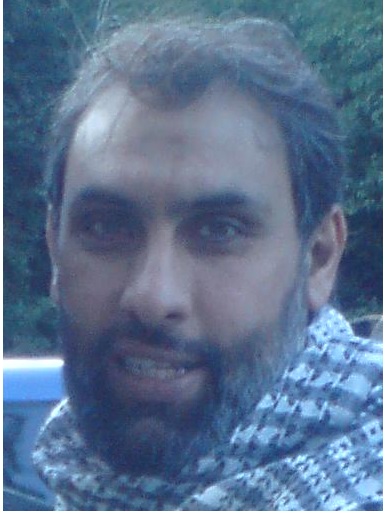
Investigations into the January 2015 Paris attacks have drawn fresh attention to Djamel Beghal, a shadowy 49-year-old French-Algerian veteran of Europe’s first generation of jihadists. Formerly based in the UK but now jailed in France, Beghal is believed to have inspired—and perhaps actively directed—the attacks on the Charlie Hebdo magazine offices and a Jewish deli. This article aims to summarize Beghal’s life so far and to show why, even from prison, he remains a potent influence on many European jihadists.
Early life
Beghal was born in Bordj Bou Arreridj in the Kabiye region of Algeria on December 2, 1965. In 1987, at the age of 21, he moved to France to study information technology, settling in the run-down Parisian suburb of Corbeil-Essonnes, where he worked a series of poorly paid, dead-end jobs, gradually abandoning his intentions of studying. In 1989, he married Sylvie, a native French woman who had converted to Islam (France Soir, January 10). In October 1997, Beghal and his wife moved to the UK, which was becoming the main hub of radical Islam in Europe following France’s crackdown on radicals in the wake of the 1995 Paris metro bombings (Le Parisien, September 27, 2001).
Londonistan
In London, Beghal seems to have rapidly joined the circles of Abu Qatada, then serving as one of the key ideological influences on the Algeria-based Armed Islamic Group (Groupe Islamique Armé—GIA), as this movement was going through a period of rapid radicalization (L’Express, January 13). During this period, Beghal was based partly in Leicester, a city in England’s central region with a large proportion of South Asian immigrants, and in London (L’Express, February 28, 2002). Although he lacked any scholarly credentials and did not seek to establish himself as a preacher, Beghal became known as a charismatic presence in London’s pro-jihadist scene, particularly through his ability to empathize with first- and second-generation immigrants who were—like himself—struggling to fit into European society. Although Beghal has retrospectively been depicted as a “top al-Qaeda recruiter,” this is probably an overstatement (NBC, January 15). More likely, he acted as a father figure towards the numerous younger radicals who were gravitating towards preachers like Abu Hamza and Abu Qatada at locations like London’s Finsbury Park mosque. Beghal’s role in their radicalization likely involved giving them a sense of belonging while encouraging them to adopt more radical views (The Observer, September 30, 2001).
One of those who Beghal helped radicalize in the UK was Nizar Trabelsi, a failed footballer of Tunisian origin, who drifted into hardline Islamism following his release from prison for assorted petty criminal acts (The Independent, February 7, 2006). Not long afterwards, in 2000, Trabelsi travelled to Afghanistan, where he met Osama bin Laden, who Trabelsi said he “loved like a father” (FBI, October 13, 2013). [1] Beghal also influenced Richard Reid, a British citizen of Jamaican origin who had converted to Islam after serving several sentences for petty crime (The Independent, January 9). Reid also soon after travelled to Taliban-ruled Afghanistan, where he rapidly became involved in plots to attack the West, culminating in his failed attempted “shoe-bombing” of a Transatlantic airliner (BBC, December 28, 2001).
Afghanistan and Arrest
On November 11, 2000, Beghal travelled to Afghanistan, flying from Frankfurt to Islamabad and then travelling overland from Peshawar (L’Express, February 13). In Afghanistan, he reportedly attended the Derunta training camp, located near Jalalabad, which was mostly run by the Hizb-e-Islami group, but was also widely said to have been associated with al-Qaeda. Derunta also has attracted many European jihadists (L’Express, February 29, 2002). His time in the camp reportedly included two weeks of military training near Kabul, and he also renewed his close relationship with Trabelsi (L’Express, February 13). At some point, his wife and children also joined him in Afghanistan, a practice common among jihadists in 2000-2001 who saw the Taliban’s Islamic Emirate as an Islamic utopia.
On July 29, 2001, Beghal left Afghanistan and was arrested at the Dubai airport, while en route from Islamabad to Morocco, for travelling on falsified documents (France Soir, January 10). He was detained and questioned by the UAE authorities for two months, and then deported to France (Human Rights Watch, July 2, 2008). On his arrival on October 1 he was interrogated by Jean-Louis Bruguière, then France’s top counter-terrorism judge, and was subsequently charged. “Mr. Beghal has an exceptional charisma,” Bruguière later said (Wall Street Journal, January 13). Beghal later claimed that he had been tortured by the UAE authorities, telling CagePrisoners, a UK group that lobbies for imprisoned Islamist radicals: “They wanted me to accuse Abu Qatada at any cost.” [2]
Meanwhile, Beghal’s protégé Trabelsi was arrested in Brussels on September 13, 2001, apparently as the result of being denounced by Beghal in the UAE. A police search of Trabelsi’s apartment revealed “false passports, automatic weapons and ammunition, as well as chemical formulas that could be used for making explosives and a detailed plan of the United States Embassy in Paris” (Le Parisien, May 27, 2003). Trabelsi denied links to any Paris embassy plot but later pled guilty to planning to attack a NATO base in Belgium and, on September 29, 2003, was according sentenced to ten years imprisonment. [3] Investigations into the Paris embassy plot continued however, and Beghal was convicted for this four years later, on March 15, 2005, and was given a ten-year sentence (Le Monde, February 15, 2005).
Prison Radicalization
Following his conviction, Beghal was jailed in Fleury-Mérogis prison. Here, despite being largely kept in solitary confinement, he reportedly became a “mentor” to Chérif Kouachi, who was then imprisoned for his role in the “Buttes-Chaumont network,” which funneled French jihadists to militant groups in Iraq. On being released in October 2006, Kouachi then became involved in a plot to free another imprisoned Algerian radical, Smaïn Ait Ali Belkacem, who had been jailed for his role in the 1995 Paris metro attacks (Le Monde, January 8). In 2010, Beghal was released early from prison and placed under virtual house arrest in the small town of Murat in south-central France. In April 2010, the French security services photographed Beghal and Chérif Kouachi, along with his brother Said Kouachi and Amedy Coulibaly, holding discussions while walking outdoors (L’Express, January 13). Beghal was soon after rearrested, in May, over the plot to free Belkacem, for which he was given a further ten-year sentence in October 2014 (Le Figaro, November 12, 2014; Le Figaro, December 2, 2014). Although the role that Beghal played in directly ordering or inspiring the Kouachi brothers’ subsequent attack on Charlie Hebdo, and Coulibaly’s attack on the Parisian Jewish deli, in January 2015 is presently unclear, a subsequent search of Beghal’s prison cell uncovered a mobile telephone, suggesting that he may have been in touch with the men from inside prison (Le Telegramme, January 28).
Conclusion
The case of Djamel Beghal raises a number of points. Effectively one of the first generation of European jihadists radicalized in the early 1990s, during the Algerian civil war, and trained in Afghanistan camps prior to al-Qaeda’s September 2001 attacks, he nonetheless has apparently continued to inspire attacks in 2015, illustrating how long the influence of a charismatic radical can persist. Although Beghal remains closely confined in a French prison, particularly after his potential role in inspiring the Charlie Hebdo attacks was revealed, the ongoing shift of many formerly quiet French Salafists toward active Salafi-Jihadism means more of Beghal’s protégés may yet conduct attacks in the coming years.
James Brandon is a political and security risk analyst.
Notes
1. Peter Nesser, “Jihad In Europe – A survey of the motivations for Sunni Islamist terrorism in post-millennium Europe,” FFI, 2004, p. 48, https://www.ffi.no/no/rapporter/04-01146.pdf.
2. “Djamel Beghal: British and French complicity in torture,” CagePrisoners, p. 15, https://www.cageuk.org/sites/default/files/reports/Djamel_Beghal.pdf.
3. “Case Of Trabelsi V. Belgium: Judgement,” European Court of Human Rights, (Application no. 140/10), September 4, 2014, https://hudoc.echr.coe.int/webservices/content/pdf/003-4857437-5932276.