A Post-Mortem Analysis of Muhsen al-Fadhli – Former Head of Syrian AQ Affiliate Khorasan
A Post-Mortem Analysis of Muhsen al-Fadhli – Former Head of Syrian AQ Affiliate Khorasan
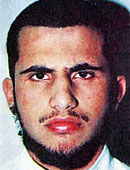
In September, the United States conducted successful attacks against terrorist groups fighting in Syria. While the bulk of the strikes focused on the Islamic State organization, other missiles targeted the Khorasan Group, a splinter of Jabhat al-Nusra. The missiles not only leveled the group’s training and communication sites, but also killed senior members (Nasaem Syria, September 25). Allegedly among those neutralized by the surgical attack was the leader of Khorasan, Kuwaiti citizen Muhsen al-Fadhli. Al-Fadhli was an important member of al-Qaeda, with close ties to both Osama bin Laden and Ayman al-Zawahiri, and, as such, has been on the radar of U.S. counter-terrorism officials for the last decade.
Khorasan, which in jihadist literature refers to the lands of Pakistan and Afghanistan, is composed of about fifty veterans of al-Qaeda from the Middle East, North Africa, Pakistan, Afghanistan and Chechnya with close links to Ayman al-Zawahiri’s al-Qaeda central, according to the U.S. intelligence community (al-Majlis, October 6; al-Hayat, September 30). Due to its global objective, the group is regarded as the most determined to attack the West, and is characterized by officials in Washington as the most dangerous to U.S. national interests (NBC News, September 23; Sabr.com, September 19).
Personal Narrative
Al-Fadhli was born on April 24, 1981 as Muhsen Fadil Iyad Ashoor al-Fadhli to a Shi’ite family in southern Kuwait. A slim and short man, who reportedly suffered from an undisclosed physical disability, he was best known as Muhsen al-Fadhli, but also took the name of Abu Sumaya al-Khorasani (Elaph, September 23; al-Majlis, October 6). By virtue of his Shi’ite upbringing, it is reasonable to assume that al-Qaeda’s rhetoric meant nothing to him in his early years. However, by his teens, he became influenced by the group’s ideology (Elaph, September 23). Given his age, the first exposure to such rhetoric and ideology may have been during the events of the First Chechen War in 1994 and then the ethnic cleaning of Bosnians in 1995. Such exposure influenced him to embrace the Sunni sect of Islam, the sect to which al-Qaeda adheres.
While it is unclear when al-Fadhli joined al-Qaeda, it is clear that he thrived soon after joining. He rose among the ranks so rapidly that by the year 2000 (at age 19), he was the personal guard of Bin Laden (Elaph, September 23). While fighting in Chechnya in late 1990s, he received training in fighting and bomb making (al-Watan al-Arabi, September 24). He also developed skills in fundraising and organizing. With the passage of time, his experience in fighting, fundraising and organizing grew impressively and so did his leadership roles. At one time, he simultaneously occupied three posts within al-Qaeda’s hierarchy: finance minister, bodyguard and personal assistant to Bin Laden. The latter trusted al-Fadhli so much that he exposed him to the planning for the September 11 attacks (al-Majlis, October 6; Elaph, September 23).
Trouble with the Law
Al-Fadhli’s involvement with law enforcement dates back to the late 1990s when Kuwaiti authorities arrested him for his alleged involvement in the attempt to blow up the World Trade Organization conference in Doha, Qatar in 1998. He was detained but soon released when the court indicted two other individuals instead (al-Quds, September 24).
In 2001, Saudi authorities arrested him for suspected membership in what was known as the “Afghan Arab” jihadist cells (al-Arabi, September 25; Elaph, September 23; Elaph, January 8; al-Malaf, September 24). Al-Fadhli was later released, however, after an unidentified Saudi religious cleric intermediated on his behalf (Elaph, January 8). In 2002, it was believed that he played a key role in the bombing of the French oil tanker Limburg on October 6, 2002, in the Gulf of Aden off the coast of Yemen, which killed one crew member and wounded 32 others (VetoGate.co,, September 25; BBC Arabic, October 16). In 2003, Kuwaiti authorities arrested him on charges of involvement in the bombing of the USS Cole off the coast of Yemen on October 17, 2000, which killed 17 Americans and injured some 39 others (Elaph, January 8; al-Arabia News, June 29; al-Malaf, September 24). He was found guilty by the Kuwaiti criminal court, a decision that was upheld by the court of appeals. However, he was acquitted later when the court of cassation ruled that there was “no role for the Kuwaiti judiciary in events occurring outside Kuwait” (al-Quds, September 24; al-Malaf, September 24; Elaph, January 8).
In 2004, al-Fadhli was arrested again when Kuwaitis received intelligence indicating his involvement in the assassination of Iraqi Governing Council member Ezzeldeen Salim in August 2003 in Baghdad and the leader of the Supreme Council of Islamic Revolution in Iraq Muhammad Baker al-Hakim in May 2004 in al-Najef Province. Ninety-five of al-Hakim’s followers were also killed in that attack (al-Quds, September 24). However, he was released due to a lack of evidence. In mid-2005, the U.S. Treasury Department said that al-Fadhli was somewhere in the Gulf providing support for al-Qaeda in Iraq then led by Abu Musab al-Zarqawi (BBC Arabic, September 25).
These rounds of arrests and releases are simply puzzling. For such autocratic states to act as though al-Fadhli went through an impartial judicial process and was then cleared for a lack of evidence is inconsistent with the nature of their political systems. Hence, as one could infer from the appeal of the Saudi cleric to release al-Fadhli from detention, al-Fadlhi had to have ties to the religious and state authorities. To further support this reasoning, it is inconceivable that bin Laden, who was known for his caution and secrecy, would give this authority to a young militant.
In any event, from 2005 onwards, al-Fadhli’s exact whereabouts were unknown. It later turned out that he was hiding in Kuwait, where he formed the “Ijerfan Cell” in 2007 (al-Malaf, September 24). This cell was tasked with targeting U.S. troops stationed in Ijerfan and Felka in Kuwait (al-Arabi, September 25). However, in November 2008, a captured Islamist told Kuwaiti authorities that he aided al-Fadhli in forging travel documents that the latter used to escape to Iran in 2008 (al-Quds, September 24). While in Iran, it is believed that he directed and financed the movement of al-Qaeda members from Pakistan, through Iran and Syria, to the West (CNN Arabic, September 23). Iran has admitted it had al-Qaeda members under house arrest, including some members of Bin Laden’s own family, who had crossed the border following the U.S. invasion of Afghanistan in 2001. This account, however, has been refuted by sources claiming that al-Qaeda members had free movement inside Iran (al-Aan, September 25).
On the surface, one might think of a relationship between Iran, a Shiite state, and al-Qaeda, a radical Sunni hierarchy that detest Shiites more than any other “infidels” as impossible. In fact, a marriage of convenience of this sort is beneficial to Iran. It could potentially use al-Qaeda members as bargaining cards in the negotiations with the West over its nuclear ambitions and terms of sanctions. Such relationship could also be disciplined by the principle of expediency in Shiite theology in that Iran would like for such a relationship to exist not only because it could provide bargaining power, but also to deter direct conflicts with al-Qaeda. From al-Qaeda’s perspective, it is likely beneficial to have a tacit agreement with a state least suspected of cooperating with al-Qaeda, due to their different ideological worldviews.
Al-Fadhli left Iran for Syria in 2012 and joined the al-Qaeda-linked group al-Nusra Front before leaving it a few months later to focus on “external operations” by forming the Khorasan Group in mid-2013 (Masrawy, September 24; al-Anba [Kuwait city], September 24).
The Formation of Khorasan
Khorasan was not effectively involved in the Syrian civil war as much as appeared to use the lawless land as a base for training. The group’s methods of recruitment differ from those commonly employed by terrorist organizations in that it mainly recruits militants with Western passports who could then travel to their home countries unsuspected by the authorities. In its training, the group focuses on making bombs that can evade airline security (Elaph, September 23; al-Anba [Kuwait city], September 24; Mustaqila, September 25). In fact, the reason for the particular timing of the recent strikes is because Khorasan was preparing to carry out attacks against U.S. targets and interests, according to Iraqi MP Hakim al-Zameli (Sot al-Iraq, October 1).
While some may doubt such a small group might could actually pose a real threat to the United States, there are several reasons why the U.S. concerns about the group are legitimate. First, as acknowledged by many credible sources, Khorasan was plotting to carry out attacks against the U.S. homeland and interests. Second, the group had a cooperative relationship with al-Qaeda in the Arabian Peninsula (AQAP), which in turn possesses competent capabilities to strike anywhere (BBC Arabic, September 25; al-Hayat, September 30). AQAP’s bomb making techniques are mainly the craft of one of the most dangerous bomb makers in the world, AQAP member and Saudi citizen Ibrahim al-Asiri (al-Hayat, September 30; Sot al-Iraq, October 1). Al-Asiri is believed to be the mastermind behind the Underwear Bomber, Umar Farouq Abd al-Mutallab, in his failed attempt on Christmas Day in 2009. If al-Asiri were to assist Khorasan, the concern is that he would help Khorasan conduct other attacks that would be more dangerous than that of the Underwear Bomber. Third, and the most concerning, was the persistent efforts of the group to recruit Westerners who could easily return home and engage in high-profile attacks.
Conclusion
Muhsen al-Fadhli was a significant member of al-Qaeda’s global jihadi movement. His rise through al-Qaeda’s ranks is atypical. He was not a typical Kuwaiti who decided to join al-Qaeda. In order to fund his numerous activities, it is likely that he came from a well-to-do family with strong influence in society. It is also likely that al-Qaeda wanted him not merely because of his proficiencies, but because of his wealth and connections in the region. Indeed, since his death, it has been publicized that al-Zawahiri personally selected him to act as his representative in Syria following the murder of Abu Khalid al-Souri by the Islamic State organization in 2014 (al-Hayat, September 30). With al-Fadhli’s death, however, al-Qaeda and Khorasan will continue on as the group has done without bin Laden.
Yasir Kuoti is a former consultant in the Institute of National Strategic Studies at National Defense University.