A Profile of Pakistani Taliban Spokesperson Ehsanullah Ehsan
A Profile of Pakistani Taliban Spokesperson Ehsanullah Ehsan
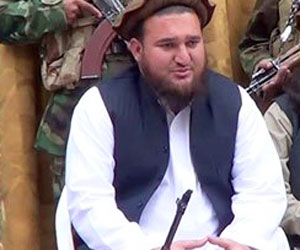
December 16, 2014 marked the single worst terror attack in Pakistani history. The assault led by members of the Tehrik-e-Taliban Pakistan (TTP) on the Army Public School in Peshawar claimed the lives of 141 people, 132 of whom were school children (BBC, December 16, 2014). The assault sent shockwaves throughout Pakistan, where massive protests demonstrated public outrage over the carnage. Surprisingly, the widespread condemnation of the attack was enough to coax affiliates of the Afghan and Pakistani Taliban, as well as al-Qaeda, into voicing their own disapproval of the incident. In particular, the denunciatory statements of Ehsanullah Ehsan, a spokesperson for the TTP splinter group Jamaat ul-Ahrar, offer crucial insight into the divisions that exist among the TTP and its affiliates today. In fact, when used as a case study, the trajectory of Ehsan’s career as a militant spokesperson presents unique evidence of the public relations follies that have afflicted Pakistani militant groups of late.
Ehsan began as a spokesperson for the TTP. His early career with the organization involved several critical junctions that helped to crystallize the group’s present mainstream image. Among the most formative of these was the TTP’s attempted assassination of Malala Yousafzai on October 9, 2012. That incident resulted in widespread domestic and international condemnation of the TTP, but was nonetheless defended by Ehsan, who stated that whoever “leads a campaign against Islam and Shari’a is ordered to be killed by Shari’a” (Dawn [Karachi], October 10, 2012). Ehsan was also the voice of the TTP when the organization claimed responsibility for the subsequent failed assassination attempt against well-known Pakistani journalist Hamid Mir that November. In both cases, Ehsan’s response to the use of violence against civilians was couched in a logic that deemed impolite references to the TTP as condemnable by death. That logic was endorsed fully and without reservation by the TTP. In late 2012, Ehsanullah voiced the TTP’s opposition to the possibility of peace talks with the Pakistani government, dismissing the then Interior Minister Rehman Malik as a “foreign agent” (Dawn [Karachi], November 26, 2012).
The frequency with which Ehsan’s statements have been carried by Pakistani news outlets highlights the novelty of his position and the particular context in which he operates in Pakistani society. While sporadic Facebook, Twitter and even LinkedIn accounts have been attributed to him in the past – most of which have shown few signs of having been actually utilized by Ehsan himself – a substantial share of his public statements are made not on the usual online forums or chat rooms, but to Pakistani journalists directly (Express Tribune [Karachi], January 4). Operating in a capacity more akin to that of a spokesperson for a political party, the frequency with which Ehsan contacts members of the Pakistani media speaks to his operational capacity as a professional propagandist. His announcements, however crude, have been intended to cultivate a certain mainstream persona for the TTP and its affiliates. The simplicity of the name Ehsanullah Ehsan, itself, reveals that it is likely a code-name, but one intended to cement particular moral attributes to the spokesperson’s mainstream public persona; ehsan roughly translates to perfection and is being used to relate to the Muslim religious obligation to pursue perfection in the worship of God.
Despite his careful approach to cultivating a mainstream persona, it was Ehsan’s volatile approach to the idea of diplomacy that would eventually come to cost him. In July 2013, he was sacked by senior TTP leadership for remarking to the media that talks between the United States and Afghan Taliban would have “no effect” on the actions of the Pakistani Taliban (The News International [Karachi], July 9, 2013). Ehsan’s aversion to negotiations, when coupled with the debate over who would succeed TTP chief Hakimullah Mahsud (slain in a 2013 drone strike), led him to eventually join the TTP splinter faction Jamaat ul-Ahrar in late 2014. Ehsan has described the group – led by its so-called amir, Maulana Qasim Khorasani – as being “administratively separate” from the Mullah Fazlullah-led TTP parent-group (Dawn [Karachi], September 4, 2014).
Since the split, Ehsan has served as the voice of Jamaat ul-Ahrar by championing its attacks on the Pakistani military. Among other incidents, he took credit on behalf of the organization for a high-profile attack that was launched at India and Pakistan’s Wagah border crossing this past November. The Wagah border crossing regularly hosts public ceremonies of military pageantry and often attracts thousands of civilian spectators. The attack resulted in the death of 61 people, including 10 women and 7 children, all Pakistani in nationality (India Today [Noida], November 13, 2012).
Given his group’s propensity for engaging in violence that often results in the death of unarmed civilians, Ehsan’s denunciation of the December 2014 Peshawar attacks defies simplistic assessment. While he may have been sacked from his last position for a lack of deference to the Afghan Taliban, this time around he seems to have adopted a more conformist approach, saying that “Jamaat ul-Ahrar has nothing to do with the killing of schoolchildren in Peshawar,” and that he and the group fully endorse the Afghan Taliban’s denunciation of the incident as going against “the principles of Islam” (The News International [Karachi], December 19, 2014).
Ehsan’s framing of the Wagah border crossing incident, and past attacks, exemplified an approach in which he used the Pakistani military’s actions against TTP affiliates as a justification for his own group’s actions – an implementation of tit-for-tat morality. But while it is possible that the scale and intrinsic depravity of the TTP’s killing of unarmed students in Peshawar may have been too much for even Ehsan to bear, his subsequent approach to public outrage over the incident suggests that his public relations strategy is based on cold pragmatism, not piety.
In the immediate aftermath of the Peshawar attack, public outrage quickly focused in on those elements of Pakistani society that activists charged with being terrorist sympathizers. The most high-profile example of this came with the popular protests directed at controversial cleric Maulana Abdul Aziz, who had stated that the Peshawar attack was simply a TTP response to Pakistani military actions against it. The protests were spearheaded by Muhammad Jibran Nasir, a political activist who has called for Aziz to be arrested. The movement has been spurred on by widespread support throughout Pakistan and abroad with Twitter users invoking hashtags like #ArrestAziz, and #NeverForget. The arbitrary nature of Ehsan’s initial statements on the Peshawar attack becomes easier to discern upon examining his response to the protest efforts led by Nasir: Ehsan reportedly called and tried to intimidate Nasir, warning him that further demonstrations against Aziz would bring about a threat to his (Nasir’s) safety (Express Tribune [Karachi], December 22, 2014).
Ehsan’s threats to Nasir indicate that the divisions among TTP affiliates have left them vulnerable to a Pakistani mainstream that is more vocal than ever in its opposition to radical elements. Ehsan’s statements, and the actions of his affiliates, have thus far functioned in an environment in which a public hunger for stability and moderation has been paralyzed by fear. But the scale and savagery of the Peshawar attacks have infused the Pakistani mainstream with an added degree of outrage, leading many to abandon the logic of self-preservation. Ehsan’s public relations proficiency no longer stands in juxtaposition just to the Pakistani government and military, but now also to the Pakistani public.
Udit Thakur is a freelance writer and researcher based in Mumbai. He writes on issues of religion, politics and human security, with a key focus on the Middle East and South Asia.