Abdel Raouf Kara: The Madkhali Strongman of Tripoli
Abdel Raouf Kara: The Madkhali Strongman of Tripoli
Executive Summary:
● Abdel Raouf Kara’s al-Radaa militia remains the most powerful obstacle to Prime Minister Dbeibah’s consolidation of authority in Tripoli, surviving months of government pressure and sustaining control over Mitiga Airport, prisons, and key revenue streams.
● Kara’s Madkhali loyalist-fundamentalist ideology and quasi-official paramilitary structure have enabled al-Radaa to operate as both morality police and counterterrorism force—blending state authority with militia rule while drawing accusations of torture, arbitrary detention, and abusive governance.
● Türkiye’s intervention to broker a truce underscores Kara’s centrality to Tripoli’s fragile security balance; efforts to dismantle al-Radaa risk provoking urban conflict, empowering rival militias, and destabilizing the capital’s already volatile political landscape.
Tripoli has been shaken by a wave of violence since May after the mysterious assassination of Abdul Ghani al-Kikli, or “Ghneiwa” (Arabic: “عبد الغني الككلي,”غنيوة), who headed the Stability Support Apparatus (Arabic: جهاز دعم الاستقرار, SSA). The ensuing clashes marked interim prime minister of the Government of National Unity (Arabic: حكومة الوحدة الوطنية, GNU) Abdul Hamid Dbeibah’s most determined effort yet to dismantle the major militias not aligned with him, such as Abdel Raouf Kara’s (Arabic: عبد الرؤوف كارة) Special Deterrence Force (Arabic: جهاز الردع لمكافحة الإرهاب والجريمة المنظمة, “Deterrence Force for Combating Terrorism and Organized Crime,” commonly called “al-Radaa”). The interim prime minister regards al-Radaa as the main obstacle to centralizing power, given its control over Mitiga (Arabic: معيتيقة) Airport, major detention centers, and key revenue streams.
Kara’s al-Radaa network has proven resilient despite months of pressure from the central government. Its command remains intact, its territorial foothold is unshaken, and its political leverage is undiminished. At present, the capital Tripoli lives under an uneasy calm brokered and supervised by Türkiye, whose troops and advisers maintain a presence at the airport. The truce is precarious, with frequent mobilizations and a constant risk that minor incidents could reignite full-scale conflict between Tripoli’s militias or push Khalifa Haftar (Arabic: خليفة حفتر) and other Russia-backed actors in the east and the south to use military force to achieve their goals. In this tense equilibrium, Tripoli’s security order continues to rest on bargains between armed actors rather than state institutions.
Kara remains one of the most influential and polarizing figures in the fragmented security landscape in Libya. As founder and commander of al-Radaa, he has built a paramilitary structure that operates simultaneously as a morality-police force and counterterrorism unit, nominally under the Ministry of Interior, but effectively answerable only to himself. In the vacuum left by the disintegration of formal governance, Kara has turned al-Radaa into a quasi-official security apparatus—a hybrid entity enforcing order, religious discipline, and loyalty to its own command. His endurance, despite political challenges, domestic unrest, and external pressure, illustrates both the limits of Dbeibah’s authority and the enduring power of militia governance in the heart of Libya’s capital (Al Jazeera Arabic, May 13).
Kara’s Early Career
Kara is originally from the old city of Tripoli’s Souq al-Jum‘a (Arabic: سوق الجمعة) district and was born around 1980 (Marefa, January 1). He attended a Quranic school before becoming a craftsman and entrepreneur in the metalworking trade and was not a prominent figure in the February 17, 2011 revolution. He later joined the anti-regime forces fighting Muammar Gaddafi’s army in Tripoli alongside other young men from Souq al-Jum‘a (Jeune Afrique, January 23, 2014). Some sources cite him imprisoned under Gaddafi, which helps explain his lack of participation in the initial uprising.
He appears to have become a member of the Tripoli Military Council led by former emir of the Libyan Islamic Fighting Group (Arabic: الجماعة الليبية المقاتلة, LIFG) Abdel Hakim Belhaj (Arabic: عبد الحكيم بلحاج) (Sky News Arabia, April 20, 2015). However, his ties with Belhaj allegedly broke to the extent that Belhaj started preferring travel through Misrata (Arabic: مصراتة) Airport rather than Mitiga Airport, where Kara had established his headquarters since 2014 (Marefa, January 1). Kara then rose to prominence when he became one of the founders of the al-Nawasi Brigade (Arabic: كتيبة النواصي), an Islamist militia later dominated by the Qaddur (Arabic: قدور) family. The militia, which initially aimed to combat drug and alcohol dealers thriving in Tripoli’s lawless environment, gained popularity for Kara among local families who feared that their children would become substance addicts (The Egypt Telegraph, May 15).
Establishing al-Radaa
Kara joined the U.S. intervention in Libya (Operation Odyssey Dawn) to topple Gaddafi when it seized Tripoli as part of a large group. While common claims included around fifteen-hundred members, more recent assessments suggest the group might comprise as many as fifteen-thousand people (Middle East Eye, October 17). A significant percentage of the group’s personnel are formal police officers, including many who served in the Libyan police force before 2011. Its main areas of operation in Tripoli are the western sectors of Souq al-Jum‘a and Ain Zara.
Al-Radaa was originally a small vigilante group created to curb the post-Qaddafi wave of kidnappings and drug trafficking before evolving into one of Tripoli’s most powerful and feared militias. Kara repositioned al-Radaa as a policing body focused on combating crime, repeatedly insisting he had no political ambitions and sought only to maintain order in the capital. However, Kara’s control of Mitiga Airport gave him authority over aviation security and the notorious Mitiga Prison, a central pillar of his power. Although formally linked to the Interior Ministry, al-Radaa operated independently and functioned as a parallel institution that blended state authority with moral enforcement.
Kara’s leadership reflects the rise within Libya’s fragmented security landscape of Madkhali Salafism (Arabic: السلفية المدخلية), or Madkhalism. Madkhalism is a loyalist trend of Salafist thought emphasizing obedience to incumbent rulers and the rejection of both political Islam and jihadism, stemming from the teachings of Saudi scholar Rabi’ al-Madkhali (Arabic: ربيع المدخلي). Through this lens, al-Radaa presents itself as a guardian of stability and religious propriety, which uses Islamic legitimacy to justify its dominance. In rare interviews, Kara has portrayed his forces as reformers fighting vice and extremism and has cast himself as a protector against chaos (YouTube/MagdiMokhtar, January 17, 2013).
Resistance to al-Radaa
Al-Radaa has also operated as an anti-terrorist force and presented itself as a partner for Western countries in fighting the Islamic State in Libya. Indeed, his group was instrumental in defeating Islamic State (IS) cells in Tripoli between 2015 and 2017, which earned Kara tacit approval and recognition from Western and UN-backed institutions. This approach, however, also strained Kara’s ties with other major Islamist players in Libya. For instance, it is notable how poor Kara’s relationship is with the former Grand Mufti Sadiq al-Ghariani (Arabic: الصادق الغرياني). Their relations deteriorated for the first time in December 2015, when Kara’s forces raided the al-Tawhid Battalion (Arabic: لواء التوحيد) affiliated with IS and killed its commander, Murad al-Qamati (Arabic: مراد القماطي), in the Furnaj (Arabic: الفرناج) area of Tripoli. In September 2025, al-Ghariani repeatedly attacked Kara, accusing the Souq al-Jum’a area of siding with al-Radaa and preventing the state—namely Dbeibah and the militias loyal to him—from extending its authority there (Libya Update, September 6).
The narrative al-Radaa seeks to portray about itself contrasts sharply with widespread allegations of abuse. Human Rights Watch, Amnesty International and other organizations have documented arbitrary detentions, torture, and the suppression of perceived “immorality” within Mitiga Prison. Victims have included journalists, activists, and migrants held without trial. Beneath the rhetoric of order and faith, al-Radaa has come to embody the contradictions of Tripoli’s security order—a hybrid entity that claims to defend the state while systematically operating beyond its laws (Human Rights Watch, September 10, 2020; Amnesty International, February 17, 2021).
Disputes with Dbeibah
Kara and his men adhere to the traditional Salafi concept of loyalty to the wali al-amr (Arabic: ولي الأمر, the legitimate ruler). This doctrine is central to Madkhali thought, which unlike more revolutionary forms of political Islam assumes the wali al-amr to be the incumbent Muslim ruler, making it staunchly loyalist by nature. As such, Kara is known for repeatedly declaring that he is not concerned with politics, but with maintaining public security. Based on the provisions of the “Skhirat Agreement” (Arabic: اتفاق الصخيرات) of 2015, he has since recognized the Presidential Council as the current wali al-amr, a choice consistent with his Madkhali approach to maintaining political authority (International Crisis Group, April 25, 2019). This means that, under the Government of the National Accord, he and his men were loyal to the previous President, Fayez al-Sarraj, while now they pledge their loyalty primarily to the head of the Presidential Council, Mohamed al-Menfi (Arabic: محمد المنفي). This also might help explain the continuous tension with the other major political figure in Tripoli: interim prime minister Dbeibah. Throughout 2025, Dbeibah has tried to destroy al-Radaa, which he sees as a major obstacle to exerting his full authority on the capital. However, Kara and his militia have shown a significant degree of resilience and have not been significantly undermined (Asharq Al-Awsat, September 4).
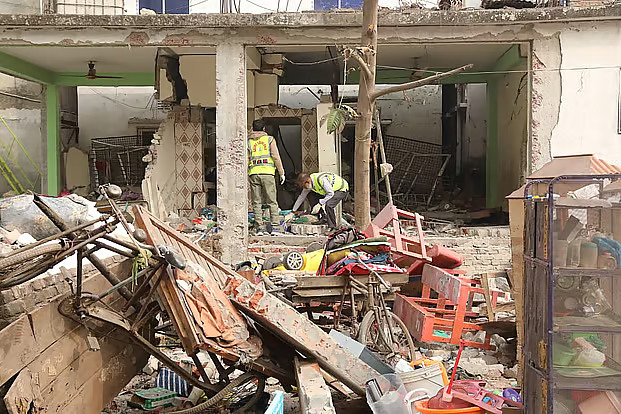
Tripoli was rocked by violent clashes triggered by the killing of SSA head al-Kikli in May 2025. His death inside a 444th Brigade facility on May 12 unleashed the heaviest fighting the capital had seen in years, pitting Dbeibah-aligned units, particularly the 444th Brigade (Arabic: اللواء 444 قتال), against Kara’s al-Radaa. Battles raged around Mitiga Airport and al-Jadida Prison (Arabic: سجن الجديدة) until a truce was announced on May 14 (Atlantic Council, May 16).
The GNU presented its operations as an effort to dismantle “irregular” formations and restore state control. UN officials, however, warned of indiscriminate use of heavy weapons in densely populated areas. In June, Dbeibah and Presidential Council head Mohamed al-Menfi announced a plan to clear the capital of armed groups and reassert state authority (The Libya Observer, June 5). Sporadic clashes continued, exposing the fragility of the truce and Libya’s ongoing failure to build unified institutions. Public anger grew against Dbeibah’s forces, with protesters demanding his resignation and expressing support for Kara.
Turkish-Mediated Truce
Further outbursts of violence throughout the summer underscored the volatility of Tripoli’s security environment. By late August, the GNU deployed heavy reinforcements to the city’s outskirts, which was widely viewed as an ultimatum to al-Radaa: submit to government control or face destruction. By early September, Dbeibah’s strategy focused on weakening al-Radaa’s grip over Mitiga Airport, a critical source of its policing authority, detention control, and revenue. However, this decision was opposed by Türkiye. Ankara, whose presence at Mitiga Airport is considered essential for its control in Libya, reportedly opposed any confrontation that could jeopardize its military presence at the base (The Arab Weekly, September 2). Yet, at the same time, Ankara wants to preserve the role of Dbeibah, still considered Ankara’s main ally in Libya, even if trust in him has eroded over the years.
Ankara decided to intervene and Turkish mediation led to an agreement between the GNU and al-Radaa to defuse tensions. The deal required al-Radaa’s withdrawal from Mitiga, the transfer of the prison complex to the Ministry of Justice, and the redeployment of outside militias to their home bases. Responsibility for Tripoli’s security was assigned to the city’s official directorate, while all armed groups were limited to single compounds and barred from political activity (The Libya Observer, September 13, Asharq News, September 22).
Türkiye’s intervention sought to avert a destructive urban war that could have ended Dbeibah’s tenure. Ankara’s priority is stability, continuity, and preserving its influence in Libya through a managed political transition, rather than a chaotic military showdown (Asharq al-Awsat, September 17). Even if he is not considered Türkiye’s major ally, Kara is seen as part of this fragile stability in Tripoli. He is believed to enjoy popularity in areas under al-Radaa control, as shown by public rallies in his support.
Conclusion
Abdel Raouf Kara is indisputably one of Tripoli’s most influential militant leaders and among the most entrenched actors in Tripoli’s security architecture. His significance extends well beyond the territory controlled by his forces, while his trajectory reflects a rare combination of ideological rigidity and political pragmatism. Kara can be seen as a bridge between two seemingly irreconcilable roles: the Islamist militia leader guided by a strict Salafi creed, and the “security technocrat” who uses his grip over key infrastructure to gain legitimacy, institutional recognition, and financial resources.