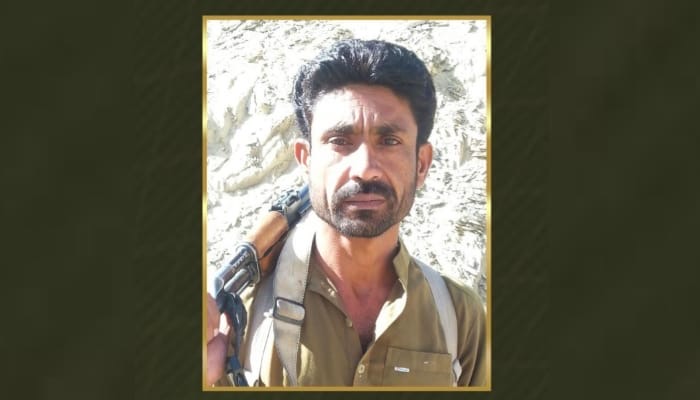
Ahmad Omar Saeed Shaikh: New Updates in Daniel Pearl Murder Case
Ahmad Omar Saeed Shaikh: New Updates in Daniel Pearl Murder Case
The Supreme Court of Pakistan’s acquittal of Ahmad Omar Saeed Shaikh is a recent but shocking development in the Daniel Pearl murder case. The kidnapping and beheading of the Wall Street Journal correspondent in Pakistan riveted international attention due to the fact that the victim was a Western journalist while the perpetrator turned out to be the head of al-Qaeda’s military committee and mastermind of the 9/11 attacks, Khalid Shaikh Mohammad, and local Pakistani al-Qaeda affiliates were complicit in the crime. Legal gaps in the case resulted in the benefit of doubt being given to the accused.
Background
Daniel Pearl, a 39-year-old Wall Street Journal correspondent, came to Pakistan to research an investigative story about the financing of the 9/11 attacks and the Richard Reid case, better known as the shoe bomber case. Pearl attempted to meet several jihadist figures, including Pir Mubarak Gillani of the then U.S.-based organization Jamaat ul-Fuqra, but was kidnapped by Ahmad Omar Saeed Shaikh at the behest of al-Qaeda. [1] Shaikh, a British-Pakistani and a London School of Economics dropout who was a senior leader of Harkat-ul-Mujahedeen, cajoled Pearl to meet him, setting up his kidnapping in Karachi in December 2001. Pearl was held in a cellar in the suburbs of Karachi. A previously unknown terrorist group, the National Movement for the Restoration of Pakistani Sovereignty, issued demands for Pearl’s release in an email to a local newspaper, including the “freeing of Pakistani prisoners in U.S. prisons, release of U.S. fighter jets F-16 to Pakistan, and release of Mullah Abdul Salam Zaeef, the former Afghan ambassador to Pakistan“ (News International, February 11).
After a month of silence, a video was sent to the U.S. Consulate in Karachi of Pearl’s beheading by a masked assailant, who turned out to be Khalid Shaikh Mohammad. Pearl’s body was later found buried in a plot on the outskirts of Karachi. Pakistani police launched investigations, and a number of accused, including Ahmad Omar Saeed Shaikh, were arrested, charged and sentenced to death in 2004.
Recent Developments
The Daniel Pearl case remained closed for more than 18 years. However, last April, the Sindh High Court responded to an appeal filed by Shaikh’s father. In a short trial, the local appellate court dropped the murder charges against Shaikh but upheld the charges against him for Pearl’s kidnapping. Still, the court allowed Shaikh to walk free, as he had already completed his seven-year sentence for kidnapping. The Pakistani government filed an appeal against the Sindh High Court’s verdict with Pakistan’s Supreme Court. The Supreme Court trial began after a delay of several months and a verdict was issued in February 2021.
According to Azaz Syed, a senior Islamabad journalist who was interviewed for this piece, the prosecution’s case had a number of problems from the beginning, but since the charges were framed efficiently by the prosecutorial team at the time, they were overlooked by the court. [2] However, the charges began to fall apart upon scrutiny in the Sindh High Court. A state witness turned out to be fake, two confessional statements from Fahad Nasim and Syed Sulaiman Saqib, who were also accused of taking part of the kidnapping, were deemed inadmissible, as they were made under duress, according to the magistrate who recorded their statements.
The court also ruled the testimony of a handwriting expert inadmissible, as he did not have the required experience as an expert witness. In addition, the dates of the police’s data extraction of the accused’s computer conflicted, the murderer’s face was not visible in the video shown to the court, and the murder weapon was never recovered. Amid these discrepancies, Shaikh’s presence at the crime scene could not be confirmed, and he was granted the benefit of the doubt considering the lacunas in the investigations and the prosecution’s witnesses and evidence.
The Sindh High Court had already dropped the murder charge, and it ultimately confirmed only the kidnapping for ransom charge. The Supreme Court went further, acquitting Shaikh of the kidnapping charge, as the only witness, a taxi driver, turned out to be a false witness and a police employee. Eventually, all charges against Shaikh were dropped (News International, February 11). [3]
Conclusion
Ahmad Omar Saeed Shaikh, whose multiple talents and London School of Economics background led many to consider him a terrorist of exceptional ability, is now free. As a free man, he could reenter the insurgency by joining al-Qaeda in the Indian Subcontinent (AQIS) or even al-Qaeda Central, as both organizations are facing an acute shortage of veteran leaders to command and reinvigorate the organizations in the region and globally. For the counterterrorism community, the acquittal is a setback, as a free Omar Shaikh could contribute his experience to — and provide a propaganda opportunity for — any extremist group he joins. However, it is unclear how Omar Shaikh is going to behave, as he is no longer the young man he was in the 1990s. Both policymakers and jihadist circles in Pakistan and abroad are waiting with great interest to see what path he will follow following his release from prison.
Notes
[1] Ahmad Omar Saeed Shaikh is a veteran jihadist who had fought in Bosnia during the Yugoslav Wars in the early 1990s and in the Islamist insurgency in Indian Kashmir. He was arrested in New Delhi in 1994, but was released in 1999 after Harkat-ul-Mujahedeen hijacked Air India flight IC-814 from Kathmandu and landed it in Taliban-ruled Kandahar, Afghanistan. He was released in exchange for the hostages, along with two other Indian prisoners, Masood Azhar and Mushtaq Zargar. [2] Discussions with Azaz Syed about the case on February 16, 2021. [3] Ibid.