Al-Qaeda’s Uyghur Jihadi: A Profile of the Turkistan Islamic Party’s Abdul Shakoor Turkistani
Al-Qaeda’s Uyghur Jihadi: A Profile of the Turkistan Islamic Party’s Abdul Shakoor Turkistani
The Progeny
The third Uyghur to lead the jihad against the Chinese state over the “occupation” of Xinjiang, Abdul Shakoor Turkistani is the “Amir” of the Turkistan Islamic Party (TIP). [1] [2] In this role, he succeeds two prominent Uyghur leaders—Abdul Haq al-Turkistani and Hahsan Mahsum—and carries on their legacy by dually holding a high-ranking position in al-Qaeda.
Like Mahsum and Abdul Haq, Abdul Shakoor and his fighters in the TIP want independence for Xinjiang Province and for the province to become an Islamic State by the name of East Turkistan. Alternatively, if all of Central Asia is “liberated” from the current “apostate” and “infidel” governments, then Xinjiang would become part of a greater Central Asian caliphate called Turkistan, a name which refers to the Turkic ethnic groups that populate the region, including the Uyghurs, Uzbeks, Karkalpaks, Kazakhs, Kyrgyz, Turkmen and Tatars.
Mahsum was killed in October 2003 by Pakistani troops in Northwest Frontier Province (NFWP-now known as Khyber-Pakhtunkhwa Province-KP). He had led a group of as many as 250 Uyghur fighters in northern Afghanistan and received financing from Osama bin Laden to found the East Turkistan Islamic Movement (ETIM) as early as 1997. [3] Abdul Haq ran a training camp for Uyghur fighters in the infamous Tora Bora area prior to the US bombardment of Afghanistan in October 2001. He was appointed to al-Qaeda’s Shura Majlis in 2005 and chosen by bin Laden to lead the TIP in 2008, which he did until a U.S. drone strike killed him in the North Waziristan Agency of the Federally Administered Tribal Areas (FATA) in March 2010.
Abdul Shakoor gained notoriety for the first time after Abdul Haq’s death when he took over the leadership of the TIP and Uzbek militants in North Waziristan (Asia Times, October 26, 2011). [4] Approximately one year on, in April 2011, Abdul Shakoor was promoted to Commander of al-Qaeda forces in the FATA. [5] Abdul Shakoor’s close relationship with the late Tahir Yuldashev of the Islamic Movement of Uzbekistan (IMU), who was on the Shura Majlis with Abdul Haq, as well as his familiarity with various factions of Taliban explains his rapid ascendency.
In addition, Abdul Shakoor’s rapid rise in al-Qaeda’s ranks can be attributed to him being the progeny of Mahsum and Abdul Haq, two Uyghur “martyrs” who dedicated more than one decade of their lives to jihad in Afghanistan and Pakistan. Their careers gave the al-Qaeda leadership, including Bin Laden who was still alive when Abdul Shakoor was promoted to Commander of al-Qaeda in FATA, the confidence that Abdul Shakoor would carry out jihad with the same fervor of Mahsum and Abdul Haq before him.
Written and Video Statements
If the terrorist attack in July 2011 in Kashgar, Xinjiang Province is any indication, Uyghur militants in the Afghanistan-Pakistan border region are benefitting from Abdul Shakoor’s leadership and connections with the IMU, al-Qaeda, and the Taliban. These terrorist organizations have trained and operated together since the time of Hahsan Mahsum and their coordination remains strong.
The TIP’s use of training camps in the Afghanistan-Pakistan border region to prepare fighters for attacks on China was confirmed with undisputable evidence when Abdul Shakoor released a written statement in August 2011 and a corresponding oral statement in a video message in October 2011. [6] [7] The statement and video were both posted on the jihadi Shumukh al-Islam online forum and titled “On the Occasion of the Military Operations in the Prefectures of Hotan and Kashgar in East Turkistan.” The statement was written in identical Arabic and Uyghur language versions, while in the video Abdul Shakoor spoke in Uyghur but a dubbed voiceover in Turkish was also released. [8]
In the written statement, the content of which was very similar in content to the video, Abdul Shakoor says, “Every policy that you, the Communist government of China, implement is aimed at undermining the identity and the conservative traditions of the Muslims….”
According to Abdul Shakoor, these policies include:
- Mandatory education, which he says has caused the apostasy of Muslims from their religion;
- The policy of enforced bilingual education (Mandarin Chinese is required for Uyghurs);
- The emigration of Muslim females from Xinjiang to the “Chinese region,” which is usually related to finding employment;
- The policy of birth control, which he describes as “threatening;”
- The policy of densely settling in the Chinese in the Muslim population, which he says has led to the marginalization of the Muslims;
- The policy of looting and transporting out Turkistan resources by “night and day;”
- The testing of nuclear weapons in Xinjiang.
In the video statement, Abdul Shakoor focuses on retaliation against the Chinese. He states:
- “My brothers, without fighting the Chinese and with only talking they will not leave our land. The land they took over by using guns can only be taken back with guns;”
- “Whoever attacks you, you attack them back;”
- “The only way for us to get rid of this tyranny is to do the jihad ibadet,” or prayer, which he says is an obligation equal to fasting during Ramadan. [9]
Photos included in the written statement and clips in the video showed Memtieli Tiliwaldi in a TIP training camp wrestling with other fighters. This was the same Memtieli Tiliwaldi who was killed by Xinjiang police on August 2 in a corn field outside of Kashgar two days after 10 Uyghur attackers and Tiliwaldi detonated two bombs on a popular shopping and dining street frequented by the Han Chinese and then shot and stabbed Han Chinese people indiscriminately (Xinhua, August 2, 2011). In the attacks on July 30, 2011 and July 31, 2011 in Kashgar more than ten civilians were killed and 40 people wounded while eight attackers, including Tiliwaldi, were killed and four other attackers detained.
The July 30, 2011 and July 31, 2011 attacks were unique for the high number of fighters who participated in the operations and because the attacks were carried out over the course of two days. Previously, Uyghur terrorists in Xinjiang had conducted similarly styled attacks—ramming police with trucks, detonating low-impact bombs, and stabbing people—but the attacks usually involved one or two people and occurred in a single phase. Previous attacks also targeted Han or Uyghur policemen and soldiers, but these attacks explicitly targeted civilians.
The attack’s greater level sophistication and the choice of civilian targets may be a sign that al-Qaeda’s penchant for killing civilians has seeped into the TIP’s strategy. This is consistent with Abdul Shakoor’s dual role as both an al-Qaeda and TIP leader. In addition, neither the ETIM under Hahsan Mahsum nor the TIP under Abdul Haq, who desired to internalize the jihad by attacking Chinese interests abroad, achieved anything noteworthy for the Uyghurs in Xinjiang (al-Jazeera, March 2, 2010). The Chinese “settlements” in the province only increased, Chinese security and economic arrangements with other Central Asian states solidified, and Beijing’s crackdown on the protests in Urumqi in 2009 showed that China would meet any challenge to its authority in Xinjiang with lethal and repressive force.
Abdul Shakoor’s claim in the statement and video that the TIP orchestrated an attack on July 15, 2011 in Hotan is more dubious than his Kashgar claim. The Hotan incident appeared more likely to be criminal violence stemming from a protest over the detainment of Uyghurs than a planned terrorist attack. Nonetheless, the protestors in Hotan could have been influenced by the TIP propaganda and some of them may have trained in TIP camps in Pakistan and Afghanistan.
New Directions
TIP Videos were released with increasing frequency in 2011, including a five-part video series called “Lovers of Paradise,” two other videos called “Provisions of Jihad” and “Tourism of the Believers,” and a notable video titled “Message to the Chinese People” released in May 2011 in which the speaker, Faruq Turisoon, speaks in Mandarin for the first time in TIP media (see Terrorism Monitor, June 23, 2011). Previous videos and written statements had only been in Uyghur, Arabic or Turkish.
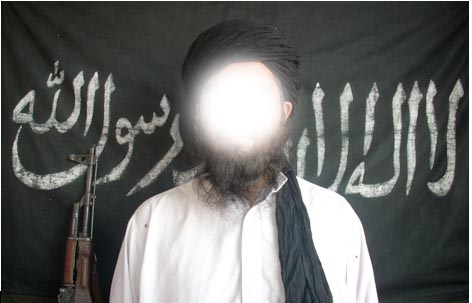
In the August TIP video in which Abdul Shakoor claimed the Kahsgar and Hotan attacks, Abdul Shakoor’s face is blotted out, while in the May video Tursoon’s face is unguarded as he speaks surrounded by armed fighters. Although Abdul Shakoor and Turisoon wear the same style black turban, sport long black beards, and discuss similar themes (family planning, Han “settlements,” displacement of Uyghur women, etc.), there is nothing to indicate that Abdul Shakoor also goes by the name of Faruq Turisoon or that it was Abdul Shakoor who delivered the “message to the Chinese people” in May. That is in fact highly unlikely considering that it would not make sense for Abdul Shakoor to forfeit an opportunity to propagate his name.
However, the significance of the Turisoon video from a leadership perspective is that it shows that below Abdul Shakoor in the TIP and al-Qaeda hierarchy are other Uyghur fighters ready to carry on the jihad and take on a leadership role should Abdul Shakoor follows his predecessors Mahsum and Abdul Haq into “martyrdom.”
Conclusion
Abdul Shakoor has become one of the highest ranking al-Qaeda figures and the most powerful Uyghur jihadi leader since Hahsan Mahsum and Abdul Haq al-Turkistani. Pakistani forces killed Mahsum, U.S. drones took out Abdul Haq, and with the Chinese cooperating even more closely with Islamabad after the July Kashgar attacks—and possibly even operating secret bases in Pakistan—the future of the TIP’s embattled leadership appears dim. China certainly will attempt to have its intelligence agents hunting for Abdul Shakoor in the FATA, though this will assuredly be a difficult task in a Pakistan that is increasingly fretting about its national sovereignty while militants in the region are constantly on the lookout for spies, who, when caught, are swiftly executed by ad hoc Shari’a courts. Though Uyghur militancy is weaker in the present as well as under constant threat from drone strikes and Pakistani military incursions in the areas where TIP members operate, the lack of any real improvement in Uyghur national aspirations in the face of an implacable Beijing will continue to stoke rage among Communist China’s demographically embattled Turkic peoples.
Notes
1. His name has also appeared as Abdul Shakoor Damla in other videos and statements.
2. The TIP is pronounced in Arabic as Hizb al-Islami al-Turkistani or in Uyghur as Turkistan Islam Partisi. In the most recent video statement featuring Abdul Shakoor Turkistani, however, the group is called Turk Islam Cemaat, which also roughly translates to “Turkistan Islamic Party.”
3. It remains unclear whether the Turkistan Islamic Party (TIP) is a continuation of the East Turkistan Islamic Movement (ETIM) or a different organization that shares the same objectives. ETIM is believed to have faded into extinction shortly after Hahsan Mahsum’s death in 2003, while the TIP emerged around 2008.
4. The Uzbeks, an ethnic Turkic group with a language mutually intelligible to a degree with Uyghur, have been closely associated with the Uyghurs in Afghanistan and Pakistan since Mahsum’s time. Both the Islamic Movement of Uzbekistan (IMU) and the TIP tout pan-Islamism over ethno-nationalism and harbor the broader ambition to create and Islamic caliphate including all of the Turkic ethnic groups and Muslims in Central Asia.
5. In his role as Commander in the FATA, Abdul Shakoor succeeded the Egyptian Saif al-Adel, who left the FATA in April 2011 to escape frequent drone strikes in the area. Later al-Adel became the interim al-Qaeda number one after bin Laden’s death.
6. www.shamikh1.info/vb/showthread.php.
7. www.shamikh1.info/vb/showthread.php .
8. Though Uyghur is traditionally written using a modified Arabic script, the spoken language is a branch of the Turkic family unrelated to Arabic.
9. The three bullet-points are taken from the Turkish dubbing of the original Uyghur language video and are as follows: Karde?lerim i?galci çinlilerle sava?madan sadece söz söylemekle vatan?m?zdan ç?k?p gidecek de?illerdir. Silahla gasp ettikleri topraklar?m?z? ancak silahla geri alabiliriz; Kim size sald?r?rsa sizde ona misilleme olacak kadar sald?r?n; and Üstümüzdeki zulümden kurtulman?n tek yolu cihad ibatedini yerine getirmekle olur.