Ashraf al-Mayar – The Face of Libyan Salafist Support for Haftar
Ashraf al-Mayar – The Face of Libyan Salafist Support for Haftar
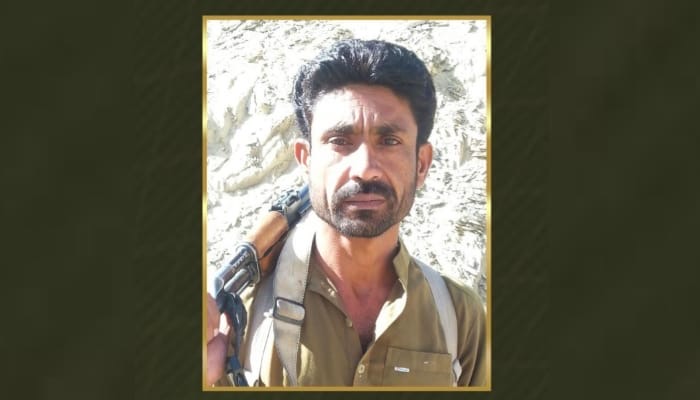
Ashraf al-Mayar is one of the most prominent militia field commanders fighting on the side of General Khalifa Haftar in the Libyan conflict. Mayar, a Salafist from eastern Libya, was a member of the 17 February Brigade, which was a coalition of militias that coexisted and sometimes correlated with the al-Qaeda-linked Ansar al-Sharia group. Mayar joined Haftar in 2014 when the latter launched Operation Dignity, claiming his goal was to save Libya from terrorist groups (Afrigate News, July 24, 2014).
With the crucial field support of Salafist figures like Mayar, and the backing of regional powers like Egypt, Saudi Arabia, the UAE and to some extent Russia, Haftar has since ran over most of eastern Libya and is now leading a military campaign aiming to capture the capitol Tripoli in the west and remove the UN-backed government (Al-Jazeera, December 9).
Salafists in the East
One of the underreported aspects of the conflict in Libya is the role of Salafists, and in particular a certain strand of the traditional Islamist movement, called the Madkhalites. Madkhalism has adherents in several Muslim countries. It was named after its founder and the Saudi-based cleric Sheikh Rabee al-Madkhali, who for decades preached a form of Salafism that is against the Muslim Brotherhood and other politically active Islamist movements. Ashraf al-Mayar is one of the most prominent figures of the Madkhalite group in Libya. Although Haftar is launching a war on jihadist and non-jihadist Islamist groups, some of the most important components of his own forces are Madkhalite Salafists. Madkhalism demands obedience to the dominant ruler of a country (following the traditional concept of Wali al-Amr) in any certain time and place as a paramount duty for its adherents over any other consideration. Mayar and many fellow Madkhalites declared their support for Haftar and considered the political leadership in eastern Libya to be the dominant state authority (Djelfa, November 25, 2014).
Since 2014, Mayar has rejected the authority of the Tripoli-based governments, accusing them of being dominated by his enemies, the Muslim Brotherhood. More than ideology explains the Madhkalites loyalty to Haftar, however. Their strong ties to Saudi Arabia, and to some extent the UAE, seems to dictate where their allegiance in regional conflicts lie. In their confrontation with the Muslim Brotherhood in countries across the Middle East and North Africa, Saudi Arabia has directed Salafists in those countries to confront the Muslim Brotherhood, even when they were members of elected governments (Atvsat, July 14, 2016).
Changing Sides
Ashraf Abdullah al-Mayar is from the Hasi tribe in eastern Libya. His date of birth is not known, but he is believed to be in his mid-thirties. His decision to join Haftar’s forces in 2014 was important to the success of Haftar’s war efforts. Mayar brought three crucial elements that played a key role in Haftar’s advances in Benghazi, Libya’s second largest city, and beyond: those where his inside knowledge of anti-Haftar Islamist groups, his fighting experience and network of fighters, and the religious rhetoric that he employed to support Haftar and his operations.
Mayar claims that he had infiltrated anti-Haftar Islamist forces with elements who stayed within the ranks of the militias, but were loyal to him. They became sources of valuable intelligence. He was proud of his knowledge of the addresses and backgrounds of fighters from those militias (Youtube, September 23, 2014). [1]
When Benghazi fell to Haftar in 2015, Mayar’s men were accused of committing human rights violations. The accusations against Haftar’s forces continued in the following years (Al-Araby, September 17, 2018).
The impact of Mayar’s military field experience was apparent as soon as he switched sides. While he led al-Agha battalion in the 17 February Brigade, he swiftly formed and led al-Tawheed Battalion, which became one of the most prominent parts of Haftar’s forces. Mayar was also awarded the rank of a major in Haftar’s Libyan National Army (LNA). Mayar has proven his authority and his control over his group in and around Benghazi. He is trusted to protect key Saudi clerics when they visit Libya (Minbarlibya, May 14).
Mayar is not a senior cleric and he is not known for having religious authority. However, he became known as Haftar’s mufti when he joined forces with the general. This was not only due to the power of Mayar’s armed group and the way it operated under his command, but because of his prolific statements and interviews. In his interviews, Mayar emphasizes his condemnation of the Muslim Brotherhood and labels Salafi-jihadists as ‘Khawarij’ (Karam Press, September 24, 2014).
The Khawarij were a group of Muslims who emerged in the early decades of Islam in the seventh century. Khawarij were well known for their piousness, rejection of authority, and violence against governments and people who did not agree with their interpretation of Islam. As they rebelled against Muslim rulers of their times, they were beaten in battlefields and dissolved, but the term has remained in use to describe ultra-radical groups. Mayar is well known for his excessive use of this term in labelling his enemies.
Under the accusation of being Khawarij, rivals of Haftar were rounded up and executed by Madkhalites on several occasions. One of these well-known incidents involved Mahmoud al-Warfali—another Haftar aide and a Madkhalite—executing prisoners in cold blood. Al-Warfali was indicted for war crimes by the International Criminal Court in 2017 and was sanctioned by the U.S. Treasury Department in December (Al-Quds, December 17). Mayar himself is accused of committing human rights violations in Benghazi and neighboring areas. His name has even become synonymous to these brutal actions (Afrigate News, August 1, 2016).
World of Conspiracies
Mayar condemns other Islamist groups for killing Jews, Christians and foreigners. He considers them to be under Islamic protection, either according to their status as non-Muslims living peacefully and obediently under Muslim rule or as non-combatant foreigners. However, a closer look into his thinking shows a man who believes wholeheartedly in conspiracy theories. He believes international politics to be directed by Freemason societies, who are controlled by Jewish people. [2]
Conclusion
Whether Haftar prevails in capturing Tripoli and controlling the whole of Libya or not, the role of Mayar and his co-Madkhalites will always be important. Despite criticism, Mayar’s role in the operation to control Benghazi has been effective. The city has since become the base of power for Haftar. In order not to be viewed as too anti-Islamist, Haftar needs the Islamist credentials of Mayar and other Madkhalites.
The power of Madkhalites does not lie in eastern Libya alone. Many militias and figures in the West have some relations with Madkhalites, or they are actual adherents of the ideology but have not been so responsive to its directions to follow Haftar. That is prone to change, depending on the outcome of the battle for Tripoli, which is still not settled at the time of writing.
But Madkhalites’ loyalty for Haftar is not unconditional. In 2018, Mayar seemed to have become closer to Haftar’s ally and possible rival Aquila Saleh—the president of the Libyan House of Representatives government based in Tobruk, which backs the LNA—when he reportedly had severe disagreements with the general (Al-Araby, October 30, 2018).
Saleh is a civilian, but is considered to be Madkhalite himself. The disagreement did not grow into a more serious division, but it was a reminder to Haftar of the autonomy held by Mayar and the Madkhalites.
Notes
[1] See TV interview with Mayar published on Youtube on September 23, 2014, https://www.youtube.com/watch?v=5IK8QPHKXkQ [2] See for example this video published on Facebook on January 22, 2016, and on Youtube https://ar-ar.facebook.com/1479123322362459/videos/1949289158679204/. See also an interview mentioned above with Mayar, published on Youtube on September 23, 2014 https://www.youtube.com/watch?v=5IK8QPHKXkQ