Before Boko Haram: A Profile of al-Qaeda’s West Africa Chief Ibrahim Harun (a.k.a. Spinghul)
Before Boko Haram: A Profile of al-Qaeda’s West Africa Chief Ibrahim Harun (a.k.a. Spinghul)
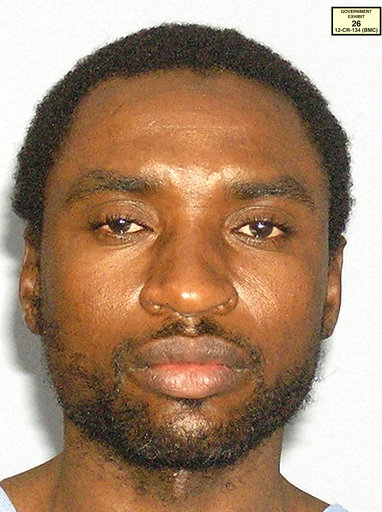
In March 2017, 46-year-old Ibrahim Harun, who claims to be a citizen of Niger but was born in Saudi Arabia while his parents were on the hajj, was convicted in the court of the Eastern District of New York for a conspiracy to murder American military personnel in Afghanistan and a conspiracy to bomb the U.S. embassy in Nigeria.
The trial transcripts reveal that Harun is “Spinghul,” the heretofore not publicly known al-Qaeda representative to the Nigerian Taliban, Boko Haram’s predecessor, and the Salafist Group for Preaching and Combat (GSPC), the predecessor of al-Qaeda in the Islamic Maghreb (AQIM). From the international jihadist standpoint, this makes Harun the third in a line of high-level al-Qaeda representatives to have visited Nigeria. But Harun’s exploits in Nigeria are now more transparent — and almost certainly more significant — than the al-Qaeda missions to Nigeria in the late 1980s and 2001, respectively, of Abdullah Azzam’s associate Tameen al-Adnani, and Harun’s predecessor, the Yemeni Emad Abdelwahid Ahmed Alwan (Azzam co-established al-Qaeda with Bin Laden around 1989) (Global Jihadism: Theory and Practice, September 2008; UPI.com, June 17, 2010).
Harun’s Militant Activity
According to the U.S. Department of Justice’s Office of Public Affairs, Harun traveled from Saudi Arabia to Afghanistan several weeks before the September 11, 2001 attacks on the United States to train with al-Qaeda (Department of Justice, March 16). After September 11, Harun received weapons and explosives training in Afghanistan in preparation for the U.S. invasion.
Harun later crossed the border to Pakistan, where he trained under Abdul Hadi al-Iraqi, one of bin Laden’s deputies, who was al-Qaeda’s top military commander in Afghanistan and specialized in cross-border attacks (Letter from Seif al-Adel, 2002). Harun carried out an operation on the Afghan side of the border that killed two U.S. servicemen in 2003. Fingerprints on a Koran found at the scene of the attack have forensically corroborated that the Harun was involved in the attack. Harun was wounded in the operation and returned to Pakistan to recover, where he met Abu Faraj al-Libi, then al-Qaeda’s external operations chief. Harun pledged baya’a (loyalty) to Bin Laden, and expressed interest in carrying out attacks on American interests in Africa similar to the attacks on the U.S. embassies in Kenya and Tanzania in 1998.
Harun then traveled to Nigeria in 2003 with orders from al-Qaeda to target “the head of the snake [America]” at “locations where Americans congregate,” such as embassies, hotels and “places where they gather for fun.” The U.S. embassy in Abuja, Nigeria’s capital, was the main target, and the goal was to carry out the attack before the U.S. presidential election in 2004 in order to have maximum impact. [1] Harun became the al-Qaeda representative to the GSPC, which would later become al-Qaeda in the Islamic Maghreb (AQIM) in 2007, as well as to the Nigerian Taliban, the predecessor to Boko Haram — or Jama’at Ahlisunnah Lidda’awati Wal-Jihad, as it is formally called itself since 2010 (Courthousenews.com, April 7, 2016).
Harun recruited accomplices in Nigeria and met other al-Qaeda operatives in West Africa and scouted the U.S. embassy. However, he fled Nigeria for Libya when one of his accomplices, Muhammed Ashafa, was arrested in Pakistan in 2004 while delivering the plans for the attack on the U.S. embassy in Nigeria to al-Qaeda leaders in Pakistan (Odili.net, April 8, 2012). Ashafa was then deported to Nigeria. There he was freed, only to be re-arrested — maps of various U.S. and other diplomatic facilities in Abuja were found in his house in Kano where he was re-arrested. For his part, Harun was arrested in Libya in 2005 and, although he was freed after the uprising there in June 2011, he was arrested again in Italy several months later. He had traveled there by boat seeking to carry out more attacks against Western interests in Europe. Harun has openly admitted that he was an al-Qaeda member since being detained by Italian authorities and has since requested to be sent to Guantanamo.
The Revelation of “Spinghul”
The U.S. Department of Justice’s report and court transcripts from Harun’s trials show that Harun was an important and ambitious figure in al-Qaeda. But the key, if small, detail that helps to connect the dots and shows not only that Harun was in al-Qaeda, but also that he was the former “al-Qaeda Chief in West Africa,” is the revelation of one of his aliases — “Spinghul,” meaning “white rose” in Pashtun, which Harun adopted after a Somali fighter in Afghanistan was “martyred” before him.
It is via the alias “Spinghul” that the connection between Harun and Nigerian Taliban member Muhammed Ashafa can be made. Ashafa admitted before the Federal High Court in Nigeria in 2012 that he was involved in both “national and international acts of terrorism,” including that he permitted his house in Kano to be used as the al-Qaeda secret operational base and rendered logistics and intelligence services to, among others, one “Spinghul” (Vanguard, December 22, 2006). It was not known—at least publicly at that time—that “Spinghul” was Harun.
Further corroborating Ashafa’s connection to Harun is the interview a former Nigerian intelligence officer who went into the private sector in 2008 gave to a Nigerian media outlet in 2012, at the time of Ashafa’s second trial (again, Ashafa appears to have been released after being deported from Pakistan in 2004). The ex-officer said in the interview that Ashafa was first detained at the airport in Pakistan in 2004 “with compact discs containing coded messages for the West African Chief of the al-Qaeda” (Thenigerianvoice.com, April 5, 2012). This coincides accurately with the Department of Justice report that Harun “fled Nigeria for Libya when one of his accomplices was arrested in Pakistan in 2004… while delivering the attack plans for Nigeria to al-Qaeda leaders there.” The “accomplice” was Ashafa.
Another interesting data point related to this is that the Nigerian intelligence officer also stated that Ashafa was arrested in Pakistan along with Yusuf Ahmed (not to be confused with slain Boko Haram leader Muhammed Yusuf) (Thenigerianvoice.com, April 5, 2012). Yusuf Ahmed was the deputy of the founder of the Nigerian Taliban, Muhammed Ali. Muhammed Ali had been loyal through baya’a to Osama bin Laden in the 1990s when Ali was a student at an Islamic university in Khartoum. Muhammed Ali is still recognized by al-Qaeda as having been the founder of Boko Haram; his legacy lives on through the breakaway faction Ansaru, which, like al-Qaeda, rejects the khawarij (a tendency by Muslims to excommunicate other Muslims not for sins but for reasons of political expediency) practices of Muhammed Yusuf’s successor, Abubakar Shekau (Muhammed Yusuf was the successor of Muhammed Ali) (Tell [Lagos], April 26, 2004; ICG, April 3, 2014; al-Risalah #4, January 10).
As Yusef Ahmed was Muhammed Ali’s deputy, Ali almost certainly would have known that Harun had dispatched Yusuf Ahmed and Muhammed Ashafa to Pakistan to deliver Harun’s attack plans on U.S. targets in Nigeria to al-Qaeda’s External Operations Unit in Pakistan before they both were arrested at the airport in Pakistan. Harun, according to the U.S. Department of Justice report, arrived in Nigeria from Pakistan in 2003. So it is likely that Harun devised the attack plans as the representative of al-Qaeda’s External Operations Unit—then led by Abu Faraj al-Libi—and connected with Muhammed Ali and the Nigerian Taliban to implement the plan in Nigeria.
Given that Harun had not been in Nigeria in the years prior to his travel to Nigeria in 2003, it is likely he did not directly know Muhammed Ali. However, there are several ways he may have been able to make contact with Muhammed Ali. The Nigerian Khalid al-Barnawi, who would become the first leader of Ansaru in 2012, was also in Sudan in the 1990s, when Muhammed Ali was there, and also reportedly pledged baya’a to Bin Laden while there (see Terrorism Monitor, April 4, 2013). Harun may have connected with GSPC in 2003, and thus also with al-Barnawi, who at the time was in the Sahel with GSPC. Khalid al-Barnawi may have been able to connect to Muhammed Ali and the Nigerian Taliban, as Khalid al-Barnawi was also a follower of Muhammed Yusuf (and was later deployed by Abubakar Shekau as a Boko Haram liaison to AQIM in 2009) (Letter from Abdallah Abu Zayd Abd-al-Hamid to Abu Musab Abd-al-Wadud, August 2009).
Alternatively, it is possible Bin Laden maintained contact with Muhammed Ali from their time in Sudan and connected Harun to Muhammed Ali when Harun traveled to Nigeria. One other alternative is that Nigerian Taliban members, such as Muhammed Yusuf, Yusuf Ahmed (who was raised in Saudi Arabia), and Muhammed Ali and others regularly traveled to Saudi Arabia, and it is possible they came to know Harun while he, or other al-Qaeda operatives, were there.
Finally, it might also be recalled that prior to his arrest in Algeria in 2002, the Yemeni Emad Abdelwahid Ahmed Alwan held the position of al-Qaeda liaison to the GSPC and Africa more generally. Alwan visited Nigeria, Niger and Chad in 2001, where he may have established relations with the Nigerian Taliban that were passed on to Alwan’s successor, Harun (UPI.com, June 17, 2010).
Implications for Understanding Boko Haram’s Origins
The significance of the information that has emerged in the wake of Harun’s trials stems from the fact that before his alias of “Spinghul” was revealed, the larger story behind the first delegation of Nigerian Taliban members—Yusuf Ahmed and Muhammed Ashafa—to al-Qaeda in Pakistan had been unclear. Now it is known that as early as 2003, if not before when Alwan visited Nigeria, the Nigerian Taliban was in contact with and operating in coordination with al-Qaeda. Part of this lacuna in research was because Pakistan had revealed that Yusuf Ahmed and Muhammed Ashafa were sent by the “resident chief of the al-Qaeda network in West Africa, identified as Mallam Adnan Ibrahim,” who was in Kano (Odili.net, April 8, 2012). Now it is clear that this “Mallam Adnan Ibrahim” was Ibrahim Harun, or “Spinghul” — Adnan Ibrahim is part of his extended name — and that Ashafa and Yusuf Ahmed were sent to Pakistan at least with the knowledge of Nigerian Taliban leader Muhammed Ali. Thus, while the Nigerian Taliban is often considered to have been a “local” group, the ties of its leadership to al-Qaeda in 2003—and Muhammed Ali and Khalid al-Barnawi to Bin Laden in the 1990s in Sudan—suggest al-Qaeda may have played a much more fundamental role in the Nigerian Taliban’s early evolution than previously acknowledged.
Moreover, the first major attacks by the Nigerian Taliban were in late 2003 and early 2004, when it fought with Nigerian security forces outside its encampment called “Afghanistan” near the Niger border in Nigeria’s Yobe State. Though the uprising failed and led to Muhammed Ali’s death, it was a harbinger of the later uprising in 2009 that would feed directly into the “revenge motive” behind Boko Haram violence that has come since Shekau’s declaration of a jihad in 2010. As the uprising in 2003 began only months after Harun arrived in Nigeria, it is possible he influenced it (Azdailysun.com, January 14, 2004). Indeed, scholar Andrea Brigaglia is possibly the first to have accurately concluded in 2015 — without knowing of Harun’s trials — that the “Afghanistan” encampment was not so much a “simple commune” for the Nigerian Taliban to live in society modeled on the Taliban in Afghanistan. Rather, as he notes, it was “hosting a training camp for (al-Qaeda’s?) [sic] militants, and that the confrontation with the authorities [that] occurred during 2003 was not the unintended outcome of a disputation between local villagers and an overzealous religious community over fishing rights, but the result of an attempt by the Nigerian security forces to dismantle the camp – possibly the first of its kind in the history of Nigeria.” [2] Perhaps one of the few individuals who could speak authoritatively on this matter is Muhammed Ali’s former deputy, Yusuf Ahmed, who is still at-large. He reportedly fled to Saudi Arabia after the clashes in 2003-2004 and is not known to have returned to militancy or been arrested since then.
In addition, the fact that Harun was freed from detention in Libya in 2011 and that, according to the Nigerian intelligence officer mentioned above, there were other Nigerian jihadists in Libyan prisons, indicates that the uprising in Libya in 2011 may have had a greater impact on jihadism in Nigeria than previously known. Weapons from Muammar Gadhafi’s arsenals are known to have made their way first to Mali and then on to Nigeria. The issue of whether Nigerian jihadists in Libyan prisons returned to Nigeria to engage in combat has not been reported on to the same extent as the reporting on the Nigerians who fought with AQIM in Mali and returned to Nigeria (ICG, April 3, 2014; African Arguments, January 20, 2014).
Finally, it is important to recall that in August 2011, AQIM-trained Nigerian militants in Boko Haram finally carried out a major suicide attack on an international diplomatic facility in Abuja at the UN Headquarters, killing 23 people (Vanguard, September 4, 2011). This attack was masterminded by Mamman Nur and facilitated by militants based in Kano. Nur had trained in AQIM camps in 2010 and also met with al-Shabaab. This shows that even with Harun’s departure from Nigeria in 2004, his mission stayed alive through the successor groups of the Nigerian Taliban and the GSPC. Indeed, one of Harun’s legacies is that after Ashafa was deported from Pakistan and returned to Nigeria, Ashafa facilitated the training of Nigerian Taliban members with the GSPC at Camp Agwan in Niger. This seems to have been a replacement camp in a safer location than the original “Afghanistan” encampment (Refworld, April 30, 2008). Thus, much of the militant expertise that Boko Haram would later gain—and much of the carnage it has caused—can be traced to the networks and capacity that Harun built up while he was in Nigeria.
While Harun will spend his remaining years in prison in the United States, it is not only the deaths of the two U.S. servicemen at Harun’s hands in Afghanistan that are the result of his militancy. Rather much of the struggle Nigeria has faced throughout the era of Boko Haram’s violence can be traced to the role Harun played in linking the Nigerian Taliban to al-Qaeda both operationally and in terms of objectives.
NOTES
[1] Musharraf, Pervez, In the Line of Fire: A Memoir (Simon and Schuster, 2006).
https://books.google.com.vn/books/about/In_the_Line_of_Fire.html?id=7igVvi3aO-8C&redir_esc=y
[2] Brigaglia, Andrea. The Volitility of Salafi Political Theology, the War on Terror and the Genesis of Boko Haram.
https://www.academia.edu/24045774/The_Volatility_of_Salafi_Political_Theology_the_War_on_Terror_and_the_Genesis_of_Boko_Haram