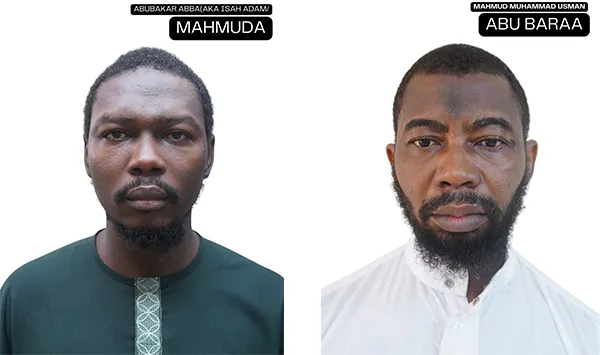
Boko Haram’s Man in Cameroon: Alhaji Abdalla
Boko Haram’s Man in Cameroon: Alhaji Abdalla
Since Boko Haram kidnapped seven members of the French Moulin-Fournier family in February 2013, its first major operation in Cameroon, the militant group’s operations in Cameroon have steadily increased. Throughout 2014, Boko Haram attempted to seize control of the four most important border points connecting Nigeria to Cameroon’s Far North Province — at Fotokol, Kolofata, Amchide and Ashigashia. In addition, the militants have attacked Cameroonian troops in Waza, Kousseri and Maroua in the interior of Far North Province. Although Cameroon has come under pressure from Boko Haram, the commanders, logisticians and financiers of the group in Cameroon have remained largely out of the spotlight. One exception is Alhaji Abdalla, a key “networker” in Cameroon, who is becoming widely known due to his relationships with other arms traffickers, kidnappers and commanders in Cameroon, as well as his role in hostage negotiations with the Cameroonian government.
Alhaji Abdalla has residences in Maroua and Amchide and is a vehicle exporter with business deals extending to Qatar (Camer.be, June 2). He has been involved in Boko Haram’s negotiations with the Cameroonian government in kidnapping-for-ransom cases, using his contacts in markets in Cameroonian border towns such as Amchide (Vanguard [Lagos], November 20). Given his close connection to these markets, where the Cameroon security forces have discovered bunkers for storing and hiding arms, Abdalla is also suspected of being involved in trafficking arms into Nigeria for use in Boko Haram’s war against the Nigerian government. In June, when travel receipts found in a Cameroonian Boko Haram camp showed deals made in Qatar and flight itineraries starting in Libya – a key arms market to Nigeria since the fall of Qaddafi in 2011 – suspicions grew of Abdalla’s deeper involvement in Boko Haram’s international networks (Camer.be, June 2). Thus, Abdalla, a well-known businessman, may be part of the network that funnels weapons from Libya to Nigeria via Chad and Niger.
Abdalla’s first appearance as a Boko Haram negotiator was in April 2013, when he negotiated on behalf of Boko Haram with the representative of the Cameroonian government – in this case, the mayor of Kolofata, Ahmadou Ali – the terms of release of the seven Moulin-Fournier family members kidnapped in Waza that February. In March 2013, the family was shown in a split-screen video in which a militant purporting to be the Boko Haram leader Abubakr Shekau demanded the Nigerian government release Boko Haram members in return for the family’s release. [1] An earlier video released right after the kidnapping, however, featured armed Arabic-speaking militants with the Moulin-Fournier family demanding France end its war against Islamist militants in Mali or else risk the family being “beheaded.” [2] This suggested that Ansaru, whose leaders were Nigerians with a history of operations with al-Qaeda in the Islamic Maghreb (AQIM), was behind the initial kidnapping before transferring the family to Boko Haram in Nigeria (RFI, March 18, 2013).
Abdalla succeeded in the Moulin-Fournier negotiation, which was Boko Haram’s first kidnapping-for-ransom negotiation with the Cameroonian government. According to news reports, Cameroon’s President Paul Biya, under French pressure, personally ordered the payment of a ransom of $3.14 million and released Boko Haram arms dealers from prison in return for the release of the Moulin-Fourniers in April 2013 (France24.com, April 23, 2013). In December 2013, Abdalla also negotiated on behalf of Boko Haram (and Ansaru, which claimed responsibility for the kidnapping with Boko Haram) for the release of French priest Georges Vandenbusch, who was kidnapped north of Maroua in November 2013 (Rttnews.com, December 31, 2013; Camer.be, June 2). In return for Vandenbusch’s freedom, Boko Haram received up to $12 million (though news reports may be exaggerated) and several Boko Haram arms smugglers were released from Cameroonian prisons (Le Journal International [Paris], February 7).
Abdalla resurfaced again this past July, when Boko Haram kidnapped the lamido (traditional leader) of Kolofata, the lamido’s family and the wife of the mayor of Kolofata (as discussed above, the mayor of Kolofata was Ahamdou Ali, the negotiator on behalf of Cameroon during the Moulin-Fournier kidnapping) (This Day [Lagos], July 28). Cameroon reportedly had not paid the full ransom for the release of the Moulin-Fourniers and therefore Boko Haram kidnapped the lamido and Ahamadou Ali’s wife to demand the remaining $600,000 that the government did not pay to Boko Haram in April 2013 (Iroko Magazine, July 28). Ultimately, after a series of negotiations, the lamido and his family, the mayor of Kolofata’s wife and 10 Chinese engineers who were kidnapped separately by Boko Haram this past April in Waza, were released in September for $600,000 and the release of more than 20 Boko Haram militants imprisoned in Cameroon (Vanguard [Lagos], September 20).
The release of these prisoners brought to surface the connection between Abdalla’s negotiations and the key Boko Haram militants in Cameroon who were released because of his efforts. Among the prisoners released in September, for example, was Abakar Ali, the top Cameroonian Boko Haram commander also known by the alias “Mustapha Umar,” who was arrested in September in Kousseri (Leadership [Abuja], September 26). At the time of his arrest, Ali controlled the largest Boko Haram logistics center in Cameroon, with the following weapons, according to Cameroonian security forces: “five machine guns, 14 rifles, 24 rockets, four rocket launchers, six Kalashnikovs, 60 Kalashnikovs magazines, four automatic pistols, over 500 9mm ammunition, 469 12.7mm ammunition, 4,454 7.62 mm ammunition, 1,491 5.56 mm ammunition, 822 ammunition of 7.62 mm, six grenades, 28 rocket launcher chargers and other accessories such as pincers, tweezers and knives” (SardaunaMagazine.com, October 7). Also released along with Abakar Ali was Mohamat Ali, who had also been arrested in September with a “huge cache of arms and ammunition” (StreetJournal.org, September 24).
Under interrogation, Ali revealed that he coordinated arms trafficking with the mayor of the border town of Fotokol, Ramat Musa (Camer.be, July 31). This relationship likely facilitated Ali’s role in leading attacks in border towns between Nigeria and Cameroon and “shuttling between various Boko Haram camps in the area and organizing deadly attacks that targeted mostly civilians” (Vanguard, September 28). Musa’s home was in Fotokol, Cameroon, directly across the border from the Boko Haram-controlled Nigerian town of Gambarou-Ngala. The proximity of the two towns likely facilitated Ali’s cross-border arms transfers as Ali could store weapons in Musa’s home before transferring them to Nigeria. Moreover, as “a notable member of the ruling Cameroon Peoples Democratic Movement,” Musa had access to Cameroon’s military intelligence information, which he may have passed along to Boko Haram commanders like Ali to allow them to carry out their cross-border attacks more effectively (StreetJournal.org, October 4).
In addition to Abakar Ali, other prisoners released in September included a leading Boko Haram recruiter and the mastermind of a kidnapping of two Italian priests and a Canadian nun in a town north of Maroua in June. The release of these three Christian missionaries from Boko Haram’s captivity was also negotiated by Alhaji Abdalla in exchange for the release of more Boko Haram arms traffickers imprisoned in Cameroon (StreetJournal.org, September 24).
The case of Alhaji Abdalla shows that Boko Haram “membership” extends beyond just armed militants. Rather, influential individuals, such as Alhaji Abdalla, with international business connections, avenues to dialogue with the Cameroon government and relationships with arms traffickers, also provide support to Boko Haram. Abdalla, for example, was able to negotiate for the freedom of Boko Haram commanders from Cameroonian prisons in hostage negotiations, especially Boko Haram’s vital arms traffickers, and facilitate the trafficking of arms into Nigeria to support Boko Haram’s insurgency there. Moreover, with Abdalla’s influence came political connections that appear to have played a role in Boko Haram’s acquisition of military intelligence from Ramat Musa and use of Musa’s house for storing weapons on the Cameroonian side of the Nigerian border. Finally, the funds that Abdalla negotiated for on behalf of Boko Haram were likely also used by Boko Haram to purchase more weapons and pay new recruits to the insurgency.
Yet, above all, the most notable aspect of Alhjai Abdalla, one that cannot be forgotten, is that he is a Cameroonian and operates in Cameroon. Though Boko Haram is often considered a “Nigerian insurgency,” 2014 saw Cameroon’s Far North Region become a locus of insurgency, in part due to the activities of individuals like Abdalla. With the increasing Boko Haram attacks in Cameroon, the networks of Boko Haram militants in Cameroon will continue play a more prominent role in steering the course of the insurgency across Nigeria’s borders. Therefore, if key “networkers” like Abdalla also operate in Chad and Niger, then the insurgency may expand deeper into those two countries in 2015.
Jacob Zenn is an analyst of African and Eurasian Affairs for The Jamestown Foundation and a consultant on countering violent extremism, international law of freedom of association, and socio-cultural analysis for geospatial visualization.
Notes
1. Video can be seen here: https://www.youtube.com/watch?v=xM1dWpxlNcw.
2. This video can be seen here: https://www.youtube.com/watch?v=gs-NZ3zb0gA.