Duran Kalkan: The Turk Fighting for Kurdish Irredentism
Duran Kalkan: The Turk Fighting for Kurdish Irredentism
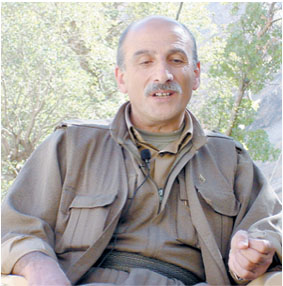
The Partiya Karkerên Kurdistan (PKK – Kurdistan Workers Party) is a highly centralized organization guided by an almost cult-like worship of its imprisoned leader Abdullah Öcalan. There are however other individuals within the PKK who play a central role in its insurgent strategies and financing, like Duran Kalkan (a.k.a. Selahattin Abbas). Kalkan was one of the founding members of the PKK and was born in the Tufanbeyli district in Adana Province of Turkey in 1954 (NTVMSNBC, August 14, 2011). There is not much known about his background, fueling speculation that he is actually an ethnic-Turk from the Alevi heterodox religious minority (Radikal, September 1999).
After graduating from the Adana Teachers School, he went to the Ankara University Faculty of Arts and Sciences and graduated in 1978. During that time period, Turkey suffered from clashes between far left and far right wing groups as well as military coups. It is likely that Kalkan was radicalized in the universities, where fierce competition took place by rightist and leftist groups. There is not much known about his motivation to join the PKK and the Kurdish nationalist movement, since he is believed to be Turkish. The PKK always maintained a radical leftwing ideology. Kalkan also vociferously criticized the Turkish left for failing to cooperate with the PKK in its resistance to the September 12, 1980 coup (Ajansa Nûçeyan a Firatê, May 15, 2009).
On November 27, 1978 Duran Kalkan participated in the first founding congress of the PKK in Turkey’s troubled Diyarbakir Province. It was then that Öcalan was elected. Kalkan is one of the oldest of the PKK’s surviving core members. In 1984 the PKK announced the establishment of the Hazen Rizgariya Kurdistan (HRK-Kurdistan Freedom Brigades). Kalkan was named the Secretary-General of the Council of the HRK and was one of the PKK leaders who approved of two attacks in Eruh and Semdinli that took place on August 15, 1984. [1]
Later Kalkan traveled to Syria in a bid to reorganize the organization abroad. Hafez al-Assad’s Syria supported the PKK during this period as a means of leverage in the broader context of Damascus’ then ongoing feud with Turkey in fraught negotiations over water usage rights. In the fourth PKK congress held in Damascus in October 1986, Kalkan was arrested on orders by Öcalan who went after PKK members who had risen to positions of responsibility and power. Öcalan conducted an internal purge against those who he felt could challenge his authority. Öcalan further consolidated his power within the PKK by arresting and humiliating other high-ranking PKK members. Öcalan targeted those directly responsible for leading the PKK’s historic August 1984 Semdinli attack in the southeastern province of Hakkari, which marked the beginning of the PKK’s armed insurrection targeting the Turkish state. [2]
PKK expert Michael Günter claims that Duran Kalkan was identified as the number two in the PKK in 1988. According to Günter, Kalkan broke with Öcalan over PKK violence inflicted against Kurdish villagers that were suspected of collaborating because it hurt the party’s recruitment efforts. It is however more likely that that Kalkan was forced to confess his responsibility of the military failures of the PKK. Öcalan severely criticized Kalkan and Selahattin Çelik “for missing opportunities to enlarge the rebel forces, and for being overly dependent on Iraqi Kurdish chieftain Massoud Barzani and his Partîya Demokrata Kurdistan (Kurdistan Democratic Party-KDP).” [3] Although the PKK wanted to launch a large scale uprising and liberate zones within Turkey’s Kurdish majority populated areas, the PKK was still working on proving itself as a fighting force when Turkish troops were able to wipe out scores of PKK fighters. [4]
After confessing, admitting his guilt and writing a self-criticism, Kalkan was rehabilitated and sent to Europe in 1987 to reorganize the PKK. However, in 1988, he was arrested in Germany and sentenced to six years in jail (AP, March 7, 1994). In 1993, he was freed and returned to the PKK’s Syrian camps. Kalkan then became a member of the Central Committee of the PKK and the Political Bureau. Later he became one of Öcalan’s chief lieutenants and was one of the first deputies elected to the PKK’s Leadership Council formed by Öcalan in 1995. [5] Kalkan also served on the Central Executive Committee.
In 1999, the PKK suffered a major setback when Öcalan was imprisoned in Turkey and ordered the PKK rebel forces to withdraw to its camps in Iraqi Kurdistan. Cemil Bay?k and Öcalan’s brother, Osman Öcalan, were named as possible successors to Öcalan. Kalkan and Karasu supported Bay?k (Hürriyet, February 18, 1999). After Öcalan’s capture, the PKK formed the Presidency Council to preserve its unity; its members were Cemil Bay?k, Osman Öcalan, Halil Atac, Mustafa Karasu, Riza Altun, Duran Kalkan, Nizamettin Tas, Ali Haydar Kaytan, Murat Karayilan and Nizamettin Ucan (Milliyet, February 27, 1999). In 2001, Cemil Bay?k and Duran Kalkan were allegedly involved in an assassination attempt against Osman Öcalan with whom they had major differences (Hürriyet, January 13, 2001).
In April 2002, at its eighth party congress, the PKK was briefly dissolved. The organization was officially reconstituted as the Kongreya Azadî û Demokrasiya Kurdistanê (KADEK—Kurdistan Freedom and Democracy Congress). They proclaimed to be committed to non-violent resistance when not carrying out insurgent operations against Turkey. [6] Kalkan took up a leadership position in KADEK and while his political responsibilities heightened, Kalkan managed to retain his military role. In this capacity he managed training camps in Iraqi Kurdistan and commanded guerilla units. [7] Officially he had the position of General Chairmanship Council member and noted in a program on Medya TV in July 2002 that new elections and a democratic solution to the Kurdish question were amenable to Turkey’s disgruntled Kurds (Özgur Politika, July 9, 2002). During this period, Kalkan did not speak publicly about armed activities carried out by his cadres.
KADEK announced its dissolution in October 2003, and re-formed as Kongra Gel. Kongra Gel had the stated aim of pursuing Kurdish rights through negotiation with Ankara rather than seeking outright territorial independence. The armed wing of KADEK, known as the Hêzên Parastina Gel (HPG—Peoples Defense Forces), has remained active since then. In early 2004, a split took place within Kongra Gel. Militants took control of the organization while moderates, headed by Osman Öcalan, broke away to form a new political party calling itself the Partîya Welatparêzên Demokratên Kurdistan (PWD—Patriotic Democratic Party). Several PWD members were subsequently assassinated following this schism.
Kongra Gel ended its unilateral ceasefire with Ankara in June 2004, and resumed guerrilla operations. On March 20, 2005 Abdullah Öcalan launched his “Declaration of Democratic Confederalism” with a new logo for the PKK. In April 2005, Kongra Gel reverted back to referring to itself as the PKK. [8] Duran Kalkan became a member of the Koma Komalen Kurdistan (KKK—Democratic Confederation of Kurdistan) and chairman of the Legitimate Defense Committee (Roj TV, July 30, 2005). The KKK in 2007 was renamed the Koma Civakên Kurdistan (Union of Communities in Kurdistan—KCK), and Kalkan assumed the position of KCK Executive Council Member.
After 2007, Cemil Bay?k, the PKK’s military head and financial chief Duran Kalkan joined Karay?lan to form the PKK’s ruling troika. Within the troika, Karayilan, having earned a reputation as the most independent thinker, is the leader. Aliza Marcus, a writer specializing in the PKK, suggests that Kalkan and Bay?k are playing secondary roles and follow orders rather than initiate them (AP, November 7, 2007). Some suggest there is a lack of communication between Abdullah Öcalan—incarcerated on Imrali Island in the Sea of Marmara—and the PKK-leadership in Iraqi Kurdistan’s Qandil mountains along the Iranian border. These communication issues help lead to contradictory PKK policies. In a statement issued by Öcalan in May 2010, he identified Bayik, Karayilan, Kalkan and Kaytan as the most important leaders “of the people” (Ajansa Nûçeyan a Firatê, May 28, 2010).
Turkish newspapers often speculate about the existence of several ideological wings within the PKK. According to a Turkish daily, Kalkan is the head of the most hardline left wing of the PKK together with senior leaders Mustafa Karasu and Ali Haydar (Aksiyon, December 4, 2007). It is not clear on which criteria certain members of the Turkish media base their assertions about the inner workings of this secretive and often quarrelsome organization.
Milliyet suggested that Kalkan is in charge of the Hinere camp in Iraqi Kurdistan (Milliyet, August 4, 2005). This camp serves as an ideological nerve center for the PKK and has fedayeen (special forces), cadre training, intelligence, a hospital, a procurement committee and two laboratories where electrical mechanisms and detonators are tested. Its intelligence units consist of people who have degrees in law and computer engineering.
In April 2008, Kalkan was blamed for coordinating the raid on the Turkish military unit in Daglica in Hakkari Province in which 12 Turkish soldiers were killed and eight others were abducted (Vatan, April 3, 2008). This resulted in a major embarrassment for the Turkish army, sparking public outrage across Turkey. An estimated 500 PKK fighters participated in the deadly raid, which the army was unable to stave off.
Often Kalkan speaks to media outlets sympathetic to or affiliated with the PKK to disseminate the views of the insurgents. In 2011, Kalkan stated: “We [the PKK] are intent on gaining our freedom and solving the Kurdish problem based on democratic autonomy and insisting on a line of revolutionary people’s war.” (Radikal, August 29, 2011). He suggested that recent Turkish cross border operations in Iraqi Kurdistan against the PKK, in conjunction with the ban placed on Öcalan’s meetings with his lawyers, are preparations for a large-scale ground invasion into Iraqi territory. In another interview, he suggested the Turkish government aims to destroy the PKK (Ajansa Nûçeyan a Firatê, October 23, 2010).
After continuing Turkish pressure on Washington to thwart the PKK’s safe haven in the Qandil Mountains, on April 20, 2011, the U.S. Treasury Department designated Kalkan as one of the five PKK leaders involved in narcotics trafficking (Ajansa Nûçeyan a Firatê, May 2, 2011).
The history of Duran Kalkan makes it clear that he plays a key leadership position in the PKK. He has extensive experience with organizing the PKK’s political activities in Europe, as well as its military operations and financial capabilities on the ground in Kurdistan. This prominence has made Kalkan a target of both Ankara and its allies in Washington. Despite his position within the PKK, he continues to remain subordinate to Murat Karayilan, the KCK’s chairman, who continues to make most of the critical strategic decisions within the PKK.
Notes
1. Michael Gunter, The Kurds in Turkey: A Political Dilemma, (Boulder: Westview Press 1990), p. 75.
2. Aliza Marcus, Blood and Belief, the PKK and the Kurdish Fight for Independence, (New York: New York University Press 2007), p. 110.
3. Ibid.
4. Joost Jongerden & Marlies Caser, Nationalism and Politics in Turkey: Political Islam, Kemalism, and the Kurdish Issue, Tayler and Francis, 2011, p. 137.
5. Nejdet Buldan, “PKK’de Kad?n Olmak,” Istanbul, 2004, p. 90.
6. See: https://www.start.umd.edu/start/data_collections/tops/terrorist_organization_member.asp?id=118.
7. See: https://www.globalsecurity.org/military/world/para/pkk.htm.
8. Parliament of Australia, Parliamentary Joint Committee on Intelligence and Security, https://www.aph.gov.au/house/committee/pjcis/pkk/background.pdf.