East Africa’s Emerging IS Leader: Who Is Shaykh Abdulqadir Mumin?
East Africa’s Emerging IS Leader: Who Is Shaykh Abdulqadir Mumin?
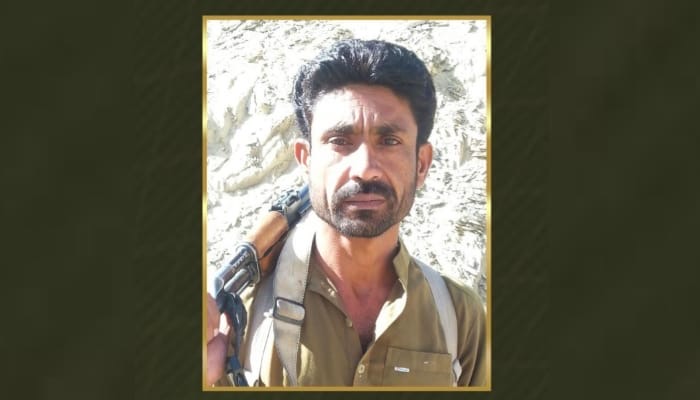
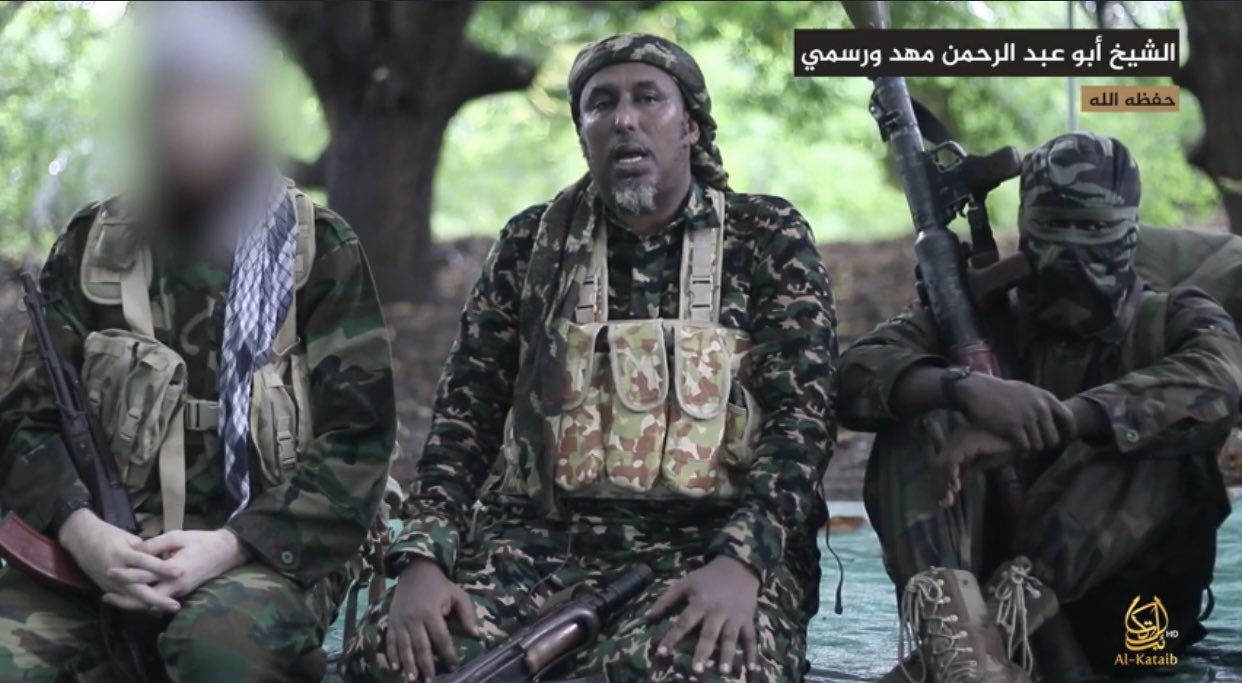
In the mountains of northern Somalia, Shaykh Abdulqadir Mumin, a former al-Shabaab ideologue, is an up-and-coming leader of the emerging Islamic State (IS) cell in East Africa.
Reports indicate that Mumin, who is believed to be in his late 50s, was born in Puntland, a semi-autonomous region near the mountains in Somalia, where he has launched the IS cell. The cleric is an experienced hardliner and jihadist. Few personal details are known about Mumin. However, he has been referred to by multiple variations of his name. Evidence also suggests that he has also gone by the name Ikrima al-Muhajir (Galgalanews [link deactivated], April 30).
In October 2015, the cleric and about 20 al-Shabaab fighters declared allegiance to IS leader Abu Bakr al-Baghdadi from a secret hideout in the Golis and Galgaga mountain ranges near the border between Puntland and the semi-autonomous region of Somaliland (Africa Review, October 24, 2015).
This announcement marks the latest evolution in the life of a militant whose journey to radicalization spreads across two continents. Before switching his allegiance to IS, Mumin had been a propagandist and an imam – an ideologue within al-Shabaab who facilitated and led recruitment efforts – and he first gained attention for these activities while living in Europe and then once again returning to Somalia.
Escape to Europe
Late in his youth, the cleric is believed to have traveled to Europe at the height of the rebellion against Siad Barre in the 1990s, settling with his family in Hjallbo, an area in Sweden’s Gothenburg City with a large population of Somali migrants. Between the 1990s and 2000s, Mumin actively preached at the Bellevue Mosque, a Salafi-oriented center in Gamlestan district of the city. The district has been identified as an area from which a significant number of people have left to join extremist groups in Iraq and Syria (Hate Speech International, January 18). [1]
Mumin reportedly left Sweden around 2000 over allegations that he was being monitored by security agencies. A year later, he resurfaced in the UK, where he had remained active in the Somali community and al-Shabaab network. Similar to his departure from Sweden, he would later leave London over alleged harassment by security agencies.
Back to Somalia
In 2010, a time when foreign fighters were flocking to Somalia to boost al-Shabaab’s war against the government, Mumin arrived in East Africa.
After a short say in Kenya, which photo evidence documents, the cleric traveled to Somalia through Beled Hawo, a town under al-Shabaab control on the Kenya-Ethiopia-Somali border. It is at this border crossing where the hardliner allegedly burned his UK passport and pledged to commit the rest of life to Islamic jihad (The East African, September 2; Hate Speech International, January 18).
Abdulkadir went on to become a leading ideologist within al-Shabaab. Media reports suggest his first significant appearance with al-Shabaab was after the death of the al-Qaeda leader Osama bin Laden in 2011, when he pledged: “[Somali jihadists] will never stray away from the path of Osama and we will continue our holy war until we taste death like our brother Osama or until we are victorious and rule the whole world” (Hate Speech International, January 18).
In 2012, al-Shabaab leader Abdi Ahmad Godane dispatched Mumin as a cleric to northern Somalia. He was tasked with inspiring the fighters operating on the harsh terrain of the Galgala and the Golis Mountains. Under the command of local al-Shabaab and Warsengili clan militia leader Mohammad Said Atom, the faction allegedly split off from the majority of the al-Shabaab troops in southern Somalia (Daily Nation, September 3).
When Atom surrendered to the Somali government in 2014, Mumin took control of the faction as its commander (The East African, September 2).
Courting Islamic State
One year after assuming the position of commander, Mumin announced that he and those he led were loyal to IS.
The cleric said in a video recording that the jihadists in Somalia were solemnly declaring their allegiance to the Islamic Caliphate, under the leadership Mujahedeen (Holy Warrior) Ibrahim Ibn Awad Ibn Ibrahim Al-Wad al–Qurashi (a.k.a. Abu Bakr al-Baghdadi).
Although he claimed to speak on behalf of the Mujahedeen in Somalia, only 20 out the 300 fighters he controlled in Puntland appear to have followed him in swearing allegiance to IS (Goobjoog news, December 15, 2015).
Mumin’s IS-affiliated cell – seen as off-shoot of al-Shabaab, the dominant jihadist group in East Africa – recently received attention after it claimed responsibility for an attack in Mogadishu and the September 11 attack on a central police station in Mombasa city in Kenya’s coastal region (Tuko, September 15; Online Nigeria, April 25).
It must be noted, however, that while Mumin’s current group of fighters is relatively small, the large number of disillusioned al-Shabaab fighters could form a fertile ground for the group’s recruitment (Jubbaland Media, April 28).
For a period, IS made overtures to the al-Qaeda linked group, which has reigned supreme for over a decade as the main jihadist group in East Africa (Hiraan Online, October 23, 2015). In 2015, IS released a video in which fighters were seen urging their fellow jihadists in Somalia to join the ranks of a truthful mujahedeen. IS has also been trying to co-opt Nigeria’s Boko Haram and Afghanistan’s Taliban, but it had not gained access to East Africa until Mumin’s announcement.
Mumin’s declaration not only confirmed a split in al-Shabaab, but also ended the speculation that the Middle East-based Islamic State had finally gained a foothold in the East African region. However, with no acknowledgment from al-Baghdadi, Mumin’s position still remains unofficial.
It can be argued that Mumin, who keeps his beard dyed in bright orange Henna – a practice adopted many radical Islamist leaders globally – fits well in the new role. Although he is not known to have any military or combat experience, he combines a knowledge of the people and region in which he operates with his experience as a radical preacher – experience he gained while delivering sermons in radical mosques in Europe. Additionally, his European experience helped shape an international outlook that in turn influences his interpretation and reaction to local developments.
Conclusion
From the mountains in northern Somalia, Mumin is attempting to boost IS’ presence in East Africa by forcefully recruiting 10- to 15-year-old boys. The boys are kidnapped, indoctrinated and forced to take arms. Additionally, Mumin and his group have been accused of physically abusing women (The Standard, September 1).
For his actions, the United States recently designated Mumin as a global terrorist, freezing his assets and barring American citizens from doing business with him. The action raised his jihadist credentials, a move that is expected to spur more interest in his activities and those of his networks. (Daily Nation, September 1; The East African, September 2).
With his new U.S. designation, Mumin is expected to rise to the occasion by leading his forces in executing a major attack somewhere in East Africa. This would prove to the IS leadership that he is a capable emir. However, he will find that he has to surmount a double challenge – he is hunted by al-Shabaab and the AMISOM-backed government at the same time.