From Jihad to Human Rights: The Life and Death of Taliban Middleman Khalid Khawaja
From Jihad to Human Rights: The Life and Death of Taliban Middleman Khalid Khawaja
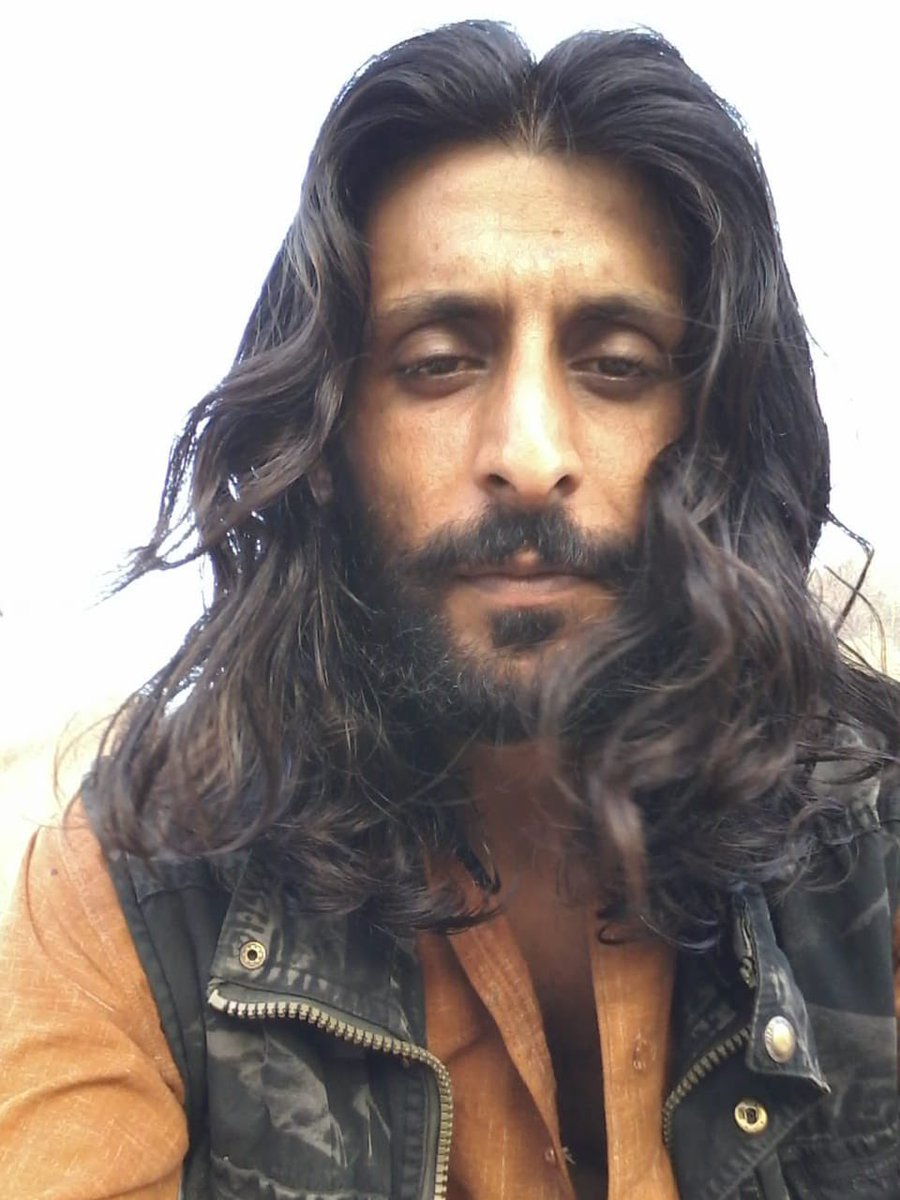
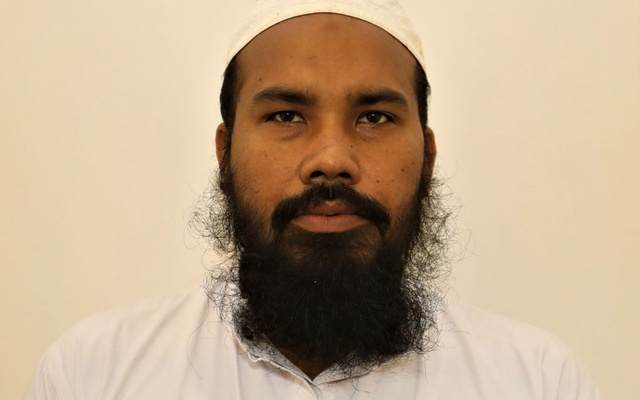
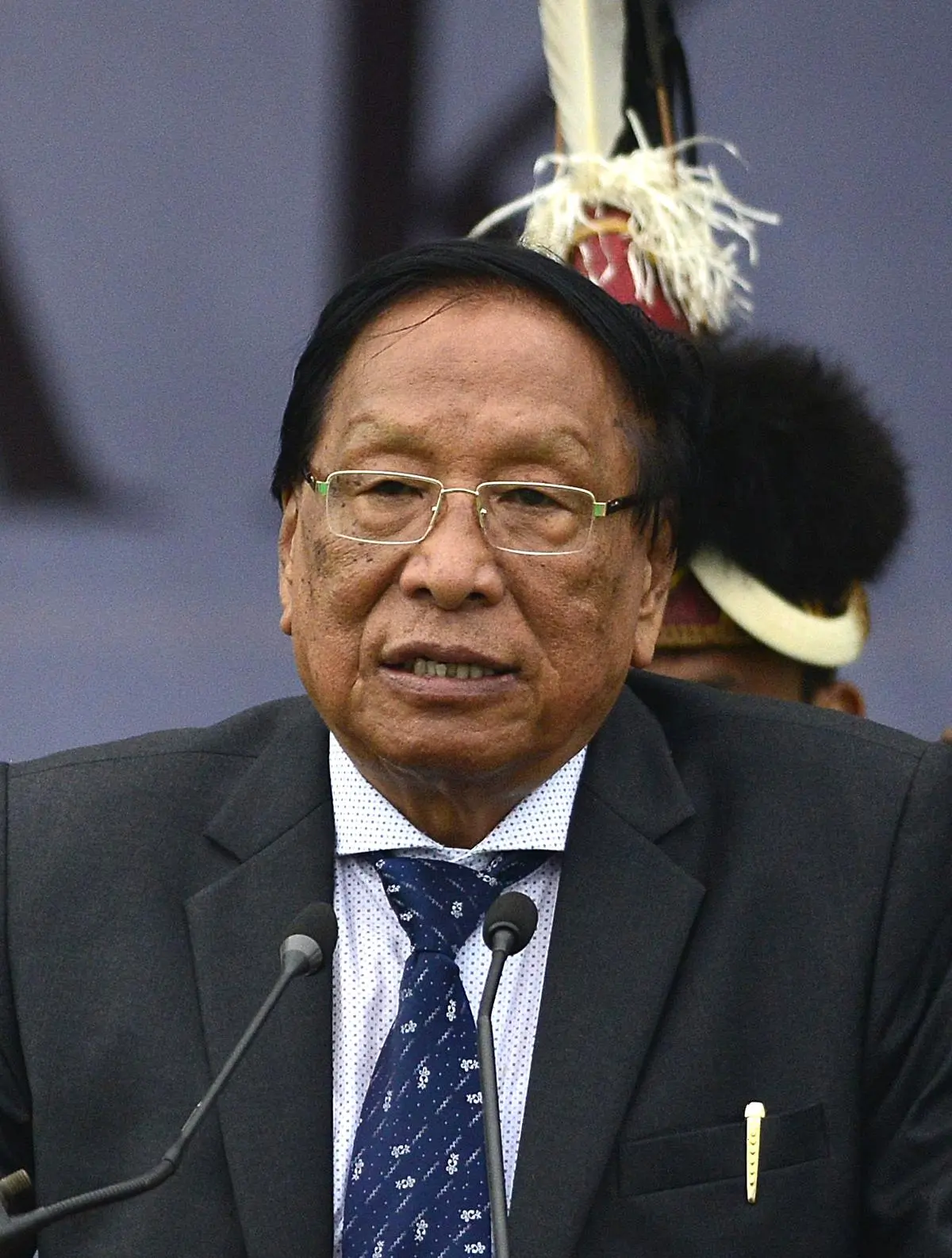
Khalid Khawaja was found dead adjacent to a stream in the town of Karam Kot, North Waziristan on April 30, 2010 with a note pinned to his bullet-pierced body that read, “He was a U.S. agent and whoever spies for America will meet the same fate” (Dawn, April 30, 2010; Daily Times [Lahore], May 1, 2010). Khawaja had embarked on a supposed peace mission on March 25, 2010 with a former Inter-Services Intelligence (ISI) colleague known as Colonel Imam (given name Sultan Amir Tarar) and an Anglo-Pakistani journalist named Asad Qureshi who was seeking to interview top-tier Taliban leadership in the Federally Administered Tribal Areas (FATA) for an upcoming documentary for British television.
Strange Bedfellows
After 18 years in the Pakistan Air Force and another two serving his country as an ISI officer, Khalid Khawaja was dismissed from government service in 1987 (though some sources state the year was 1988) when he became too overtly critical of General Zia ul-Haq’s Islamist credibility within Pakistan. But he would remain a murky interlocutor of his country’s violent politics until the hour of his death. He often defined his role in Pakistan’s public sphere as indispensable while reporters and diplomats over the decades in various encounters with him considered his activities less defined. His brutal captors in the FATA insisted he “confess” to his CIA affiliations over the years. Khawaja had told the Guardian in 2002 that he had been negotiating with the Kanadahr-core Taliban as part of a semi-clandestine delegation after 9/11 on behalf of former CIA Director Robert James Woolsey and Pakistan-American businessman Mansoor Ijaz, with whom he had previously been in contact in regard to backchannel Kashmir negotiations (Guardian, September 11, 2002). Khawaja’s Taliban talks faltered when it became clear the American goal was to simply overthrow Mullah Muhammad Omar’s regime with the help of Afghanistan’s northern ethnic war-fighting groups and that Omar had no intention of giving up bin Laden. Nor did the ultra-reclusive Omar likely have any interest in meeting Woolsey as Omar generally refused to meet anyone not from the Pashtun belt he calls home.
Realizing that any kind of negotiated settlement was fruitless, Khawaja scuttled back to Pakistan. Khawaja, with his excellent command of English and his ability to swing between intellectual rationales and Islamist dogma, was a rare figure in Pakistan’s radical circles who was able to move between disparate worlds. Khawaja told Jamestown in an interview on March 17, 2008, in the same breath, that he considered Osama bin Laden and the late 60 minutes correspondent and author of the seminal Charlie Wilson’s War, George Crile, to be equally good friends of his. He spoke of Crile with great fondness and said that he had hoped to collaborate on a storytelling project when Crile was struck down by pancreatic cancer in 2006, which greatly saddened him. Khawaja was also in contact with Daniel Pearl before his murder by terrorists on the outskirts of Karachi in January 2002. Pearl had contacted Khawaja about getting in touch with a shadowy militant figure named Shaykh Mubarak Ali Shah Gilani while investigating the Richard Reid shoe-bomber case which ultimately lead to Pearl’s abduction and subsequent beheading. Khawaja had also boasted of setting up a rendezvous in 1989 at a hotel in Medina, Saudi Arabia between ex-Prime Minister Nawaz Sharif and Osama bin Laden in order to protect the interests of “Afghan Arabs” who had begun to settle in Pakistan as the Soviet occupation of Afghanistan was coming to a close (Pakistan Spectator, May 2, 2010). [1]
Lal Masjid
The Lal Masjid (Red Mosque) was constructed in the mid-1960’s after Muhammad Ayub Khan, the first of Pakistan’s military rulers, relocated Pakistan’s capital from the colonial-era port of Karachi, perceived as vulnerable to the Indian or Iranian navies, to the newly constructed Islamabad. The Lal Masjid had been a hotbed of radicalism throughout the anti-Soviet jihad in the 1980s and was closely connected to Pakistan’s security establishment because of both the state-approved ideology of its leader Maulana Abdullah, who was in regular communication with the late dictator General Zia ul-Haq BBC News, July 27, 2007), and because of its locale to the headquarters of the ISI in the capital.
During the eight-day siege of the mosque complex, Khawaja was busy shuttling back and forth as an ad hoc advocate for those that had recently disappeared. The kidnappers holding Khawaja suggested that he had sold out Lal Masjid’s radical Ghazi brothers by instructing Abdul Rasheed Ghazi to stay behind and fight while telling Maulana Abdul Aziz to compromise himself and exit the mosque in a burka, at which point he was mortifyingly caught in a body search by a policewoman at a checkpoint (Dawn, April 30). Many young Punjabi and Kashmiri militants who came out of the siege unharmed but saw many of their classmates, including girls, perish at the hands of Pakistani policeman and soldiers, moved to North Waziristan forming new militant configurations with escalating consequences for old guard jihadis who they viewed as insufficiently militant. Somewhat ironically, Khalid Khawaja’s funeral service was carried out at the reconstituted Lal Masjid and prayers were led by Maulana Aziz, the very man whom the Asian Tigers believe Khawaja had stabbed in the back (Daily Times [Lahore], May 2, 2010).
Defense of Human Rights
Khawaja’s passion in the last period of his life was that of a self-declared human rights activist who confronted the Pakistani state on the abductions and disappearances of hundreds of citizens since Pervez Musharraf fell on the “with us” side of the American global anti-terror drive, in the wake of 9/11. On March 17, 2008, this author sat down with Khawaja at his lawyer’s office at the Rawalpindi Bar Association outside Islamabad. Khawaja had been arrested (“abducted” as he termed it) on the charge of “the distribution of hate material” on January 26, 2007 en route to the Lal Masjid while he was working as an interlocutor on behalf of the institution’s militant clerics and their jihadi epigones (Daily Times [Lahore], February 4, 2007).
Khawaja was deeply involved in an NGO calling itself Defense of Human Rights that sought information on thousands of missing and “disappeared” detainees after then-President Musharraf had consented to deeper intelligence cooperation after the commencement of the U.S.-led War on Terror. [2] During the interview, Khawaja said sarcastically, “I am known as terrorist” alluding to his pro-Taliban outlook and professed past friendship with Bin Laden in the 1980s. Khawaja described Pakistan as a “slave nation” that was exhausted from decades of subservience to American congressional foreign policy whims and suggested that Pakistanis had far fewer rights than African slaves in the pre-Civil War era United States. “We just want the rights of slaves,” Khawaja lameted, stroking his long, graying beard. “Your [American] slaves had more rights than normal people in Pakistan today.” When he was grabbed near the Lal Masjid by ISI agents in late January of 2007, Khawaja told the author that Musharraf’s men uttered, “pray for us” and told Khawaja they had the utmost respect for his past jihadi credentials on behalf of the state but that the political tide had turned against him and they were forced to do Musharraf’s bidding by arresting him. In 2008, Khawaja said that in Pakistan’s 61 years of independence, 33 years had been under a military dictatorship that prevented Pakistan from maturing into a healthy society. Years of zero checks and balances under the Musharraf regime “polluted the political climate” in Pakistan and the country’s establishment had run amok in the name of America’s War on Terror, during which the rights of detainees and terror suspects inside Pakistan had lessened considerably. Up until his capture, Khawaja was a relentless agitator in Pakistan’s internal political dynamics. He had filed a petition to revoke the law granting immunity, based on grounds within Pakistan’s constitution of Pakistan’s top political leaders including its oft loathed and wildly corrupt president, Asif Ali Zardari.
Defense of Human Rights and Khawaja in particular, were advocating for the release of Dr. Aafia Siddiqui, often referred to as “Lady al-Qaeda” by the tabloid press, from U.S. custody in New York. The Defense of Human Rights website lists a past protest in 2009 for Siddiqui, describing her detention as a “daughter of our nation” whose “tragic confinement” is a result of the “Zionist and American War of [sic] Terror.” Khawaja considered the plight of Dr. Siddiqui a cause célèbre for Pakistanis whose case could be used to rally the public behind his organization. An MIT and Brandeis graduate, Siddiqui was charged in a New York federal courtroom in January with attacking American troops in Afghanistan in 2008 with a firearm and she was convicted on two counts (UPI, January 19, 2010; Guardian, February 4, 2010). Despite much of the mystery that surrounds Siddiqui’s case and her alleged disappearance from Karachi in 2003, her surfacing in Afghanistan five years later and whether or not she was a genuine jihadist, Khawaja calculated that the mere notion of a Pakistani woman being detained in the United States, circumstances be damned, would rally all hues of Pakistani nationalists to his cause.
Before his March abduction, Khawaja had filed a petition in the Lahore High Court pressing for the release of Afghan Taliban leader Mullah Abdul Ghani Baradar (Adnkronos International, April 23, 2010). He had also appointed himself legal spokesman (though he is not known to have had any formal legal training) for the five Alexandria, Virginia residents who were arrested in the town of Sargodha in December 2009 after their parents reported them missing from the Washington, D.C. suburbs they called home. Sargodha is the headquarters of Pakistan Air Force’s Central Air Command in northern Punjab Province and the Virginia youths allegedly had maps detailing the Sargodha Pakistan Air Force complex as well as the Chinese-supported Chashma nuclear power plant (Dawn, May 9, 2008) near central Punjab’s border with Khyber-Pakhtunkhwa Province (Washington Post, March 18, 2010).
Murder
It is generally believed in Pakistan that Khalid Khawaja was killed by an unknown group of pro-Kashmiri “Punjabi Taliban” calling themselves the Asian Tigers. The hitherto unannounced group is thought to be a splinter group of either Lashkar-e-Jhangvi (LeJ) or Jaish-e-Muhammed (JeM). Many of the Kashmir-focused jihadis who lived and trained in and around Muzzafarabad, Azad Jammu & Kashmir (AJK) relocated to North Waziristan in 2004, when the Musharraf government had its arm twisted to reign in its former proxies’ activities in AJK. Harakatul Jihadul Islami (HuJI) and Lashkar-e-Zil (LeZ) commander Ilyas Kashmiri (see Militant Leadership Monitor, January 2010) reportedly holds sway in the Mir Ali area. The Asian Tigers are thought to be former members of anti-India Kashmiri radical groups formerly supported in a formal capacity by the Pakistani state who were then radicalized against it in the aftermath of the Lal Masjid siege and which made the waging of jihad against Pakistan’s institutions their new raison d’etre (Dawn, May 3, 2010).
Khawaja’s son, Usama Khalid, told reporters gathered outside his Islamabad home that it was LeJ that “martyred” his father and that his family would continue Khawaja’s mission to advocate for the post-9/11 disappearances and support the Virginia five (The Nation [Lahore], May 1, 2010). Further speculation was heightened when a transcript of a leaked phone conversation—between prominent Pakistani journalist and television host Hamid Mir and a man believed to be Usman Punjabi representing the Punjabi Taliban—was published on a Facebook page and later in the Pakistani press and blogosphere (Daily Times [Lahore], May 19, 2010). Some in Pakistan believe Mir gave up Khawaja in retribution for Khawaja getting Mir fired from his job at the major Urdu language newspaper The Daily Ausaf and told jihadis that Khawaja was assuredly a CIA asset (Times of India, May 18, 2010).
The Coming War in North Waziristan
Pakistan is under immense pressure from the upper most echelons of the U.S. government to launch an all-out assault in North Waziristan, the last remaining area of the FATA unscathed by a major Pakistani army incursion in recent years. North Waziristan, which lays adjacent to Afghanistan’s turbulent Khost Province, has continued to remain a beacon of jihadist terrorism while the other agencies from South Waziristan up to Mohmand in the north have been crippled by all out assaults that have flattened town centers, coupled with UAV drone strikes that are becoming ever more relentless by the week under a quietly aggressive Bush-era policy prescription that the Obama White House has greatly amplified in intensity. A who’s who of Pakistani, Afghan, Kashmiri and other assorted international Taliban-aligned militant leaders are thought to be operating in unchecked North Waziristan. Father and son terror duo Jalaluddin and Sirajuddin Haqqani of the Haqqani Network, Ilyas Kashmiri of LeZ, Hakimullah Mehsud, the still living emir of the TTP, as well as top LeJ, JeM, and Lashkar-e-Tayyba (LeT) militants all call North Waziristan home (The News International [Karachi], May 14). American pressure has increased since the killing of seven CIA officers on December 30, 2009 at Camp Chapman in Khost Province by a Jordanian General Intelligence Directorate asset named Humam Khalil Abu-Mulal al-Balawi, and the clumsily constructed vehicle-borne improvised explosive device left in New York’s Times Square on May 1, 2010, just one day after Khawaja’s murder by Pakistani Faisal Shahzad, a naturalized U.S. citizen who has subsequently told investigators he had trained somewhere in either North or South Waziristan.
Khawaja had been attempting to be an interlocutor between the Pakistan military establishment and militants that he and Colonel Imam deemed reconcilable. He was possibly creating his own backchannel when he was killed. According to Pakistani journalist Syed Saleem Shahzad, Khawaja had made a trip to the region with an Iraqi Islamist named Mahmood al-Samarai, which he thought achieved enough progress to return with Imam and Qureshi to continue trying to foster dialog and prevent more bloodshed (Asia Times, May 21, 2010). The harboring of militants from Kashmir, Punjab and those dispersed from Pakistani army operations in the adjoining tribal agencies may be precisely why Khalid Khawaja was killed by those to whom he provided ideological succor. If Khawaja was on a mission to negotiate specifically with the North Waziristan Taliban to avoid war, this notion may have threatened the sanctuary of the South Waziristan Taliban and Punjabi Taliban taking shelter under the aegis of the North Waziristan faction within FATA’s ultimately fissiparous and sectarian Pashtun tribal structure. Khawaja, in attempting to cut a deal for the North Waziristanis that would undercut the other groups inside that agency, may have been reason enough for them to eliminate a lifelong jihadi sympathizer, particularly if he was discussing the taboo of the other jihadi groups receiving covert Indian support in order to keep Pakistan’s generals occupied and troops away from the Indian border as many in Pakistan speculate (Daily Jang, May 25, 2010).
General Ashfaq Pervez Kayani, Pakistan’s level-headed Chief of Army Staff, said that Pakistani army units have been conducting small operations in the area already with some of his 40,000 troops stationed there but he had no plans to launch what he termed a “steamroller operation” despite American political and economic pressure to do so (The Nation [Lahore], March 31, 2010). Asad Munir, a retired high-ranking ISI official, stated that an offensive in North Waziristan was all but inevitable but that the army is presently occupied in South Waziristan and Orakzai agencies and may have to launch a new operation in the Khyber agency before a full-scale assault on North Waziristan could begin (REF/RL, May 5, 2010). Khawaja had connections to the Afghan Taliban as part of Pakistan’s strategy in 1990s Afghanistan to counter Indian power in the region but the hydra-headed Pakistani Taliban, with it’s Kalashnikovs pointed at Islamabad’s throat, does not seem to be something Khawaja could have had a handle on. Hafiz Gul Bahadur, the local leader of the North Waziristan Taliban, may have been amenable to Khawaja and Colonel Imam’s pleas for a peace initiative but with so many other groups operating in the agency, Khawaja was likely murdered by those not of the specific territory under Bahadur’s writ (see Terrorism Monitor, April 10, 2009).
Conclusion
The very undignified way in which Khalid Khawaja’s corpse appeared in a non-descript area in the badlands of North Waziristan speaks to the nihilistic schism that has emerged in the three years since the Lal Masjid siege between Cold War-era jihadis focusing their efforts externally by exporting jihad outside of Pakistan’s borders and the younger generation that seeks to overthrow Pakistan’s fitful democratic institutions. Khawaja’s passing is a sure sign of the end of Pakistan’s old guard generation of strategic jihadis and the rise of a much more chaotic Pakistan where non-state groups, impossible to reign in by the ISI precisely because they view the ISI as their dogged opponent rather than sponsor, will constantly push the envelope of civil war in Pakistan for years to come. A mix of genuine counterinsurgency tactics and containment of multiple militant fires in the FATA may be Islamabad’s best hope as the execution of a once-vaunted jihadi demonstrates that negotiation with the Taliban’s new generation is a very unlikely possibility.
Notes
1. The term Afghan Arab denotes the foreign fighters from the Maghreb, Mashreq, and Levant regions who had been radicalized fighting the Red Army inside Afghanistan during the 1980s and whose native regimes viewed their return to their countries of origin as a possibly destabilizing factor and preferred these battle hardened mujahideen remain in the Afghanistan-Pakistan theater with no desire to reintegrate them back into Arab society.
2. The website for Defense of Human Rights can be seen here: https://www.dhrpk.org/index.php?option=com_content&view=category&id=1&Itemid=8.