Georgia Hopes to Reverse Venezuela’s Recognition of Occupied Territories
Georgia Hopes to Reverse Venezuela’s Recognition of Occupied Territories
Executive Summary:
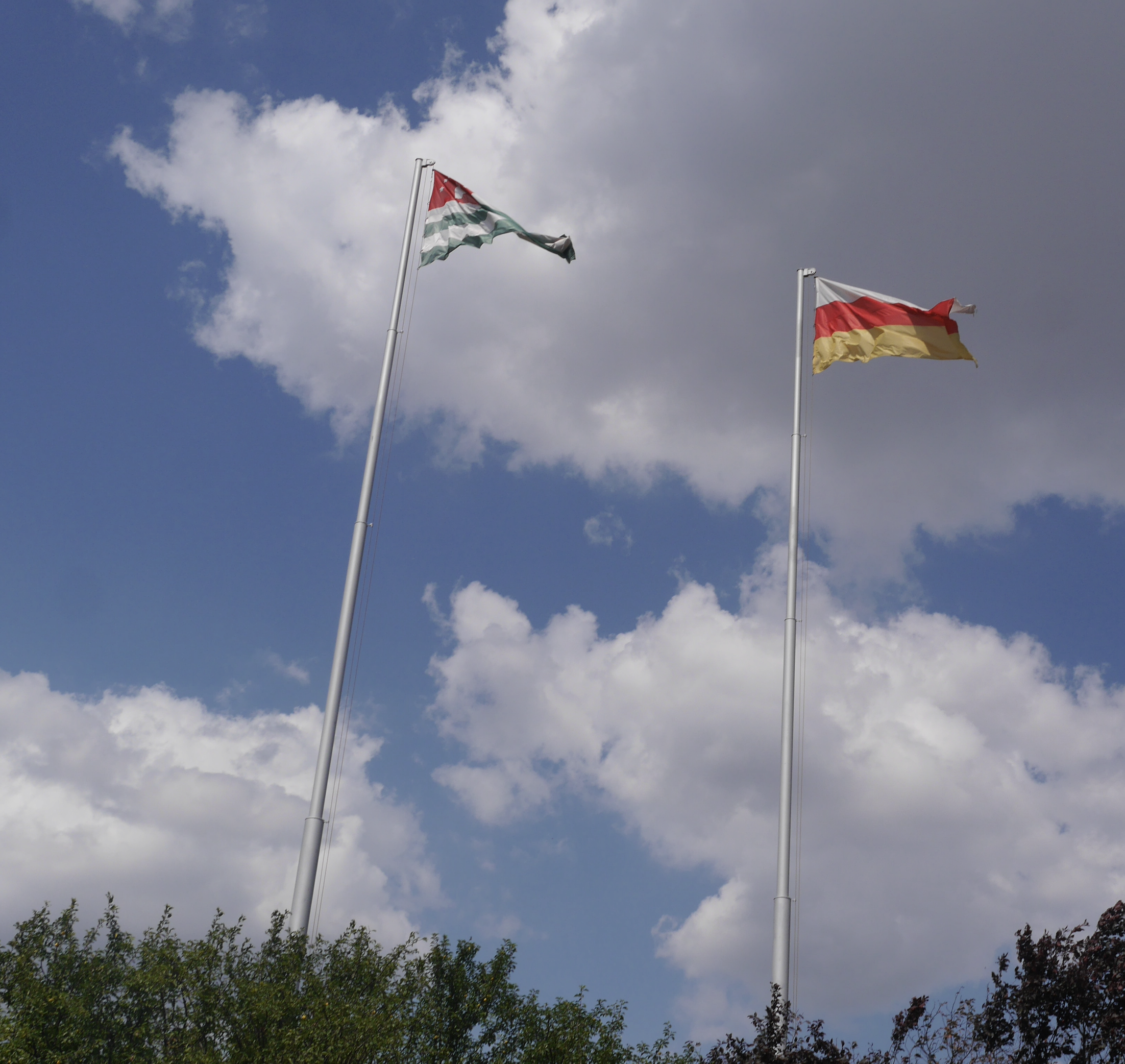
- Venezuela is among a small group of states—alongside Syria, Russia, Nicaragua, and Nauru—that recognized Abkhazia and South Ossetia, Georgia’s territories occupied by Russia, as independent countries in 2009.
- Tbilisi has an opportunity to convince Venezuela to withdraw its recognition of Georgia’s breakaway regions’ independence after Nicolas Maduro’s January 3 capture. Tbilisi also has an opportunity to change Syria’s position since Damascus has been free from former President Bashar al-Assad, who fled to Russia, since December 2024.
- Venezuela and Syria, however, are not decisive international players regarding recognition of Georgia’s breakaway regions. The People’s Republic of China’s ambiguous position on Abkhazia and South Ossetia poses a more serious challenge, particularly given that Beijing and Tbilisi maintain a strategic partnership.
The Kremlin recognized Abkhazia and South Ossetia, regions of Georgia under Russian occupation, as independent states following its invasion in 2008. Aligning with Moscow, Venezuela adopted the same position under Hugo Chávez, and maintained that stance under ousted Venezuelan President Nicolás Maduro (see EDM; Civil Georgia, September 10, 2009). Abkhazia opened up its so-called embassy in Caracas in 2011, and Georgia has not recognized Maduro as president after the disputed 2018 presidential elections in Venezuela (Eurasianet, February 23, 2011).
The Kremlin’s campaign for international recognition of the independence of Georgian territory under its occupation extended to many of its partners. Syria, under former President Bashar al-Assad’s rule, recognized the independence of Georgia’s breakaway regions’ in 2018 (see EDM, July 8, 2025). Damascus signed several agreements on transport and logistics with the occupied regions to directly link their naval ports (Civil Georgia, May 29, 2018; Caucasus Watch, September 29, 2025). Syria also accepted a so-called embassy of Abkhazia in 2020 (Abkhazworld, October 6, 2020). In 2025, after Assad fled to Moscow and Syria formed a new government, Georgia asked Türkiye to mediate Syria’s withdrawal of recognition of its occupied territories. The Organization for Security and Co-operation in Europe (OSCE) Parliamentary Assembly also asked the Syrian authorities to unrecognize Abkhazia and South Ossetia, citing international law. Assad’s legacy of recognition, however, remains unchanged (Tabula, June 10, 2025).
There is presently a rare opportunity for Tbilisi to push for Syria and Venezuela’s formal reversals of recognition. The Kremlin’s close partners, Maduro and al-Assad, are no longer in a position to influence recognition of Georgia’s territorial integrity and sovereignty. In early January, Abkhazian separatists expressed concerns over Maduro’s capture and claimed that support from the Russian Federation and other “friendly states” contributes to stability and development in Abkhazia. At the same time, Georgia’s Foreign Ministry issued an official statement asking Venezuela to revoke its recognition of Georgia’s occupied territories (Georgia Today; OC-Media, January 5, 2025). Without sustained diplomatic pressure, however, Venezuela’s recognition will persist, even without the leader who made the initial decision.
The overwhelming majority of states support Georgia’s territorial integrity and do not recognize Abkhazia and South Ossetia as independent states. Countries including the United States, the United Kingdom, Germany, France, Canada, and the Baltic and Nordic states have consistently reaffirmed their support for Georgia’s sovereignty, viewing Russia’s 2008 invasion as a clear violation of international law. Even Russia’s close partner, Belarus, has refrained from formal recognition, aware of the dangerous precedent a decision would set.
The People’s Republic of China (PRC) has an ambiguous position on Abkhazia and South Ossetia. Since 2008, Beijing has repeatedly abstained from United Nations votes on the return of internally displaced persons (IDPs) to Georgia’s occupied region to avoid upsetting Moscow (Batumelebi, March 23, 2024; see EDM, October 20, 2025). The PRC–Georgia strategic partnership document avoids any reference to Georgia’s two breakaway territories (PRC Embassy in Georgia, July 8, 2023). During a 2024 interview with Georgia’s pro-government TV Imedi, PRC Ambassador to Georgia Zhou Qian avoided answering a question regarding Beijing’s position on Abkhazia and South Ossetia (Imedi.ge, March 30, 2024; Choice, December 1, 2025).
Beijing has quietly engaged with Abkhaz and South Ossetian delegations for years (Yuga, October 17, 2009; Abkhaz World, May 14, 2014). In late September 2025, a delegation from the Abkhaz Chamber of Commerce traveled to the PRC to participate in the Food2China Expo, a major international food and beverage trade exhibition held in Guangzhou (Chamber of Commerce of Abkhazia, September 29, 2025). The delegation also met with representatives of the Guangdong Chamber of Commerce and signed a Memorandum of Cooperation. This agreement is an unprecedented engagement between a PRC-affiliated entity and the Abkhaz authorities. Within days, however, references to the memorandum disappeared from Abkhaz media platforms, underscoring the sensitivity of the issue (Choice, December 1, 2025). The PRC has expressed interest in buying land in Abkhazia and settling 3,000 workers to renew infrastructure linked to the “One Belt, One Road” (OBOR) initiative. The Abkhaz government ultimately blocked the agreement, deciding that the terms of the deal were unfavorable (New Eastern Europe, September 20, 2018; RussiaMatters, October 1, 2020). A delegation from South Ossetia also attended the 2025 Xiamen Stone Fair in the PRC city of Shantou. In 2024, South Ossetia hosted Sabrina Wu Yinghui, vice president of one of the largest investment corporations in the PRC (RES, April 27, 2024, April 2, 2025).
The PRC’s engagements with Georgia’s breakaway regions are happening as the Georgian Dream government seeks closer ties with Beijing (IntelNews, November 10, 2025). Georgian Dream views the PRC as an alternative economic and political partner as Western support dwindles following Tbilisi’s autocratic turn (see Strategic Snapshot, September 10, 2025). Tbilisi increasingly sees its relationship with the PRC as an economic and political hedge against the consequences of democratic backsliding and eroding Western partnerships.
Venezuela and Syria are unlikely to unrecognize Georgia’s breakaway territories without prompting from Georgia’s former Western partners. Tbilisi has eroded its partnership and close cooperation with the United States and European Union (see Jamestown Perspectives, December 14, 2025). Unlike the PRC, the United States has been voting in favor of Georgia’s territorial integrity for more than sixteen years and has provided extensive economic support (Batumelebi, March 23, 2024). The EU Monitoring Mission in Georgia continues to help make the areas bordering the Administrative Boundary Lines of Abkhazia and South Ossetia more secure (EU Monitoring Mission in Georgia, accessed January 26). In 2025, for the first time in history, the United States was absent from a joint statement by several UN Security Council members condemning Russia for its 2008 invasion of Georgia, demonstrating worsening relations (OC-Media, August 21, 2025).
Since 2024, Georgia has become increasingly autocratic (see Strategic Snapshot, September 10, 2025; see EDM, October 6, October 22, 2025, January 21). Tbilisi presently has more political prisoners per capita than Moscow (1TV, November 20, 2025). In early January, five Russian IL-76 military transport aircraft, reportedly carrying cargo destined for Iran, used Georgian airspace (X/@JAMnewsCaucasus, January 5). In May 2024, Georgian Dream Prime Minister Irakli Kobakhidze attended the funeral of former Iranian President Ebrahim Raisi (Georgia Today, May 22, 2024; see EDM, July 14, 2025). Georgian Dream has been replicating the Kremlin’s autocratic governance playbook and has accepted sanctioned Russian oil in its Kulevi refinery (see EDM, November 3, 2025). Meanwhile, Russian forces are forcing Abkhaz students who hold dual citizenship of Abkhazia and Russia to register for military service, potentially recruiting them for the Kremlin’s war against Ukraine (JAM-News, December 18, 2025).
The fall of authoritarian leaders in Venezuela and Syria creates a rare moment for Georgia to challenge their Russian-orchestrated recognition of South Ossetia and Abkhazia. This opportunity, however, exposes Georgia’s declining diplomatic leverage in the West as the ruling Georgian Dream party drifts farther into Russia’s orbit (see EDM, January 12). Georgia cannot afford to miss this moment, but has damaged its partnerships with the Western partners who could lobby Damascus and Caracas. The West will likely keep its distance from Tbilisi until it releases its political prisoners and guarantees free and fair elections. Georgia’s increasing closeness with the PRC will not yield its support on Abkhazia or South Ossetia as Beijing seeks to protect its relationship with Russia. Without sustained and coordinated international diplomatic pressure, new leaders in Caracas, managing internal instability, are unlikely to prioritize Georgia’s territorial integrity.