Georgian Dream Intensifies Anti-Immigration Rhetoric
Georgian Dream Intensifies Anti-Immigration Rhetoric
Executive Summary:
- Georgian Prime Minister Irakli Kobakhidze announced a large-scale anti-immigration campaign on February 18, pledging to reduce illegal migration to zero, while new labor regulations tighten controls on foreign workers amid rising migration under Georgian Dream’s rule.
- Public concerns over the immigration focus on large-scale Arab-funded real estate projects near Tbilisi and Batumi, which critics warn could shift Georgia’s demographic balance, fuel “Arabization” fears, and obscure opaque government agreements.
- Despite nationalist rhetoric emphasizing sovereignty and identity, Georgian Dream continues accommodating Russian and Arab investors, revealing tensions between populist anti-immigration messaging, economic dependence on foreign capital, and demographic concerns.
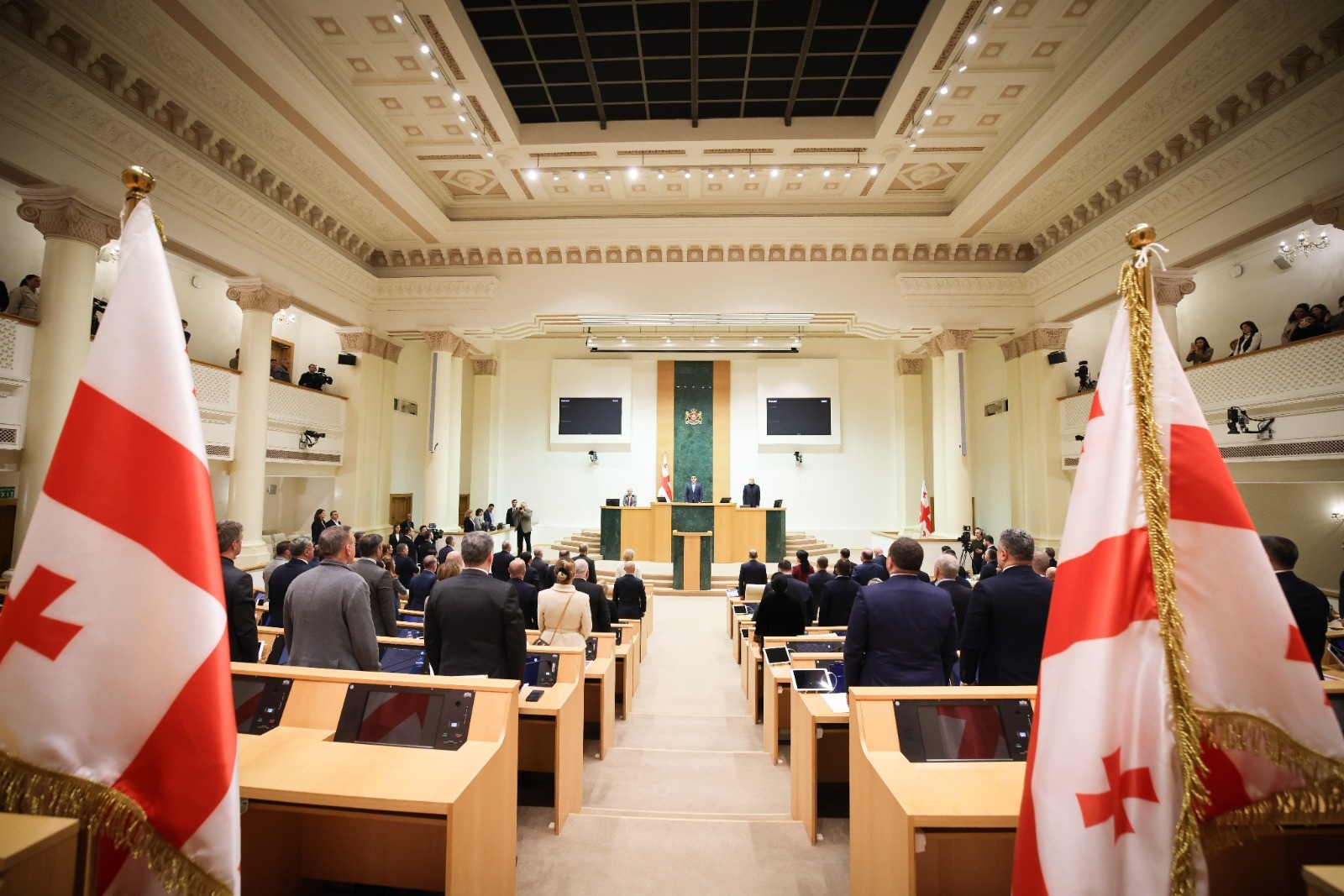
On February 18, the Georgian government announced the launch of a large-scale campaign against immigrants. Speaking at a parliamentary session, Georgian Prime Minister Irakli Kobakhidze promised the population that illegal migration would be reduced to zero (Facebook/KobakhidzeOfficial, February 18). The Georgian government is vague in how they present the issue of immigration. On one hand, they have declared an anti-immigration policy aimed at combating illegal migration, which many countries also address. On the other hand, the ruling Georgian Dream party appears to be attempting to show the Georgian population that it is trying to restrict not only illegal but also legal immigration. At the same time, Georgian Dream is effectively simulating a fight against immigration, while in reality, migration has grown significantly under its rule.
According to amendments to the labor immigration law approved in 2025, effective on March 1, Georgian Dream decided to introduce strict regulations for foreign nationals legally residing in Georgia. Once the regulations are in effect, foreign nationals seeking employment in Georgia will be required to have a signed employment contract; a D1 immigration visa or a valid residence permit; and official authorization to engage in work activities (Business Media, February 17). The new rules are aimed at tightening control over labor migration and regulating the labor market to protect jobs for the local population. Georgian Dream has faced criticism because foreign nationals are actively employed in Georgia, while the local population is leaving the country in search of work due to unemployment.
Georgian Dream may be motivated by public concern over the sharp increase in the number of foreigners in the country overall, rather than by the issue of illegal versus legal residents. On the one hand, Georgian Dream positions itself as a conservative force and a defender of national values and sovereignty. On the other hand, according to statistics, during the party’s rule, the number of foreigners permanently residing in Georgia has been growing rapidly.
Georgia’s growing international isolation and its sharp decline in foreign investment have caused some in Georgian society to speculate that Georgian Dream may be agreeing to disadvantageous arrangements with Middle Eastern companies. These agreements are primarily in real estate development, which could pose risks to the country’s demographic security. Currently, even among Georgian Dream supporters, concerns have emerged about the so-called “Arabization” of Georgia, which could result from the implementation of large-scale development projects by a company from the United Arab Emirates (Business Media, February 3). These plans involve constructing two so-called Arab-towns—one near the capital, Tbilisi, and another near the Black Sea city of Batumi. Opposition and civil society accuse Georgian Dream of keeping the terms of the agreement with the Arab campaign secret and demand its declassification (Publika, November 9, 2025).
In February, news broke of yet another settlement project financed by Arab investments from the United Arab Emirates (Radio Tavisupleba, February 16). Many fear that property prices are so high that local Georgians will be unable to purchase them, potentially shifting the socio-demographic balance in favor of investors from Arab countries, where these projects are actively promoted, and pre-purchases are already underway. Kobakidze, however, dismisses concerns about Georgia’s “Arabization” as unfounded speculation.
In December 2025, Kobakhidze stated that the project would bring Georgia 11 billion GEL ($4.12 billion) in revenue and accused his opponents of spreading lies (1tv.ge, December 16, 2025). Concerns about the “Arabization” of Georgian cities have united factions not only within active civil society but also within the opposition—between the pro-Western and pro-Russian camps. The pro-Russian opposition, which often acts as a situational partner of Georgian Dream on various issues, has also begun actively speaking out against the so-called Arabization of the country. David Tarkhan-Mouravi, a leader of the pro-Russian party “Alliance of Patriots of Georgia,” stated that he is categorically against the construction of the so-called “Arab towns.” In his view, Georgia is effectively selling its territory to a foreign state and thereby facilitating the creation of two small “Arab states” similar to Abu Dhabi on Georgian soil (Facebook/obieqti, November 15, 2025).
The Patriarchate of Georgia has not yet expressed its official position on this Arab project, but it has traditionally advocated protecting land, national identity, and the country’s demographic security. One of the influential bishops of the Georgian Orthodox Church and a close ally of the patriarchate, however, denies the risk of Arabization through these projects (Facebook/tvpirveli.ge, November 30, 2025). Only certain clergymen of the Georgian Orthodox Church have sharply criticized the so-called “Arabization,” stating that these Arab investments are not investments at all, but rather an intervention by Arab countries in Georgia. They argue that investments should normally be reflected in the creation of new enterprises and jobs, not in the purchase of land to settle representatives of other states (Facebook/leri.kurdadze, November 16, 2025).
Georgian Dream does not appear to consider the current number of foreigners in Georgia to be alarming. According to official data that Kobakhidze presented in parliament, as of 2026, the total number of foreigners in Georgia is 257,000, including both legal and illegal migrants. More than 70 percent of them come from post-Soviet countries, the European Union, the United States, and Israel (Facebook/KobakhidzeOfficial, February 18). According to this data, around 20,000 of these foreigners are in the country illegally, and the government intends to pursue a strict deportation policy toward them. According to the plan, approximately four thousand illegal migrants will be deported from the country in 2026 (Facebook/KobakhidzeOfficial, February 18). Out of the total number of foreigners in Georgia, 107,307 hold residence permits from 164 countries, with Russian citizens leading the list at 32,129 (Facebook/KobakhidzeOfficial, February 18). To justify their relative leniency toward Russian citizens, the government notes that approximately 30 percent of these Russians are of Georgian origin. Russian citizens occupy the leading position not only among foreigners holding residence permits but also among officially registered labor migrants, totaling 51,448, of whom 25 percent are Russian citizens. After Russians, the next-largest group—particularly noticeable in major cities in recent years—is Indian citizens (Facebook/KobakhidzeOfficial, February 18).
Despite the militant anti-immigration rhetoric of Georgian Dream, it is unlikely the party will fully implement its policies. The government earlier reversed its decision to ban the admission of foreign students to state universities. Speaking in parliament on February 18, Kobakhidze unexpectedly stated that the contribution of foreign students to the national economy amounts to 1.2 billion GEL ($450 million). According to him, the Georgian budget is replenished annually by 300 million GEL ($112 million) thanks to foreign students, and their presence has created 10,000 jobs in the country. Currently, 37,000 foreign students are studying in Georgia, the majority of whom are Indian citizens (Facebook/KobakhidzeOfficial, February 18).
Georgian Dream seemingly does not see this as a threat to the country’s demographic security. Generally, Indian citizens leave Georgia after completing their studies. For this reason, the government reversed its decision to ban foreign students from enrolling in state universities. In their previous decision, only private universities were allowed to admit foreign students (Interpressnews, December 4, 2025).
The beginning of Georgian Dream’s rule was marked by ultranationalist rhetoric and slogans about protecting national identity. This rhetoric persisted and even intensified during periods of political instability. Whenever domestic crises arose or internal consolidation was needed, the party resorted to a nationalist agenda. Earlier, Georgian Dream repeatedly used populist measures to demonstrate its purported defense of the country’s national identity.
Now, Georgian Dream is using nationalist rhetoric to mobilize society around itself, appealing to concerns about the loss of the country’s unique identity. On February 18, while speaking in parliament, Kobakhidze stated that the main goal of his anti-immigration policy is to protect the country’s national and religious identity. At the same time, he presented statistics to Georgia and the European Union to show the public that, as the share of migrants grows in EU countries, Georgia is beginning to effectively address this issue (Facebook/KobakhidzeOfficial, February 18).
The issue of protecting land as a national asset has always been particularly sensitive in Georgian society and has frequently become a subject of political speculation. Georgian Dream came to power in 2012, and in 2013, the party amended the Organic Law of Georgia on Agricultural Land Ownership, which prohibited foreigners from purchasing agricultural land. Georgian civil society perceived this step as unconstitutional and as creating an unfavorable environment for foreign investors (Transparency International Georgia, July 19, 2023). In 2017, the ban on the sale of land to foreigners was enshrined in the Georgian Constitution. According to amendments, agricultural land in Georgia is considered a resource of special importance. It may only be owned by the state, local self-governing units, Georgian citizens, or associations of Georgian citizens (Legislative Herald of Georgia, June 29, 2020).
In practice, circumvention of this restriction occurs regularly, especially involving large foreign investors. This has drawn criticism and raises concerns about compliance with the law. Georgian Dream constitutionally prohibited the sale of land to foreigners, but it also created exceptions, which were later clarified in 2019 through amendments to the Organic Law of Georgia on Agricultural Land Ownership (Legislative Herald of Georgia, June 25, 2019). Despite its quasi-nationalist rhetoric about protecting sovereignty, land, and national identity, the Georgian Dream party has readily opened the doors to Russian and Arab investors—something opponents argue creates demographic and socio-economic risks.Kobakhidze is focusing on the fight against migration, while calling the low birth rate the country’s main demographic problem, blaming the spread of Western liberal ideology (Facebook/KobakhidzeOfficial, February 18). Despite Georgian Dream’s declared campaign against immigration, public opinion in Georgia overwhelmingly recognizes the real risks of Russification and potential risks of so-called Arabization. This puts the party in a delicate position. It cannot ignore societal concerns, yet it must reconcile them with its economic and political openness to Arab and Russian investors. As a result, Georgian Dream often redirects public attention to other “threats,” such as Western liberal influence, to manage domestic anxieties without constraining its foreign economic strategies.