Hafeez Pandrani: the Man Behind the Emerging Insurgency in Sindh
Hafeez Pandrani: the Man Behind the Emerging Insurgency in Sindh
Pakistan’s southern province Sindh has been a hotbed of terrorist activities since the 1980s and Karachi, the capital of the province and financial capital of Pakistan, has been considered to be the most violent city in Pakistan. Islamist terrorist groups, ethno-political and national-separatist groups have been conducting terrorist operations in the province since Afghan War (1979-89).
For a long time, the terrorism in Sindh province mostly remained an urban phenomenon. Recently, however, this has shifted, with a wave of terrorist incidents sweeping the interior/rural districts of the province, particularly incidents of Islamist terrorism. Major and more minor terrorist incidents have been reported in far-flung rural districts such as Shikarpur, Khairpur, Sukhar, and Jacobabad (SATP, 2015). Indeed, this is a new development as far as terrorism in Sindh province is concerned. Perhaps one reason is that terrorist bases of operation have been shifting from Karachi to rural districts of Sindh amid an ongoing crackdown against terrorist groups in Karachi and other parts of Pakistan. However, the primary reason appears to be that people in rural Sindhi are now joining Islamist terrorist groups. One prominent example is Hafeez Pandrani. From Shikarpur district, Pandrani is now heading the Lashkar-e-Jhangvi (LeJ) cell active in rural areas of Sindh, the same LeJ cell responsible for terrorist attacks in rural districts.
In the long history of Islamist terrorism in Pakistan, Islamist terrorist organizations traditionally recruit mostly from Punjab, the country’s most populous province, and Khyber-Pakhtunkhwa province bordering Afghanistan. This is because the leaders of these Islamist groups hail from these provinces. Most Islamist terrorist groups have strong ethnic ties in their areas of operation, such as Pashtun groups in Afghanistan and Punjabi groups in Indian Kashmir. These ties are reflected throughout Islamist terrorist groups’ membership, both in leadership and in the rank-and-file. Sindhi and Baluch people tend to have a very low rate of membership, perhaps because the Sufi traditions of Sindh province are too strong to be replaced by orthodox Deobandi and puritanical Salafi sects of Islam. A shift, however, seems to be happening now.
Who is Pandrani?
Abdul Hafeez Pandrani (a.k.a. Ali Sher) was born in the small village of Pandrani in Shikarpur district in 1982. Shikarpur district is one of the least progressive and most rural districts of Sindh province. The Pandrani tribe is a sub-tribe of the Baluch people (termed Baroch) who settled in Sindh province in last three centuries; they are naturalized Sindhi, as now hardly any of them are conversant in the Baluchi language. [1] Not much is known about the radicalization of Pandrani and his path to joining LeJ in his early youth. Police records indicate that he currently heads LeJ’s Sindh chapter and his previously executed attacks and plans for future terrorist operations are focused on Sindh. Pandrani joined LeJ’s Asif Choto cell and started overseeing terrorist operations in rural districts of Sindh. After Asif’s arrest in February 2016 in the Sindh-Punjab border area, Pandrani continued his violent sectarian legacy in Sindh (Dunya TV, February 2016). One possible factor contributing to Pandrani’s radicalization and the boom of terrorist activity in the region is the recent mushrooming of Deobandi madrasas in rural districts of Sindh.
Terrorist Activities in Rural Sindh
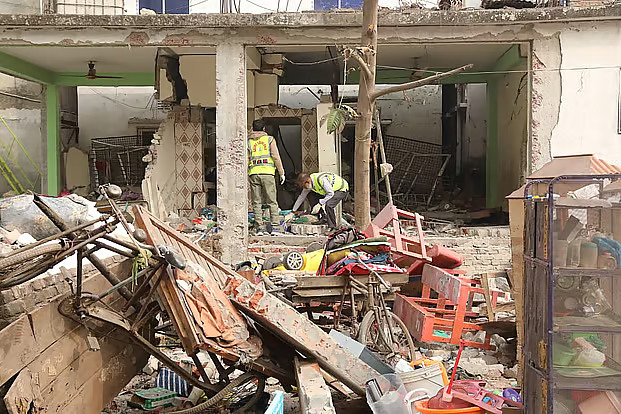
Pandrani made headlines in May 2013 after he orchestrated a suicide attack on a local member of the National Assembly, Ibrahim Jatoi, in Shikarpur. Jatoi escaped the attack unharmed, but two people were injured (Express Tribune, May 1, 2013). Pandrani masterminded a suicide attack at a Shia mosque in Shikarpur in January 2015. A total of 60 Shia worshippers inside the mosque lost their lives and another 60 were injured (Dawn, January 31 2015). He planned another suicide attack in September 2015, this time in Khanpur, a small town in Shikarpur district. This attack was less deadly, with one police officer was killed along with the bomber. The second bomber was arrested (News International, October 14, 2016). Jacobabad, the neighboring district of Shikarpur, also became the target of a Pandrani terrorist attack. The Jacobabad terrorist attack on a Muharram (mourning) procession by the local Shia community left 20 people dead in October 2015 (Dawn, October 24, 2015). Arrested members of Pandrani cell revealed that it was responsible for attacking NATO oil tankers in Shikarpur in September 2011 and sent suicide bombers from Quetta to carry out terrorist attacks in Sindh (Express Tribune, December 7, 2016). According to an officer of the Sindh Police Counter Terrorism Department, Pandrani’s brother died carrying out a suicide bombing attack in Afghanistan.
Connections With Other Jihadists
Pandrani has managed to forge working relationships with other Islamist terrorist groups operating in other parts of Pakistan. The tribal area-based Tehreek-e-Taliban Pakistan (TTP) has long supported LeJ and provided suicide bombers for terrorist attacks. [2] Terrorism being new to rural districts of Sindh, it was therefore necessary to seek material support from TTP. The TTP is currently on the back foot due to the ongoing Pakistani military operation (Operation Zarb-e-Azb) against it in the tribal areas. Many TTP fighters are on the run, and some of its factions have joined Islamic State’s (IS) Khurasan Chapter based in Nangarhar province adjacent to the tribal areas in neighboring Afghanistan.
Reportedly, Pandrani is also in contact with Kashmiri Islamist terrorist group Jaish-e-Mohammad. The connections between Pandrani’s LeJ cell and IS-Khurasan are not clear, but other factions of LeJ in Quetta and Karachi have pledged allegiance to Abu Bakr al-Baghdadi. The anti-Shia ideology of LeJ makes it a prime candidate to join IS. It is reported that Malik Ishaq, the founder of LeJ, planned to merge LeJ into IS before he was killed in a police encounter in Punjab in August 2015. (News International, August 1, 2015).
Conclusion
Pandrani is still at large, and Sindh police are making extensive efforts to arrest him. Even if he is arrested in the near future, it would take a long time to repair the damage he and his LeJ cell have done to the social fabric of rural Sindh society. For a long time, only the rural districts of Sindh province remained isolated from sectarian violence. No major terrorist attack was previously reported there, even during the peak of the Global War on Terror, during times that no Pakistani city could be considered safe from terrorist attacks. Perhaps, amid the intensity of military operations and crackdown against the Islamist terrorists in Pakistan, terrorist groups are looking for new havens where they can re-operationalize their terrorist activities.
The absence of a concrete counter-terrorism strategy in the region has allowed terrorist groups to regroup in peaceful areas. The new wave of terrorism in rural Sindh needs to be thoroughly analyzed to develop a response. Rural Sindh is at risk of falling prey to local Islamist terrorist organizations. Furthermore, the region’s extreme poverty and dilapidated economic condition create the risk of global Islamist terrorist groups, such as al-Qaeda and IS, to use local conditions in order to gain influence in these areas.
NOTES
[1] Discussions with a senior police officer of Sindh Police’s Counter Terrorism Department who requested for anonymity on December 2, 2016 in Karachi
[2] Discussions with Senior Police Officer of Sindh Police on Dec 2, 2016 in Karachi.