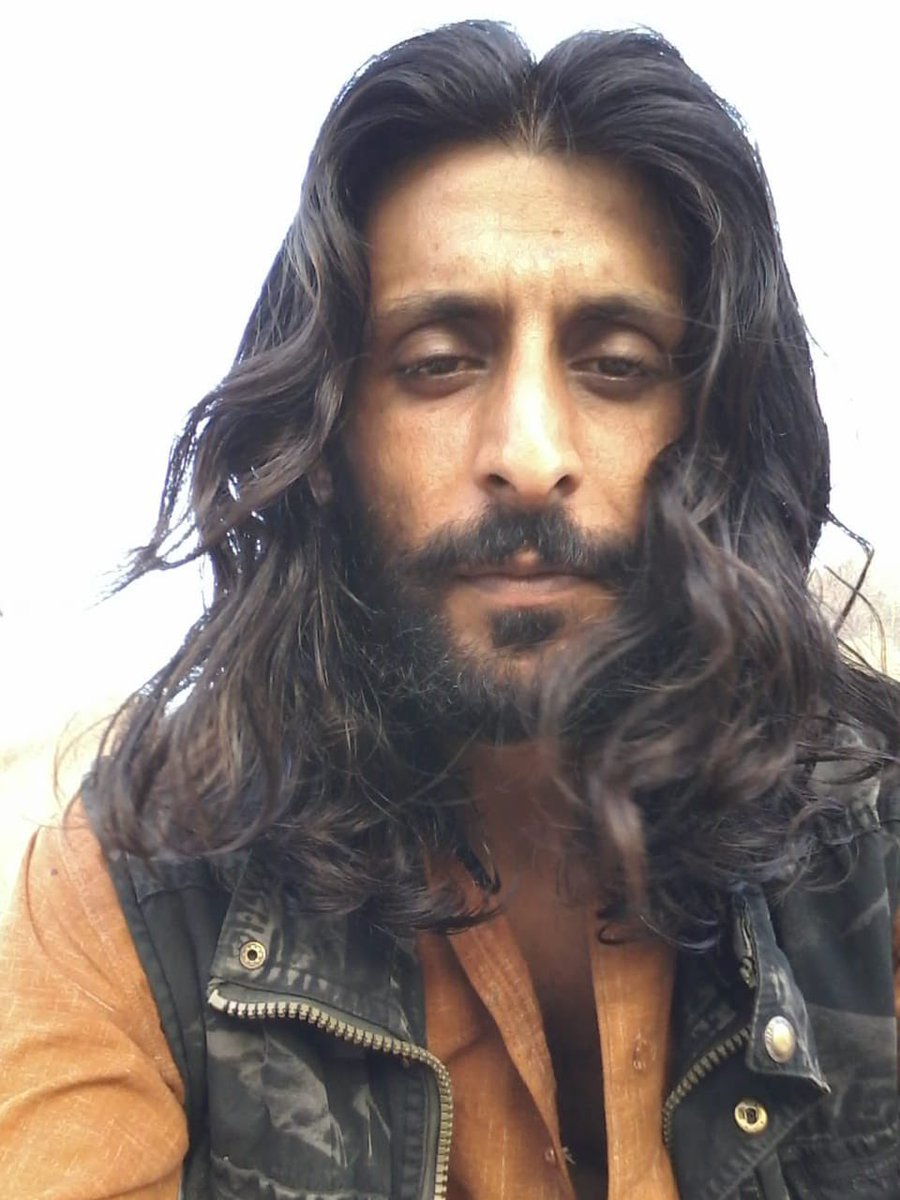
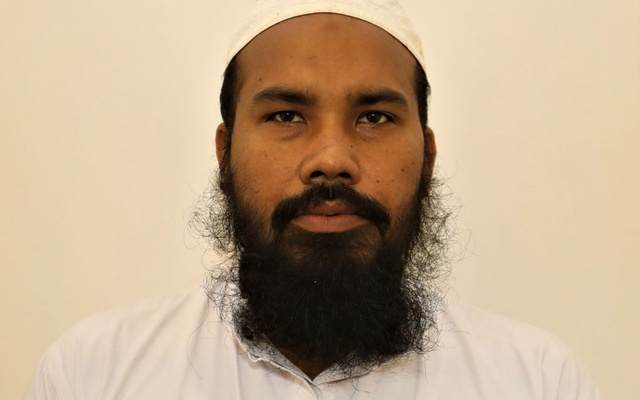
How the Martyrdom of Asadullah al-Urgenchi and Abu Muhammad al-Uzbeki Inspires Future ISKP Recruits
How the Martyrdom of Asadullah al-Urgenchi and Abu Muhammad al-Uzbeki Inspires Future ISKP Recruits
Since the Taliban’s takeover of Afghanistan in August 2021, Islamic State in Khorasan Province (ISKP) has centralized and vastly expanded its media apparatus, while widening its scope to include more content about regional and international political topics beyond Afghanistan (see Terrorism Monitor, May 6, 2022). The bolstered propaganda effort is intended in part to increase the group’s reach and customize messaging to appeal to various ethnolinguistic target audiences (Asia-Plus, August 1, 2022). One of the more notable aspects of this approach has been ISKP’s intensified campaign to recruit, fundraise, and gain favor among Islamists in Central Asia, primarily in Tajikistan and Uzbekistan (see Terrorism Monitor, July 15, 2022). This involves, first, criticism and threats towards Central Asian governments; second, rocket attacks from within Afghanistan directed at these countries; and, third, the exaltation of Tajik and Uzbek martyrs as examples to follow (Caravanserei, April 19, 2022).
The third part of this propaganda campaign began with magazine profiles of ISKP militants Abu Muhammad al-Tajiki and Umar at-Tajiki. [1] The group then released biographies of Asadullah al-Urgenchi and Abu Muhammad al-Uzbeki to show the group’s recognition of the important role that Uzbek figures have played in ISKP’s historical development. In choosing these individuals, ISKP chose a prominent ideologue and a fighter to show the importance of both to the movement. In particular, al-Urgenchi’s legacy lives on within ISKP’s Central Asian contingent and the region’s ISKP supporters more broadly. There are entire Telegram channels devoted to archiving and disseminating al-Urgenchi’s lectures and works. The speeches and sermons of other former Islamic Movement of Uzbekistan (IMU) figures are also frequently shared on social media and messaging application groups. Their words and ideas remain highly influential among Uzbek and Central Asian radicals.
This is notable, as the center of gravity for Islamic State (IS) recruits from Central Asia was traditionally in the Middle East during the rise and fall of the caliphate in Iraq and Syria. With the loss of Baghuz, Syria in 2019, IS’s Afghanistan-Pakistan branch has gradually become the leading destination for Central Asian jihadists. This is due to the ISKP propaganda campaign and the network’s close geographical proximity to Central Asia (Central Asia-Caucasus Analyst, August 31, 2022).
Asadullah al-Urgenchi
Issue 18 of ISKP’s flagship English language Voice of Khurasan magazine, which is published by Al-Azaim Foundation for Media Production, features a biography of legendary IMU-turned ISKP ideologue Asadullah al-Urgenchi [2] The profiles of both al-Urgenchi and Abu Muhammad al-Uzbeki are entries in Voice of Khurasan’s “Memories of Shuhadah (Martyrs)” series about (mostly) foreign fighters who joined ISKP and gave their lives for the cause. The profile of al-Urgenchi started by introducing Urgenchi as “a muhajir (migrant) in the path of Allah, a mujahid who sacrificed his life in the field of jihad, and a teacher who fought jihad with his life, wealth, and tongue.” Although he was not well known to the public—or even to researchers of jihadism in general—ISKP claimed that “among the Uzbek Muhajirin and Ansars (supporters), there are probably very few brothers who do not know this man” due to his poems, articles, books, and sermons that “found a place in the hearts” of the regional Islamic State movement (Jihadology, November 25, 2022).
The author of the biography claims al-Urgenchi was born in 1976 to a family of intellectuals in the city of Urgench (inside Khorezm Region) in Uzbekistan. Throughout al-Urgenchi’s youth, “he was the owner of a special virtue that befits him” and had lots of friends. Al-Urgenchi moved to Tajikistan in March 1999, and then travelled to Afghanistan later that year to join the Taliban under Mullah Muhammad Umar; al-Urgenchi would then go on to become a member of the IMU, where he pledged allegiance to the group’s leader, Muhammad Takhir Farouk. From the first time they met, Farouk was immediately impressed by al-Urgenchi. Accordingly, al-Urgenchi was brought to Kabul and assigned a position at the IMU’s propaganda outlet, “Jundullah.” ISKP noted that the “jihadi arena was blessed with his creativity, as he had been serving the religion with his media works in the 2000s,” and his first poem for the IMU was about hijra and tilted “Eslasam.”
Following 9/11 and the American invasion of Afghanistan, al-Urgenchi and his IMU comrades moved from Afghanistan into Pakistan’s Waziristan region, where al-Urgenchi had a son in 2002. ISKP described how in Waziristan he made videos, wrote books and poems, and edited the IMU’s official newspaper called “Khurasan Army.” Because of this work, al-Urgenchi was eventually appointed to the top position of IMU’s Jundullah by Amir Osman Adil, who had succeeded Muhammed Takhir Farouk as IMU leader after the latter’s death (Pakistan Press Foundation, February 4, 2011).
In 2015, al-Urgenchi, along with many other IMU militants, pledged allegiance to ISKP. Collectively, they cut ties with (and became enemies of) former allies, such as the Taliban and al-Qaeda (The Express Tribune, August 7, 2015). Al-Urgenchi, his family, and much of the IMU returned to Afghanistan and settled in Nangarhar province. The article spoke of how highly regarded al-Urgenchi was as an ideologue and teacher, emphasizing the spiritual power he brought to ISKP’s ranks; one IMU member stated that “Asadullah [al-Urgenchi] is my Sayyid Qutub.” Al-Urgenchi continued to be a media force during his time with ISKP. The profile stated that “Khurasan [province] was the land of Islam and honor, where affairs were managed with new reforms, under the Caliph Abubakr al-Baghdadi, and Sharia was enforced.” Thus, al-Urgenchi was given a large responsibility as the “promotional media officer of the [province]”—a position in which he served until his death.
The article explained how American forces conducted operations in the Tora-Bora region in October 2018, specifically hunting for al-Urgenchi. It is also mentioned that Uzbekistan’s own intelligence operatives were looking for him at the same time. ISKP asserted the reason for this was that al-Urgenchi was very prominent and an “influential person among the sincere Muslims.” According to ISKP, al-Urgenchi was on top of a mountain with his son browsing the internet on November 25, 2018, when he was killed by a drone strike. It is notable, however, that IMU accounts of al-Urgenchi’s death contradict the details put forth by ISKP. IMU audio recollections circulated online claims that he was captured and executed by the Taliban in 2015. [3] Regardless of these discrepancies, al-Urgenchi’s legacy lives on in the social media pages and messenger application channels that are devoted to his life and works.
Abu Muhammad al-Uzbeki
This trend continued in issue 20 of Voice of Khurasan, in which the life and legacy of Abu Muhammad al-Uzbeki was celebrated by ISKP. [4] Al-Uzbeki was born in the Surkhandarya region of Uzbekistan in 1981 and relocated to South Korea for work in 2008, where he studied Islam more intensely. On the internet, al-Uzbeki found jihadist lectures by IMU figures, such as Tahir Yoldash, Juma Namangani, and Shaykh Abdul Wali Qari, and later ended up making contact with the IMU when researching the Islamic Jihad Union (IJU). ISKP claims that al-Uzbeki had a dream in which IMU leader Tahir Yoldash told him that IJU had strayed from the true path of Islam, prompting his subsequent decision to join the IMU.
Al-Uzbeki moved around from Russia, to Azerbaijan, and finally Iran before landing in Miranshah, North Waziristan District in Pakistan among the IMU and other mujahidin. He was then sent for 15 days of military and religious training before participating in militant action. Afterwards, he performed various roles, ranging from driving personnel carriers to and from battle to serving as a combat medic (Jihadology, January 17).
In late 2014, al-Uzbeki and other IMU fighters relocated from Pakistan to Afghanistan’s Zabul, and later pledged allegiance to Islamic State in 2015 (Caravanserai, October 7, 2016). Consequently, the IMU began to fight the Taliban, who ISKP now accuses of slaughtering the elderly, women, and children of over 150 IMU mujahidin. Al-Uzbeki was captured alive during the battles and then executed alongside other IMU fighters.
Conclusion
Just as prominent Uzbek jihadists and ideologues inspired Asadullah al-Urgenchi and Abu Muhammad al-Uzbeki to make hijrah and join the IMU, ISKP hopes the exaltation of these martyrs will appeal to and attract Uzbek and Central Asian foreign fighters. The stories of these two martyrs are intended to appeal to ethno-linguistic Uzbek populations and show how people like them have achieved jihadist success. In the past, ISKP has celebrated Uzbek suicide bombers in Afghanistan and Pakistan, but these two in-depth profiles are unprecedented, marking an intensification of Uzbek-directed outreach for recruitment.
It is also notable that the Taliban’s alleged execution of IMU fighters and slaughter of their innocent families looms large in Central Asian ISKP organizational lore. This is meant to evoke outrage and galvanize Uzbeks into supporting ISKP, as well as turn fence-sitters against the Taliban. ISKP also wants to incite followers to conduct attacks inside Central Asia, and such tales of these regional jihadist legends may move some to do so in the near future.
Notes:
[1] Islamic State Khurasan Province: Al-Azaim Foundation’s Voice of Khurasan magazine issue 16 (October 17, 2022)