In the Name of the Mahdi: An In-depth Look at Bangladeshi Militant and Propagandist Mushtaq Arman Khan
In the Name of the Mahdi: An In-depth Look at Bangladeshi Militant and Propagandist Mushtaq Arman Khan
In early May 2020, the Bangladeshi police counter-terrorism unit arrested 17 members of the banned terrorist group, Jamaat-ul-Mujahideen Bangladesh (JMB), in Dhaka. At the time of the arrest, the JMB operatives planned to join Imam Mahdi, the spiritual redeemer of Islam, in Mecca, Saudi Arabia. The detained militants had been taking shelter in Dhaka’s Kakrail Mosque in disguise as Tablighi Jamaat members, and acknowledged that seven others among them had already left the country for Saudi Arabia at different times to become soldiers of Imam Mahdi (Business Standard, May 5, 2020).
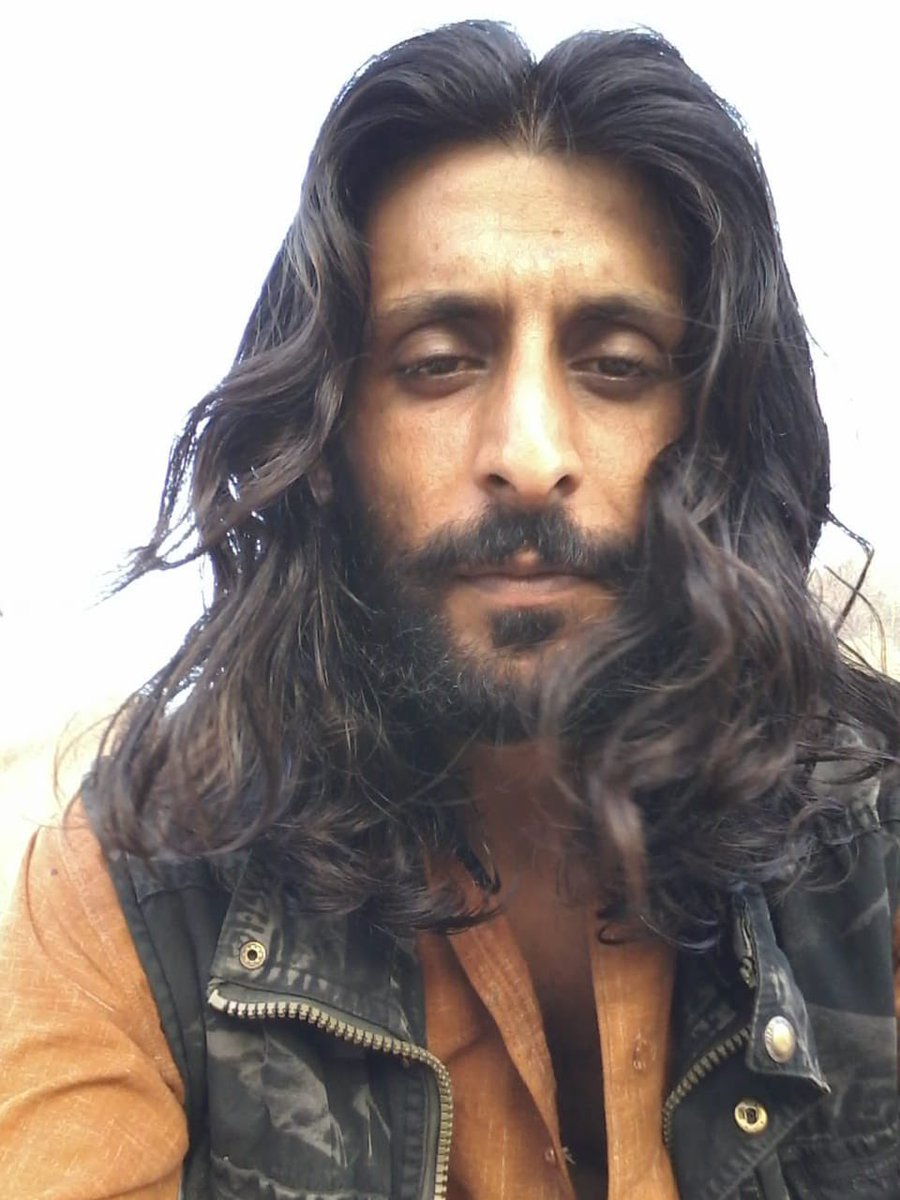
The self-proclaimed “Imam Mahdi” was identified as Mushtaq Arman Khan, a Bangladeshi expatriate in Saudi Arabia who spread Islamist propaganda through social media channels (YouTube, February 10, 2020). He lamented through his online speeches and writing about the arrests of his followers by the Bangladeshi authorities. Earlier, in January 2020, four students of Bangladesh Agricultural University in Mymensingh travelled to Saudi Arabia on the pretext of performing Umrah (Islamic pilgrimage), and reportedly pledged allegiance and joined Khan as his followers (Daily Star, May 06, 2020)
A deputy commissioner of Bangladesh’s elite Counter Terrorism and Transnational Crime (CTTC) unit, who was in charge of the case, revealed to the media that these JMB members, and others who have already joined Khan, were inspired by their leader’s audio-visual propaganda on social media. These lectures are primarily focused on theological themes, such as Islamic jihad (holy war), Dajjal (false Prophethood), Ghazwat- ul-Hind (the final battle of India) and other eschatological narratives, such as the Day of Judgment (Daily Ittefaq, August 23, 2020; YouTube, November 8, 2020). This profile examines how Khan exploited the COVID-19 pandemic to peddle jihadist and doomsday narratives in the Indian subcontinent and beyond through his widespread social media presence.
Tablighi Jamaat, JMB, and COVID-19 in Khan’s Narratives
Mushtaq Arman Khan, who claims to be a direct descendant of the Prophet Muhammad, garnered support and followers in Bangladesh during the height of the COVID-19 pandemic through his statements about the disease, the end of the world, and the arrival of Imam Mahdi. A cursory look at his website suggests that some have already pledged support to Khan as Imam Mahdi. In October 2020, for example, Bangladeshi police arrested Sirajul Islam, a charted accountant by profession from the Badda area of capital Dhaka, for disseminating Khan’s teachings in Bangladesh and inspiring people to pledge support to him, the self-proclaimed Imam Mahdi (New Age, October 21, 2020).
Not much is known, however, about Khan’s childhood and early education. His website claims that he was born and educated in Netrokona in northern Bangladesh. [1] In 2006, Khan graduated from Bangladesh University of Engineering and Technology in his early 40s. After completing his degree in electrical and electronic engineering, he studied architecture in Malaysia. Despite his mainstream technical background, he took a keen interest in studying Islam. In 2016, he travelled to Uganda on a religious preaching tour along with his followers. It appears that he led a Tablighi Jamaat preaching party to the African country. Two years later, in 2018, he travelled to Saudi Arabia and declared himself as Imam Mahdi (Daily Newsline, August 23, 2020).
Khan claims through his YouTube and Facebook messages that a single night’s dream changed the course of his life by transforming him from an ordinary Muslim to God’s “chosen one.” However, he gives credit to Tablighi Jamaat, the transnational ultra-conservative proselytizing group borne out of the larger Deoband movement of India, for his new religious bent of mind, lifestyle and ideology. His inclination towards religion increased manifold, and he became a devout Muslim after attending Tablighi Jamaat’s biggest world conclave (Biswa Ijtema) in Tongi, Bangladesh during his college years. The Tongi event is an annual three-day congregation that attracts millions of Muslims every year from all over the world. Not surprisingly, Khan’s propaganda messages centered around Tongi. He highlighted in his messages how the next Imam Mahdi (himself) would come from a country east of Medina, and indicated that place as Tongi in his propaganda talks and literature. He draws several parallels between Mecca and Tong, including that these places are famous for annual Muslim religious congregations, such as Hajj and Ijtema (“congregation”). [2]
In Bangladesh, various militant group members often take refuge or masquerade as members of Tablighi Jamaat to evade scrutiny. Although it is not categorized as a banned group, it is accused of sheltering and nurturing extremist elements under the garb of pious preachers or Islamic mendicants (Hindustan Times, May 31, 2019; Dhaka Times, September 18, 2021). The arrested JMB members were captured on their way to Saudi Arabia while attempting to travel under the guise of the Tablighi Jamaat preaching team. During their interrogation, the militants reiterated Khan’s doomsday predictions and apocalyptic religious-based concerns about COVID-19’s spread and future calamities. In his audio-visual messages, Khan likewise claims the COVID-19 pandemic, earthquakes, and locust swarms in early 2020 were signs of the coming of Imam Mahdi.
The arrested JMB members also believed, as per the prophecies spread by Khan, that “The sun would not rise for the next 40 days, the sky would be covered with smoke, the infidels would all die, but the believers would have only a light coughing.” Further, the JMB members reportedly believed that the COVID-19 pandemic would “bring down wrath from the skies, smoldering everything, leaving no guards at the Bangladesh-India borders” (Facebook, February 22, 2020). Arrested militants admitted their plan to leave the country through the India-Bangladesh borders near Satkhira and Benapole to reach Kashmir before travelling to Saudi Arabia in the guise of members of Tablighi Jamaat. They were convinced the poor security along the international borders due to COVID-19 would allow them to sneak past border guards (Bangladesh Post, May 5, 2020).
Khan’s Proclamations on Ghazwat-ul Hind, Dajjal, and the End of the World
Khan claimed to be the “promised leader for mankind” and believed he was “destined to fight back against evil entities of the world,” including in the mythical Ghazwat Hind (“Battle of India”), referring to the final battle between the Muslims and the polytheists (Hindus) for the Indian subcontinent. He urged Muslims worldwide to enter Mecca in Saudi Arabia to join the fight against infidels and be among the coveted 313 mujahideen companions of Imam Mahdi, who take the oath of allegiance to him (Desh Rupantor, March 31, 2020). According to Khan, no Hindus will survive after the Battle of India, which will be the most horrific war in the history of mankind, causing the deaths of one-third of the world’s population. He also claimed that all the Jews would be killed with the end of Dajjal, and warned about natural disasters and the destruction of the United States and Israel after the invasion of Jerusalem. [3]
It appears from Khan’s speeches and writings that he also believed in secret societies like the Illuminati and Bilderberg. He explained how these associations teamed up with the Dajjal against Islam to kill innocent Muslims in Syria, Palestine, India, Iraq, Afghanistan, Yemen and Myanmar. These radical and apocalyptic views notwithstanding, his speeches are often laced with Islamic concepts of life and death, and remind Muslims around the world to be true Muslims. Consistent with Tablighi Jamaat’s worldview, he urged Muslims to follow the basic tenets of Islam, renounce worldly possessions, and help fellow Muslims. Interestingly, in his effort to inspire the Indian subcontinent’s Muslims, Khan further invited famous Indian Muslim movie stars, such as Salman Khan, Sharukh Khan, Saif Ali Khan and Amir Khan, to visit Mecca. He additionally urged them to help fellow Muslims of the region and renounce their luxurious lifestyles to become true and devout Muslims. [4]
Khan’s Arrest and Future
In August 2020, the CTTC lodged a case against Khan under the Digital Security Act (2018) for religious misinterpretations, apocalyptic narratives, and the spreading of provocative statements on virtual platforms. Bangladeshi authorities had informed the Saudi government and Interpol about the controversial preacher, and briefed them about his propaganda and misinformation activities through social media channels. According to one of his followers, the Saudi authorities arrested him in late December 2020 (YouTube, January 13). As per Khan’s earlier prophecies about possible Saudi-Bangladesh actions, his followers are hopeful and waiting for his safe release.
No clarity exists concerning his arrest or deportation from the Bangladeshi government thus far. It may be possible that cases like this have partly influenced the Saudi government to restrict Tablighi Jamaat and similar groups that have recently begun operating in the Kingdom (Twitter, December 6, 2021). However, despite Khan’s reported arrest in Saudi Arabia, his propaganda, videos and other materials are still available on his active Facebook page and YouTube channels, which continue to spread his unusual ideology.
Notes
[1] Mushtaq Arman Khan, “The Holy Messenger of Allah”, November 16, 2020, https://www.caliphatullah.com/wp-content/uploads/2020/11/The-Holy-Messenger-of-Allah-.pdf. [2] Khan, “Letter to Ummah”, November 16, 2020, https://caliphatullah.com/index.php?view=post&id=633. [3] Khan, “Birth & Death of Islam”, https://drive.google.com/file/d/1stLOiW6W7mEiRxNdILu8UpGAX-M_drPm/view. [4] Khan, “Letter to Amir Khan”, https://drive.google.com/file/d/1NewRkbFKBLoRay5QBgA3HGRLC3MovcUq/view.