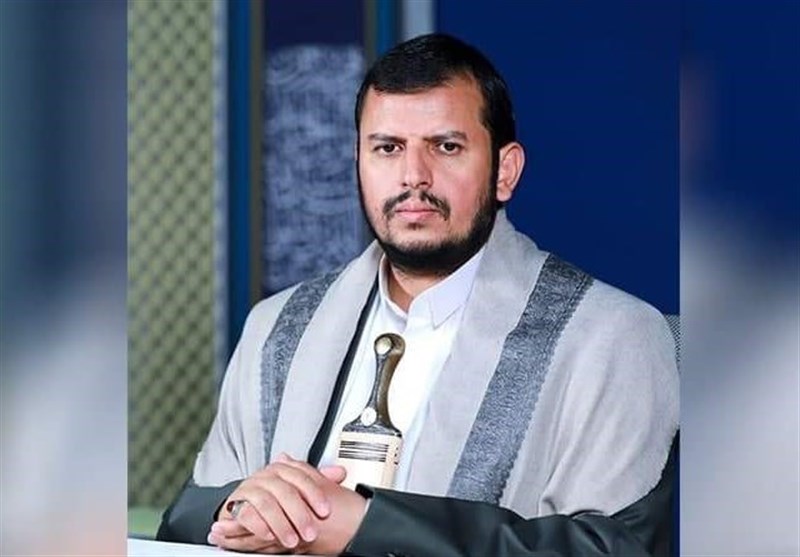
Jabhat al-Nusra’s Australia-Born Religious Mouthpiece: Abu Sulayman al-Muhajir
Jabhat al-Nusra’s Australia-Born Religious Mouthpiece: Abu Sulayman al-Muhajir
In May 2014, Nagieb Khaja, a Dutch filmmaker and journalist reporting on the ground in Syria for al-Jazeera, began to negotiate with Jabhat al-Nusra (JN) members about conducting an on-camera interview with a JN official. After months of negotiations, JN gave him permission to interview Abu Sulayman al-Muhajir, an Australian native of Egyptian descent and one of JN’s top religious officials (al-Jazeera, March 4). In the interview, which aired as part of a March 2015 documentary, Abu Sulayman, an articulate and poised English speaker, explained JN’s worldview and strategy in Syria. He also used the interview as a platform to slam the Islamic State, JN’s most significant jihadist rival in Syria, criticizing the way that the Islamic State had “defined themselves as the exclusive bearers of Islam, delegitimizing the rest of the Muslim community.”
JN’s choice of Abu Sulayman to speak with al-Jazeera is indicative of the Australian’s prominence in the group. Indeed, Abu Sulayman has emerged as one of JN’s central figures in its conflict with the Islamic State. After first serving as a mediator between the two groups—a prestigious appointment that raises the question of how Abu Sulayman managed to rise to such prominence within the al-Qaeda network while still residing in Australia—he became one of the Islamic State’s most vocal critics. Abu Sulayman is now one of JN’s leading religious officials, featuring prominently in the group’s propaganda videos, and more significantly signing all the major joint statements about the Islamic State released by Syria-based jihadist groups. His rapid ascent is more remarkable in light of JN’s emphasis on its Syrian roots, which makes Abu Sulayman one of the few known high-ranking JN officials who is not from Syria or its immediate surroundings.
Extremist Ties in Australia
Abu Sulayman, whose real name is Mostafa Mahamed Farag, was steeped in jihadist thought long before he came to Syria (The Australian, March 7). A Sydney resident, Abu Sulayman reportedly studied Islamic theology in Saudi Arabia and received a master’s degree in education from Sydney University. [1] He was a prominent preacher at the al-Risalah Bookstore, a community center in the Bankstown area of Sydney, which is known as a hub for Salafist-Jihadists. Al-Risalah closed in September 2014, with the center director citing financial issues and Australian intelligence agencies’ harassment of members as factors in the decision to close (Australia Broadcasting Corporation, September 15, 2014). Speakers at al-Risalah prior to its closing included extremist clerics and ideologues, including Musa Cerantonio, an Australian convert and one of the most prominent Islamic State supporters on Twitter; Bilal Khazal, a jihadist who reportedly trained in Afghanistan and was sentenced to 12 years in prison in 2008 for publishing a terrorist training manual; and Mustapha Majzoub, a hardline cleric who went to Syria in June 2012 (Sydney Morning Herald, August 11, 2012).
Abu Sulayman fit perfectly in al-Risalah’s radical environment and soon established himself within the center as one of the most outspoken supporters of the jihad in Syria. He frequently exhorted individuals to donate money to Syrian rebel groups and emphasized the obligation to come to the aid of fellow Muslims fighting infidel forces. He orchestrated a fundraising campaign for the Syria conflict, reportedly raising over $200,000 that was used to purchase medical supplies. [2] Whether the supplies were provided to Syrian citizens or to rebel groups is unclear, though the latter seems likely; the group that helped to coordinate the delivery of supplies, Turkish NGO Humanitarian Relief Foundation (İnsan Hak ve Hürriyetleri ve İnsani Yardım Vakfı—IHH), is suspected of having connections to al-Qaeda (al-Jazeera, January 14, 2014).
Given Abu Sulayman’s hardline leanings and his relentless advocacy of the Syrian jihad, it is no shock that he made his way to Syria himself, leaving Australia in 2013. What is surprising, though, is the high-level position he was given within the jihadist movement when he arrived. This suggests that significant parts of Abu Sulayman’s activities while in Australia remain unknown: Without establishing himself to the al-Qaeda network, he never would have been given such a position of trust.
Abu Sulayman and the Islamic State
After traveling to Syria, Abu Sulayman originally served as a representative of al-Qaeda’s senior leadership (AQSL), as his role was mediating between JN and the Islamic State. After this mediation effort failed, he was incorporated into JN’s Shari’a committee in early 2014.
Following a February 2014 appearance in a propaganda video, which was the first such appearance by Abu Sulayman, his official position within JN was clarified in a statement released in March 2014 (VideoPress, February 26, 2014). In the statement—which announced the establishment of the al-Basirah Establishment for Media Production, a new JN media outlet that would become the central forum for JN’s rhetorical attacks against the Islamic State—Abu Sulayman was recognized as one of the members of JN’s general Shari’a committee, the group’s most prestigious religious entity. [3] Thereafter, Abu Sulayman took center stage in the JN-Islamic State quarrel.
On March 7, Abu Muhammed al-Adnani, the Islamic State’s spokesman, called for a mubahalah (a ceremony of grave importance in Islamic tradition, where two warring sides call for God’s curse upon the guilty or dishonest party) to set the record straight with JN, whom al-Adnani accused of slandering the Islamic State. [4] In response, JN released a series of testimonies detailing the other jihadist group’s transgressions. The testimony featured several JN heavyweights, including longtime al-Qaeda veterans Abu Humam al-Suri, who was JN’s general military commander, and Abu Firas al-Suri, who formerly served as a liaison between al-Qaeda and Pakistani militant groups. Abu Sulayman’s inclusion alongside two members of AQSL suggested that he too could be considered part of this senior leadership, though his jihadist biography was not released at the time to justify his inclusion. In his video testimonial, Abu Sulayman explained that he had been tasked by AQSL to serve as a mediator between Islamic State and JN, but the mediation effort failed. He also accused the Islamic State and its amir, Abu Bakr al-Baghdadi, of vacillating, and then finally reneging, on its pledge of allegiance (bayat) to al-Qaeda amir Ayman al-Zawahiri (YouTube, March 17, 2014).
Much of Abu Sulayman’s critique centered on the inconsistencies in the Islamic State’s story. He noted that some officials had claimed that the group’s pledge to al-Qaeda was one of “admiration and support,” rather than a full and binding pledge. Abu Sulayman asserted that al-Baghdadi himself had refuted that rumor, and affirmed that the Islamic State’s pledge to al-Zawahiri was binding. Thus, according to Abu Sulayman, the Islamic State’s decision to expand into Syria despite al-Zawahiri’s instructions to the contrary amounted to insubordination in violation of the group’s oaths. Abu Sulayman also took the Islamic State to task for the group’s willingness to kill fellow jihadists, lambasting it for the “corrupt logic” it employed to justify the killing of JN fighters and other rebels (YouTube, March 17, 2014).
Following the March 2014 testimonials, Abu Sulayman spearheaded a massive public relations offensive against the Islamic State. In April 2014, he was featured in a 44-minute English-language video, entitled “An Interview With Sheikh Abu-Sulayman al-Muhajir,” in which he spoke in depth about the Islamic State-JN divide (YouTube, April 12, 2014). In addition to reiterating the critique he had advanced in the March testimonial, Abu Sulayman provided a detailed overview of al-Qaeda’s organizational structure. He explained that al-Qaeda divides its organization into different regional commands, each of which has an amir who swears bayat to al-Qaeda’s overall amir. Abu Sulayman explained that although the amirs of the various regional commands have significant authority and autonomy, they must receive approval from al-Qaeda’s leadership before merging groups or declaring an Islamic state, steps which the Islamic State ignored.
Abu Sulayman followed up this interview with several more initiatives aimed at exposing the Islamic State’s transgressions. Just days after it aired, he and several other prominent JN ideologues and supporters coauthored a public letter to Ayman al-Zawahiri requesting that the amir publicly address the Islamic State’s wrongdoings and provide clarity about whether al-Zawahiri had received a pledge of bayat from al-Baghdadi. [5] The letter—which was cosigned by prominent JN leaders such as Sami al-Uraydi and al-Gharib al-Muhajir Qahtani—may have evinced impatience with al-Zawahiri, who had been relatively quiet on the issue of the JN-Islamic State infighting. (Publicly, Zawahiri had expressed annoyance that the JN-Islamic State feuding had reached the public arena, because it gave the appearance of fitna (strife).) A few days after the letter was released, Abu Sulayman penned a eulogy for Abu Muhammad al-Fatih, a JN commander who was reportedly assassinated by Islamic State militants as he was recuperating from an injury. According to the eulogy, Islamic State fighters also massacred everyone else in al-Fatih’s house, including children, which to Abu Sulayman demonstrated the other group’s savagery. [6]
Abu Sulayman’s sustained criticism of the Islamic State brought condemnation from that organization’s supporters, including several of Abu Sulayman’s countrymen. Khaled Sharrouf, an Australian Islamic State member who became notorious after photographing his seven-year-old son holding the severed head of a Syrian soldier, put out a $10,000 bounty on Abu Sulayman and accused him of being an “informant” for the Australian intelligence services (Sydney Morning Herald, August 28, 2014). Mohamed Elomar, another Australian Islamic State fighter, said on Twitter that he would “love to see a blade” on Abu Sulayman’s neck (The Daily Telegraph [Sydney], October 15, 2014). Abu Sulayman was also criticized in the tenth issue of Dabiq, the Islamic State’s English-language online magazine. Abu Samir al-Urduni, a former high-level JN official who defected to the Islamic State, claimed that Abu Sulayman had allowed Free Syrian Army (FSA) fighters to attack an Islamic State base in Idlib province in January 2014. Dabiq also featured a picture of Abu Sulayman, with a caption noting that he was an “ally of the FSA,” thus accusing Abu Sulayman and JN of allying with secular forces and betraying their jihadist values. [7]
Despite these threats from Islamic State supporters, Abu Sulayman continued to play a central role in JN’s media offensive against them. After the Islamic State declared its establishment of a caliphate at the end of June 2014, he posted a series of tweets criticizing the declaration, calling the announcement “an audacious move Audacious against the scholars Audacious against the leaders of jihad Audacious against the ummah.” [8] In September 2014, Abu Sulayman criticized the Islamic State for threatening to execute Alan Henning, an aid worker who had been kidnapped while conducting humanitarian work in Syria. Though Abu Sulayman affirmed that Henning was an infidel, he asserted that aid workers like Henning had been given a covenant of security, and were thus protected from kidnapping by jihadist forces. [9] Al-Qaeda’s English-language publication al-Risalah would later adopt the same position about Henning. [10]
In June 2015, as JN and allied rebel groups fought against the Islamic State’s factions in Aleppo province, Abu Sulayman and several al-Qaeda heavyweights—including Abu Qatada al-Filistini, Abu Muhammad al-Maqdisi and the head of JN’s Shari’a committee Sami al-Uraydi—issued a fatwa stating that it was “compulsory” for all Syrian rebel groups to fight the Islamic State. [11] This fatwa was followed by another statement, released on July 18 and signed by Abu Sulayman along with several other high-level al-Qaeda and JN officials, which affirmed that JN and the hardline group Ahrar al-Sham would continue to fight the Islamic State on behalf of the Syrian people. [12]
Rebranding Jabhat al-Nusra
In addition to spearheading JN’s campaign against the Islamic State, Abu Sulayman may also be involved in another ambitious project: rebranding JN as a more moderate force. In recent months, JN has seemingly sought to cast itself as a patient and relatively tolerant organization, capable of cooperating with other rebel groups in Syria and taking a relatively accepting posture toward religious minorities. For instance, in a rare interview, JN amir Abu Muhammad al-Julani told al-Jazeera in May 2015 that JN would not target Druze or Alawites living in Syria. Al-Julani also asserted that his group was not planning to strike the West, and focused solely on overthrowing Bashar al-Assad’s regime (YouTube, May 27). While it has thus far flown below the radar, the rebranding of organizations affiliated with al-Qaeda is likely to have a lasting strategic impact.
As an articulate English speaker, Abu Sulayman is a prime candidate for representing JN to the Western world. Indeed, his interview with al-Jazeera discussed earlier in this article may be one of the first signs that JN is looking to remake itself in the public eye. When asked in that interview about al-Qaeda’s objectives in Syria, Abu Sulayman said that the group’s primary objective was to topple the al-Assad regime and “restore the right of the Muslim people to choose their leaders independently” (YouTube, March 4). While Abu Sulayman was vague in explaining al-Qaeda’s strategy for a post-Assad Syria, the fact that he alluded to popular representation demonstrated JN’s effort to portray itself as a moderate entity.
Conclusion
Abu Sulayman’s extraordinary rise is noteworthy in its own right, especially since he was able to transition from a life in the Western world to a position of great importance within al-Qaeda. Noteworthy also are his current propaganda operations, which reveal much about JN’s media strategy. He has helped guide both JN’s confrontational approach toward the Islamic State and also its campaign of rebranding. Given Abu Sulayman’s rhetorical skills and religious credentials, he will likely continue to be one of JN’s leading propagandists and his statements should be studied to discern new trends in JN’s posture and communications.
Daveed Gartenstein-Ross is a senior fellow at the Foundation for Defense of Democracies and the chief executive officer of Valens Global. Nathaniel Barr is a threat analyst at Valens Global.
Notes
1. This was from the now defunct Knowledgehouse.com.au.
2. Post from Abu Sulayman’s Facebook page (now suspended), no date available.
3. The statement was published on March 2, 2014, and can be seen at https://justpaste.it/elq8.
4. YouTube, March 7, 2014 (video has been removed).
5. The letter was written on April 11, 2014 and can be seen at https://justpaste.it/omah.
6. Abu Sulayman al-Muhajir, “The Gem of Idlib,” Justpaste.it, April 18, 2014.
7. “Interview with Abu Samir al-Urduni,” Dabiq issue 10, July 2015, p. 71.
8. Tweet from @abusulayman321 (now suspended), June 30, 2014.
9. Tweets from @abusulayman321 (now suspended), September 18, 2014.
10. Abu Faruq al-Muhajir, “Khilafa One Year On,” al-Risalah, July 2015, p. 24.
11. “Verdict (Fatwa) of Some of the Scholars of Jihad Regarding the IS Group’s Attack on the Mujahideen,” Justpaste.it, June 3, 2015.
12. The statement can be viewed at https://azelin.files.wordpress.com/2015/07/muhc481jirc4ab-al-shc481m-22about-the-baghdc481dc4ab-group22.pdf.