Kazakhstan Embraces Connectivity with the South Caucasus
Kazakhstan Embraces Connectivity with the South Caucasus
Executive Summary:
- Kazakhstan is building its political and economic engagement with the South Caucasus, driven by Armenia–Azerbaijan rapprochement and the need to find less risky east–west trade routes following Russia’s full-scale invasion of Ukraine.
- Commercial and diplomatic ties between Central Asia and the South Caucasus are surging, including Kazakh oil shipments via the Baku–Tbilisi–Ceyhan (BTC) pipeline, rapidly growing trade volumes, and Azerbaijan’s official participation in Central Asian head-of-state meetings.
- Kazakhstan is investing heavily in the Trans-Caspian International Transport Route to diversify trade routes away from Russia and boost east–west transit, particularly through developing transit partnerships with the South Caucasus.
Since the 1990s, Kazakhstan’s connections with the South Caucasus have accelerated. Kazakhstan’s recent foreign policy toward the South Caucasus is indicative of this trend. Astana has always maintained active ties with Tbilisi and Baku, and it has recently boosted contacts with Yerevan through mutual high-level visits (Arka, April 15, 2025). On February 11, Kazakh Ambassador to Armenia Bolat Imanbayev and Armenian Deputy Minister of Territorial Administration and Infrastructure Armen Simonyan discussed strengthening Kazakhstan–Armenia cooperation in logistics and transport, particularly in establishing direct air service and building business, cultural, and humanitarian ties (Facebook/kazakhembassyarm; Arminfo, February 11). In November 2025, Kazakh President Kassym-Jomart Tokayev and Armenian Prime Minister Nikol Pashinyan met in Astana. During this visit, they signed numerous cooperation agreements on digitalization, artificial intelligence, and innovation (Prime Minister of Armenia, November 20, 2025; The Astana Times, November 21, 2025). Kazakhstan’s strengthening cooperation with the South Caucasus is just one way it is diversifying its partnerships, particularly in the realm of economics and transit.
Commercial connections between Central Asia and the South Caucasus are growing. Kazakhstan dispatched its first shipment of wheat to Armenia via Azerbaijan in early November 2025, illustrating Astana’s growing engagement and connectivity with the South Caucasus (Interfax; see EDM, November 6, 2025). In 2024, 1.4 million tons of Kazakh oil were transported via the Baku–Tbilisi–Ceyhan (BTC) pipeline, with plans to further increase amounts in the following years (Anadolu, July 21, 2025). Kazakhstan owns assets in Georgia’s Batumi seaport and the Batumi oil terminal. In 2025, a new Kazakhstani container terminal was constructed in the Georgian port of Poti, with a capacity to process around 120,000 twenty-foot equivalent units (TEU) per year (24.kz, February 28, 2025). In 2025, Kazakhstan ranked among Georgia’s top trading partners and became the second-largest importer of Georgian goods, according to the Georgian National Statistics Office (The Astana Times, November 20, December 25, 2025). Kazakhstan’s Halyk Bank is entrenched in Georgia’s market, and Freedom Bank Kazakhstan is expected to begin operating in Georgia soon (GBG.ge, November 28, 2025).
Azerbaijan has shown the most high-profile engagement with Central Asia of the South Caucasian countries (see EDM, January 21, 28). Up to 1,500 Azerbaijani companies are operating in Kazakhstan with Azerbaijani capital, and 150 Kazakhstani entities are operating in Azerbaijan (Qazinform, October 20, 2025). The transit of goods from Central Asia to Azerbaijan and Georgia along the Trans-Caspian International Transport Route (TITR, or the Middle Corridor) is likewise gaining momentum. In the first seven months of 2025, 2.6 million tons of cargo were transported between Central Asia and the South Caucasus (Qazinform, October 20, 2025). Container traffic along the TITR was 40,200 TEU in the first seven months of 2025, with a goal of 70,000 TEU for the whole year. Kazakhstan and Azerbaijan are also working on developing major projects such as the Aktau–Sumgait underwater fiber-optic communication line and a deep-sea power cable (The Astana Times, August, 7, 2025). Political cooperation between Azerbaijan and Central Asia is particularly robust, with Azerbaijan joining the November 16, 2025, Consultative Meetings of Heads of State of Central Asia as a full participant, the first non-Central Asian country to be included in this regional forum (Aze.media, November 17, 2025; see EDM, January 21, 28).
Kazakhstan needs closer ties with the South Caucasus to diversify its trade and develop the TITR, which runs through Georgia and Azerbaijan to connect Asia with Europe. Before 2022, Central Asia was dependent on Russia as its primary transit route. The Kremlin’s full-scale invasion of Ukraine, however, has pushed the region to find other ways to participate in east–west connectivity. The route through Russia remains active, but Astana is reducing its reliance on its northern neighbor because of the political and economic risks of shipping goods through Russia amid Moscow’s war against Ukraine (see EDM, June 9, 2025). Kazakhstan is unable to use a route through Iran to reach global markets, since the Islamic Republic also remains heavily sanctioned. Geography and politics push Kazakhstan and the rest of Central Asia to seek greater global connectivity through the South Caucasus. Central Asia and the South Caucasus have the geographic ability to link the largest markets of Europe and Asia. With access to the Caspian Sea, transit infrastructure development, and transregional cooperation, they can become a critical part of international transportation.
Kazakhstan is developing infrastructure for the TITR to connect Asian markets through Central Asia, across the Caspian Sea and the South Caucasus, and onward to Europe. Over the past five years, cargo traffic along the TITR has increased sixfold (Azernews, August 22, 2025). In 2024, around 4.5 million tons of cargo moved along the route, up 62 percent from 2023, making it one of the fastest-growing trade routes across Eurasia. Kazakhstan aims to almost double transit cargo on the route to 10 million tons by 2027 (The Astana Times, February 27, 2024).
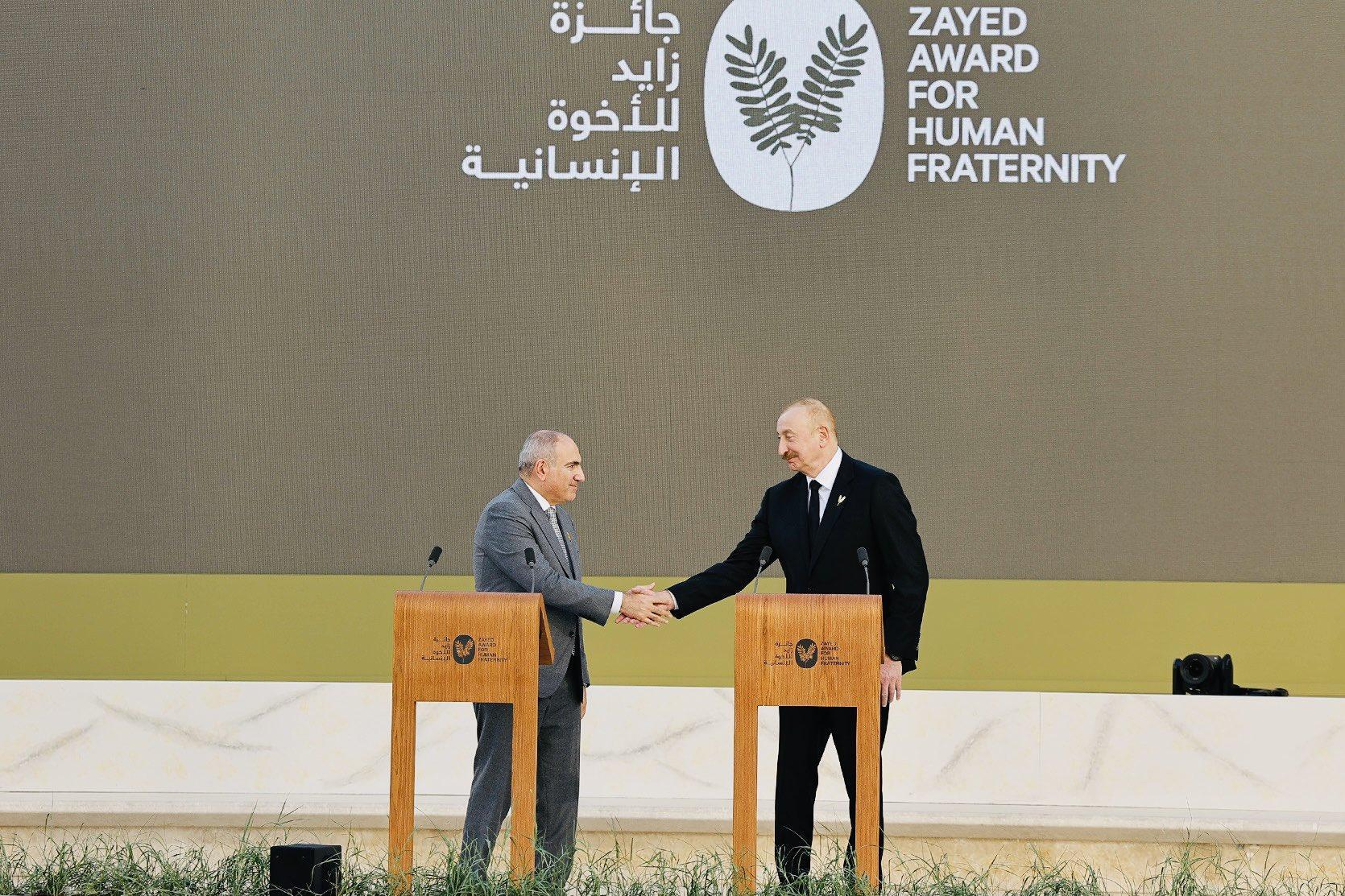
The TITR’s role has also increased for Kazakhstan as Armenia and Azerbaijan’s rapprochement progresses (see EDM, July 17, 23, September 11, 2025). The establishment of the Trump Route for International Peace and Prosperity (TRIPP)—which gives Azerbaijan direct land access to its Nakhchivan Autonomous Republic exclave via Armenian territory under U.S. control—also marked a warming in the Armenia–Azerbaijan relationship (see EDM, August 13, October 15, 2025). Rapprochement between Baku and Yerevan could enable greater connectivity between the Black and Caspian seas beyond the existing route through Georgia (see EDM, January 29). Georgia’s role is unlikely to be completely replaced by alternative routes, but other countries in the South Caucasus and Central Asia benefit from having multiple routes developed.
The TITR’s development remains a work in progress. It requires substantial investment to match the efficiency of more established northern and maritime routes. Kazakhstan has poured billions into modernizing its transport and logistics infrastructure, including major upgrades to its Caspian Sea ports and the creation of new multimodal logistics platforms (see EDM, July 10, 2024, June 9, 11, 2025). The European Union is also contributing under its Global Gateway initiative (see EDM, January 28, April 23, November 19, 2025). The trade corridor will require greater coordination and financing—areas where the participation of larger economic powers could prove useful—to reach its full potential.