Middle Corridor Expands Through New Multimodal Routes
Middle Corridor Expands Through New Multimodal Routes
Executive Summary:
- A new multimodal freight corridor launched on October 15—which moves cargo from the People’s Republic of China (PRC) through Kyrgyzstan, Uzbekistan, and Turkmenistan to the Caspian Sea for onward transport to Western markets via the Baku-Tblisi-Kars route—demonstrates the potential of emerging east–west transport networks.
- This initiative aligns with Uzbekistan’s transit hub ambitions and introduces important geographical diversification, reducing reliance on northern routes through Russia while enhancing the resilience of Eurasian supply chains.
- The route strengthens the Middle Corridor’s infrastructure, deepening regional cooperation and transforming Central Asia from a landlocked space into a land-linked crossroads.
The opening ceremony of a new multimodal freight corridor on October 15 marked a notable milestone in the ongoing transformation of Eurasia’s logistics architecture. A pilot shipment departed from Kashgar, a key commercial hub in the People’s Republic of China’s (PRC) Xinjiang region, and proceeded toward the PRC–Kyrgyzstan border. After successfully transiting Kyrgyz territory, the convoy entered Uzbekistan on October 21. The cargo then continued westward, reaching Turkmenistan on October 24, where part of the shipment was prepared for onward movement across the Caspian Sea. Utilizing maritime links to Azerbaijan via the Middle Corridor, the goods were ultimately directed toward markets further west via the Baku–Tblisi–Kars rail line (Uzdaily, October 16; Caliber, October 16). This initial multimodal operation demonstrates not only the technical viability of the route but also its potential to reinforce emerging east–west transport networks, diversify regional supply chains, and enhance connectivity between Central Asia and the South Caucasus within the broader Eurasian transportation system.
Central Asia’s role in global supply chains has previously remained narrowly defined as a supplier of raw materials moving along inherited transport arteries with limited flexibility and minimal geopolitical autonomy (CAREC Program, May 2024; The Diplomat, May 14). The emergence of the China–Kyrgyzstan–Uzbekistan–Turkmenistan multimodal corridor has the potential to change this role. By integrating Uzbekistan into a continuous overland chain stretching from the PRC to the Caspian Sea, the initiative injects both strategic depth and infrastructural coherence into the region (Global Times, October 15; Uzdaily, October 17). It materially advances Tashkent’s long-articulated objective of transforming a double-landlocked state into a transit hub, capable of channeling east–west and north–south flows across its territory (Asian Transport Observatory, August 2025; see EDM, November 12). This new corridor has become more viable because the Northern Corridor—the long-favored route that sends trains from the PRC across Kazakhstan and Russia into Europe—is less attractive for many Western shippers following Russia’s full-scale invasion of Ukraine (Geopolitical Monitor, November 8, 2022; Market Insights, February 21, 2023).
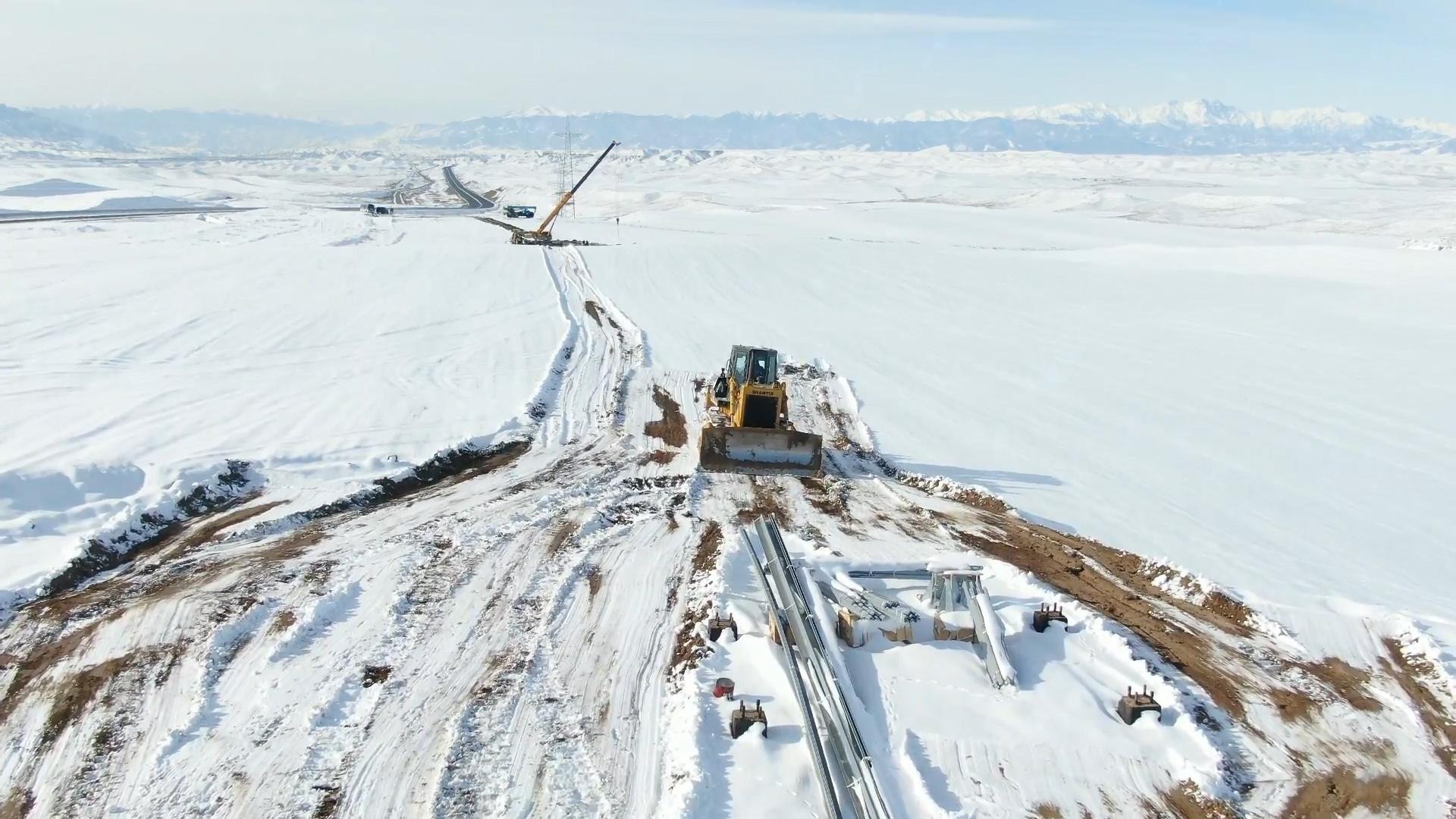
The long-stagnant China–Kyrgyzstan–Uzbekistan (CKU) railway project has finally entered the construction phase after decades of geopolitical hesitation, financing complexities, and technical negotiations (see EDM, July 17, 2024, April 8). Once operational, the CKU line will establish a second east–west rail axis that bypasses Kazakhstan, linking Kashgar directly to Andijan, onward to Tashkent, and further into Central Asia’s wider rail network (Global Times, December 27, 2024; Caspian Policy Center, October 10).
Unlike traditional freight flows that rely heavily on northern routes through Russia and Kazakhstan, the new China–Kyrgyzstan–Uzbekistan–Turkmenistan multimodal corridor introduces geographical diversification, reduces dependence on a single north-bound transit axis, and enhances the resilience of Eurasian supply chains amid shifting geopolitical pressures (WITA, June 16, 2024; Organization of Turkic States, May 2025). Uzbekistan’s active participation underscores Tashkent’s broader goal to transform Central Asia from a peripheral landlocked zone into a transit power center linking the PRC with the Middle East, the South Caucasus, and Europe (Caspian Policy Center, March 14, 2024; NATO Defense College Foundation, May 23).
The corridor’s extension to the Caspian Sea introduces a new layer of geopolitical and geo-economic significance for both the South Caucasus and the Caspian littoral states (Caspian Policy Center, July 28). Turkmenistan’s modernized Port of Turkmenbashi has rapidly evolved into one of the key maritime gateways of Central Asia (Turkmenbashi International Seaport, accessed December 4). Already connected to Baku, Aktau, and several Russian ports through regular roll-on/roll-off (ro-ro) and container ferry services, Turkmenbashi is now positioned as the critical hinge between Central Asia’s rail networks and the trans-Caspian maritime segment of the Middle Corridor.
This route represents an opportunity for Ashgabat to recalibrate Turkmenistan’s regional economic role (CAREC Program, May 22, 2024). Historically dependent on hydrocarbons as its primary source of revenue, the country has long sought avenues to diversify its external economic engagement. The consolidation of Turkmenbashi as a transit hub allows Turkmenistan to expand logistics services, port-based industries, and multimodal trade facilitation. Deeper integration into trans-Caspian transport chains enhances Turkmenistan’s connectivity with Azerbaijan, Kazakhstan, and Türkiye, while creating incentives for more structured participation in broader Eurasian initiatives, whether under the Middle Corridor framework, the Organization of Turkic States (OTS), or emerging PRC–Central Asian connectivity formats (Business Turkmenistan, October 12).
The Port of Baku serves simultaneously as a maritime gateway, a railroad junction, and a multimodal integration hub (see EDM, April 23; Port of Baku, accessed in November). Baku’s infrastructure enables cargo arriving from Central Asia to be redistributed across multiple geoeconomic axes. Westward, freight can continue along the Baku–Tbilisi–Kars (BTK) railway, linking Azerbaijan to Türkiye and further into Europe’s rail and port systems. Southward, Baku connects to the International North–South Transport Corridor (INSTC), a major route facilitating trade flows between Russia, the South Caucasus, Iran, the Persian Gulf, and as far as India (Transport Events, 2024; Eurasia Review, July 16).
The greater the volume of cargo reaching the Caspian from the east—whether through Kazakhstan’s Aktau and Kuryk ports or now through Turkmenistan’s Turkmenbashi port via Uzbekistan’s new multimodal route—the more Baku becomes a transit bridge linking Central Asia to both European and Middle Eastern markets. The expansion of the Port of Baku at Alat, the development of the Alat Free Economic Zone, and the modernization of national railways were all designed to strengthen Azerbaijan’s position as the central node of the Middle Corridor (President of the Republic of Azerbaijan, accessed in November; UN Trade & Development, October 23).
Uzbekistan’s increased involvement in transit routes helps consolidate the trans-Caspian logistical ecosystem. Central Asian, Caspian, and South Caucasus states are becoming increasingly interdependent (Journal of Eurasian Studies, July 24; Trends Research, September 17). Their collective success now hinges on the ability to synchronize tariffs, harmonize schedules, expand port capacities, standardize customs procedures, and invest jointly in digital transport solutions.
This evolving corridor architecture binds the region’s economies together, compelling cooperation and raising the cost of unilateral policy choices. The push to optimize and digitalize these trade arteries is gathering significant momentum across the Turkic geopolitical space (see EDM, June 26). For example, Azerbaijan, Türkiye, and Uzbekistan signed the Ankara Agreement in January 2025, through which they pledged to adopt coordinated measures to expand cross-continental container flows in both east–west and west–east directions (Ministry of Foreign Affairs of Türkiye, January 29). These initiatives are reinforced by a growing body of agreements facilitated by the OTS, which increasingly serves as the primary multilateral forum for coordinating standards, aligning infrastructure planning, and institutionalizing policy reforms across member and observer states (Khazar Journal of Humanities and Social Sciences, September 7, 2024).The successful launch of the China–Kyrgyzstan–Uzbekistan–Turkmenistan multimodal route represents a step toward creating a resilient, diversified, and geopolitically balanced Eurasian transport ecosystem. Uzbekistan’s participation not only strengthens the Middle Corridor but also amplifies the role of the Caspian states, particularly Azerbaijan, as essential connectors in the wider East–West transport architecture. As cargo begins flowing more regularly along this path, the corridor is poised to reshape supply chains, deepen regional cooperation, and accelerate the shift toward a more multipolar Eurasian connectivity model. Central Asia is transforming a “landlocked” space into a “land-linked” crossroads, with new corridors enabling states to capture greater value from logistics, trade facilitation, and industrial spillovers. This shift not only strengthens regional autonomy but also enhances the strategic relevance of the Middle Corridor as a competitive, politically diversified alternative within the broader Eurasian transport landscape.