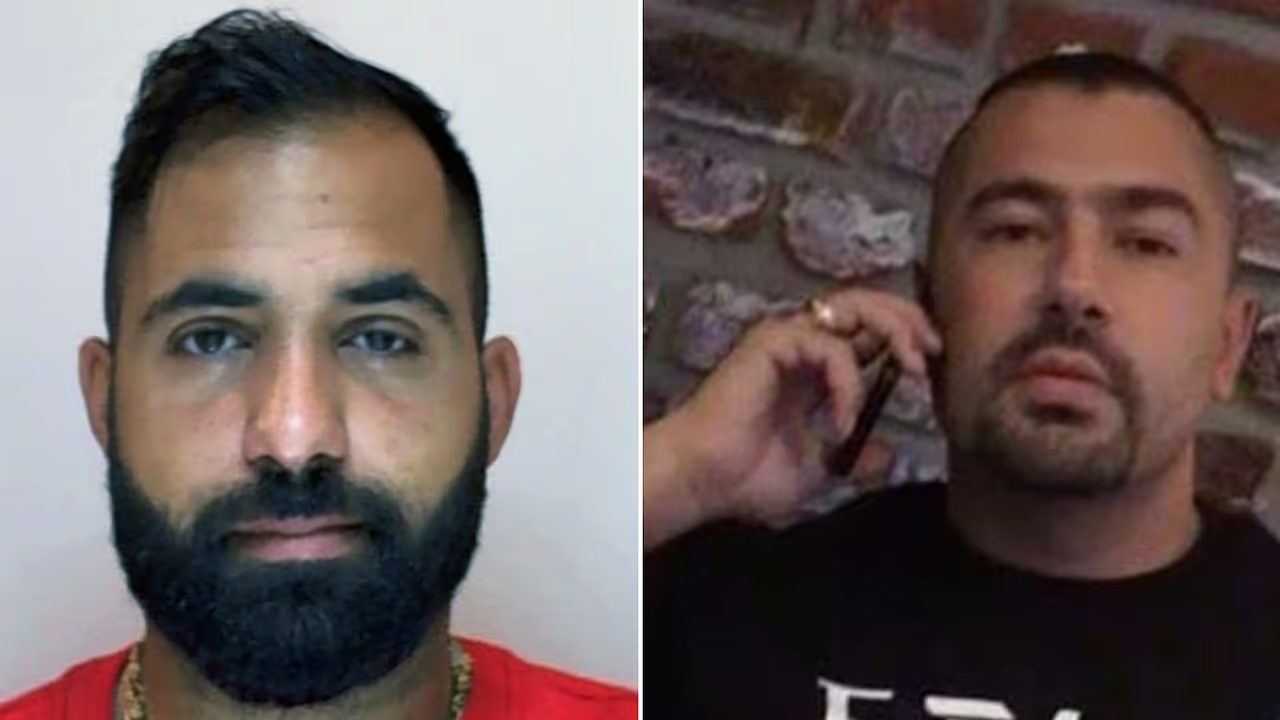
Muhammad Porca: The Man behind Bosnia’s Wahhabi Movement
Muhammad Porca: The Man behind Bosnia’s Wahhabi Movement
Over the course of the past three years, Bosnia-Herzegovina has seen the organizational rise of the radical Wahhabi movement, which is now at its strongest point since the war. Strings are being pulled and recruitment is being initiated by prominent Wahhabi clerics in Western European capitals. The most significant figure among them is Vienna-based Bosnian cleric Muhammad Porca.
Following 9/11, the Bosnian government found itself under pressure from the international community to launch an offensive against the Wahhabi movement, which, until then, had been tolerated and largely ignored by the authorities. Dozens of Islamic charities believed to have ties with militant groups were shut down. Freelance foreign fighters, a holdover from the war, were expelled from the country. Islamic media outlets were banned and radical mosques and key Wahhabi figures were placed under surveillance by both local and international intelligence services.
Wahhabi ringleaders are now focusing on the recruitment of Bosniak (Bosnian Muslim) youth through various gatherings and a pronounced increase in public appearances, most recently in the form of public protests against Israeli attacks on Palestinian land, such as the January 2009 Gaza offensive and attempts to prevent or disrupt Sarajevo’s Gay Pride Festival (Reuters, January 8, 2009).
The Wahhabi movement in Bosnia is relatively new and few in numbers, but it remains a cause for concern among local and Western authorities for several reasons, including its violent behavior and intolerance of other ethnic and religious groups. In Bosnia, the movement has made attempts to infiltrate and take over moderate, local mosques, has vigorously targeted Bosnian Muslim youth for new recruits, called for the establishment of an Islamic state in Bosnia and is advocating jihad.
Wahhabi ideology was imported to Bosnia during the war between 1992 and 1995, when thousands of mujahideen from across the Islamic world came to fight for the Bosniak cause. After the war, the majority of the foreign fighters left the country for other jihads, but Wahhabism lingered. Current leaders of the Wahhabi movement in Bosnia are Bosnian nationals, mostly former clerics, living both at home and abroad. While the movement currently remains highly unpopular among the majority of Bosnia’s Muslims, this is the first time since the war that the radical group has been making inroads by a consistent increase in their public activities, financing and organization.
The Man behind the Movement
Almost all Wahhabi-related activities that have taken place in Bosnia over the past decade, including terrorism cases, lead back to one man, Muhammad Porca, who is believed to be the mastermind of the movement. Bosnian Islamic community officials, police and intelligence have all said (under the condition of anonymity) that Porca, who runs the Vienna-based Islamic community administrative unit, is both the financial and ideological leader of the movement.
The movement experienced a rebirth in early 2007, when self-proclaimed Shaykh Jusuf Barcic and his followers attempted to enter the central Czar’s mosque in Sarajevo to preach for a return to traditional Islam (see Terrorism Monitor, March 23, 2007). Their attempt was rebuffed by Bosnian Islamic community leaders, worshipers and police. Shortly before that, Barcic and his followers had already occupied several mosques in the Tuzla region, clashing with local Muslims. However, Barcic, who was a colleague of Porca’s during their studies in Saudi Arabia, died thereafter in a traffic accident while driving a car lent to him by Porca.
For the last decade and half, the Sarajevo-born Porca has served as the imam of the al-Tawhid Mosque in Vienna’s 12th district. Before the Bosnian war, Porca, age 44, studied at Sarajevo’s Gazi Husrev Beg madrassa and continued his studies at the University of Medina in Saudi Arabia and later in Jordan.
During the war, he left Bosnia for Vienna and became imam at the High Saudi Committee. In 1995, he was appointed imam at the Bosnian branch of Islamic Community in Vienna. After the war, Porca returned to Sarajevo, seeking a teaching position at the Faculty of Islamic Sciences (FIN), but was turned away because his views were considered too radical. Outraged by the rejection, he returned to Vienna with the intention of setting up a parallel institution to the Bosnian Islamic Community.
Overall, Porca’s main ambition is to extend his influence over Wahhabism in Bosnia and abroad and establish himself as an equal authority in direct confrontation with the Bosnian Islamic Community.
Recruitment Full Speed Ahead
Porca and his group are extremely active in their preaching of Salafism, utilizing the Internet, lecturing at mosques and in private houses, organizing seminars and youth gatherings and distributing Islamic literature. Porca has organized a number of meetings in Bosnia and Western European cities, particularly in Austria, focusing on Salafism and decrying the suffering of Muslims in Chechnya, Iraq, Afghanistan and Palestine. Recruitment has become an active goal and the main point Porca appears to stress, according to Bosnian intelligence sources, is that the local Islamic community is ignorant, lacking initiative, indifferent to transgressions against Muslims and lax in their practice of “Communist Islam.”
Porca’s recruitment efforts have been well-thought out and take advantage of economic conditions and the local effects of the global financial crisis by offering cash incentives for converts. Wahhabi recruiters generally target young, rural men with limited economic and educational opportunities. Newly-recruited Wahhabis are also offered financial benefits, such as a monthly salary and additional payments for each new child and convincing their wives to wear hijab. Recruits are mainly Muslim youth who are predominantly Bosnian immigrants, but also converts from Western Europe, who attend Porca’s meetings to listen to a variety of radical preachers. Videos showing crimes committed against Muslims in Iraq and Afghanistan are often used to enrage those in attendance, according to Bosnian intelligence sources.
In Bosnia, Porca’s gatherings take place in closed, isolated Wahhabi communities, difficult for authorities to keep under surveillance. There are currently five larger communities in Bosnia. The largest one, which was recently the subject of independent Bosnia’s largest police raid to date, is in the village of Gornja Maoca. There are two others in villages near the central Bosnian city of Zenica, one in the vicinity of the town of Kakanj and one near the town of Zavidovici. Such communities are ruled by Shari’a law and do not follow Bosnian Islamic Community authority, nor do they show much respect for state laws. While the residents of those communities claim to be farmers subsisting largely on agriculture, they do not mix with people outside their community and they can be hostile to police patrols.
For the past several years, Bosnian authorities have largely relied on foreign intelligence on the area, including information that radical Wahhabis were using the village as a terrorist training camp and a safe haven for wanted terrorist suspects and other criminals.
In early February 2010, 600 police and security agents raided the Wahhabi community in Gornja Maoca, home to around 30 families. In the raid, code named “Operation Light,” launched for undermining the territorial integrity and constitutional order and inciting ethnic, racial or religious hatred and intolerance, seven people were arrested, including community leader Nusret Imamovic, who resided between Vienna and Gornja Maoca. Imamovic is a long time ally of Porca. During the raid security forces confiscated 18 pistols, dozens of hand-grenades and eight rifles, but police said that they expected many more weapons to be discovered, which leads them to believe that Wahhabis relocated the majority of the weapons ahead of the raid (Glas Srpske [Banja Luka], February 14, 2010).
While in Bosnia, Imamovic taught Shari’a law at an improvised school in Gornja Maoca and lectured at the Saudi-funded mosque in Sarajevo. He also administered an Austria-based website called www.putvjernika.com. Last year, Bosnian State Investigation and Protection Agency (SIPA) opened an investigation into the website, suspecting it was being used as a recruitment point for radicalized Bosniaks to fight against U.S.-led coalition forces in Iraq and Afghanistan. For some time, the site was shut down by Austrian authorities, but has recently been re-launched (Slobodna Bosna [Sarajevo], March 14, 2010).
A source from the Bosnian Prosecutors office told Jamestown that the investigation showed that Porca was behind the organizational and financial structure the network of isolated Wahhabi communities. After a similar Wahhabi community in Donja Bocinja was closed down in 2001 by local authorities under U.S. pressure, Porca and his associates set up the isolated community in the abandoned village of Gornja Maoca; previously inhabited by Orthodox Roma. The source said that Porca secured the money used for buying houses and financing the Wahhabis’ relocation from the Saudi High Commission for Aid to Bosnia, of which he was a representative in Vienna and also from some Islamic charities based in the UK and Kuwait, as well as private donors (ISN Security Watch, February 8, 2010).
The first residents of the Gornja Maoca community migrated from Vienna and had all been members of Porca’s mosque; the leaders of the community were his close associates. Porca is known to have visited Bosnia during the annual conclaves in the Gornja Maoca, which attract up to 400 Wahhabi acolytes from several countries. Porca has strong connections with other former Bosnian clerics who are now propagating Salafist thought. All of them studied more or less at the same time as Porca in the Sarajevo FIN, Saudi Arabia and Jordan. One of them is Adnan Buzar, the son-in-law of Palestinian Sabri al-Banna (a.k.a. Abu Nidal), the founder of the Fatah Revolutionary Council and the most-wanted international terrorist in the late 1980s. [1]
All Roads Lead To Porca
In 2007 at the U.S. Embassy in Vienna, a rucksack full of explosives along with Islamic literature containing a passage written by Porca was discovered and declared as belonging to terrorism suspect and Bosnian national Asim (see Terrorism Monitor, October 12, 2007). During the investigation, which ended with Cejvanovic being found mentally ill, Austrian authorities included Porca as one of the organizers of the thwarted attack, but an indictment was never brought due a lack of evidence (Nezavisne Novine, September 17, 2007).
In October 2009, Bosnian border police arrested Vienna-based Muhammad Rustempasic, another Bosnian citizen, suspected of trafficking weapons from Austria and Germany to radical Muslim groups in Bosnia. Rustempasic was a follower of Porca and a frequent visitor to his mosque.
Bosnian intelligence and police sources told Jamestown that the first leader of the Gornja Maoca Wahhabi community, Sabahudin Fiuljanin, was believed to have been appointed by Porca. Fiuljanin (who has legal residency in Vienna) was arrested in Bosnia in October 2002 by U.S. forces who followed him home after observing him outside an American military base in Tuzla on several occasions. In his apartment, soldiers found a shoulder-mounted rocket launcher and several different passports, along with a last will and testament.
Though no verdicts have been handed down in ongoing terrorism cases in Bosnia—largely due to lack of evidence because of the legal necessity of catching suspects in the act of carrying out a terrorist attack—both Bosnian and Western intelligence and security officials acknowledge that the Balkans may serve as a transit point or recuperation area for terrorists.
The stability of the western Balkan region continues to be fragile and local law enforcement and other public institutions remain weak. If Wahhabi ringleaders continue to engage Bosniak youth at the current rate, within several years’ time they will have successfully created a small army of disgruntled, under-educated radical Muslims, frustrated enough with the West to resort to violence. Today, Porca is the man to watch, as he has demonstrated his skills at recruitment and provocation and indicated that keeping a low profile is no longer his strategy.
Note
1. Abu Nidal was killed during mysterious circumstances in Baghdad in August of 2002 (The Independent, October 5, 2008).