Mukaram Khan: Hizb ul-Ahrar – The New Security Challenge in Pakistan
Mukaram Khan: Hizb ul-Ahrar – The New Security Challenge in Pakistan
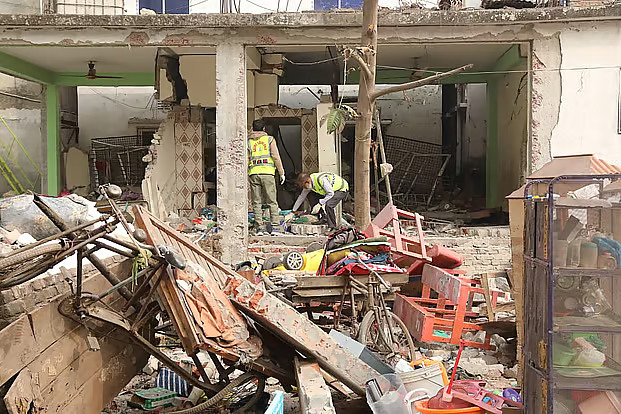
On November 14, 2019, 14 people were injured when a bomb exploded in Lahore. The attack was later claimed by Hizb ul-Ahrar (HuA), a relatively new terrorist group in Pakistan (Dawn, November 30, 2019). The group was founded as a splinter group of Jamaat ul-Ahrar (JuA), which is itself a splinter group of Tehreek-e-Taliban (TTP). The phenomenon of militant organizations breaking apart into smaller groups is not new, and in fact can rob the groups of operational momentum. However, the near-term problem for government security forces that result from the creation of a splinter faction typically comes from the new group attempting to demonstrate its capabilities through wide-scale attacks. The HuA is no exception: under its leader, Mukaram Khan, it has conducted a series of attacks in Pakistan.
Reasons for the Schism
TTP has never been a monolithic entity, as it is comprised of more than 40 factions with a central shura (council) providing limited cohesion. The TTP first splintered after the death of its emir, Hakeemulllah Mehsud, in 2013, and the various factions clashed over the question of leadership. The major new terrorist organization that emerged out of the turmoil within TTP was Jamaat ul-Ahrar (JuA), led by Omar Khalid Khurasani in 2014. The JuA perpetrated several mass casualty terrorist attacks in Lahore, Quetta, Peshawar, the tribal areas and other parts of Pakistan. The group carried out scores of low-intensity strikes against security forces. The JuA spread to Karachi and Quetta from its base of operations in Pakistan’s Mohmand tribal district. Reportedly, the emir of JuA is based in the neighboring province of Nangarhar, Afghanistan. Like its mother organization the TTP, the JuA also expanded and produced its own splinter, the HuA, in November 2017.
The TTP alliance, which is still operating and perpetrating attacks every year, splintered after Omar Khalid Khurasani left the group and founded the JuA. Khurasani left the TTP after serious leadership disputes emerged as a result of the intense pressure placed on the group from the Pakistani military’s Zarb-e-Azb and Rad-ul-Fasad operations in 2014. Reports emerged in November 2017 that a faction of the JuA broke off and formed HuA (Nation, November 12, 2017).
In announcing the formation of his new organization, Mukaram Khan stated the reason he left JuA was because he considered the group’s tactics to be un-Islamic. He pointed to large attacks claimed by JuA that resulted in mass civilian casualties. Specifically, Khan pointed to the bombing of Gulshan e-Iqbal Park in Lahore, which targeted Christians celebrating Easter on March 27, 2016. The attack killed 74 people and injured over 340 (Dawn, January 7, 2017). Khan also pointed to a December 29, 2015 attack in Mardan that killed 26 people and injured 56 (Tribune.com.pk, December 31, 2015). Khan viewed these attacks on innocent people, including women and children, to be against Islamic teachings, saying the JuA leadership did not prioritize avoiding civilian casualties. He claimed that this was a primary reason why he decided to part ways with JuA. Khan also accused Khurasani as being vengeful and involved in attempts to assassinate him. Overall, Khan said he established HuA to reform the current tactics of jihadist operations in Pakistan (Pakistan Today, November 13, 2017).
Leadership and Terrorist Activities
Prior to the formation of HuA, Khan was close to Khurasani, having served as a commander, the head of JuA’s intelligence wing, and a spokesperson for the organization. [1] Khan is a seasoned jihadist who served as one of the most ruthless TTP, and later JuA, commanders since its formation. He hails from the Mohmand district of Pakistan’s former tribal areas. Khurasani is also from Mohmand district, and it is known as a hub of JuA activities. The Pakistani military has conducted several operations in that district since 2008. According to various accounts, the leadership of both JuA and HuA are now based in the eastern Afghan province of Nangarhar and neighboring areas, which is a result of the Pakistani military pushing militants out of the tribal districts in 2014. In fact, Khan announced the formation of HuA from Nangahar province in November 2017 (DOPEL, 2019). Before breaking ranks with JuA, the relationship between Khurasani and Khan had reportedly soured to such a degree that a firefight took place between the supporters of the two, with Mukaram receiving injuries as a result. Mukaram later issued an audio statement describing his differences over the killing of innocent people by JuA in terrorist attacks. He said, “I and other members tried to convince the leadership to change such policies, but failed” (Daily Times, November 12, 2017).
The JuA worked with Islamic State Khorasan (IS-K), the organization’s Afghan province, for a brief period of time in 2014-15, but this relationship did not last long, and it is not clear if Khan himself will pursue a relationship with the group (Aurora Intel, 2019). Allegedly, Khan would like to remain in the orbit of TTP, but as more of a separate entity than his previous association with JuA would allow.
After the formation of HuA, sources estimated that some 40 percent of JuA’s commanders and foot soldiers joined Khan’s new organization (Daily Times, November 12, 2017). Khan designated senior commanders to form the upper hierarchy of HuA. Most of this group are former JuA militant commanders, including Jihadyar Mehsud, commander of HuA’s military wing; Muslimyar, head of finance; Haji Rashid, head of the political shura; Imran Aurakzai, Mohmand Agency commander; and Qari Ismael Afridi, Khyber Agency commander. Khan also named Aziz Yousafzai as the organization’s spokesman, issuing statements and press releases on behalf of the terrorist group (Pakistan Today, November 13, 2017).
Since its formation, the HuA has attempted to compete with both TTP and JuA in perpetrating mass casualty attacks in Pakistan. The focus of HuA attacks is typically law enforcement and security forces, but at times the group has targeted civilians, despite its earlier vow to avoid doing so. HuA has hitherto claimed a number of terrorist attacks in Karachi, where it targeted and killed a police officer on October 3, 2019 (Max Security). An additional attack in the D.I. Khan district of Khyber-Pakhtunkhawa province killed four police officers in February 2019, and on May 8 of the same year, a terrorist attack that targeted police standing near a Sufi Shrine in Lahore killed 11 police officers and injured 25 people (Dawn, February 13, 2019; News International, May 12, 2019). This string of attacks is part of HuA’s “Operation Shamzai,” which it launched in February 2019. Earlier attacks fell under its “Operation Mohammad bin Qasim,” which was launched in April 2018.
A JuA cell that had been operating in Lahore reportedly left the organization to join HuA. This cell is allegedly the same one that claimed to have carried out the aforementioned Easter 2016 terrorist attack, as well as an attack on the Wagah Border that killed 60 people watching the Pakistan-India daily flag ceremony. This cell reportedly joined HuA after the split. [2]
Conclusion
The rise of HuA under Mukaram Khan has shown that the terrorist group is increasing its operations and influence across Pakistan. Curbing the HuA’s terrorist activities seems to be a large task for local law enforcement forces in Pakistan, as the terrorist organization has managed to establish various operational cells in different districts. The police will need to widen the scope of investigations and inter-provincial coordination among law enforcement bodies and the intelligence community. Security policymakers in Pakistan also need to have a closer look at the HuA’s rise and the spread of its activities across Pakistan. It is time to frame strategies to combat cell-structured terrorist organizations like HuA, which are highly secretive and decentralized.
Notes
[1] Discussions with senior Islamabad based journalist, January 21, 2020 [2] Discussions with a senior police officer in Islamabad, January 21, 2020