Pickleball Diplomacy Links U.S. Students to CCP
Executive Summary:
- The People’s Republic of China (PRC) is utilizing a range of both official and less overt means to attract young Americans to the country in support of Xi Jinping’s “50,000 in five years” plan.
- A recent example involving a pickleball delegation from public schools in Montgomery County, Maryland, demonstrates that the less overt channels feature individuals linked to the Chinese Communist Party (CCP), People’s Liberation Army (PLA), and PRC intelligence.
- Facilitating American youth engagement with CCP operatives violates both the national interest and the duty of care that U.S. school leaders owe students.
Just before Christmas, the Consulate General of the People’s Republic of China (PRC) in Los Angeles hosted a gala dinner to celebrate the 54th anniversary of “ping-pong diplomacy” (中美乒乓外交). Coverage of the event stressed the 1971 slogan “friendship first, competition second” (友谊第一,比赛第二), and emphasized Chinese Communist Party (CCP) general secretary Xi Jinping’s message that the “vitality” (活力) of U.S.–PRC relations lies in “exchanges at subnational levels” (在地方) (The Los Angeles Post, December 23, 2025; PRC Consulate General, December 25, 2025, [a], [b]).
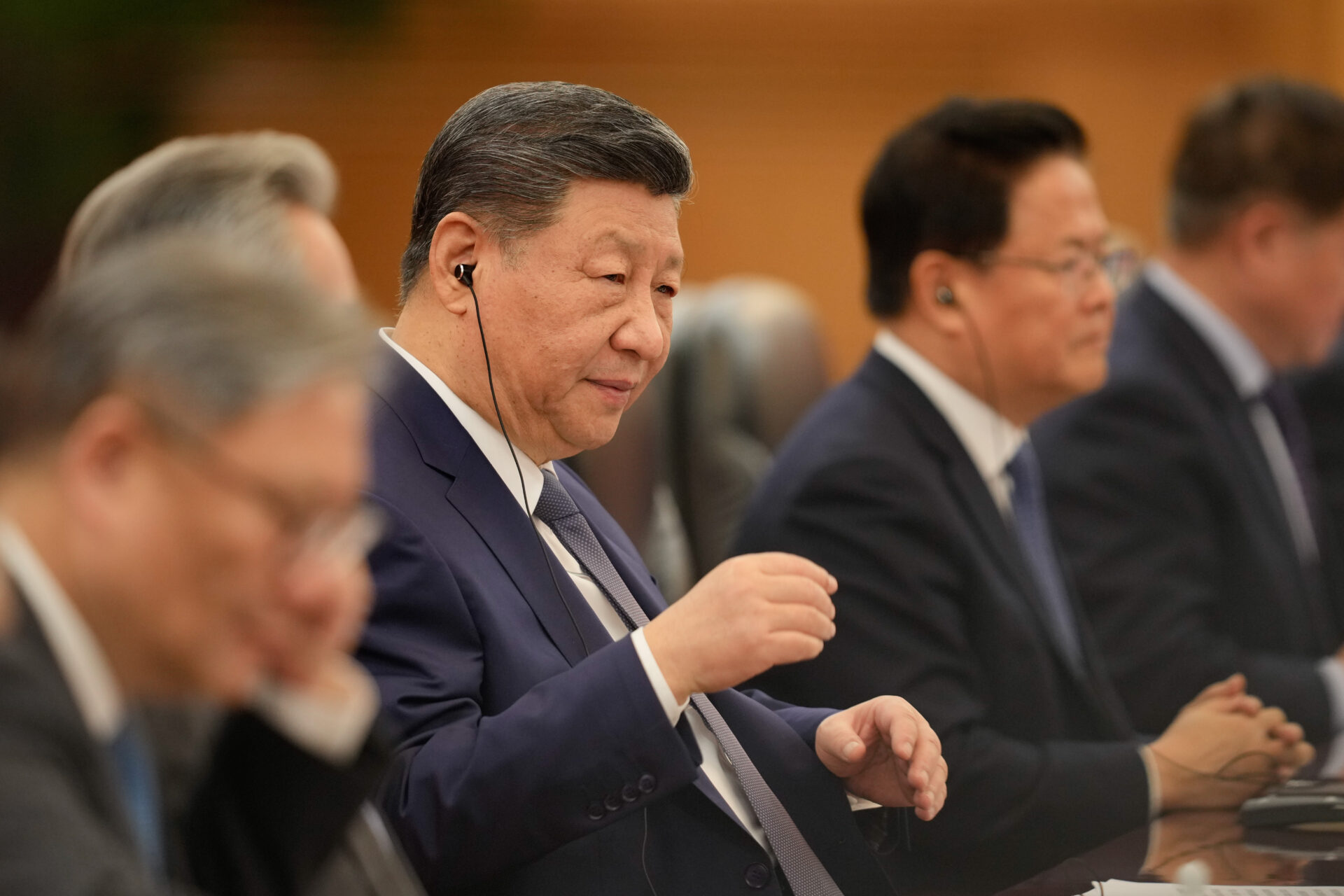
More than half a century on from the era of ping-pong diplomacy, Beijing is seeking to revive sports diplomacy with Chinese characteristics. In July 2025, General Secretary Xi Jinping wrote to a youth pickleball team from Montgomery County, Maryland, that had recently visited the PRC (Xinhua, July 6, 2025). The trip occurred under a PRC initiative aimed at reversing the post-pandemic decline in young Americans traveling to the PRC, which set a goal of attracting 50,000 visitors on exchange and study programs within five years. Xi had outlined this agenda during the 30th APEC Economic Leaders’ Meeting in San Francisco in November 2023, and the PRC Embassy in the United States subsequently revised its visa provisions for young Americans (Embassy of the PRC in the USA, January 3, 2025).
“Pickleball diplomacy,” as the latest outreach operation has been called, has targeted the subnational level. The selection of Maryland’s most populous county to be the focus of the initiative is perhaps not a coincidence. It borders Washington, D.C. and is home to the National Institutes of Health and the Food and Drug Administration; the Department of Health & Human Services is its largest employer; and, as of 2015, the county’s top five employers also included the Department of Defense, Walter Reed National Military Medical Center and associated military health facilities, and the Defense Intelligence Agency. It is also home to senior government officials and their families (Government Executive, October 8, 2015; Montgomery County Maryland, June 30, 2024). If the Party wanted to use subnational diplomacy to ultimately impact national policy, there would be few better places to start.
Party-Linked Power Couple Leads Engagement
Two of the individuals who played important roles in the pickleball trip are husband and wife Zhou Zhixing (周志兴) and Yu Shan (喻杉). The couple are well known in both the PRC and the United States, though English-language biographies omit their deep ties to Party institutions and the People’s Liberation Army (PLA). [1]
Zhou’s father contributed to the PRC’s atomic bomb program, and Zhou himself served in the PLA from 1969–1975 and later in a military factory, before being selected for a position in the Liu Shaoqi research unit of the Central Institute of Party History and Literature (中共中央文献研究室刘少奇研究组) (Sohu, May 28, 2020). He later transferred to the Central Party Literature Press (中央文献出版社), where he published pictorial volumes on Deng Xiaoping and became connected with the Deng family (Sina, February 20, 2017). This led to work for Phoenix Television, headed by a former PLA officer who would go on to serve within the standing committee of united front’s core platform, the Chinese People’s Political Consultative Conference (CPPCC). Zhou launched Phoenix Weekly (凤凰周刊) and became president of the Phoenix Group by 2002 (Baidu Baike/周志兴, December 2025). By this time, Zhou had married Yu, who had her own connections to both the Deng family and the PLA (rfi, October 27, 2016). Yu served with the Policy Research Office of the National People’s Congress Standing Committee, before becoming a deputy director of the Office of the China Association for International Friendly Contact (中国国际友好联络会), which sits under the Liaison Bureau of the Political Work Department of the Central Military Commission (Project 2049, October 14, 2013; Wanwei Forum, October 23, 2015).
In the 2010s, the couple began engaging in international outreach. In 2013, Zhou established the Shenzhen Innovation and Development Institute (深圳创新发展研究院), which in turn launched the Dameisha China Innovation Forum, paying former British prime minister Gordon Brown over $90,000 to deliver a keynote address at its inaugural event in 2014 (U.K. Parliament, March 9, 2015; Dameisha China Innovation Forum, accessed December 22, 2025). The couple also started moving between the PRC and the United States, where they established a foundation to hold track 1.5 dialogues between Chinese and American retired military personnel, government counterterrorism experts, and scholars (Sohu, March 26, 2018).
In 2017, the foundation sponsored a delegation of U.S. mayors to visit the PRC. Also on the trip was Carson Tavenner, a National Committee on U.S.–China Relations (NCUSCR) member who participated through a Seattle-based nonprofit, the Tai Initiative, which he leads (Columbus Dispatch, March 7, 2017; University of Washington, accessed January 12). A former U.S. Air Force officer at Pacific Command, Tavenner identifies Qian Jun (钱军), his childhood Chinese pen pal and lifelong “trustworthy friend,” as his inspiration for promoting U.S.–PRC subnational ties (Defense Technical Information Center, June 28, 2000; University of Washington, November 16, 2015; Tai Initiative, accessed January 6). [2] Qian is now a member of the standing committee of the Shanghai Committee of the CPPCC (FISF, December 2025).
Zhou and Yu’s cooperation with the NCUSCR predated Tavenner and included work with the committee’s vice president, Jan Berris, who has been involved in U.S.–PRC ties since the era of ping-pong diplomacy (Dunjiaodu, October 30, 2019; NCUSCR, accessed December 22, 2025). Zhou spoke on a panel at Harvard with Berris in 2016 in conjunction with a screening of a documentary about Deng Xiaoping’s 1979 trip to the United States (Fairbank Center, November 14, 2016). That documentary provided Zhou access to the Meridian International Center in Washington, where he later sponsored an event at which the PRC ambassador spoke with former national security advisor Zbigniew Brzezinski (Meridian International Center, June 21, 2017).
The couple engage in PRC international influence channels through the West Taihu Lake Global Enterprises Development Forum (西太湖全球公司发展论坛), which they established in 2018 (Baidu Baike/西太湖全球公司发展论坛, accessed January 12). Yu also runs Z-Share Consulting (北京智享荟咨询), which has hosted global enterprise development forums boasting unrivaled connections with U.S. companies and institutions (Sohu, July 22, 2020). A 2017 Beijing event hosted by Yu’s company included participants from the Central Party School, the PRC Ministry of Commerce, the Beijing Department of Commerce, and the China Institute of International Studies, a think tank administered by the Ministry of Foreign Affairs (Global Network, December 8, 2017).
Zhou and Yu have hosted Chinese cultural events in Washington for the better part of a decade, often in conjunction with the Shanghai Magnolia Foundation for International Exchange (SHMF; 上海市白玉兰国际友好交流基金会), which is subordinate to the Shanghai Foreign Affairs Office, and the Chinese Alumni Associations of Greater Washington, which is a united front body (New World Times, September 20, 2024).
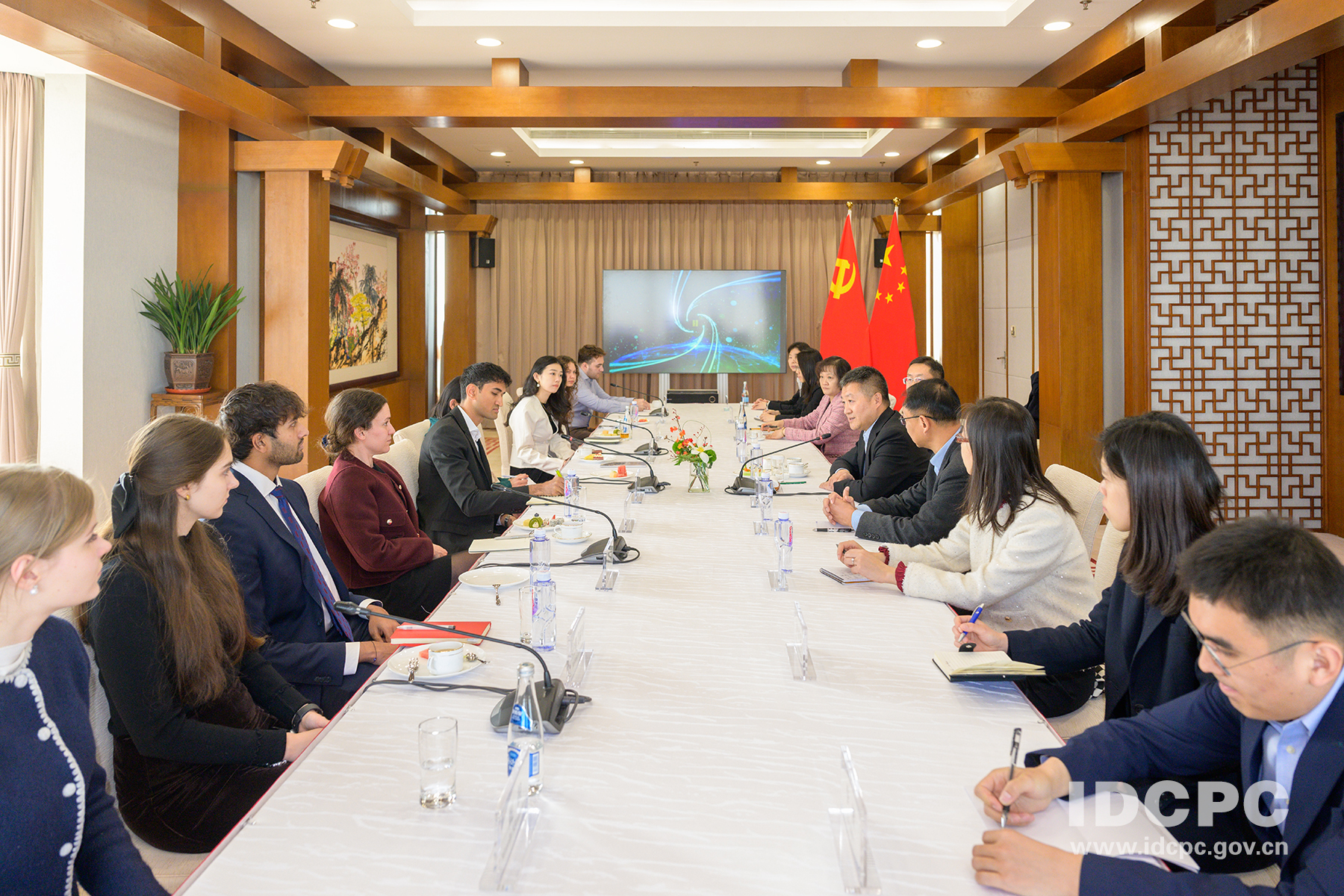
The couple’s involvement with the pickleball trip was tied to their roles as president and founding director of a Washington, D.C.-based nonprofit called the U.S.–China New Perspectives Foundation (美中新视角基金会) (China Center for International People-to-People Exchange [CCIPE], April 14, 2025; Candid, accessed January 14). [3] It is in this capacity that Yu attended the opening ceremony of the Montgomery County delegation’s pickleball tournament in April 2025 and hosted the students at her and Zhou’s Beijing residence. The couple also hosted an event three months later at their D.C. home to premiere a film about the students’ trip (YouTube/MCPS-MD, July 13, 2025; China Daily, July 15, 2025).
Power Imbalance Favors Party Over U.S. Local Authorities
“Pickleball diplomacy” differs from earlier “ping-pong diplomacy,” as it serves as a vector of subnational, rather than national, influence. This applies to the broader “50,000 in five years” campaign. A 2024 report by a united front-linked think tank summarized the campaign’s objective as being to use outreach to U.S. youth to offset the recent downturn in American views of the PRC, and criticized the U.S. State Department’s classification of mainland China at the time as a “Tier 3” destination (which suggests reconsidering travel “due to serious risks to safety and security”) (Center for China and Globalization, July 11, 2024). [4] The report cast the campaign as an opportunity to counter “negative voices and sentiments in the U.S. elections, media, and public opinion” while promoting cooperation in education and sports, among other areas.
Central coordination and united front-linked activity was evident throughout the April tour. Posters and banners advertising “friendship without borders, building the future together” greeted the 31 student travelers and their chaperones at every stop. The group’s first game was in Shanghai, at the invitation of the Shanghai municipal government, and was supported by SHMF (Shanghai Observer, April 13, 2025). Alongside school visits for pickleball matches, the group visited tech companies and were entertained at Zhou and Yu’s home. Other individuals involved in the trip also have ties to organizations linked to the PRC government or the united front system. These include Xia Xiangbo (夏详波), a senior advisor to the U.S.–China Association of Commerce (USCAC; 美中工商联合会), a body active in promoting PRC links with U.S. states; Wang Pengfei (王鹏飞), executive director of New Education Research Institute at Soochow University; and Julie Yang (杨成化), president of the Montgomery County Board of Education, who has participated in events in D.C. hosted by Zhou and Yu’s U.S.–China New Perspectives Foundation (Capital City Info, November 13, 2024; CCIPE, April 22, 2025; YouTube/MCPS-MD, July 13, 2025; Baidu Baike/王鹏飞; BOSS Zhipin; CEAIE, accessed December 20, 2025). [5]
Subnational authorities in the United States are unlikely to be aware of how the CCP tightly manages exchanges. County leaders told students that relationships between countries “start with … one friendship at a time” and encouraged “sharing the story” of the warmth they encountered in the PRC. Comments from one of the leaders of the trip on the U.S. side also spoke of the students receiving history lessons about the three cities visited, and described Shenzhen as one of the world’s “most technologically advanced cities” (NAS Athletic Zone, January 8, 2026). Such comments mirror the messaging and framing that the Party has pushed in recent years.
A Chinese assessment indicates that the “50,000 in five years” campaign is succeeding: 40,000 students have visited in the last two years, and U.S. public opinion surveys by Pew and the Chicago Council on Foreign Relations find that “public attitude [sic] in the US toward China is becoming more and more positive, with the younger generation holding more favorable views” (China Daily, January 12). The CCP appears to be counting on the students it hosts through these exchanges to advance its interests down the line—a longstanding goal of united front work (US-China Economic and Security Review Commission, August 24, 2018; China Brief, March 28, 2025).
Following the trip, the PRC side sought to build on this new facet of the bilateral relationship. Beyond the film and a letter from Xi Jinping, the embassy in Washington installed a pickleball court and invited the Montgomery County pickleball players to use it (X/@AmbXieFeng, August 2, 2025). Soon after, the Montgomery County team welcomed a pickleball contingent of 53 students from Shenzhen (X/@mpcsAD, August 30, 2025).
Pushback from Congress
By late summer 2025, the U.S. government had become aware of the “pickleball diplomacy” initiative. On August 18, a few weeks after the PRC ambassador had invited the Montgomery County players to participate in a tournament at the embassy, Congressman John Moolenaar, who chairs the House Select Committee on Strategic Competition between the United States and the Chinese Communist Party, wrote to the Montgomery County executive and the Montgomery County Public School Board, noting that “students in Maryland have been targeted for influence operations by an organization affiliated with the Chinese Communist Party (CCP) in an attempt to influence American youths” (Select Committee on the CCP, August 18, 2025). The letter illuminated the CEAIE as an influence agent subordinate to the CCP and an element of the united front system: “In short, the CEAIE-funded exchange is a front for the CCP’s influence operations.” The congressman recommended that Montgomery County “cease all future engagements with CEAIE and the CCP, as well as the CCP’s proxies, and conduct a thorough and comprehensive review of all the County’s exchange programs with the PRC” (Select Committee on the CCP, August 18, 2025).
This pressure from Capitol Hill appears not to have deterred Montgomery County from continuing its engagement with “pickleball diplomacy.” The county hosted a delegation from Shenzhen over Labor Day weekend in 2025, and plans to welcome students from the PRC in February before a second delegation of Montgomery County students head to the PRC for the Spring Festival, which the county official called “the most sacred time to visit China” (YouTube/NAS Athletic Zone, January 8).
Conclusion
Subnational influence campaigns place the burden of safeguarding national security on local actors, such as city councilmembers, law enforcement authorities, and in this case, parents. The Select Committee and other federal government institutions may play a role in advocacy, but otherwise have limited jurisdiction in addressing the coordinated efforts of Party committees, city administrations, state media, and PRC-based corporate sponsors to target American students.
In the United States, local authorities and functionaries, schools, pro-PRC organizations, the PRC Embassy, non-profits, and prominent philanthropists have all been involved in aspects of the campaign, either consciously or otherwise. Countering such influence requires a concerted effort by national and subnational authorities. Whether the goal is thwarting Xi Jinping’s “50,000 in five years” plan or protecting unsuspecting students from the CCP’s prying eyes, elected officials from the executive and legislative branches down to the county and school-board level have roles to play.
Notes
[1] A 2019 Hoover Institution publication on Chinese influence activities in the United States mentions Zhou and the U.S.–China New Perspectives Foundation. But it only refers to him as a “publishing entrepreneur” and dismisses the foundation’s significance on the grounds that its offices “have no track record of activities or publications” (Hoover Institution, 2019). An earlier profile of Zhou from a National Committee on U.S.-China Relations (NCUSCR) event describes him as “a well-connected publisher and a distinguished political commentator” who began his career at the Central Party Literature Research Office. This profile also leaves out his military service and distinguished pedigree (NCUSCR, February 27, 2014).
[2] One of Tavenner’s board members memorably explained that the Tai Initiative’s subnational focus is necessary because “[n]ational security and big governmental issues too often get in the way of building more constructive, positive relationships” (University of Washington, November 16, 2015).
[3] Interestingly, the organization’s public filings do not mention Yu, though media reports refer to her as the organization’s “founding director” (创始董事).
[4] After the CCP released three U.S. citizens in a prisoner exchange in November, 2024, the Biden Administration downgraded its classification of China from a Tier 3, “reconsider travel,” to a Tier 2, “exercise increased caution” destination, though maintained a warning about arbitrary exit bans (China Travel Advisory, accessed January 21).
[5] Xia is also a long-term cadre of the Chinese Alumni Associations of Greater Washington (CAAGW; 大华府地区中国大专院校校友会联合会), alongside Yu Shan (USCAC, May 3, 2024, accessed January 12; CAAGW, accessed January 12). Wang’s organizations involved in the trip include the event-sponsoring company MSE Education Technology Group (迈思亿教育科技集团) and the “Young Envoys Scholarship” (YES) program run by the China Education Association for International Exchange (CEAIE) and the CCIPE under the Ministry of Education.