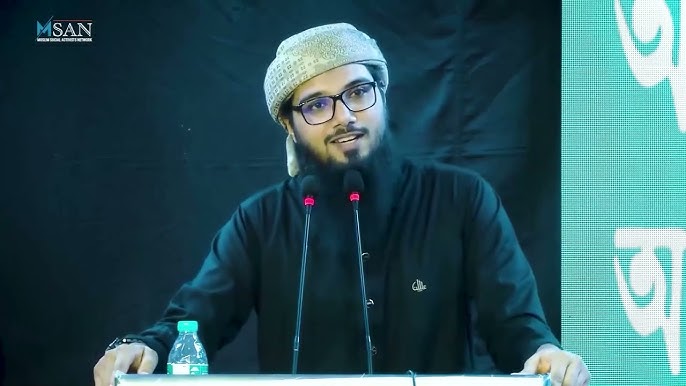
The Future Leader of the Taliban? A Brief Sketch of Taliban Deputy Chief Mullah Muhammad Yaqoob
The Future Leader of the Taliban? A Brief Sketch of Taliban Deputy Chief Mullah Muhammad Yaqoob
The announcement of the death the Taliban movement’s founding leader, Mullah Muhammad Omar, in July 2015, almost two years after his actual demise, set off a succession battle within the Taliban’s ranks (Dawn (Karachi), July 29, 2015; Daily Pakistan, August 31, 2015). Despite vehement opposition from one faction of Taliban commanders and the family members of Mullah Omar — especially his eldest son Muhammad Yaqoob and his brother Mullah Abdul Mannan Omari — Mullah Akhtar Mansoor, the sole deputy of Mullah Omar who had been essentially leading the Taliban since 2013, was able to secure his appointment as the next Taliban chief. In April 2016, Mansoor appointed Muhammad Yaqoob and his uncle to the Taliban’s Rahbari Shura (a.k.a. Quetta Shura), the powerful decision-making body, in a move designed to quell internal dissent and strengthen his position as the leader (Pajhwok Afghan News (Kabul), April 5, 2016).
Mullah Yaqoob maintains high levels of clout with Taliban commanders due to his famous father. In exchange for his unconditional support for Mansoor, Yaqoob was also appointed head of the Taliban’s military commission for the 15 provinces of Afghanistan under Mansoor’s leadership; his uncle, Abdul Mannan, was appointed as the Taliban’s chief for religious affairs (Khaama Press, April 4, 2016). Even though Mansoor was not unanimously supported as the choice for the top Taliban post, he managed to lead the group by appeasing various Taliban factions — and with the Pakistani intelligence agencies’ tacit backing — until his death in late May 2016 in a U.S.-backed drone strike in Pakistan’s Balochistan province.
With the death of Mansoor, the succession battle within the group once again surfaced. This time, the Rahbari Shura of Taliban, the central leadership council, elected influential Islamic cleric Haibatullah Akhundzada as a consensus leader. In an attempt to keep the Taliban movement united and to put down any dissenting voices, the Taliban council also restored position, power and territory to a few formidable Taliban leaders, including Muhammad Yaqoob and Sirajuddin Haqqani, the scion of the Haqqani Network. In May 2016, both Yaqoob and Haqqani became deputies of the present Taliban Emir ul Momnieen (Commander of the Faithful) Haibatullah Akhundzada. By elevating both, the Taliban council muted the dissent and existing intra-group differences for the time being (Dawn [Karachi], May 25, 2016).
Future Leader of the Taliban
A cursory look at Yaqoob’s early life shows that this 27-year-old son of the Taliban movement founder and supreme leader was educated in a religious seminary in the Pakistani city of Karachi. He reportedly received educational training under the present Emir of the Taliban in Pakistan when Haibatullah Akhundzada was teaching and preaching at the al-Haaj mosque and Khair-ul Madrasa in Kuchlagh area, located near Quetta in Balochistan province (Reuters, October 10, 2016; Afghanistan Analyst Network, June 22, 2016). In Taliban statements, his name appears as Moulavi Mohammad Yaqoob Mujahid. “Moulavi,” an honorific, is undoubtedly a reference to his achievements in religious education.
Muhammad Yaqoob’s rise within the Taliban’s leadership hierarchy has been under constant scrutiny: many observers believe that Yaqoob is best placed to ascend to the group’s top leadership position should anything happen to Akhundzada. Yaqoob has gained key experience while leading the Taliban’s military commission and serving under the two successive Taliban leaders for the last couple of years. Most importantly, even though he is young, his family name makes him one of the most accepted figures among the Taliban’s various factional leaders. Additionally, Yaqoob has an edge over the other powerful contender for the top post, Sirajuddin Haqqani, popularly known as “Khalifa,” as Haqqani is preoccupied with managing the operations of the Taliban-allied Haqqani Network. Furthermore, Haqqani does not have the same level of authority that Yaqoob has over all sections of the Taliban in Afghanistan, especially in the southern strongholds.
According to reports, both deputies of Haibatullah Akhundzada, including Muhammad Yaqoob, are currently consolidating their positions and taking operational commands within the group. [1] As Akhundzada focuses mostly on the Taliban’s religious affairs and seems to lack control over the day-to-day political or military operations, the two deputies have been establishing their own operational spheres of influence.
Though little is known about his aptitude as a commander both on and off the battle field, Yaqoob has shown the ability to astutely negotiate intra-group tensions. How he handled the pressure of his father’s death and the ensuing leadership crisis, and his move to extend his and his family’s support to Akhtar Mansoor after initially hesitating, shows his maturity and foresight. Furthermore, it displays his commitment to keeping the Taliban movement alive without factionalism at a crucial time. In fact, his support to Mansoor brought unity among the various Taliban factions, helping to continue his father’s legacy.
Days after the reports of his father’s death surfaced in 2015, rumors of Yaqoob’s death also began to circulate. Then-deputy speaker of the Afghan Wolesi Jirga (lower house of parliament) Zahir Qadir also went on record to say that Muhammad Yaqoob was killed in his attempt to succeed his father and that the Mansoor faction of the Taliban was suspected (Tolo News, August 3, 2015).
However, an unscathed Yaqoob emerged in subsequent days, putting to rest all the rumors about his death and Taliban infighting. He also denied an earlier rumor about his father’s suspicious death having been at the hands of a rival Taliban faction, instead underscoring the fact that Mullah Omar had died of natural causes (Express Tribune, September 14, 2015). Yaqoob has shown his commitment to group unity and obedience to the Taliban’s core values. Despite strong support from a group of Taliban commanders who wanted him to take the mantle of leadership by force, Yaqoob has pledged allegiance to and served under both of his father’s successors.
Outlook
It is as yet unclear if Muhammad Yaqoob is ready to assume the leadership of the Taliban. Factors influencing him may be that he is still too young and that assuming the top leadership role could make him a prime target of government forces or rival Islamic movements like Islamic State Khurasan (IS-K). However, his closeness to his former teacher and now leader, Akhundzada, and the support of many of his father’s loyal commanders — including Gul Agha, Qayum Zakir, Maulvi Shirin and Nuruddin Turabi — put him ahead of Sirajuddin Haqqani or other Taliban leadership camps to eventually take the reins of the movement. [2] The support of his family members alone, including that of his uncle Abdul Mannan, would immensely facilitate his position as a leader of the Taliban in Afghanistan.
Unlike many other senior commanders who only have expertise and experience in military operations, Muhammad Yaqoob has both extensive religious training and battlefield experience as the chief of military operations for the 15 southern and western provinces. This would certainly assist him in gaining respect and influence over the Taliban’s political and military commanders as well as its foot soldiers. Even though he spent the large part of his student life in Pakistan’s seminaries, his last few years in Afghanistan will certainly have taught Yaqoob the hard lessons of insurgency and the responsibility of a deadly legacy.
NOTES
[1] Author’s interview with anonymous Afghan journalist, October 2017 [2] Borhan Osman, “Taliban in Transition 2: Who is in charge now?”, Afghanistan Analysts Network, June 22, 2016. https://www.afghanistan-analysts.org/taleban-in-transition-2-who-is-in-charge-of-the-taleban/