In His Own Words, Abu Zar al-Burmi: The Mufti of the Islamic Movement of Uzbekistan
In His Own Words, Abu Zar al-Burmi: The Mufti of the Islamic Movement of Uzbekistan
Background
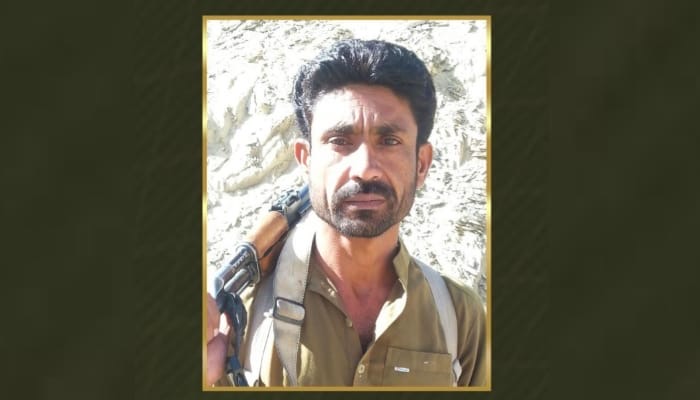
A ferociously combative polemicist, Abu Zar al-Burmi (a.k.a. Abu Zar Khanjari; Abu Zar Azzam)has been recently identified on jihadi forums as the mufti of the Islamic Movement of Uzbekistan (IMU), one of the most radical groups based in Pakistan’s Federally Administered Tribal Areas (FATA). [1] Al-Burmi, however, has described himself in the past as being part of the Tehrik-e-Taliban Pakistan (TTP). [2]
Fluent in Arabic and Urdu, he is believed to be a Pakistani national of Burmese ancestry or nationality, which only makes his theological leadership of an ethno-linguistically unrelated militant group all the more curious. His Arabic-style nom de guerre includes the nisba—an adjectival suffix ubiquitous in Islamic culture—“al-Burmi,” meaning “the Burmese” or “of Burma.” Perhaps due to his unconventional background, belonging to the marginal Rohingya community inside Pakistan and in the jihadi community, al-Burmi appears to have little sentimental value for anything not purely Islamic, including the complex background of Pakistan’s founder, Muhammad Ali Jinnah. For this reason, he does not seem to be interested in the Taliban movement as a Pashtun nationalist—as some analysts interpret such nationalist sentiments—but as a force for implementing Islamic law in the tribal areas under their nominal control. Al-Burmi’s online recordings include an extremely hostile debate with a religious scholar likely linked to the Pakistan Army as well as a number of lectures.
Pakistan in Need of a Jihadi Revolution
Al-Burmi’s stated hadf (goal) is to transform Pakistan into a pure Islamic state through the rasta (course) of jihad. Echoing the call of other late jihadis, such as Osama bin Laden and Abdul Rashid Ghazi, he states that the goal of Muslims should be shariat ya shahadat (Islamic law or martyrdom). Al-Burmi makes clear that the sources of manba(proof) or emulation should be restricted to the Quran, the Sunnah, Ijma-the consensus view of Islamic community, and comparative analogies of the Quran and hadith known as Qiyas. He claims that the Prophet Muhammad established Shari’a law through jihad and that to make Islam dominant in a territory, the aforementioned manba, rasta, andhadf must be adhered to. He asserts again that Pakistan’s constitution and judicial system are based on an infidel system, known in Urdu as kufri nizam, inherited from the British.
Anger at the Elite
Al-Burmi is opposed to Pakistan’s elite who derive much of their power from the inequality of the country’s stubborn feudal system. He states that the TTP and their allies (such as the IMU) are waging jihad against the current status quo in Pakistan. In pursuit of a pure Islamic system, their targets are Pakistan’s rulers, bureaucracy, intelligence agencies, army, courts, lawyers, and judges. His jihad will not stop as long as Allah’s law is not implemented and the Shari’a of the era of the Prophet Muhammad is not ruling the land.
In a series of lectures under the title of Qanun-e Pakistan Ka Kufr (The Disbelief of the Laws of Pakistan), al-Burmi describes Pakistan’s laws as “satanic.” [3] He criticizes those who state that Pakistan’s constitution and laws are based in Islam and that the country’s woes stem simply from its morally corrupt ruling class. Al-Burmi states that there is a double fasad (transgression) exemplified by Islamabad. He believes the problem resides with both the usuli (fundamental) and amali (practical) elements of Pakistan’s political system.
Al-Burmi outlines his view as to why Pakistan’s political system is fundamentally un-Islamic:
- It takes away the right to make laws from Allah and gives it to an elected parliament;
- It gives immunity to many individuals and institutions from prosecution (from both Islamic and non-Islamic injunctions);
- It gives the president the right to pardon criminals or suspend/change their punishment. But according to Islamic law, this is solely the right of the victim/victim’s family. Pakistan’s “satanic” constitution takes this right away from them and gives it to the president;
- There are no stipulations for qualifications for being a judge. Neither are judges for the Supreme Court/High Court/Sessions Court required to be Muslim nor must their rulings be bound by Shari’a law;
- Islam requires that judges be Muslim and that their rules be bound by Islamic law. Al-Burmi cites the lauded Sunni Hanafi jurist Imam al-Kasani’s view of Islamic stipulations for one to be eligible to be a judge (that he cannot be mentally ill, a non-Muslim, mute, a slave, or a child). To make his point, he mentions that Justice Rana Baghwandas, a Hindu mushrik (polytheist) served as Chief Justice of the Supreme Court of Pakistan. In al-Burmi’s intolerant view, the laws intended to govern Muslims cannot be upheld by a Hindu;
- There is no requirement that the president must be a male, but this is the ijma(consensus) of all the ulema. He cites two Quranic verses:
-
- “Men are to be the guardians of women.” Surah Nisaa (4:34);
- “Men are a degree above them [women].” (2:228) He states that the fatwa of the ulema declare that it is impermissible for a woman to be head of state.
- Its constitution and penal code are largely from non-Islamic sources. Mixing Islamic laws with non-Islamic laws, al-Burmi claims, is like mixing milk and urine. A pure or edible thing is rendered impure or inedible by mixing it with something unclean. The constitution of Pakistan states that a person cannot be punished for a crime that was committed prior to the act being declared illegal and a punishable offense. Al-Burmi states that this means that if one drank alcohol prior, an obvious offense under Islamic law, but Pakistan had yet to ban alcohol consumption until 1977, then it is not a prosecutable offense. Al-Burmi insinuates that this indicates that the Pakistani constitution trumps Allah’s law. This means that the aqidah (creed) of Pakistan’s legal system and Shari’a are not the same;
- Pakistan’s parliament can reject or change Islamic criminal punishments;
- The ultimate arbiter of the law is not Allah, but man.
Upon the election of Benazir Bhutto as Prime Minister, he stated that “unfortunately” neither does Shari’a allow a woman to lead prayer nor does it allow a woman’s leadership in determining the affairs of the country, but given that the masses have elected a woman as prime minister, he has little choice but to respect the rai(opinion/choice) of the masses. He states that this behavior is that of unbelievers and begs Allah for forgiveness. Al-Burmi then lists a number of Quranic verses that state that hukm (lawmaking) is only for Allah:
- The constitution forbids any other punishment for a crime other than that designated under Pakistani law;
- Islamic elements of the system have to be approved by the parliament and harshhudood punishments implemented under the late dictator General Muhammed;
- Zia-ul-Haq can be commuted or dismissed by the president.
Al-Burmi’s Passion for Shari’a Law
Al-Burmi states this is similar to those early Muslims who wanted to do 50/50 split in jurisprudence, (20:34) and rule by Islamic law and Quraishi law every other year. The Prophet Muhammed rejected this notion and the Surah al-Kafirun, which delineates a clear demarcation between believers and unbelievers, was revealed.
Al-Burmi insists that the implementation of Islamic law must be an all encompassing 100 percent and that even 99 percent would not be acceptable. He then labels President Asif Ali Zardari khabees (evil) zinakar (fornicator) and Prime Minister Yusuf Raza Gilani khinzeer-e-azam (the great pork), a grave insult in Islamic culture. Al-Burmi lambasts Pakistan’s leaders to make his point that expecting Shari’a from them is disrespecting the idea of Shari’a itself. He said those who are working to implement Islam through the parliament are insulting Islam. He announces that in addition to Orakzai Agency in the FATA, Shari’a has been successfully established in Kurram Agency. These gains, while significant in al-Burmi’s view, are merely a start. He purportedly prays for Shari’a in all of Pakistan, Hindustan (India), and the rest of the world. Al-Burmi states that establishing a pure Islamic state within Pakistan’s border and abolishing its Anglo-Saxon-based legal code is impossible without jihad.
Al-Burmi has deep personal anger toward the Pakistan army. He frequently shouts in his sermons, describing the Pakistan Army as kambakhton (hapless). Al-Burmi claims that during the bayans (sermons that precede the obligatory elements of the Friday prayers) of the TTP, members of the Pakistan Army curse at the group’s members and blast Indian (read: Hindu or Sikh) pop music.
At War With Pakistan’s Origins
In a debate with an Islamic cleric apparently backed by the Pakistan Army, al-Burmi states that he rejects the official title of Quaid-e Azam (the Great Leader) for the founder of Pakistan, Muhammad Ali Jinnah. He regards Jinnah as Kafir-e-Azam (the Great Infidel), a tremendous insult to Pakistan’s driving visionary and founding father. He states that Jinnah was of Ismaili Sevener Shia origin and that his father’s last name was not even a Muslim one. This derogatory pun on Jinnah’s title was used by Jinnah’s contemporary Islamic detractors, including the Jamaat-e Islami’s Maulana Abu ‘Ala Mawdudi as well as many Deobandi clerics. Al-Burmi comes from a Deobandi background and thus bases his ideology on Deobandi thought rather than any political persuasion even remotely secular such as ordinary nationalism or ethno-nationalism. This may be due to his belonging to one of Pakistan’s more obscure minority groups with no traditional political power base such as Punjabis or Pashtuns.
Al-Burmi’s Jinnah bashing amounts to a political heresy in Pakistan’s nationalistic politics where his legacy is considered sacrosanct. Pakistani Deobandis and political Islamists have had to come to terms with Jinnah’s paramount role in Pakistan’s official self-history, and have backtracked or even denied their opposition to Jinnah. Some revisionist ultra-nationalist Islamist commentators such as Zaid Hamid have gone beyond this, arguing that Jinnah had been a pious man and intended for Pakistan to be an Islamic state, a notion Jinnah himself would likely have found abhorrent (Pakteahouse.net, March 6, 2010).
Criticism of Pakistan’s Religious Parties
Al-Burmi goes on to criticize Pakistan’s Islamist religious parties. He states that theirumoomi kirdar (general role) is they do not base their opinions on implacable positions but that they keep modifying their stances on constitutional/legal/policy issues in a bid to stay relevant in Pakistan’s ever fluid polity. Neither are these parties fit for leading the Muslim ummah, nor are they equipped to battle against the Crusader onslaught to al-Burmi. He states that the objective is not to make individual people targets of his wrath but to ensure that the ummah does not continue to go astray from what he sees as Islam’s true path.
Al-Burmi acknowledges that Pakistan’s constitution does in fact contain Islamic elements and these cannot be denied. He then repeats the analogy he used in previous lectures: that if a few drops of urine are dropped into a bowl of milk, the contents of the bowl cannot be considered clean milk, let alone any type of milk.
Refutation of the “Propaganda” against the Taliban
Abu Zar al-Burmi condemns the “propaganda” against the Taliban, including claims that they are oppressors and transgressors. He states that though the Taliban are cursed by others, the people need not fear them as they are the righteous believers according to al-Burmi. He states that all sorts of weapons have been used against them—tanks, planes, the army, drones and CIA officers like Raymond Davis. But from the blood of every martyr will come a thousand mujahideen. He concludes by calling on his listeners to embrace jihad, be prepared to sacrifice everything—including their families and enter the battlefield standing firm with paradise awaiting them all.
Notes
1. Pakistani officials have regularly listed the IMU as among their greatest challenges in FATA as described in a leaked diplomatic cable from the American consulate in Peshawar. They were close allies of Baitullah Mehsud and remained tied to the TTP until today. Dawn, May 20, 2011; Al-Burmi, Greetings to the Muslim ummah Eid al-fitr 2011, see (Arabic), videos.videopress.com/QZnGwZob/islamic-movement-of-uzbekistan-abc5ab-dhar-al-bc5abrmc4ab-e2809cgreetings-to-the-muslim-ummah-on-c4abd-al-fie1b9adre2809d_dvd.mp4.
2. Ibid.
3. Al-Burmi’s sermons titled “Fawji Mufit Mubuhasa” can be heard at www.archive.org/details/Mufti_733.