Mushtaq Ahmed Zargar: Provocateur of Kashmir’s Enduring Terrorist Movement
Mushtaq Ahmed Zargar: Provocateur of Kashmir’s Enduring Terrorist Movement
On June 12, motorcycle-borne militants in Jammu and Kashmir’s Anantnag district killed five Central Reserve Police Force (CRPF) personnel. Kashmir-based Al-Umar-Mujahideen (AuM), a largely inactive terrorist group, has claimed responsibility for the attack (Daily Excelsior, June 13). These fatal shootings and grenade attacks targeting Indian paramilitary forces occurred nearly four months after the Pakistan-based Jaish-e-Mohammad (JeM) terrorist group’s audacious vehicle-borne suicide attack in Pulwama on February 14, which killed 40 CRPF personnel.
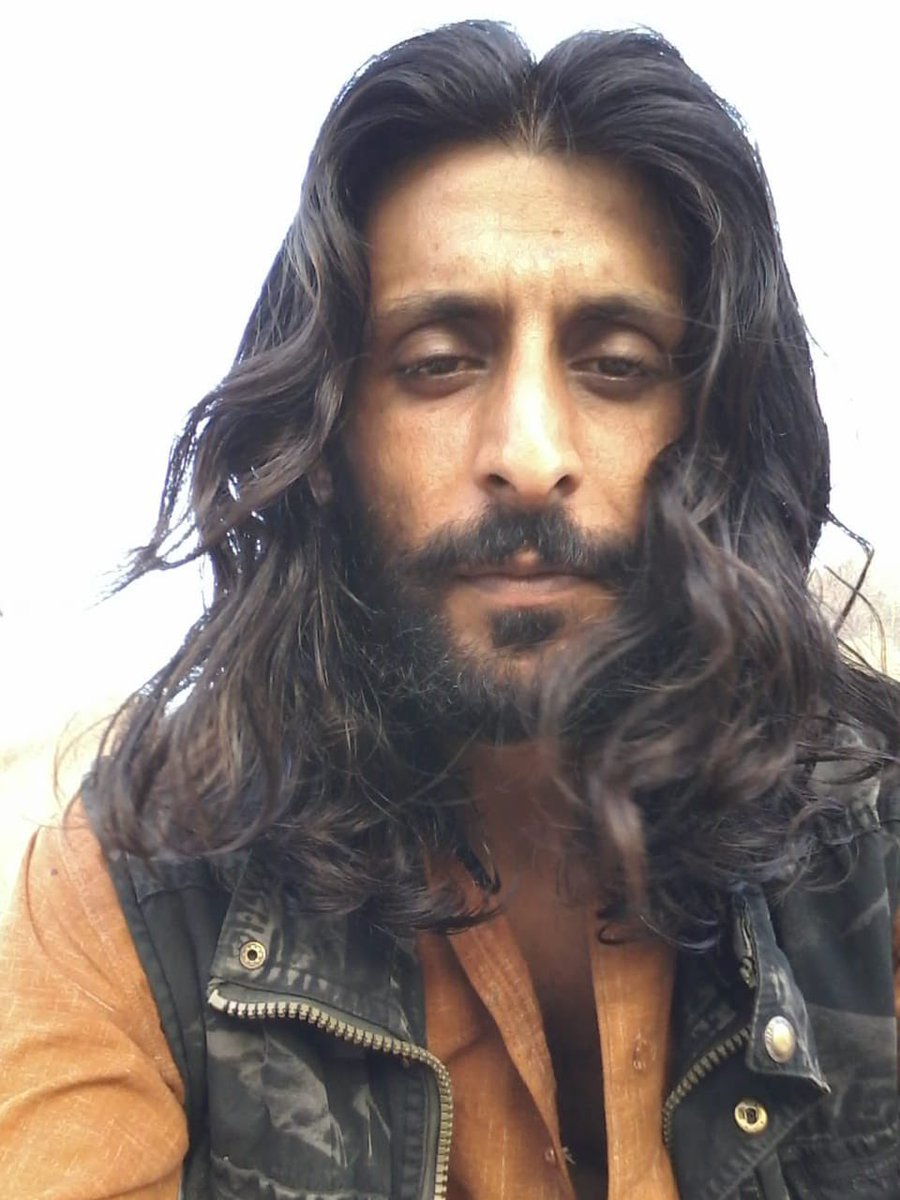
Evidently, JeM and AuM are operating jointly in the restive Indian state of Jammu and Kashmir in order to raise the level of violence by targeting Indian security forces. With the Anantnag shootout, there is obvious apprehension about the re-emergence of AuM and its fugitive leader, Mushtaq Zargar (a.k.a. Latram) on the Kashmiri militant landscape. Zargar’s ties with Pakistan-based JeM and his recruitment campaigns bring the focus back on him, especially in the aftermath of the recent attacks against Indian paramilitary forces.
Zargar—Forerunner of Kashmir Militancy
In December 1999, terrorists affiliated with the Pakistan-based Harkat-ul-Mujahideen hijacked Indian Airlines Flight 814 en route from Kathmandu, Nepal to Delhi, India, with over 180 people on-board as hostages. After being flown to several locations, the flight was finally made to land in Kandahar, Afghanistan. The hostage crisis lasted a week, with negotiations ending in the release of three terrorist commanders—Masood Azhar, Mushtaq Zargar, and British-born Omar Saeed Sheikh, who were languishing in Indian jails.
While Azhar and Sheikh went to Pakistan following their safe passage and quickly unleashed a fresh wave of terror activities targeting the United States and India, Zargar went into hiding in Pakistan-Administered Kashmir (PAK). The 51-year-old Zargar—an Indian citizen and one of the pioneers of militancy in Kashmir—resurfaced after a years-long hiatus in Pakistan, only to unleash his vengeance against India. He resumed his subversive activities with renewed support from Pakistan’s intelligence agencies and Kashmir-centric militant groups like JeM and Lashkar-e-Taiba (LeT). He has been inciting anti-India sentiments in Jammu and Kashmir (J&K) for over a decade now, keeping the security establishment on edge.
While Zargar kept a low profile in the years following his safe passage, the two terrorists released alongside him achieved international notoriety. Azhar founded Jaish-e-Muhammad (JeM) immediately after his release and continues his jihadist tirades against India today, while Sheikh pursued pro-al-Qaeda and pro-Taliban activities in Pakistan, and was arrested again in February 2002.
While Zargar never joined JeM or LeT officially, it is an open secret that he is working closely with Masood Azhar and Hafiz Saeed’s Lashkar-e-Taiba. In many interviews, as well as through his Twitter account (active at the time of the writing of this article), Zargar has admitted to his proximity to these leaders and their jihadist organizations. Zargar’s associations with Azhar date back to his days incarcerated in the Kot Bhalwal jail in Jammu and the Tihar jail in New Delhi. Their partnership can be credited for giving Azhar and his group a strong foothold inside the state. It is believed that Zargar’s dormant AuM network is facilitating the operations of the Pakistan-based militant groups JeM and LeT inside Kashmir by providing local recruits and logistics.
Emergence of Al-Umar-Mujahideen
Born and raised in the Nowhatta area of Srinagar, Zargar spearheaded violence against the Indian government in the 1980s as a member of two secessionist groups—the People’s League (PL) and Jammu and Kashmir Liberation Front (JKLF). Before 1990, Zargar had made a few trips to Pakistan to participate in militant training at camps run by Afghan war veterans under the auspices of Pakistani intelligence agencies. During that period, PL’s Zahoor Sheikh mentored him briefly and reportedly sent him to join training camps operated by JKLF across the border in Pakistan (Frontline, January 8, 2000). He later actively joined JKLF and was inspired by JKLF’s Ashfaq Majeed Wani, who motivated him to take up arms against India.
However, his violent actions in Indian Kashmir and operational differences with Yashin Mallick, the leader of JKLF, forced him out of the group. Soon, he established AuM, named after the Umar ibn Al-Khattab, the second caliph of the Rashidun Caliphate. However, it was also widely believed that the group was named after the Srinagar-based radical cleric Maulvi Umar Farooq. AuM received support from Farooq’s Awami Action Committee and covertly from Pakistan’s Inter-Service Intelligence (ISI). AuM’s offices and training camps in Muzzafarabad, Kotli, and Keel sectors in Pakistan were directly supported by Pakistani intelligence agencies, with Majid Tariq of the ISI supervising the training of its recruits at one point. At the height of the Kashmiri militancy, AuM and Zargar’s fellow operatives were active in the state capital Srinagar, as well as the Pulwama, Baramulla, and Kupwara districts of Jammu and Kashmir.
Eventually, AuM’s fighting capabilities waned due to infighting and turf wars with Hizbul Mujahideen and JKLF. They further weakened after the arrest of Zargar in May 1992 and triggered subsequent disruptions within his group until his release in December 1999. At least four abduction attempts were made to free him from prison between 1992-1999.
AuM and Zargar received maximum support from Kashmiri refugees in Pakistan thanks to their aim of liberating Kashmir through armed struggle and eventually merging with Pakistan. AuM continued unleashing mayhem in Kashmir, targeting local Pandit communities (Kashmiri Brahmin Hindus) and security personnel, until 1992. Zargar became infamous for his use of abductions for prisoner exchanges and extortion. He was instrumental in spearheading several high-profile kidnappings, including that of Rubaiya Sayeed, the daughter of then-Indian Home Minister Mufti Mohammad Sayeed on December 8, 1989. He, of course, denies involvement in this abduction (Kashmir Monitor, September 5, 2017). According to one estimate, Zargar was responsible for around 40 murders that included several Kashmiri Pandits. This targeted violence largely contributed to the exodus of Hindu communities from the Muslim-majority Kashmir Valley area between 1989 and 1990.
Terror Provocateur
Over the years, AuM has lost its relevance to security agencies in India, but Zargar has never shied away from showing his and AuM’s shadowy presence in Kashmir through media interviews and posts on social media platforms such as Twitter and Facebook. His interviews have appeared in Pakistan’s jihadist magazines, such as Jihad-e-Kashmir (affiliated with JeM) and Al-Dawa (affiliated with LeT), indicating strong operational ties with these groups. In one such interview with Al-Dawa in 2003, he had said that LeT and AuM militants had carried out several fidayeen (suicide) missions in India. Zargar has also extended support to the LeT-linked terrorist group Tehreek-Azadi Jammu and Kashmir. His Twitter feed and intermittent calls to media groups in Kashmir are testimony to his support for JeM and LeT activities in the state, as well as in Pakistan. One such message of support for Pakistan that he posted stated: “Pakistan Hamari Jaan, Pakistan Zindabad, Kashmir Banayga Pakistan, Inshallah we want freedom” (Pakistan is our life, long live Pakistan, Kashmir will turn into Pakistan) (Twitter.com/Mushtaq_Zargar, October 20, 2018). He has been vocal about Pakistan’s political, diplomatic, and moral support for Kashmiri militants. [1]
When Kashmir witnessed a series of massive civil protest rallies starting in 2010, Zargar and his patrons in Pakistan found it conducive to revive armed struggle in the state. He entered the fray in 2013, fanning anti-India sentiment in the aftermath of Kashmiri militant Muhammad Afzal Guru’s execution for his role in the 2001 attack on the Indian parliament (Kashmir Watch, February 23, 2013). Observers believe that Zargar, along with other militant leaders, devised the stone-throwing strategy to attack security forces. In 2013, there were more than 500 stone-throwing incidents in Kashmir — an exponential spike that followed Guru’s hanging in New Delhi’s Tihar jail in February of that year. In one of his interviews with The Kashmir Monitor, Mushtaq elaborated on how “stone pelters” are the “real militants” and are more courageous than those who have a gun in hand (Kashmir Monitor, September 5, 2017).
Recently, AuM claimed responsibility for several terrorist attacks in Kashmir, including two targeting security forces. On October 14, 2016, AuM militants attacked a convoy of Sashastra Seema Bal (SSB) paramilitary forces at Zakura, on the outskirts of Srinagar. One soldier was killed while eight others were injured (DNA India, October 16, 2016). AuM has also claimed joint responsibility with JeM for at least four grenade attacks in Tral, Pulwama, Awantipora, and Safar Kadal in mid-June, 2017 (Deccan Chronicle, June 15, 2017). He issued statements about the attacks as well as his ties with JeM’s Masood Azhar. “Moulvi Sahib (Masood Azar) is in Syria and I am in J&K but we are together and have the single cause of attacking Indian security forces in Kashmir till they leave J&K,” he said. He reiterated that they had started the war in Kashmir “to do or die,” and would increase attacks on security forces in the state (India Today, June 14, 2017).
In late October 2018, Mushtaq Zargar paid tribute to two slain JeM militants, including the nephew of JeM’s Masood Azhar, Usman Ibrahim, who had led a string of sniper attacks in south Kashmir’s Tral area. Zargar told local media: “I salute [the] slain militants for their bravery […] Usman was my nephew as well” (JK News Observer, October 31, 2018). He regularly issues diktats against celebrating India’s Republic Day in Kashmir, asking people to observe it as a “Black Day.”
India has banned the AuM under the Prevention of Terrorism Act, 2002 (Press Information Bureau/MHA, July 16, 2002). Although Zargar and AuM have maintained a low profile since his release from prison in 1999, and later, while he was holed up in Pakistan, it is no secret that he coordinated many attacks in Kashmir in close association with JeM and LeT. Zargar’s organizational skills and the extent of his clout in and around the Srinagar area were specifically useful in influencing youths to join the Kashmiri jihad, and this still makes him an asset for Pakistan’s intelligence agencies. At one point, an estimated 3,000 youths from different parts of Indian Jammu and Kashmir were undergoing training at various terrorist camps in PAK under the supervision of Zargar (Daily Excelsior, February 20, 2008).
By virtue of his proximity to JeM—the main militant group accused of carrying out the latest spree of violence in Kashmir and being the biggest provider of recruits to Pakistan-based militant groups—Zargar will remain a potent provocateur of jihadism in Kashmir.
Notes
[1] Baba Umar, “The Man We Released At Kandahar”: Interview with Mushtaq Zaragr, Tehleka, Vol. 10 (9), 2013. Available at https://umarblogs.blogspot.com/2013/08/exclusive-man-we-released-at-kandahar.html