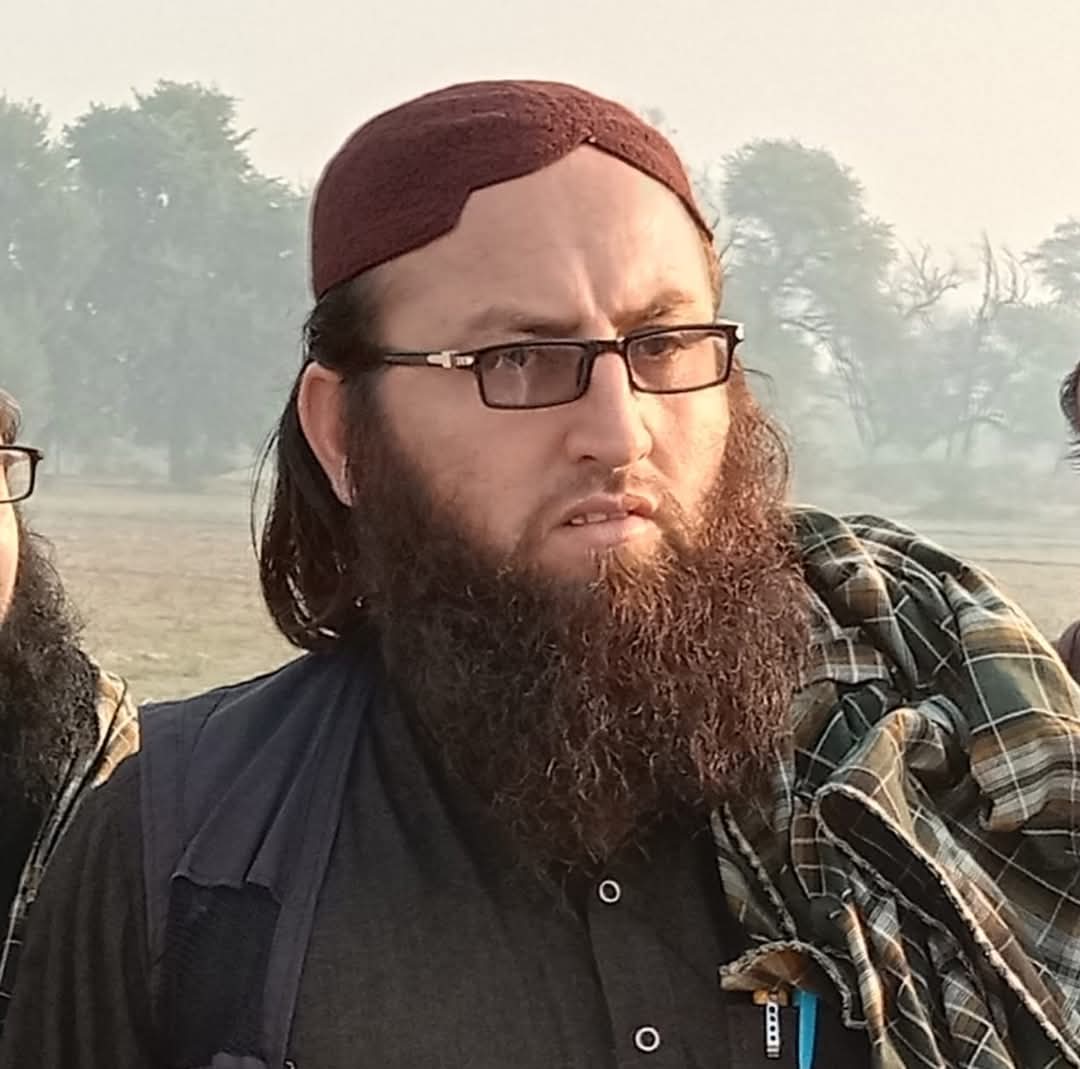
Sher Mohammad Abbas Stanikzai—The ISI-Approved Leader of the Taliban Negotiation Team
Sher Mohammad Abbas Stanikzai—The ISI-Approved Leader of the Taliban Negotiation Team
In February, the Taliban named Sher Mohammad Abbas Stanikzai as the head of its 14-member team that would participate in negotiations with U.S. Special Representative for Afghan Reconciliation Zalmay Khalilzad (Pajhwok, February 12). Stanikzai has led the Taliban team not only in several rounds of talks with the Americans, but also at the intra-Afghan negotiations being hosted by Russia. A UN-sanctioned Deputy Minister of Foreign Affairs and subsequently Deputy Minister of Health during Taliban rule, Stanikzai was appointed chief of the Taliban’s political office in Doha, Qatar in 2015. Over the years, he has played a major role in the Taliban’s diplomatic outreach. He has led Taliban delegations to various countries, including Uzbekistan, China, and Indonesia. So, to what can Stanikzai’s rise as a Taliban diplomat and negotiator be attributed?
Early Years
Sher Mohammad Abbas Stanikzai was born in 1963 in the Baraki Barak district of Afghanistan’s Logar province. He is an ethnic Pashtun of the Stanikzai sub-tribe. His background has been described as “atypical” for a member of the Taliban (Afghanistan Analysts Network, June 24, 2013). Unlike most Taliban leaders who studied in madrasas and had little or no experience of the outside world, Stanikzai grew up in the Afghan capital, Kabul, and he is well-educated and well-travelled. He holds a master’s degree in political science.
In the 1970s, he joined the Afghan National Army and was sent for training to the Indian Military Academy (IMA) in Dehradun (Hindustan Times, January 28, 2013). When the Soviets invaded Afghanistan in December 1979, Stanikzai did not return to his job in the Afghan Army. He is believed to have gone to Pakistan, where he joined the anti-Soviet resistance, first with Nabi Mohammadi’s Harakat-e Inqilab-e-Islami, and then Abdul Rab Raosul Sayyaf’s Ittehad-e-Islami, as commander in the southwestern front (Pajhwok, June 29, 2013).
It was during this period that Stanikzai established some of the most valuable relationships in his life—those with the Central Intelligence Agency (CIA) and Pakistan’s Inter-Services Intelligence (ISI). Stanikzai’s experience in the military and fluency in English, which he acquired while in India, were skills that were much valued in an insurgency that was dependent on the CIA for funding, arms and other supplies (New York Times, February 26). These skills helped Stanikzai communicate easily with CIA officials. According to an Afghan government official, Stanikzai’s training at the IMA made him “a valuable asset in the eyes of ISI operatives.” They established a close relationship with him and thus helped in his “emergence as a powerful middleman operating between the CIA, Pakistan, and the mujahideen leaders.” [1] This would prove useful in subsequent years as well.
During Taliban Rule
Stanikzai joined the Taliban in the mid-1990s. During Taliban rule, he was Deputy Minister of Foreign Affairs. His relationship with Minister of Foreign Affairs Wakil Ahmed Muttawakil was reportedly strained. Still, Stanikzai made a mark for himself in the ministry. His English-speaking skills enabled him to interact easily with the foreign media (Afghanistan Analysts Network, June 24, 2013). He defended the Taliban government at press conferences.
In 1996, Stanikzai traveled to the United States, where he met officials of the Clinton administration to ask for diplomatic recognition for the Taliban regime. He wasn’t successful in this regard. In early 2001, Stanikzai was appointed Deputy Minister of Public Health and it was in this role that he called for a probe to verify the United States’ use of chemical weapons during its invasion of Afghanistan (The Tribune, October 30, 2001).
Top Appointments
For at least a decade after the fall of the Taliban regime in November 2001, Stanikzai maintained a low profile; little is known of his activities during this period. In January 2012, Stanikzai, along with other senior Taliban leaders, including Sayyed Tayyeb Agha, a long-time personal assistant of the Taliban’s founder-leader Mullah Omar, arrived in Qatar with their families to set up a political office for the Taliban. Agha was appointed head of this office and Stanikzai as his deputy.
In 2015-16, the Taliban was roiled in internal tensions. In July 2015, it emerged that Mullah Akhtar Mansour, Omar’s deputy, had kept the Taliban leader’s death in 2013 a secret. Taliban circles were rife with rumors that Mansour may have murdered Omar (Express Tribune, July 30, 2015). When he was declared the new leader, it evoked a strong response among the higher ranks of the Taliban. Several leaders, including Agha, were deeply critical of Mansour and the manner in which he was selected to succeed Omar. Agha pointed out that all members of the Taliban’s Rahbari Shura (leadership council) were not consulted over his selection. Mansour was appointed outside Afghanistan by people residing outside the country, he said, referring to allegations that Mansour was appointed leader by sections in the Taliban considered close to the Pakistani government (Express Tribune, August 5, 2015).
In August 2015, Agha resigned from his post as head of the Qatar political office. Following his exit, Stanikzai was appointed acting head of the political office. He quickly pledged allegiance to Mansour (Express Tribune, August 5, 2015). He was confirmed in his position as head of the Qatar office in November 2015 and remained in this position until January this year. In February, the Taliban announced that Stanikzai would lead its team in talks with Khalilzad.
Stanikzai’s Statements to Media
Little is known of what is transpiring at the various ongoing negotiations or what positions Stanikzai has taken there. However, in his opening address to delegates at the Moscow talks in February, Stanikzai said that Afghanistan’s current constitution is the major obstacle to peace in the war-ravaged country. The constitution is “illegitimate” and was “imposed on Afghans by the Kabul administration,” he said (Tolo News, February 5). Describing it as a Western import, Stanikzai said that the Taliban seeks the establishment of an Islamic system in the country and to be acceptable, the new constitution would have to be drafted and ratified by Afghan religious clerics and other scholars (Khaama Press, February 5). In interviews to the media he has repeatedly said that “U.S. troops must go as soon as possible.” He has claimed that the Taliban does not want a “monopoly of power” but favors “an inclusive Islamic system.” (Afghanistan Times, February 6) On the subject of women’s rights to education, employment and inheritance, Stanikzai said that the Taliban “don’t have a problem” with giving women “whatever rights Islam gives them” (Tolo News, November 10, 2018).
Some of his comments to the media in recent months have kicked up a storm. In an interview in January, Stanikzai said that the Afghan National Army would be dissolved as part of a peace agreement. When his remark triggered widespread outrage in Afghanistan, Stanikzai backtracked and said he was misquoted, adding that he meant that when the U.S. forces leave Afghanistan, there would be no need for an Afghan army. He went on to say that the U.S. would leave behind its military hardware in Afghanistan (Tolo News, February 7).
According to Pakistani terrorism analyst Abdul Basit, Stanikzai articulates well the Taliban’s point of view and “represents it well in front of the international media.” [2] India’s security establishment views him differently. According to a former Indian government official, Stanikzai articulates the views of Pakistan, not of the Taliban. [3]
Negotiating Experience
Stanikzai’s loyalty to Mansour at a time when there was strong opposition to the latter’s leadership of the Taliban played a major role in his appointment as head of the Qatar office, says the Afghan official. [4] According to Basit, it was “not his connections with Mansour or any other Taliban commander” but the support of the Rahbari Shura that secured Stanikzai the top post in the Qatar office. In an organization like the Taliban, which has “well-defined structures and roles,” “personal closeness or differences never come in the way of organizational and political matters,” he said. It is Stanikzai’s experience as deputy minister of foreign affairs, his expertise as “a diplomat and a skillful negotiator,” and his ability to communicate well in English that would have determined his appointment to head the Taliban’s negotiating team [5]
Proximity to Pakistan
According to Basit, Stanikzai’s relationship with Pakistan is “ideal.” Had that not been the case, he would not have been appointed to his current office, nor would he have been allowed to fly in and out of Pakistan to other countries. The security agencies would have arrested and sidelined him long ago. [6]
Stanikzai’s relationship with Pakistan has impacted his role in the Taliban as well as influenced the rise and fall of his fortunes in the organization. In the late 1990s, Stanikzai is reported to have drawn Mullah Omar’s ire over his drinking and alleged abuse of power. He was removed from his post as deputy minister of foreign affairs. He was subsequently reappointed as deputy minister. His close ties with the ISI and the latter’s hold over the Taliban leadership are said to have paved the way for Stanikzai’s reinstatement, albeit in the lower profile health ministry (New York Times, February 26).
Stanikzai appears to be an important part of Pakistan’s strategy to influence the Taliban’s approach and positions in negotiations. Apparently, it was to loosen Pakistan’s grip over the Taliban that its leaders decided to set up a political office in Qatar and not in Pakistan as the ISI would have liked. Under Agha’s leadership, the Qatar office maintained a distance from Pakistan. Indeed, during this period, Taliban leaders from this office, with the exception of Stanikzai, even avoided traveling to Pakistan. The Qatar office did not participate in the Pakistan-brokered talks between Afghan officials and Taliban leaders in Murree, Pakistan in July 2015 (Pajhwok, July 8, 2015).
Mansour was known to be close to the ISI (Rediff, August 11, 2015). When Agha stepped down as head of the Qatar office, Stanikzai, who was his deputy, took over the reins. With the change of guard, relations between Mansour and the Qatar office improved (Express Tribune, August 5, 2015). It also boosted Pakistan’s influence in the Qatar office and thus over Taliban’s engagement in talks.
Soon after Stanikzai was removed as head of the Qatar office, he was replaced by Mullah Abdul Ghani Baradar, a co-founder of the Taliban who was released from a Pakistani jail in October last year. While Stanikzai continues to head the Taliban negotiating team, Baradar is reportedly on hand to provide “instructions” if needed (Pakistan Today, February 26). In recent months, there has been speculation that the Taliban is considering replacing Stanikzai. An unnamed Taliban source is reported to have said that the Taliban leadership believes that Stanikzai is not representing the group or its case well (The News, May 2). Is the Taliban trying to wriggle free of Pakistan’s control again?
Fading Fortunes?
Stanikzai is a misfit in the Taliban. His relatively modern outlook sets him apart from the more inward-looking and medieval mindset of most Taliban leaders and the rank-and-file. His rise to senior positions in the Taliban can be attributed to his English-speaking skills and his diplomatic experience, making him useful to the group. However, he is not indispensable. This could impact his future in the Taliban, especially if the insurgent group is able to find other patrons—like Iran—and bases in the neighborhood outside Pakistan.
Notes
[1] Author’s Interview, Kabul-based Afghan government official, June 15. [2] Author’s Interview, Abdul Basit, associate research fellow at the International Center for Political Violence and Terrorism Research (ICPVTR) of the S. Rajaratnam School of International Studies, Nanyang Technological University, Singapore, May 20. [3] Author’s Interview, Former Indian government official, June 13. [4] Afghan official, n. 1. [5] Basit, n. 2. [6] Ibid.