The Curious Case of Ahmed Muaz: How Islamist Groups Coopt Criminal Gangs to Advance Radicalism in the Maldives
The Curious Case of Ahmed Muaz: How Islamist Groups Coopt Criminal Gangs to Advance Radicalism in the Maldives
In mid-December 2022, the Maldivian Presidential Commission on Deaths and Disappearances (DDCom) submitted its final report on the disappearance of a prominent progressive journalist, Ahmed Rilwan Abdulla. Almost eight years after Rilwan mysteriously vanished from the capital Male’s suburb of Hulhumale in August 2014, the investigating agencies have connected several missing dots to reveal how he was harassed, abducted, tortured, and decapitated (Sun, December 15, 2022). The commission also found that Rilwan’s assassination was directly linked with his fellow friend, blogger, and social media activist Yameen Rasheed’s death in 2017.
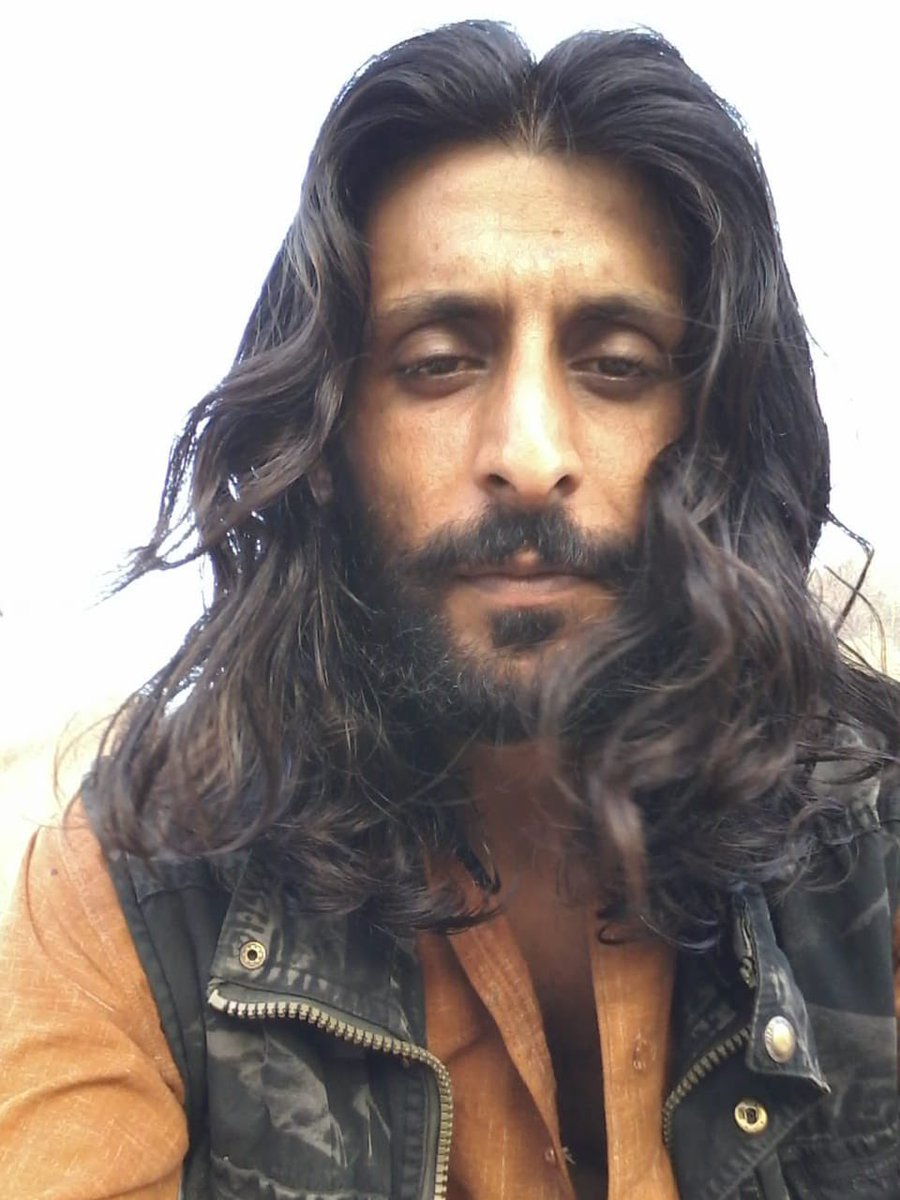
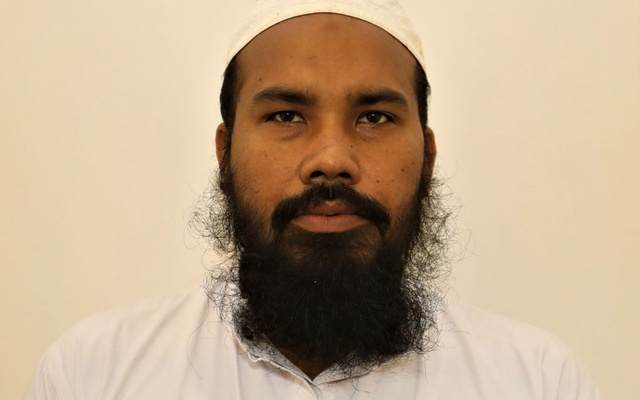
The Maldives Police Service (MPS) arrested three prime suspects, Ahmed Muaz, Ismail Abdul Raheem, and Ahmed Ismail, for “aiding and abetting the act of terrorism” in the country on June 26, 2022. Formal charges were brought against them at the Criminal Court of the Maldives on August 1, 2022. The charge sheet noted their role in the abduction and murder of Rilwan in August 2014, and the fatal attack on Yameen in April 2017 (PSM News, August 1, 2022; Dhiyares News (Dhivehi), Sep 26, 2022). This profile examines the role of Ahmed Muaz in particular, who was a radicalized gang leader that has been behind violent attacks, kidnappings, and killings of pro-democracy bloggers, journalists, and rights activists in Maldives. This issue has gained a certain amount of importance, given that 40 gangs are active in the Maldives, and there have been 32 deaths in the country due to gang violence over the past 15 years (Times of Addu, September 12, 2022).
Muaz and Gangs of Maldives
Muaz is around 40 years old and is a resident of Male. In 2011, he was arrested for the first time for burglary and other petty offences (Sun Online, April 21, 2011). Not long after this, he became an integral part of the Maldivian underworld and led a street gang called “Bosnia.” Several other violent criminal groups were also operating—and closely cooperating—in the Maldives, including Kuda Henveiru, Dot, and Buru.
Before 2013, the Maldivian crime scene was replete with drugs, weapons, and murder. However, the strain of Islamism that began taking root in the country’s mosques and prisons played a significant role in influencing gang members to target secular, progressive individuals who supported religious tolerance in the Maldives. As Daniel Bosley, former editor of Minivan News, mentioned, “gang members use extreme religious ideologies as a thin veneer of credibility to [add to] what seems [an] otherwise unremarkable profession.” These criminal gangs also helped recruit fighters for al-Qaeda and Islamic State (IS) in Syria and Iraq (see Terrorism Monitor, November 21, 2014). Since early 2014, the Maldives witnessed a spike in targeted violence against so-called “anti-Islamic” or irreligious people, or what they call “laadheenees” (in Dhivehi, the language of the Maldives).
Radicalization and Targeted Killings
In Rilwan’s case, he received a death threat from Abu Dujana al-Maldifi (real name: Yameen Naeem), who was the leader of the Maldivian contingent fighting alongside Jabhat al-Nusra in Syria in May 2014. Muaz reportedly told police during the interrogation that his group identified Rilwan after he disparaged Islam and the Prophet Muhammad through his speeches and writings. It remains unclear if Muaz had orders from Abu Dujana al-Mualdifi to abduct Rilwan and kill him. However, the DDCom report suggested there may have been an al-Qaeda link to the whole episode (Maldives Independent, September 8, 2019). Two other well-known Islamist associates of Muaz were arrested. This includes Ahmed Ismail, who facilitated travel for fellow Islamists to join the Syrian war, and Ismail Abdul Raheem, who once attempted to travel to Syria through the Turkish border in 2015. He had also been affiliated with a jihadist group operating near the Furukan mosque in Male, according to DDCom (Avas, June 26, 2022).
In June 2014, months before the abduction and killing of Rilwan, Muaz, and his fellow gang members, including Ahmed Ismail and Arlif Rauf, abducted and tortured several people. The goal had been to find out the identities of administrators of social media groups that advocated “anti-Islamic” ideals, such as secularism, homosexuality, and atheism in the Maldives. They also asked the abductees to recite the “Shahada” (profession of faith) to test their belief in Islam (Minivan Archive, June 9, 2014). Before Rilwan’s abduction, Maldivian police had even received intelligence inputs that Muaz and Ahmed Ismail were planning to drown two “secularists” (Maldives Independent, September 8, 2019). At that time, however, no action was taken (Daily Panic, June 10, 2014).
In September 2014, Muaz again figured prominently in a private investigating agency’s report commissioned by the Maldivian Democracy Network (MDN). The report focused on the disappearance of Rilwan along with several fellow radicalized gang members, including several who travelled to Syria in the name of jihad (Edition, December 16, 2022). [1] Muaz also vandalized the independent Minivan News office in Male (YouTube, September 25, 2014). Several pro-democracy institutions and media outlets, including Minivan News and Raajje TV, received threatening phone calls from Muaz and his fellow gang members. Gang members delivered the news organizations death threats and a warning not to publish anything about Muaz, his arrest, or another incident; Muaz was apparently interrogated by the police regarding his destruction of a closed-circuit security camera at the Minivan News office, where he also left a machete as an implied threat of further actions.
Both media outlets were also threatened with arson by unidentified gang members. One of the messages circulating on social media stated: “If you write the name [Muaz] we will wipe you out. Remember that.” Another similar message from Muaz himself read: “You will be killed or disappear next, be careful” (Twitter/fazyahmed, September 25, 2014). Pictures of Maldivian Democracy Network’s Shahindha Ismail and lawyer Mushfiq Mohamed were further circulated on Facebook with a message stating: “These two need to be disappeared” (Minivan Archive, September 23, 2014). As Muaz’s name and picture, along with others, were widely circulating on social media pages, especially on Facebook and Twitter, Muaz and fellow gang members reportedly abducted and assaulted the administrators of a popular Facebook page “Ranreendhoo Maldives” (Minivan Archive, November 13, 2014).
Islamism under Political Patronage
The Maldivian administration under former president Abdulla Yameen was often accused of Islamist appeasement while throttling pro-democratic and secular expression. Media reports during his tenure suggested that he and his ministers were colluding with local gangsters to intimidate and silence political opposition and independent voices (Maldives Independent, July 3, 2018; Raajje, October 12, 2018). It was also reported that Ahmed Muaz was contracted by the government and given a list of 1500 names to intimidate or eliminate (opendemocracy.net, August 26, 2014).
Muaz held multiple meetings with former Home Minister Umar Naseer and Islamic Affairs Minister Mohamed Shaheem Ali, where they discussed their concerns about the rise of secularist movements in the Maldives, which they believed threatened the country’s Islamic values (Twitter/@Ibbe4787, October 31, 2018). It is possible that during these meetings, Muaz and his associates received encouragement to carry out a coordinated campaign against anyone who supported democracy and secularism. Muaz and his followers were even observed publicly participating in government-sponsored activities, such as motorcycle rallies and sporting events as late as 2018. For example, Muaz attended official events with former President Abdullah Yameen—including as part of his presidential campaign—which suggested a mutual understanding and implicit political support between Yameen and the gangs (Times of Addu, December 15, 2022; Raajje, December 16, 2022).
As Rilwan’s case investigation was hitting a deadlock due to government apathy, Muaz and fellow gang members killed Rilwan’s friend and blogger, Yameen Rasheed for “insulting Islam” in April 2017 (Maldives Independent, May 10, 2017). The DDCom investigation not only blamed Muaz and gang members for Yameen Rasheed’s murder, but also linked their involvement to several previous knife or machete attacks. Among those attacks was the fatal killing of moderate legislator Afrashim Ali in early October 2012 (Edition, January 10, 2020).
Conclusion
Gang members who target progressive intellectuals in the Maldives—those who disrupt peace marches or attack protest rallies that support freedom of religion and secularism—are often recruited and trained by groups active around the Noor and Furqan mosques (Twitter/DDCom, December 3, 2019). Muaz became central to this growing alliance between gangs and religious radicals. As one former Male-based journalist stated, “criminals like Muaz who are already desensitized to violence and have a firm grounding in Islam are more likely to dominate the extremist universe in [the] Maldives.” [2] While providing muscle power to pro-Islamist political elites who once sought to increase their influence against secular and democratic forces in the Maldives, Muaz, along with his fellow gang members, were instrumental in the intimidation, abduction, and the killing of people who disparage Islam. Radicalized gang leaders associated with Islamist groups, such as Muaz, therefore, pose a threat to democratic and secular values in the Maldives and undermine the rule of law.
Notes:
[1] Maldivian Democracy Network, “Findings of the Report on the Disappearance of Maldivian Journalist Ahmed Rilwan Abdulla”, September 22, 2014. https://maldivesindependent.com/files/2015/03/Findings-of-the-Report-on-the-Disappearance-of-Maldivian-Journalist-Ahmed-Rilwan-English-Version.pdf [2] Authors Interview with a Maldivian journalist in exile, February 10, 2023.