The Afghan Release of Faqir Mohammad Unleashes New Wave of TTP Attacks on Pakistan
The Afghan Release of Faqir Mohammad Unleashes New Wave of TTP Attacks on Pakistan
In the vast jihadist landscape of Pakistan, the Tehreek-e-Taliban Pakistan (TTP) is a relative newcomer. The TTP was formed in 2007 and can be best considered an agglomerate of more than 40 Islamist terrorist groups operating in the tribal belt of Pakistan. [1] The TTP was also joined by a number of veteran jihadists who had previously fought with the Afghan Taliban against the Northern Alliance under the first Taliban regime from 1996-2001.
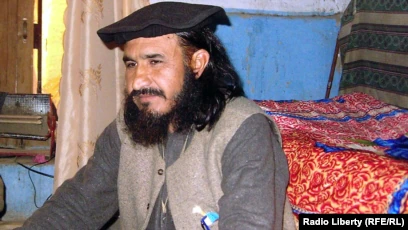
Even before its creation, the Islamist tribal sympathizers of al-Qaeda were instrumental in providing shelter to al-Qaeda’s leadership in tribal areas of Pakistan after the US invasion of Afghanistan in October 2001. Moulvi Faqir Mohammad was one of those TTP commanders, who had strong ties with Afghan Taliban and local Pakistani Islamist terrorist groups. He was also very close to al-Qaeda’s leadership after he became based in Pakistan, and was known to be a personal friend of Al-Qaeda Emir Ayman al-Zawahiri. Faqir Mohammad’s prominence in TTP gained greater prominence on the group’s military activities following his release by the Taliban from an Afghan prison on August 15, 2021, when he rejoined the ranks of the Pakistani Taliban.
Moulvi Faqir Mohammad’s Background
Born in 1970 in Bajuar district in Pakistan’s tribal areas (now merged into Khyber-Pakhtunkhawa province), Faqir Mohammad received his early education from a local madrassa established during the 1979-1989 Afghan war. It is not clear whether he participated in the Afghan jihad, but he certainly joined the Afghan Taliban’s call and fought as a foot soldier against the Northern Alliance forces in the subsequent decade. [2] After the US invasion of Afghanistan in the aftermath of the 9/11 attacks, he moved back to his native district Bajaur.
Everything remained calm there until the Pakistani military forces began incursions into the tribal areas to catch the al-Qaeda rank and file fleeing from Afghanistan. With the formation of TTP in 2007, Faqir Mohammad ascended to become the deputy of TTP emir, Baithullah Mehsud. In addition to his deputy emir status, he was also given the task of heading TTP in the Bajuar district, which borders Afghanistan. Under Faqir Mohammad’s leadership, the TTP became a force to reckon with and at one time in 2007-2009 was controlling the whole district. [3]
Faqir Mohammad’s relationship with the al-Qaeda leadership was also significant as he sought pivotal support from al-Qaeda and provided much needed shelter to its militants. Al-Qaeda rank and file also fought alongside TTP in Bajuar. The first US drone strike at a madrassa in Damadola area of Bajaur in January 2006 consequently resulted in more than 18 fatalities (theguardian.com, January 15, 2006). This was the result of high-grade intelligence that Ayman al-Zawahiri was visiting the madrassa on the invitation of Faqir Mohammad. Al-Zawahiri was fortunate enough to leave the venue before the strike, however. The event showcases the important role Faqir Mohammad played in those times.
Faqir Mohammad also fought against the Pakistani military during the operations launched in 2007. The Operation Sherdil (Lion Heart) was launched by the Pakistan Army to clear the area from Islamist militants in 2008 (Nation, September 19, 2008). The operation was partially successful in dislodging the TTP from its areas of control. However, Faqir Mohammad managed to allow the Pakistani military to only successfully take control of roadways from the TTP.
Faqir Mohammad was a frequent visitor of Afghanistan, where he was believed to have meetings with other TTP commanders. He was, however, arrested by special operation forces of the former Afghan government’s National Directorate of Security (NDS) during one of his visits along with his security detail and confidants in 2012. He was also interrogated by US intelligence operatives working in southern Afghanistan. Pakistan’s foreign office also reportedly requested his extradition to Pakistan repeatedly, but this was refused by the then Afghan government (Dawn, February 21, 2013). The arrest of Faqir Mohammad was a significant blow to the TTP because during his detainment, a number of TTP commanders were killed in drone strikes and the TTP in Bajuar lost control of many areas to Pakistani security forces.
Prison Release and Future Trajectory
With the fall of Kabul and the rest of Afghanistan to the Afghan Taliban on August 15, 2021, the Taliban forces released Faqir Mohammad and hundreds of other TTP militants in Afghan prisons. According to one report, the Afghan Taliban released around 2,300 TTP militants throughout Afghanistan, with Faqir Mohammad among the most important of them (India Today, August 18). His release from prison along with other TTP militants was a major setback to Pakistan, and the euphoria among the Pakistani establishment started to diminish as serious concerns surfaced about the TTP-Afghan Taliban nexus.
Meanwhile, his release from prison has turned out to be quite a morale booster for the TTP rank and file. The TTP has started to perpetrate terrorist attacks against Pakistani security forces in Khyber-Pakhtunkhawa and Baluchistan provinces. At least five terrorist attacks against Pakistani military check posts and patrols have taken place in the first half of September alone. The TTP emir, Noor Wali Mehsud, has even come out in the open and given an interview to CNN to describe his future course to implement sharia in Pakistan following the Afghan Taliban model (Express Tribune, July 30, 2021).
Faqir Mohammad has joined hands with TTP commanders and is likely to play a pivotal role in TTP decision making. The TTP commanders badly need an experienced leader like him to reinvigorate their terrorist strikes inside Pakistan. With no fear of drone attacks after the US withdrawal from Afghanistan, the fall of Kabul to the Afghan Taliban, and no hindrances from the former Afghan National Security Forces, the TTP is likely to make advances on its jihadist agendas in the near future. [4]
Conclusion
The fall of Kabul in August 2021 was a major blow to counter-terrorism efforts taken by the US and its allies since the commencement of Global War on Terror (GWOT). It is crystal clear from the Afghan Taliban’s policies and attitudes that the group will continue to follow similar measures to rule Afghanistan as it did in the late 1990s. The victory of the Afghan Taliban has also provided a tremendous boost to Islamist violent non-state actors across the globe and in neighbouring Pakistan, including the TTP.
During the past seven years, the TTP lost its momentum, but it was only because of the US drone strikes in the tribal districts of Pakistan and in neighboring Afghan provinces that the TTP leadership and terrorist attacks sharply declined. Faqir Mohammad will likely to put the TTP back on track to its form from before 2014. This will force Pakistani security officials and policy makers to reassess the situation and devise a new policy that could thwart his plans.
Notes
[1] It is pertinent to mention that unlike other Pakistani jihadi groups, such as Punjab province-based Islamist terrorist groups including Jaish e Mohammad (JeM), Harkat ul Mujahedeen (HuM), Lashkar e Jhangvi (LeJ) and Lashkar e Taiba (LeT), the TTP is in fact a loose tribal confederation of Islamists from the tribal areas of Pakistan. The TTP was formed by pro-al-Qaeda Islamist radicals with links to foreign elements. Muhammad Amir Rana, “Evolution of Militant Groups in Pakistan-Part I”, Conflict and Peace Studies, Pakistani Institute of Peace Studies, Volume 4, April-June 2011, Number 2, p.112-114 [2] Discussions with Islamabad-based journalist and security analyst Azaz Syed, on Sept 10, 2021. [3] Telephonic discussions with Mohammad Amir Rana, Director of Pakistan Institute of Peace Studies, on September 14, 2021. [4] Telephonic discussions with senior security affairs journalist Azaz Syed, who is based in Kabul, on September 14, 2021.