Rais Mingaleev: A Post-Mortem Sketch on the Mysterious Leader of Tatar Jihadists
Rais Mingaleev: A Post-Mortem Sketch on the Mysterious Leader of Tatar Jihadists
Rais Rinatovich Mingaleev was the first official leader of the Tatar jihadists. Based on a personal admission of carrying out attacks against Russian authorities and their policies in Tatarstan. He was accused of masterminding terrorist attacks and murder, which would have carried a life sentence if convicted. [1] According to Russian reports, however, Mingaleev was killed in an operation on May 1.
Russian sources have tied Mingaleev to foreign jihadist forces that reportedly directed his actions in Tatarstan. The Interior Ministry of Tatarstan described him as an “utterly intolerant religious fanatic” (Elabuga [Yelabuga], December 6, 2012). Unconfirmed reports from independent sources and the Federal’naya sluzhba bezopasnosti (FSB – Federal Security Service) said that Rais Mingaleev (a.k.a. Amir Abu Muhammad) joined a Ugyhur-Bulgar military jama’at (religious fighting unit) and “repeatedly visited training camps” of the Taliban in the Afghanistan-Pakistan area. Mingaleev allegedly underwent had undergone training in a jama’at that “was established with participation” of the then leader of al-Qaeda, Osama bin Laden. Russian government sources also allege that the Taliban entrusted Mingaleev with the task of killing the leaders of the pro-Moscow Islamic clergy of Tatarstan (UmmaNews.com October 29, 2012). This is a classical Russian propagandist cliché that portrays any leader of Russian jihadists as an agent of foreign forces and claims that extremism is not a Russian domestic problem, but an issue that Middle Eastern Islamists bring in.
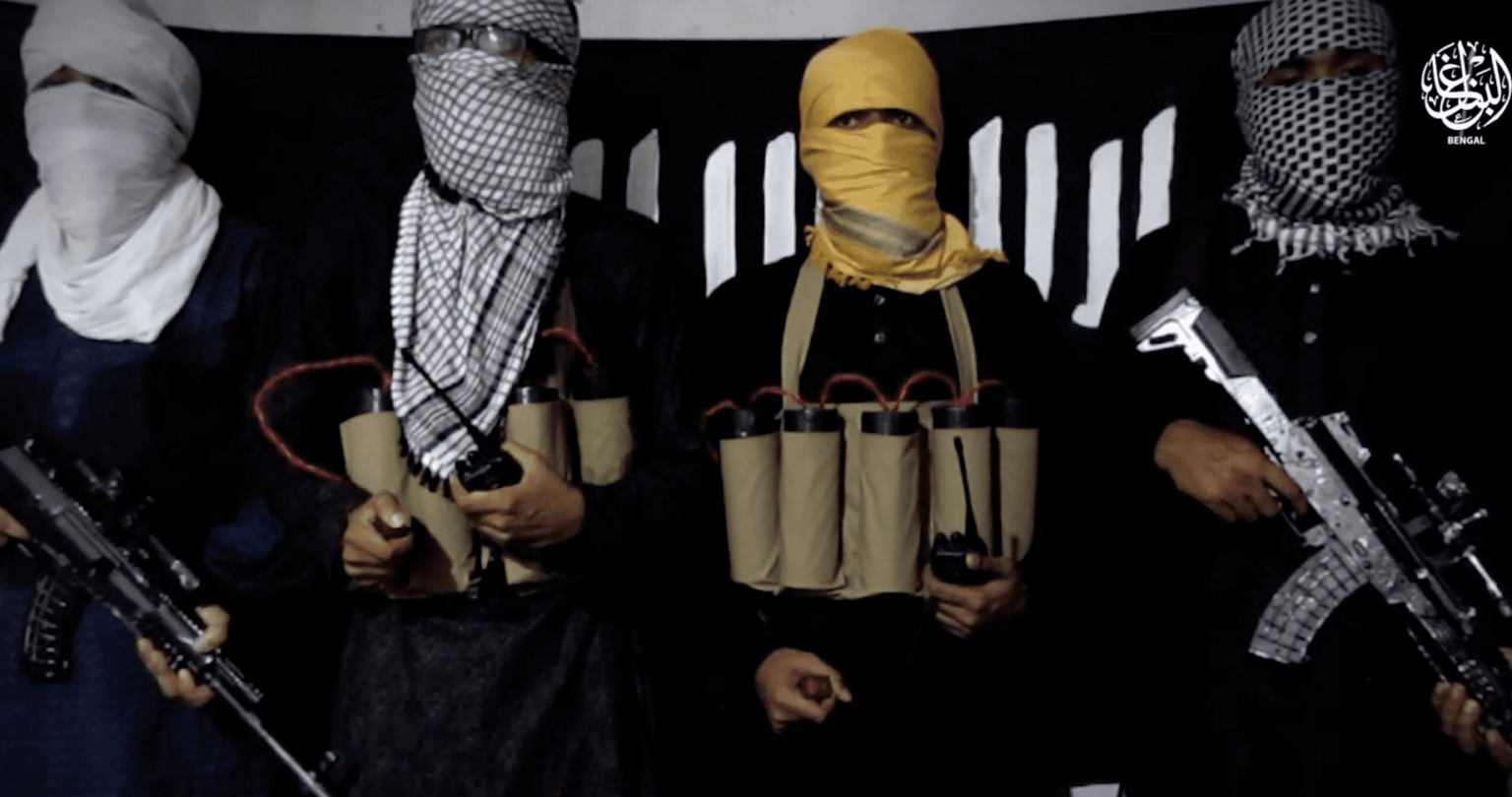
Mingaleev was appointed as amir of Tatarstan on September 24, 2006, when Doku Umarov was the president of Chechnya (Ichkeria). This move allowed the insurgents to unite the North Caucasian militants and the Tatar jihadists. With his decree, Umarov established the new Volga front and put Rais Mingaleev in charge there (Kommersant, October 2, 2006). Much later, on July 19, 2012, when the activities of the Tatar militants became common knowledge, these militants published a video address with a statement about renewal of their bayat (oath) to Doku Umarov. The video depicted seven persons, six of them in masks standing by a black flag with an Arab inscription. The man who did not conceal his face presented himself as the military amir of Tatarstan, Muhammad. He stated that he and his brothers took an oath of allegiance to Doku Umarov in 2007 and were renewing it (KavkazPress.com, July 27, 2012).
The same day that Tatarstan’s militants announced the renewal of their bayat to the Caucasus Emirate, an attempt on the life of Tatarstan’s mufti (Islamic law expert), Ildus Faizov, was made. Faizov survived the car bomb attack, but his deputy, Valiulla Yakupov, was shot dead on his home’s doorstep (Interfax, July 19, 2012). Two weeks later, on August 6, 2012, Mingaleev took responsibility for the attack (Business Gazeta, August 6, 2012). Moreover, he declared he was determined to carry on his struggle. He urged Tatarstan’s imams to return to the foundations of Shari’a and stop spreading traditional Islam. By traditional Islam, Mingaleev apparently meant the type of Islam that is friendly to Russian authorities. “The imams that do not want to or cannot carry out the requirements that have been envisaged by Shari’a must leave their positions,” the militant declared (Gazeta.ru, August, 6, 2012). In the aftermath of this attack, the Russian authorities and the security services launched a large-scale campaign against all those who did not share the opinion of official clergy. 600 Muslims were arrested. Night searches in Muslim homes, threats to relatives and torture became widespread. [2] Eventually, seven people were arrested as the authorities investigated this case. [3]
After this terror attack, practically all analysts began to discuss formation of a stable underground jihadist organization in Tatarstan. According to an estimate, the organization had up to 3,000 members, although these figures appear to be overblown (SVPressa [Moscow], August 7, 2012). Most likely, this figure reflects the number of Salafis that are automatically equated with jihadists, which is incorrect.
Against this backdrop of repression, Tatarstan’s militants announced the untimely death of their leader Muhammad Mingaleev in October 2012. [4] The announcement came as a big surprise. The video depicted a person resembling Muhammad wrapped in a shroud, put in a tomb and buried. No comments were provided. Abu Musa was announced as the new leader of Tatarstan’s militants. According to the Russian security services, Abu Musa was the closest associate of Rais Mingaleev, whose real name was Robert Ravilievich Valeev. [5] According to the nine-minute video address, jihad along the lines of the July 19 attack in Kazan against the mufti would continue and no one among the mujahideen of Tatarstan was prepared to surrender. [6] The life of this new amir also did not last long, however. According to the insurgents, Abu Musa was killed in a shootout with the security services in Kazan in October 2012 (Kavkazcenter.com, October 25, 2012).
Abdullah was declare the third amir of Tatarstan. He promised to change the tactics of the rebels, reverting to targeting judges, security services’ officers and attacks on economic infrastructure, such as gas pipelines (UmmaNews.com, December 28, 2012).
Russian security services were not impressed by the frequent changes of amirs in Tatarstan. Officials continued to talk about Rais Mingaleev’s jama’at. Apparently, the FSB had some information that the burial of Tatarstan’s amir was not real. According to the government, Mingaleev established the terrorist group Mujahideen of Tatarstan in November 2013 and attempted to explode containers at a petrochemical factory (ITAR-TASS, May 1).
The mystery about Mingaleev’s death would have remained unsolved if not for the operation of the Russian security services on the night of May 1, 2014. The special unit Alfa carried out an operation in Chistopol, Tartarstan, in an abandoned garage, killing two people. The servicemen blocked the garage and offered the people inside a chance to surrender, which they refused. One of the suspects, later found to be Mingaleev, attempted to run away, fired shots and threw a grenade at the government forces but was killed. The second person, Beslan Nazipov, died after the explosion of an improvised explosive device (IED). The deceased were preliminarily identified through DNA and the National Anti-Terrorism Committee stated they were involved in multiple terrorist attacks in the Volga region (RIA Novosti, May 1).
If Rais Mingaleev has not outsmarted the authorities again, this could be the actual end of the Tatar amir. A few weeks after these events, however, the North Caucasian militants have not reacted to the news about the death of their comrade-in-arms.
Mairbek Vatchagaev is a noted Chechen historian and political analyst on the North Caucasus and a former senior ranking official in the Chechen government of Aslan Maskhadov.
Notes
1. “Mingaleev Rais Rinatovich,” October 13, 2012, https://lit.convdocs.org/docs/255/index-1664.html.
2. “Muslims of Tatarstan and Bashkortostan ask Vladimir Putin to stop the persecution,” SOVA Center, August 8, 2012, https://www.sova-center.ru/religion/news/community-media/right-protection/2012/08/d25013/.
3. “Mingaleev Rais Rinatovich,” General Directorate of the Ministry of Internal Affairs in the Volga Federal District, https://pfo.mvd.ru/Vnimanie_rozisk/item/1953459/.
4. https://www.youtube.com/watch?v=v25epurIs9g.
5. https://www.lndp.lt/diskusijos/viewtopic.php?t=6968.
6. “In Tatarstan There Was a Second ‘Amir of the Mujahideen,’” Milliet, October 18, 2012, https://tatar-centr.blogspot.fr/2012/10/blog-post_18.html.