Sheikh Al Amin: Islamic State Bengal’s Dhaka Regional Commander
Sheikh Al Amin: Islamic State Bengal’s Dhaka Regional Commander
Executive Summary:
- Sheikh Al Amin, the Dhaka Regional Commander of Islamic State Bengal (ISB), resurfaced following an accidental December 2025 explosion at a madrassa that was secretly functioning as a sophisticated IED manufacturing hub.
- Following his stints in prison, Al Amin utilized family-based logistics, legitimate social covers, and organized robberies to rebuild militant networks and exploit security gaps during the country’s political transition.
- Prior to the blast, Al Amin’s network successfully relocated over 85 improvised explosive devices to clandestine safe houses, establishing a major kinetic threat ahead of Bangladesh’s February 12 parliamentary elections.
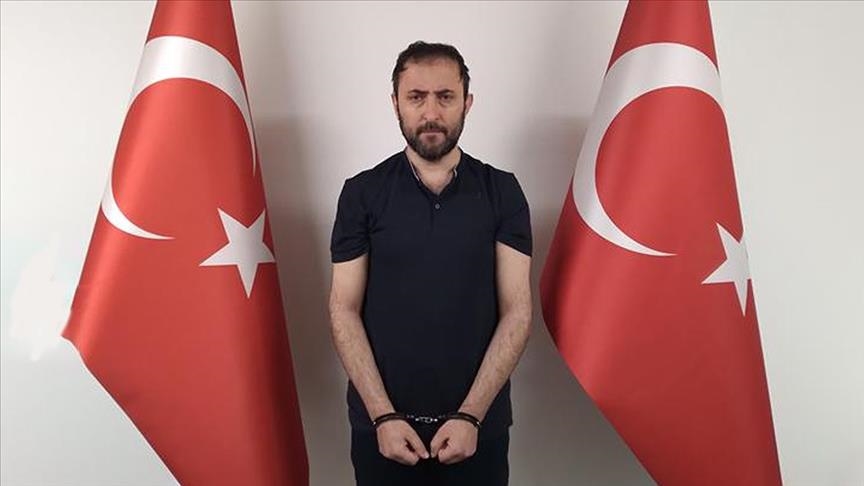
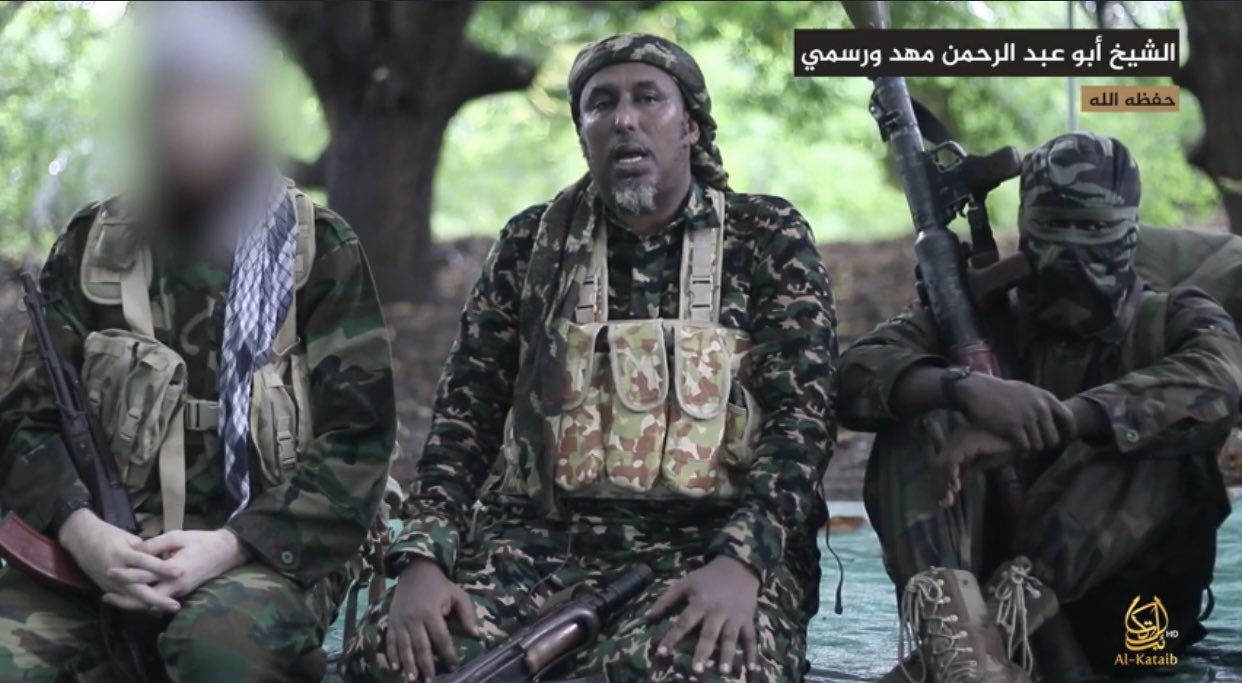
Sheikh Al Amin is the Dhaka Regional commander of Islamic State in Bengal (ISB), which is also known as Neo-Jama’atul Mujahideen Bangladesh (JMB) (Daily Janakantha, July 30, 2017). [1] [2] His name resurfaced after an accidental blast on December 26, 2025, at a little-known madrassa on the outskirts of Dhaka (Prothom Alo English, December 27, 2025; New Age, December 27, 2025; Daily Observer, December 27, 2025). Investigations revealed that Al Amin was using the madrassa as a cover while, in fact, it was a sophisticated improvised explosive device (IED) manufacturing hub (Dhaka Times, December 27, 2025). While the blast disrupted one specific cell, intelligence suggested the network had already successfully relocated over 85 IEDs to clandestine safe houses across the country prior to the incident (Dhaka Truth, January 5, 2026).
As Bangladesh approaches its parliamentary elections on February 12, Al Amin has emerged as a major kinetic threat, serving as the bridge between “old guard” militancy and a new wave of hybrid, family-based terror cells under the ISB banner.
Early Life and Radicalization
Al Amin is 32 years old and originally from Sharulia village in the Mollarhat subdistrict of Bagerhat, southwestern Bangladesh. He grew up as the only son in a family with five sisters, and his early education was rooted in the traditional Qawmi madrassa system [3], after which he completed his Higher Secondary Certificate (HSC) at a college in Mollarhat. [4] The Bagerhat district served as a strategic safe haven and logistical corridor for the al-Qaeda-aligned terrorist group, Jama’atul Mujahideen Bangladesh (JMB), during the mid-2000s (The Daily Star, January 29, 2006). [5] By establishing “sleeper cells” in rural areas such as Mollarhat, the JMB created an extremist milieu that likely served as the foundation for Al Amin’s radicalization.
Al Amin’s path toward militancy began through digital self-radicalization. After consuming extremist literature and Islamic State (IS) propaganda videos online, he eventually joined a more IS-oriented faction of JMB, commonly known as Neo-JMB, but also referred to as ISB or the “Sarwar-Tamim group.” [6] He was introduced to Neo-JMB by Mamun, the group’s top leader in Bangladesh’s South-Western region. He committed himself to the organization after receiving “Dawah” (Arabic: دعوة; propagation) from Mamun and another Neo-JMB member, Sakib.
Al Amin collected various types of militant notes, sheets, and books related to IS ideology and received specialized arms training directly from Mamun. He was part of a seven-member team that engaged in military and ideological training at Mamun’s residence using private firearms. After completing this training, Al Amin was tasked with recruiting new members and providing them with arms training (Daily Janakantha, July 30, 2017).
Militant Career and Arrests
Following Mamun’s 2016 death during a counter-terrorism operation, Al Amin demonstrated high operational security by cycling through various disguises and logistical roles in Dhaka (Daily Janakantha, July 30, 2017). By early 2017, he resurfaced under Sakib’s leadership and was tasked with military training and recruitment to ensure the organisation’s survival (Daily Janakantha, July 30, 2017). At that point, ISB’s structure was decimated by several dozen counterterrorism operations. To provide a legitimate front in Dhaka, he worked as a “construction supervisor” in the Mirpur area of the city (Banglanews24.com, July 31, 2017).
Following a period of operating in various disguises in Dhaka, Al Amin’s first major setback occurred in July 2017 when the Rapid Action Battalion (RAB) arrested him in Narayanganj alongside two other members of ISB, while at least 25 others fled. [7] At the time of his capture, they were found with firearms and extremist literature, and were in the middle of planning large-scale operations. This arrest ended his period of operating in disguise to evade prior anti-terrorism charges (The Daily Star, July 28, 2017; bdnews24.com, July 29, 2017; Jagonews24.com, July 29, 2017).
His period of incarceration between 2017 and 2019, however, served as a critical force multiplier rather than a deterrent for his future trajectory in militancy. During his time in Kashimpur Jail, Al Amin bridged the gap between historically rival al-Qaeda-aligned elements and the newer ISB factions. [8] He was, however, arrested a second time in 2021. There is no widely documented record of his second arrest, but he was eventually released on bail in late 2022 or early 2023, which took place long before the mass-bail of Islamist militants under the new interim Bangladeshi administration in August 2025 (Weekly Blitz, December 28, 2025).
The Keraniganj Hub and Tactical Shifts
Following his second release, Al Amin adopted a low-profile lifestyle to evade surveillance and worked as an auto-rickshaw driver and an Uber driver (bdnews24.com, December 28, 2025). Investigators believe these roles served as his cover for re-establishing militant connections. A significant evolution in his tactics was the use of “family cells,” in which his wife and other female operatives were involved in recruitment and logistics.
Al Amin also became the Director of the Ummul Qura International Madrassa in South Keraniganj. The madrassa was set up in a rented house, and Al Amin’s wife’s elder brother, Mufti Harun, who is also a cleric, financially assisted its establishment. Al Amin’s wife claimed that the madrassa provided income for them, as Al Amin’s family had lived in one room of the building since 2022 and used three other rooms as a madrassa. While the institution appeared to be a religious school, it functioned as a hub for bomb-making and tactical training. At least 85 IEDs were produced in and transferred from this hub to various other parts of Bangladesh prior to the accidental blast.
To fund these operations, Al Amin allegedly orchestrated organized robberies, including one in 2025 against a multinational corporation that netted around 1 million BDT (approximately $8,200). [9] ISB has frequently used “robbery in the name of Jihad” (referred to as al-Fai) to fund its operations. Unlike the original JMB—which relied more on local donations and foreign funds—ISB has been characterized by aggressive and often violent bank and gold shop robberies to sustain its cells.
The 2025 Explosion
On December 26, 2025, a massive explosion occurred at the Keraniganj madrasa managed by Al Amin, who had remained awake throughout the previous night assembling IEDs (The Business Standard, December 29, 2025). According to explosive experts, the blast was caused by the accidental detonation of Triacetone Triperoxide (TATP) precursors and suicide vest components. TATP is highly sensitive to heat and friction and is a hallmark of IS-style explosives, which are different from “crude bombs” typically used by local political thugs in Bangladesh.
The incident occurred at around 10:30 AM on a Friday—a weekly holiday in Bangladesh—which likely prevented a much higher casualty count among the madrassa’s approximately 50 students (Daily Observer, December 27, 2025). The blast blew apart the walls of two rooms and caused deep cracks in the ceiling and support beams. The debris extended up to 40 meters (around 131 feet) from the blast site. The incident left the site hazardous and caused significant panic throughout the local neighborhood, and even injured Al Amin’s wife and two of their three children. Al Amin fled the scene shortly after the explosion, leaving his injured family behind.
Conclusion
According to police sources, at least eight individuals were arrested and remanded following the December 2025 explosion (BSS News, December 28, 2025; BSS News, December 30, 2025). These individuals are primarily family members, relatives, and associates of Al Amin. A case (number 60/743) has been filed at the South Keraniganj police station under Bangladesh’s Anti-Terrorism Act 2009 (Amended in 2013) against Al Amin and his accomplices.
The trajectory of Sheikh Al Amin highlights a dangerous evolution in Bangladesh’s terrorism landscape. His ability to operate a large-scale explosives factory under the guise of a religious school—coupled with the strategic use of family members as operational support—demonstrates a level of tactical sophistication that exploits the current lack of security oversight in Bangladesh. As long as Al Amin remains at large, his expertise in high-volatility explosives and his connections to both prison-hardened militants and mainstream Islamist organizations pose an unprecedented risk to the stability of the 2026 elections and the wider region.
A resilient and highly adaptable explosives expert, Al Amin has successfully exploited the collapse of state surveillance following the 2024 political transition. By utilizing legitimate social fronts, family-based logistics, and strategic “gray zone” locations, he transformed a religious school into a high-capacity IED factory. By doing so, he effectively rebuilt a militant network capable of destabilizing the upcoming Bangladeshi elections.
Notes:
[1] Sheikh Al Amin is also known by numerous nicknames and aliases, including Al-Amin Sheikh, Md Al-Amin Sheikh, Rajib, Rajib Islam, Rajib Islam Sheikh, Islam Sheikh, and Sheikh.
[2] ISB most notably orchestrated the 2016 Holey Artisan Bakery massacre in Dhaka. Although a sustained counter-terrorism crackdown significantly degraded its leadership, the organization remains a designated terrorist entity that pioneered the use of suicide missions and targeted attacks against foreigners and religious minorities in Bangladesh.
[3] The Qawmi Madrasa is an independent, privately funded religious school system operating primarily in South Asia that follows the traditional Dars-e-Nizami curriculum, which is rooted in the revivalist Deobandi movement.
[4] Author’s interview with a Bangladeshi law-enforcement official, January 2026.
[5] Jama’atul Mujahideen Bangladesh (JMB) is an Islamist militant group founded in 1998 with the goal of replacing Bangladesh’s secular government with an Islamic state governed by Sharia law. The group carried out dozens of attacks across Bangladesh but gained international notoriety on August 17, 2005, when it executed a massive, synchronized attack by detonating nearly 500 bombs across 63 of the country’s 64 districts within a 30-minute window. Despite intense government bans, crackdowns, and the execution of its top leadership, the JMB has proven resilient by splintering into factions such as the “Neo-JMB,” expanding its operations into neighboring India, and continuing to pose a significant security threat to the region.
[6] Author’s interview with a Bangladeshi law-enforcement official, January 2026.
[7] He was arrested alongside two key associates: 27-year-old Md Waliullah Chishti (also known as Jony, Mohammad, or Abu Umar) and 35-year-old Md Kamrul Hassan (also known as Hridoy).
[8] Author’s interview with a Bangladeshi law-enforcement official, January 2026.
[9] Author’s interview with a Bangladeshi law-enforcement official, January 2026.