Sheikh Mansur Battalion Commander Muslim Cheberloyevsky: From Chechen Nationalist to Defender of Ukrainian Sovereignty
Sheikh Mansur Battalion Commander Muslim Cheberloyevsky: From Chechen Nationalist to Defender of Ukrainian Sovereignty
Just a year ago, Muslim Cheberloyevsky’s life in Ukraine was teetering precariously on the brink of disaster after the country’s National Security and Defense Council (NSDC) blacklisted him as a major criminal underworld figure (President.gov.ua, May 14, 2021). For reasons which are still yet to be fully explained, Cheberloyevsky, the commander of the Sheikh Mansur volunteer battalion that had fought alongside Ukraine’s government forces since the Donbas conflict erupted in 2014, landed on the NSDC’s list of international kingpins and gang bosses (Pravda.in.ua, May 24, 2021; see EDM, August 2, 2021). According to President Volodymyr Zelensky, individuals on the list would be subject to a range of punishments from the blocking of their assets to a ban on entering Ukrainian territory (Facebook.com, May 14, 2021).
Luckily for this Chechen commander, after a groundswell of public outrage accompanied by rumors of Russia seeking to influence Kyiv’s decisions, the Ukrainian authorities removed Cheberloyevsky and three of his comrades (alongside dozens of other people) from the sanctions list (Censor.net, October 16, 2021; see EDM, August 2, 2021). NSDC head Oleksiy Danilov admitted that over a hundred individuals, nearly a fifth of the original list, had been targeted “by mistake” (Kyiv Post, October 17, 2021). Cheberloyevsky was apparently one of them.
Cheberloyevsky had every reason to be concerned about getting caught in Kyiv’s cross-hairs. Three years earlier, in 2018, the Ukrainian authorities had extradited one of his fighters, Timur Tumgoyev, to Russia, despite calls by the UN Human Rights Committee “to halt Tumgoyev’s extradition pending consideration of his assertion that he would face torture if forcibly returned” (State.gov, June 1). In Russia, Tumgoyev was, indeed, tortured before being sentenced to 18 years in prison on terrorism charges (Zaborona.com, January 25, 2021).
Early Militancy in Chechnya
Little is known about Cheberloyevsky’s militant career prior to his emergence as an anti-Russian volunteer commander in Ukraine. The few Russian accounts of his earlier life contain inaccuracies and lack balance and substantiation. Muslim Cheberloyevsky, whose real name is Umkhan (Umakhan) Avtayev, was born in 1969, most likely in the village of Prigorodnoye, just outside the Chechen capital of Grozny. He is of the Nizhaloy teip, which is an affiliate of the confederation of kinship clans known as Cheberloy (hence the second part of his nom de guerre). Until 1991, he served in the Soviet army, but after the failed anti-Gorbachev putsch in August of that year he returned to his homeland to join the popular movement for Chechen independence (Nv.ua, April 7).
Contrary to claims by some Russian media, he never served as a bodyguard for General Dzhokhar Dudayev, Chechnya’s independence leader who was killed in 1996 in a Russian missile attack (EADdaily, May 24, 2021). According to Chechen sources, Cheberloyevsky aligned himself with Vakha Arsanov, a field commander who participated in the defense of Grozny during the First Chechen War and later became the Vice-President of the separatist Chechen Republic of Ichkeria under President Aslan Maskhadov. Arsanov, a controversial and much critiqued figure, not least because some of his decision-making directly undermined Maskhadov, was “seen by Moscow as one of Chechnya’s most radical and odious politicians (Monitor, October 2, 1997).” Arsanov would later be killed in a shoot-out with pro-Russian Chechen forces in 2005, leaving Cheberloyevsky without an influential patron and with no other option than to seek affiliation with other rebel groups and like-minded militants.
Move to Ukraine
It must have been during the Second Chechen war that Cheberloyevsky became acquainted with the former military commander of Grozny, Isa Munaev, who would later—in exile in Denmark—organize an estimated 500-strong volunteer force to fight with the Ukrainians in the Donbas region (EDM, July 18, 2014). Cheberloyevsky, at the time an asylum seeker in nearby Sweden, joined the new battalion, named after Dzhokhar Dudayev, in the summer of 2014, but the partnership did not last long. By the end of October, Cheberloyevsky broke away from the Munaev-led group to create his own fighting unit, which was named after the legendary Chechen commander Sheikh Mansur of Aldy, who led a coalition of Caucasian tribes against Catherine the Great’s imperialist push in the 18th century (Golosichkerii.com, October 25; EDM, November 7, 2014).
It is not entirely clear what led to the split between the two veteran fighters. Both subscribed to the view that Russia’s defeat in Ukraine would be beneficial to the Chechen cause and that a victorious Ukraine could become a springboard for independence-minded Chechens to fulfill their own aspirations. “If we succeed in Ukraine, then we can succeed in Chechnya,” Munaev, who would be killed in 2015, asserted (The Intercept, February 27, 2015). Cheberloyevsky’s views, however, were different in one significant respect. Several years ago, he outlined his vision for the future as follows: “[W]e want to see a free, independent Chechen Republic of Ichkeria, and the entire Caucasus, and by the will of the Almighty, we will achieve this” (Petrimazepa.com, October 6, 2019).
Although it may not be that obvious at first glance, Cheberloyevsky appears to share the objectives of the Caucasus Emirate, the pan-Caucasus militant group that was created in 2007 by the then-head of the Chechen insurgent network, Doku Umarov. Back in those days, Munaev, alongside a number of other prominent field commanders, issued a statement distancing themselves from Umarov and his new organization (RFE/RL, October 30, 2007). However, there is no record of Muslim Cheberloyevsky having ever done so. Moreover, Chechen sources suggest that Cheberloyevsky’s second-in-command and close confidant, Muslim Idrisov, maintains close ties with the Emirate’s adherents who found refuge in Turkey. [1] It is, therefore, highly likely the divisive issue of the Caucasus Emirate was the main reason for the rift between the two volunteer commanders.
Conclusion
Cheberloyevsky refuses to reveal the actual size of his battalion (Kavkaz Realii, March 7). However, Russia’s re-invasion of Ukraine in 2021 has apparently breathed new life into the unit. The battalion has, for example, taken part in the defense of Kyiv, most likely near Velyka Dymerka in Kyiv Oblast. In mid-May, it was re-deployed “in the direction of Kharkiv” (YouTube, May 14).
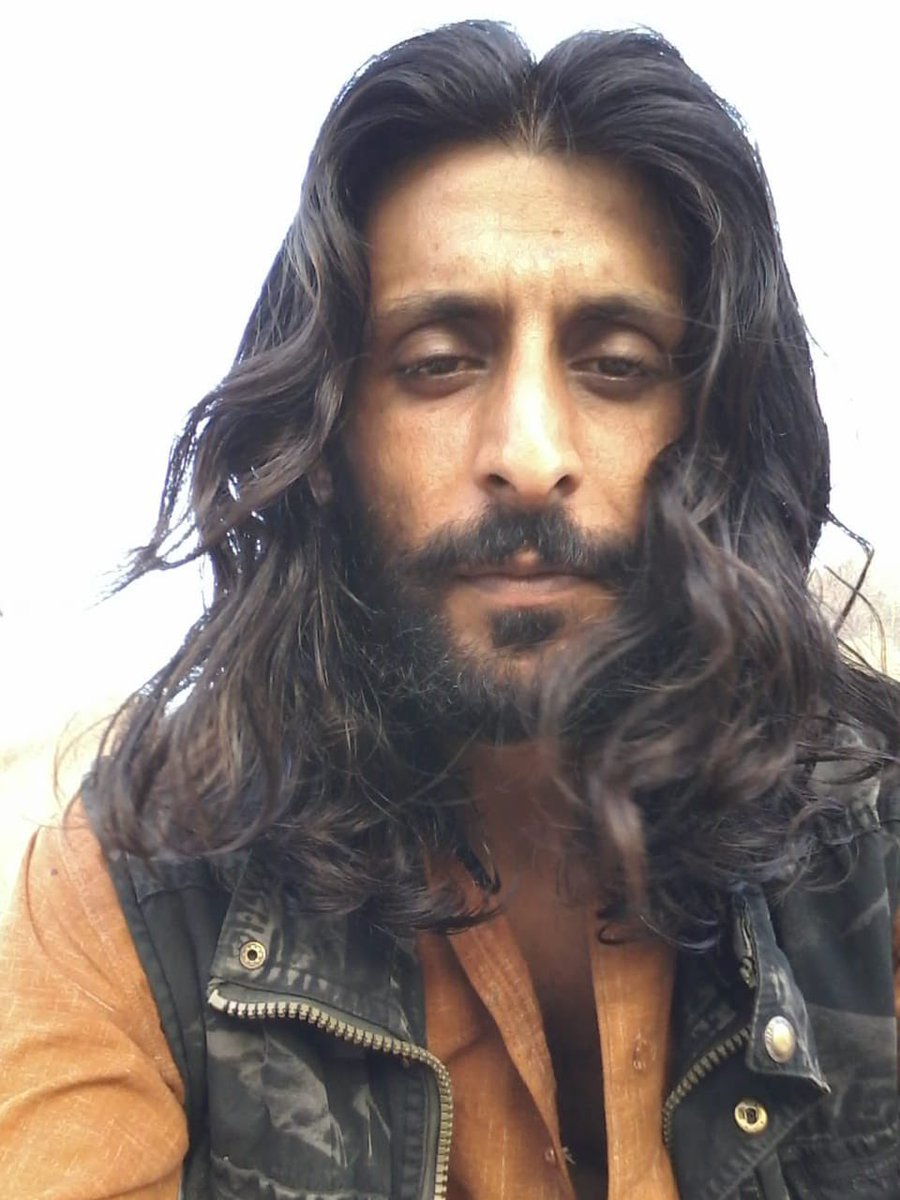
From its precarious beginnings as a front-line volunteer group to its fast growing recognition as a dedicated and effective fighting force, the Sheikh Mansur battalion has become something of a permanent fixture of the Russo-Ukrainian War. Its commander, Muslim Cheberloyevsky, invariably sports a luxuriant beard and remains clad in Fidel Castro-style cap and fatigues. He has become one of the most recognizable foreign faces of the conflict.
Notes
[1] Author’s online interview with a Chechen journalist and a source in Kyiv, both of whom requested anonymity as the information is not publicly available, June 1.