South Yemen’s Pacifist General: A Portrait of Brigadier Nasser al-Nuba
South Yemen’s Pacifist General: A Portrait of Brigadier Nasser al-Nuba
Background
While international attention is currently focused on anti-government protests and factional fighting in Yemen, since 2007 south Yemen has been the scene of large and often efficiently organized anti-government demonstrations. The Yemenis involved in the protests, strikes and sit-ins in south Yemen are demonstrating against what they regard as the north’s unfair treatment of the south and south Yemenis. With the outbreak of country wide anti-government protests in February of this year, southerners have taken to the streets in ever increasing numbers and their demands for secession from the north are growing louder and increasing in popularity among southerners.
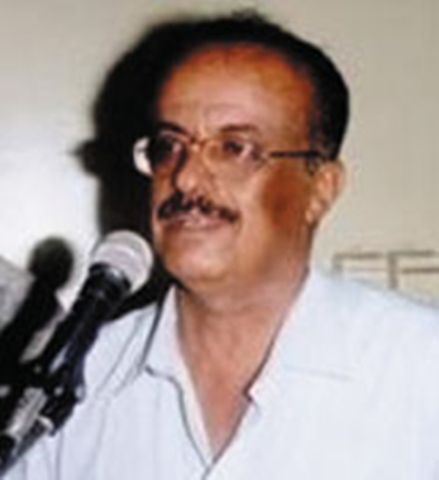
Brigadier General Nasser al-Nuba is one of the key figures and leaders within what can be termed the “southern revolt”. Brigadier al-Nuba helped found the Southern Mobility Movement (SMM) in 2008 and remains one of its most influential leaders. He also established and heads the Military Consultative Association (MCA), which is an organization that represents officers and soldiers who were forcibly “retired” from the People’s Democratic Republic of Yemen (PDRY) Army. [1] Brigadier al-Nuba also chairs the National Council for Independence of the South. Through organizations like the MCA and SMM, Brigadier al-Nuba has helped shape and define the southern revolt. He has played a key role in identifying and articulating the demands of southerners and the demand for the reestablishment of an independent south Yemen.
Despite escalating violence both on the part of the Yemeni government and some southern protesters, Brigadier al-Nuba has maintained his view that non-violent protests, sit-ins, and strikes are the only methods capable of achieving southern independence. Brigadier al-Nuba’s consistent calls for peaceful protests and his resistance to calls for armed revolt have lost him support within the SMM. However, his early support for secession, his persecution by the Yemeni government, and his position in the generally well respected former PDRY Army, have enhanced his role as a senior statesman within the south. As current factional fighting within north Yemen grows, calls for secession of the south will only grow louder. Brigadier al-Nuba will be one of the figures with whom a post-Saleh Yemeni government will have no choice but to engage.
A General in the People’s Democratic Republic of Yemen Army
Nasser al-Nuba was born in 1943 and grew up during the British occupation and administration of south Yemen. The Nuba family is native to Shabwa Governorate where Brigadier al-Nuba and his family continue to live. Following the withdrawal of British forces and administrators in 1967, the Marxist-inspired National Liberation Front (NLF) gained the advantage over its political and military rival, the Front for the Liberation of Occupied South Yemen (FLOSY). Nasser al-Nuba and much of the population of Shabwa at least nominally backed the NLF. In 1969, after much political infighting within the NLF, the People’s Democratic Republic of Yemen (PDRY) was declared. The PDRY government pursued a Marxist/socialist agenda that included radical policies like de-tribalization. On some levels these policies, particularly de-tribalization, were successful. The comparatively egalitarian PDRY Army—in contrast to the army of north Yemen and what became the Yemen Arab Republic (YAR)—was not organized along tribal lines and promotions were generally based on ability and performance rather than tribal connections.
Nasser al-Nuba excelled in the PDRY Army and quickly moved up through the ranks. His expertise was in artillery and he was chosen to attend courses in the former Soviet Union with which the PDRY had close ties. The PDRY Army enjoyed the respect of many south Yemenis due to its relatively apolitical status. While party loyalty was necessary for success in the PDRY Army, ability and professionalism remained the most important factors governing movement through the ranks. With the beginning of the dissolution of the Soviet Union in early 1990, the PDRY lost its primary financial backer and was forced to expedite its long discussed unification with the north. Due to outstanding political issues and the inherent difference in their structures, the armed forces of the PDRY and the YAR were never successfully integrated. Following unification in 1990, Brigadier al-Nuba—like most other PDRY generals—retained his command. In May 1994, the south seceded from what was now a unified Republic of Yemen (ROY). The short-lived Democratic Republic of Yemen (DRC) was declared. Brigadier al-Nuba, like most of the former PDRY armed forces, pledged loyalty to the DRC and chose to fight against ROY forces. The armed forces of ROY were successful and the south was occupied thus ending the south’s brief stint of emancipation from Sana’a. Nasser al-Nuba, along with much of the DRC’s political and military leadership, went into exile. Al-Nuba’s exile was brief and he returned after an amnesty offer from the government of the ROY. However, al-Nuba along with thousands of southerners within the armed forces and extensive southern bureaucracy were forcibly retired—many without pensions.
Organizing the Southern Military Retirees
After the 1994 civil war, the northerner dominated government of ROY pursued punitive policies in the south. The defeat of the southern armed forces resulted in widespread looting and many southerner-owned homes, businesses and lands were occupied or seized by tribesmen and officials loyal to the government of ROY president Ali Abdullah Saleh. The government of Ali Abdullah Saleh promised to address the issues of property seizures, and the forcibly retired officers and bureaucrats. The ROY government also promised a policy of federalization as part of its efforts to address the grievances of southerners. Rather than addressing these problems and implementing needed reforms, President Saleh attempted to control the south by employing a two pronged approach that worked in the north: exerting control through a patronage network and military occupation. The approach worked but only in the short term. The ailing Yemeni economy forced a curtailment of both the patronage network and limited government services. The results of this are now evident throughout Yemen but the south, which was not regarded by the Saleh government as being as central to the maintenance of power as the north, began experiencing high levels of unrest in 2007.
Some of the first widespread protests and strikes were organized by Brigadier al-Nuba as the leader of the Council for Southern Military Retirees. The deleterious effects of the faltering Yemeni economy were acutely felt by the forcibly retired soldiers and bureaucrats whose pensions had long since been rendered worthless due to both inflation and the devaluation of the Yemeni rial. In addition to being well read in military history, al-Nuba is an avid student of the non-violent methodology of Mohandas Gandhi and Martin Luther King Jr. Brigadier al-Nuba and other former PDRY Army officers began organizing and conducting peaceful sit-ins and protests in Mukalla, Ataq and Aden in May 2007. The Saleh government ordered the arrest of Brigadier al-Nuba and other leading military retirees. Al-Nuba was extracted from his Aden home on September 2, 2007 by security forces and put on trial in a military court in Sana’a (Yemen Times, December 18, 2008).
In response to this indignation, the number of protesters grew into the thousands, reaching the tens of thousands by October 14, the holiday that commemorates the beginning of South Yemen’s revolt against the British who once administered that region. The central government responded to the protests by killing four demonstrators. Those calling for al-Nuba’s release described the Saleh regime’s actions as “state terrorism” (Yemen Observer, October 6, 2007). The protests continued until Nasser al-Nuba was released in November 2007. The protests and the government’s response led to the creation of the Southern Mobility Movement in 2008.
Rise of the Southern Mobility Movement (SMM)
Brigadier al-Nuba and the other military retirees formed the nucleus of what would become the Southern Mobility Movement (SMM). The retired officers, al-Nuba in particular, benefited from the respect that southerners had historically accorded to the PDRY Army. They also benefited from the fact that they and the many civil servants that joined them are the last representatives of a sovereign southern state. The SMM was organized as an umbrella organization under which the activities of a number of groups like Brigadier al-Nuba’s Military Consultative Association (MCA) could be coordinated. The SMM’s diffuse structure and shifting, poorly defined leadership structure have impaired its ability to speak with one voice. However, the SMM’s diffuse structure has also impeded the Saleh government’s efforts to crack down on its leaders and infiltrate its member groups.
Since its founding in 2008, Nasser al-Nuba’s role as a leader in the SMM has been weakened. The government’s often violent crackdowns on southern protesters have caused many of the SMM’s member groups and leadership to question Brigadier al-Nuba’s insistence that protests remain non-violent. Tariq al-Fadhli, a former mujahideen and head of the influential Abyan Governorate-based al-Fadhli family, has called for violence against the Saleh government (Yemen Post, April 2010). Al-Nuba rejected al-Fadhli’s calls for armed revolt, reiterating the need for peaceful protests and the need for legal answers to the question of southern independence.
Brigadier al-Nuba’s importance to the SMM and the southern revolt remains significant. In April 2010 he was the target of a car bombing that instead killed a former PDRY colonel (Aden Press, April 2010). Al-Nuba accused the government of the attempted assassination. While military retirees, and Brigadier Nuba in particular, continue to act as an important force within the SMM and in southern politics in general, a shift to younger leaders—many with no associations with the former PDRY—is underway.
Brigadier General Nuba and the Revolution in Yemen
The ongoing anti-government demonstrations in Yemen and the factional and tribal fighting in Yemen have done little to change the opinion of most southerners who continue to demand secession. The SMM has consistently supported what it has termed its “northern brothers” but has been discordant in whether or not it would support or take part in a unity or opposition-led government. Brigadier al-Nuba has remained consistent in his calls for an independent south Yemen while supporting the efforts of the people of the “Yemen Arab Republic” (north Yemen before 1990) in their efforts to overthrow the Saleh government (MCA press release, April). The policy of federalization—promising greater autonomy for the southern governorates—has also been wholly rejected by al-Nuba as a possible solution to the north and south’s poisonous relations.
Conclusion
As a founder of the SMM and a leading figure in south Yemeni politics, Brigadier al-Nuba will likely have a role in future north-south negotiations. Though not without critics—even among the cadre of PDRY general officers—al-Nuba enjoys considerable popularity and respect among members of the old regime and southern youth. This fact was clearly evidenced by the thousands that took to the streets after his arrest in 2007. While al-Nuba, like a growing number of southerners, is seemingly intransigent on the issue of secession, his advocacy of non-violence and his respect for legalistic approaches to resolving deeply divisive north-south issues means that any future Sana’a-based opposition or unity government would be unwise to ignore him.
Note
1. Reflective of the PDRY bureaucracy, there are a profusion of councils and groups in south Yemen—many operating with multiple names in both Arabic and in their English translations. The MCA is also called the Consultative Council of Retired Military and Civilian Associations, an outgrowth of the Council for Southern Military Retirees.