Stabilizing Hudaydah: A Look at the Pragmatic Leadership of Tihama Resistance Brigade Commander Shaykh Abd al-Rahman Shuae Hajari
Stabilizing Hudaydah: A Look at the Pragmatic Leadership of Tihama Resistance Brigade Commander Shaykh Abd al-Rahman Shuae Hajari
On July 1, the United Arab Emirates (UAE) and Saudi Arabia–led multinational coalition announced a pause in its campaign to capture the strategic Yemeni port city of al-Hudaydah (Twitter, July 1). Coalition officials, including senior members of the UAE government, argued that the cessation in military operations was necessary to support a United Nations (UN)-led effort to end the fighting in the city and place Hudaydah port, the most important in Yemen for humanitarian relief to enter the country, under UN jurisdiction (Xinhua, July 2). Despite reported progress in the UN mediation between the coalition and the Ansar Allah (Partisans of God – the Houthis) movement that still controls large areas in Hudaydah and the highlands around the city, no agreement has been reached and the cessation of hostilities in and around the city remains tenuous (Sky News Arabia [Abu Dhabi], July 28; The National (Abu Dhabi), July 18). If no agreement can be reached through the UN effort, it is expected that the coalition and its local Yemeni partner forces, particularly the Tihama Resistance Brigades, led by Shaykh Abd al-Rahman Shuae Hajari, will resume the military campaign to seize Hudaydah from the Houthis (Sky News Arabia [Abu Dhabi], July 27; The National [Abu Dhabi], July 7; see also Militant Leadership Monitor, July 6).
Background
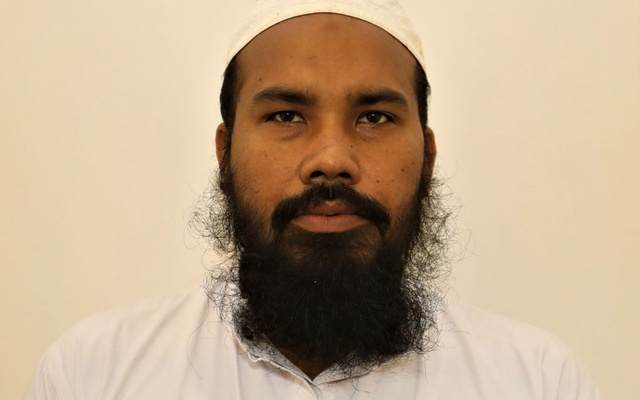
Shaykh Abd al-Rahman Shuae Hajari is a native of the city of Hudaydah, a member of the prominent southern tribe of Bani Hajar—it has a branch with a strong presence in the Hudaydah area—and both the overall military commander and the head of the political relations for the Tihama Resistance Brigades (YouTube, June 10; YouTube, January 3; YouTube, April 13, 2017). Prior to the start of the coalition campaign against the Houthis and their allies who were loyalists of the former Yemeni President Ali Abd Allah Saleh, Hajari was the leader and main organizer of the Hudaydah chapter of the Tihama Resistance Movement (YouTube, December 23, 2014; YouTube, October 15, 2013; YouTube, April 20, 2013; see Militant Leadership Monitor, July 6). He has received significant attention and investment from the UAE and Saudi–led coalition and the government of Abd Rabuh Mansour Hadi, which the coalition supports in the campaign against the Houthis. Under Hajari’s leadership, the Tihama Resistance Brigades were singled out by Hadi in July for their role in supporting the coalition’s military campaign on Hudaydah (Akhbar al-Yaman [Aden], July 2; al-Hayat, July 2). Hajari’s appeal to the Hadi government and the coalition forces is his long history of resistance against the Houthis in and around Hudaydah (YouTube, June 2, 2015; YouTube, December 23, 2014).
He organized demonstrations against the Houthis after they conquered Hudaydah in October 2014. Following the start of the coalition operations in Yemen in March 2015, Hujari became the field commander of the local Popular Resistance chapter in the Tihama region, particularly focused on the city of Hudaydah and its surrounding areas (Yaman News, October 18, 2015; Amraan, October 21, 2014). The Popular Resistance militias were the initial local Yemeni partner forces that the coalition began working with to combat the Houthis and their allies. Having this experience of working closely with the coalition since 2015 has benefited Hajari as it drew him to the attention of the Emiratis, who are seeking useful local Yemeni leaders to engage with. Due to his role in organizing protests against the Houthis in the city of Hudaydah after the Houthis captured the city, the Houthis raided his family home in Hudaydah in February 2015 and arrested members of his family (al-Riyadh, February 15, 2015; al-Masdar, February 14; Addali News [Aden], February 14).
Pragmatism and the Fight for Self-Rule
Hajari is an avowed supporter for the Tihama region’s right to self-rule and autonomy from the Yemeni national government. He frequently utilizes the argument that Tihama has a unique history, culture and role in Yemen and should be provided with self-rule in a federal system that governs Yemen (YouTube, June 2, 2015; YouTube, January 10, 2015). He also uses the rhetoric that 70 percent of Yemen’s non-oil revenues and the majority of its foodstuffs are brought into the country from the Tihama region, especially from Hudaydah port (al-Tagheer [Aden], October 18, 2016). Through his connection to the coalition and the Tihama Resistance Brigades’ role in support of the coalition campaign to seize Hudaydah, Hajari is mobilizing broader support for the political movement that he leads (YouTube, March 15, 2017).
Hajari, despite his support for the Tihama Movement, has shown a clear capability to work pragmatically with Hadi and his backers, while maintaining strong ties to the Emiratis, as part of a broader effort to remove the Houthis from Yemen’s Red Sea coastal region (YouTube, April 12, 2017). He has been an important local partner to the Emiratis, working with the UAE to identify recruits for a Tihama Elite Force to be incorporated into the UAE’s al-Hizam al-Amni (Security Belt) initiative, and recruiting hundreds of fighters for the Tihama Resistance Brigades that are supporting the Emirati push up Yemen’s Red Sea coast toward Hudaydah (al-Ain, May 12; YouTube, April 13, 2017; al-Bayan [Dubai], April 12, 2017; see Terrorism Monitor, June 14; Militant Leadership Monitor, June 6; Militant Leadership Monitor, April 4). Pragmatism is an important trait for Hajari to have as there are still disagreements within the coalition over which local Yemeni actors, supported by which patron, would run a post-Houthi governance and security administration in Hudaydah. For Hajari to be able to work with both the Emiratis, the actor that will likely run the security apparatus and maritime trade administration in Hudaydah, and Hadi and his allies, who will likely receive international recognition as the Yemeni sovereign actors, improves his chances of being a powerbroker in the city and its region in the post-Houthi period (al-Thawrah News [Sana’a], July 9; Akhbar al-Yaman, May 28).
Outlook
The pause in the Hudaydah campaign and the Houthi resistance against the coalition forces, which has been more effective than expected, should be a cause for concern for the UAE. Most concerning for the Emiratis is the question of whether the Tihama Resistance Brigades can be an effective local force that can hold the city of Hudaydah and its surroundings—whether with the Houthis completely removed from the city or as part of a joint administration of the city worked out through the UN-led process. Hajari is likely to be the face of the coalition effort to stabilize Hudaydah. Furthermore, he is the most important local Yemeni partner militia leader with a large political network in and around the city that can form a Hudaydah-based civil and security administration on behalf of the Emiratis. Hajari’s ability to secure an effective local network that is needed by the Emirati-led coalition forces to stabilize Hudaydah will be an important dynamic as the UAE decides on the next steps of the campaign to capture this critical city. This will be a challenge for Hajari and the Tihama Resistance Movement and its associated militia, and both Hajari and his movement are best positioned to dominate the local politics and administration of Hudaydah if the Emirati-led coalition is successful. However, Hajari’s ability to construct a local administrative and security infrastructure in and around Hudaydah from the Tihama Resistance Movement is being put to the test, with consequences for the long-term stability of this key region of Yemen.