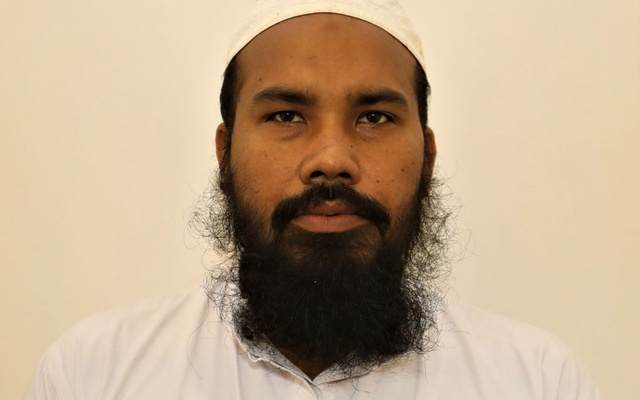
Thadiyantavide Nazeer: Lashkar-e-Taiba-Linked Ideologue Recruiting in India From Prison
Thadiyantavide Nazeer: Lashkar-e-Taiba-Linked Ideologue Recruiting in India From Prison
Executive Summary:- Thadiyantavide Nazeer is a key Islamic extremist associated with the Lashkar-e-Taiba (LeT) in Pakistan and India’s homegrown jihadist group, Indian Mujahedeen (IM), and has been under arrest since 2013. Nazeer has managed to use his time in prison to radicalize others and was at the center of a cell of radicalized individuals who served time at Bengaluru’s Central Prison.
- Nazeer gained notoriety for his involvement with a series of bombings in the mid-2000s. He was an adept recruiter at this time.
- Nazeer was acquitted in 2022 for his suspected association with several of the bombings he is alleged to have been a part of due to insufficient evidence and/or procedural lapses. He continues to serve a life sentence for his involvement in at least one attack and for recruiting youths into LeT.
Thadiyantavide Nazeer is a key Islamic extremist associated with the Lashkar-e-Taiba (LeT) in Pakistan and India’s homegrown jihadist group, Indian Mujahedeen (IM). He is currently serving a life sentence in the Bengaluru Central Prison. Nazeer’s checkered journey into the world of crime and terrorism spans over two decades, marked by vandalism, bombings, trials, and acquittals. His life story demonstrates the intersection between terrorist recruitment and prison radicalization in India. Background and Key Operations Nazeer, also known as Ummer Haji, is a native of the Thayyil locality of Kannur in the state of Kerala. He came into prominence for his involvement in terrorist activities during the mid-2000s. In his early years, Nazeer was involved in the left-wing Students Federation of India (SFI), which is the student wing of the Marxist-oriented Communist Party of India (CPI) in Kerala. He later joined Jamiaathul Ishanya (JI), a fundamentalist Sunni faction that was behind several attacks against Hindu leaders and Islamic reformists in South India. [1] Nazeer was one of the main figures accused in the Tamil Nadu state transport bus burning in 2005 in the town of Kalamassery in Ernakulam, Kerala. The incident involved pro-Islamist People’s Democratic Party (PDP) operatives engaging in violent protests to free their leader, Abdul Nasser Madani, a firebrand Islamic cleric detained in connection with the 1998 Coimbatore bomb attacks that killed and injured over 250 people (Hindustan Times, December 17, 2010). Nazeer and four associates were part of a bombing conspiracy that targeted the Coimbatore Press Club in December 2002 to take revenge for police brutality against Madani and his wife, Soofia (Times of India, December 10, 2009). Kashmir Recruitment Nazeer rose to prominence when he joined Pakistan-based Lashkar-e-Taiba, and soon after played a pivotal role in recruiting Indian youths for jihad in Kashmir. On March 3, 2006, Nazeer was associated with twin blasts at two bus stands in Kozhikode, Kerala (Hindustan Times, March 3, 2006; Decan Herald, January 24, 2019). The blasts were reportedly carried out to avenge the denial of bail to 130 people arrested in the 2003 Marad communal violence in Kerala, incited by an Islamist mob (Outlook India, June 6, 2003). Around the same time in 2006, Nazeer was also involved in the infamous Kashmir terror recruitment network. Nazeer helped recruit Keralite Muslims and provide them with arms training to carry out attacks in India. He reportedly scouted more than a hundred youths in Kerala, of which several were sent to attend terror training camps in Kashmir. The network came to light in October 2008 when four Kerala-origin militants were gunned down in two separate encounters in Kupwara and Lolab in Kashmir (India Today, November 18, 2008). Further investigation into the case confirmed Nazeer’s role in terror recruitment and training. He was later found guilty under Indian Penal Code (IPC) section 121(A) related to conspiracy to commit anti-Indian subversive acts. The investigations also found that under Nazeer’s supervision, several militant sleeper units were operating in Kerala under the guise of charity organizations and health care units (New Indian Express, October 2, 2013; Manorama Online, May 9, 2022). Ties to Indian Mujahedeen Nazeer’s involvement with the Indian Mujahedeen surfaced during investigations into bombing cases in South India in 2008 and 2009. His arrest in December 2009 near the Bangladesh border and subsequent interrogation provided crucial evidence about countrywide bombing cases. He was reportedly heading IM’s Kerala unit known as Jamiat Ansarul Muslimeen (JIAM), which was active in the Kannur, Ernakulam, and Kasargod districts of Kerala. (New India Express, September 11, 2013). Nazeer’s name figured prominently during the investigations into the July 2008 Bengaluru blasts. The attack involved the detonation of at least nine bombs in different parts of the city that killed one and injured nine others. In 2011, a National Investigation Agency (NIA) court found Nazeer and a relative, Shafas Shamsuddin, guilty of offences under the Unlawful Activities Prevention Act (Hindustan Times, August 11, 2011). These coordinated attacks in Bengaluru brought Nazeer onto the radar of India’s security agencies, leading to his arrest and life imprisonment in 2013. After almost a decade, the Kerala High Court in January 2022 exonerated Nazeer in the 2006 Kozhikode, Kerala twin blasts case, overturning his life imprisonment sentence (Matrubhumi, January 27, 2022). Again, in September 2023, an Ernakulam Court acquitted Nazeer and two others for a 2008 case involving a bomb planted near Jawahar Municipal Stadium in Kannur. The court also acquitted him in a 2009 case related to the seizure of explosives from a house in Chembilode village, Kannur (New Indian Express, September 1, 2023). Bengaluru Prison Radicalization Case Despite the several acquittals that primarily arose due to delays in his prosecution and insufficient evidence, Nazeer continues to be in jail. Nazeer still serves a life sentence for assisting LeT in recruiting Kerala youths to engage in jihadism and his direct involvement in the 2008 Bengaluru terrorist attack. While in jail, Nazeer was a central figure in a prison radicalization case at Bengaluru’s Central Prison, wherein Nazeer introduced fellow inmates to extremist ideology, going on to groom them to commit violent attacks, focusing on Indian targets. Nazeer’s core network in prison comprised five Islamists identified as Mohammed Umar, Faisal Rabbani, Tanveer Ahmed, Mohammed Farooq, and Junaid Ahmed. After their release, these individuals coordinated operations, fundraising, and the procurement of arms and ammunition for LeT. India’s National Investigation Agency seized arms and ammunition, money, digital devices, and other incriminating documents from the premises of these individuals during a raid in December 2023 (NIA, December 13, 2023). In March 2024, the NIA again raided multiple locations across the country in Karnataka, Tamil Nadu, Telangana, Punjab, Gujarat, and West Bengal when expanding the investigative scope of Nazeer’s prison radicalization network across India (National Investigation Agency, March 5). Conclusion Despite his incarceration, Nazeer has continued to coordinate terror networks from behind bars. His deep-rooted connections with various terror networks in India and abroad and his ability to influence and radicalize Muslim youths within and outside prison cells have made him a critical threat. His multiple acquittals, including in high-profile cases like the 2006 Kozhikode twin blasts, also underscore the challenges faced by India’s legal system in securing convictions in complex terrorism-related cases. This has often been due to insufficient evidence or procedural lapses. Even as his direct involvement in committing terrorist attacks has waned, Nazeer and others like him underscore the idea that incarceration of terrorists in light of a lacking judicial and penal system does not necessarily put an end to their activities. Some manage to continue to wage their own wars by different means. Notes: [1] JI was behind the death of Islamic reformist Chekannoor Moulavi in July 1993 and pro-Hindu Rashtriya Swayamsevak Sangh (RSS) activist Thozhiyoor Sunil in December 1994 (India Today, October 2, 2013; Manorama Online, October 13, 2019).