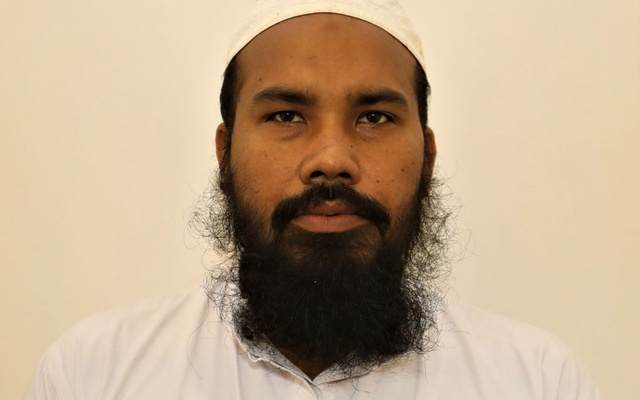
The Elusive Indian Ideologue: Farhatullah Ghauri Resurfaces to Call for Jihad in India
The Elusive Indian Ideologue: Farhatullah Ghauri Resurfaces to Call for Jihad in India
After years of hiding, Muhammed Farhatullah Ghauri, one of India’s elusive yet most wanted Islamist ideologues, resurfaced with a series of audio-visual messages. Ghauri’s sudden re-emergence on popular social media platforms such as Twitter, YouTube, Facebook, and Telegram in early 2022 caught the attention of Indian security agencies. Since February, under the banner of Sawt-al-Haq (Voice of Truth), he has railed against the Hindu right-wing in India. He has also railed against democracy, nationalism, and anti-Islam or anti-Prophet Muhammed comments, while also inciting jihadist plots.
Ghauri on the Run
Interpol and India’s top anti-terror National Investigating Agency (NIA) have been searching for Gauri for years with little success. He was involved in several terrorism cases, including the Akshardham temple attack in Gujarat in September 2002 that killed over 30 people and injured scores of other Hindu worshippers (Indian Express, November 5, 2017). He was also accused of a suicide bombing targeting Special Task Force in Hyderabad in October 2005 (Hindu, April 18). Further, his involvement came to light during the investigation of jihadist plots to assassinate Indian politicians, senior journalists, and religious leaders in Bangalore and Hubli, which would have upset the religious harmony in Karnataka (Deccan Herald, October 28, 2012).
Ghauri’s role as a recruiter and financier within multiple terrorist organizations has been corroborated by Indian intelligence agencies during investigations over the past few decades. Along with major Pakistan based Kashmir-centric terrorist groups, especially Lashkar-e-Taiba (LeT), Jaish-e-Muhammed (JeM) and Harkat-ul-Jihad Islami (HuJI), his role in establishing al-Qaeda’s footprint in India was also discovered in 2016. At that time, Delhi Police charged 17 Islamists, 12 of whom had already absconded including Ghauri, for conspiring with and recruiting Indian youths for al-Qaeda in the Indian Subcontinent (AQIS) (Millennium Post, June 11, 2016; Economic Times, July 13, 2018).
Ghauri’s Background
A resident of the Kurmaguda area of Saidabad in Telangana, Ghauri has been an ardent follower of Masood Azhar, the founder of JeM in Pakistan. Ghauri was also a member of a Hyderabad-based Islamist group named Darsgah-Jihad-O-Shahadat (Centre for Jihad and Martyrdom) (Indian Express, July 19, 2009). His recent social media outreach activities also suggest his sympathy or past association with the banned Student Islamic Movement of India (SIMI) and India’s homegrown Indian Mujahideen (IM).
He nevertheless moved from India to Saudi Arabia in the late 1990s, and after the Akshardham attack in 2002, he possibly never returned to India. During the Bengaluru-Hubli assassination conspiracy investigation in 2012, one suspect, Zafar Iqbal Sholapur, who was convicted later in 2016 by a special anti-terror court, reportedly confessed to having met Ghauri in Karachi, Pakistan. Their meeting also involved Ghauri transiting to Karachi via Iran (Indian Express, September 23, 2012; Deccan Herald, September 17, 2016).
Ghauri’s Re-emergence
The sudden re-emergence of Ghauri on popular social media channels in February-March 2022 baffled security officials in India. His reemergence, however, coincided with the 2008 Ahmedabad terror case verdict in February, which may have encouraged him to resurface virtually for militants affiliated with SIMI, IM, and LeT who were convicted in the case (NDTV News, February 8). Ghauri issued a statement upon his return threatening the government over the verdict that sentenced 38 Islamists to death and eleven others to life imprisonment by a special court in Ahmedabad (Economic Times, February 19). While labeling the judge as a legitimate target for assassination, Ghauri also touched on several perceived issues plaguing Indian Muslims in general, including the rise of the Hindu right-wing (Sawt-al-Haq/Vimeo, March 3).
Ghauri’s message also called on fellow Muslims to defend the Prophet Muhammed and threatened Nupur Sharma and Naveen Jindal of the Bhartiya Janata Party (BJP) for their remarks about the Prophet Muhammad (Sawt-al Haq/Facebook, June 13). He further mentioned past jihadist beheadings and killings for blasphemy as justification for targeting Sharma and Jindal, including the attack on Charlie Hebdo in Paris in 2015, right-wing politician Kamlesh Tiwari’s murder in Lucknow in 2017, and attempts on Swedish cartoonist Lars Vilks’ life in 2007. Further, Ghauri recounted the beheading of Mahashe Rajpal in Lahore in 1929 after he wrote a satirical book on the Prophet. Meanwhile, Ghauri’s other messages dealt with the legendary Gazawat-ul Hind (Islamic Conquest of India) and included a call for liberating Indian Muslims from injustice (Voice of Truth/Twitter, May 12).
Conclusion
The content of Farhatullah Ghauri’s audio-visual messages suggests that he is resurfacing to foment jihadist sentiment among Indian Muslims by citing various anti-Muslim events that occurred historically and are at present plaguing Indian muslims under the pro-Hindu BJP government. His messaging also resembles that of other fugitive Islamist ideologues, such as Tamim al-Adnani of AQIS, who has run the Umma Network channel on YouTube. While most other such fugitives are still in hiding, Ghauri’s online resurgence could inspire and reinvigorate dormant and struggling terrorist groups in India.