The Mysterious al-Shahab al-Mohajir—The New Emir of Islamic State-Khorasan
The Mysterious al-Shahab al-Mohajir—The New Emir of Islamic State-Khorasan
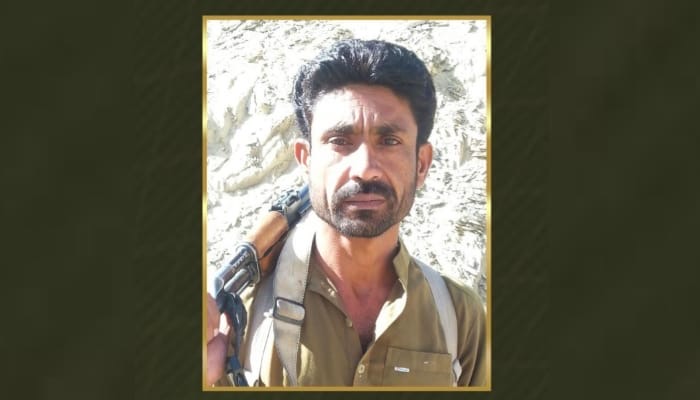
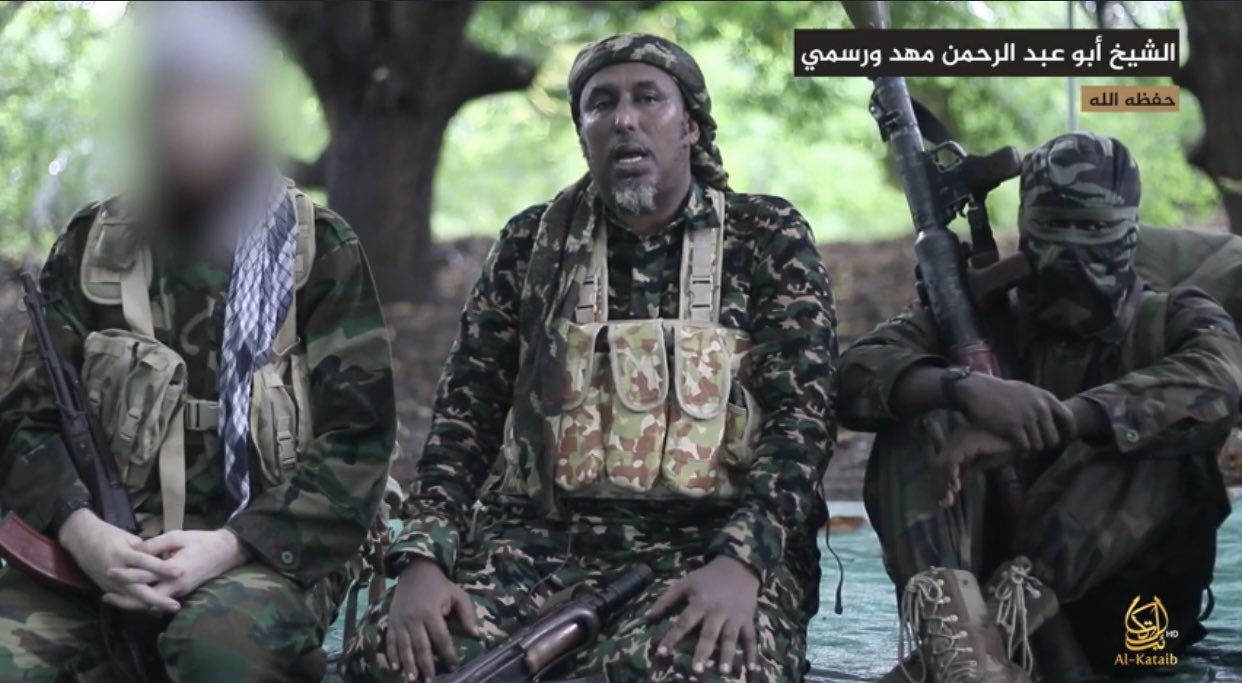
Islamic State has selected a new emir for its branch in Afghanistan, Islamic State-Khorasan (IS-K). In a surprising move, the Syrian-based central leadership of IS has chosen al-Shahab al-Mohajir—a foreign fighter, from Iraq—whose credentials are not widely known within the jihadist circles of South Asia or beyond.
His nom de guerre implies that he is a foreign fighter who was largely unknown up to his appointment by IS leadership. This article will attempt to analyze and assess al-Shahab based on the available sources. Little open source information exists on the subject, but sources within Islamist and jihadist circles in the region reveal his background and information about his appointment.
Background
The post of IS-K emir is a difficult and dangerous one. Four IS-K emirs have been killed in the past four years, and the most recent occupant of that position, Shaikh Aslam Farooqi, was arrested by Afghan security forces this year. [1] The IS-K emir faces not just one, but several threats, including the Afghan Taliban, U.S. forces, and Afghan security forces. U.S. drone strikes not only killed several IS-K emirs, but also devastated their camps and safe havens in the mountainous regions of Afghanistan’s Nangarhar province. U.S. Special Forces embedded with Afghan forces have taken part in a number of raids against IS-K hideouts. In addition, strife within IS-K has divided the Afghanistan-based group into two major factions. The Maovia Uzbeki faction was routed by the Afghan Taliban in northern Afghanistan during the Battle of Darzab in Jowzjan province in August 2018, while the faction previously led by Aslam Farooqi continued to operate in southeastern Afghanistan up until his arrest by Afghan security forces (Al-Jazeera, April 20). Against this backdrop, IS-Central appointed al-Shahab al-Mohajir, an unknown figure, to lead IS-K.
The Appointment
According to a senior Islamabad-based security expert, al-Shahab is in fact an Iraqi national who has been living in the tribal areas of Pakistan for decades. He was formerly a low-ranking militant of al-Qaeda and settled in tribal areas after the start of the Global War on Terror in 2001, when he and hundreds of other on-the-run al-Qaeda militants sought refuge there. With the perceived weakening of al-Qaeda in the region and the rise of IS-K, he switched sides and pledged allegiance to then-Caliph Abu Bakr al-Baghadi. The same source also reported that Shahab was part of the ‘Doctors’ Group,’ a faction within the Tehreek-e-Taliban Pakistan (TTP) umbrella organization, and was stationed in the Bajaur district of the tribal areas for years. Later, he moved to Afghanistan and was arrested. IS-K launched a prison-break operation at Jalalabad prison and rescued him in August 2020 (Hindustan Times, August 5). [2]
According to another source, al-Shahab is perhaps Abu Muhammad Saeed Khorasani, a Syrian national who has long been active in the South Asian theater and likely joined IS after the organization established its chapter there in 2014. It is also possible that IS-Central did not want to reveal the true identity of its new South Asian Emir, due to the high casualty rate of it leaders and the high number of enemies operating in Afghanistan and Pakistan. He is allegedly a seasoned jihadist, and one of the masterminds behind high profile terrorist attacks in Kabul in recent years (BBC Urdu, August 21).
The Islamic State’s official media wing for the region, al-Milat Media, has also confirmed the appointment of al-Shahab. Shahab released an audio message, which was announced by IS-K’s spokesperson Aziz Azzam in the local Pashto language (Islam Media Analysis, September 15). One could easily assume from this message that the new Emir is not well-versed in the local languages.
Other sources allege that Shahab is a local jihadist who has been fighting alongside TTP before pledging allegiance to IS-K few years back, and that he is one of the few hundred foreign jihadists who decided to remain in the region. [3] [4] Some analysts have posited that a foreign militant leading IS-K might well be better able to manage the multiple disputes that exist within IS-K. A foreign emir may be more capable of resolving the rifts among a rank-and-file from different cultures and ethnicities. Recently, IS-K had to face internal divisions between the Maovia Uzbeki faction (comprising Central Asians and former militants of the Islamic Movement of Uzbekistan) and the Aslam Farooqi faction (comprising mostly Pakistanis and former militants of TTP). The schism badly damaged IS-K, and Afghan and U.S. security forces and the Taliban took full advantage of this, defeating the group in northern Afghanistan and in its southeastern strongholds of Nangarhar and Loya Paktia. The choice of al-Shahab as the new emir might lure in fresh recruits and those who were disillusioned by the infighting. An Arab emir could attract members of other jihadists groups to join IS-K. IS-K needs to reinvigorate itself in order to capitalize on potential defectors from the Afghan Taliban, who may become disillusioned by the Taliban’s peace talks with the U.S. and Afghan government.
What’s Next?
Al-Shahab’s audio message was read by the spokesperson of IS-K, suggesting he may not be fluent in local Afghan languages. This could hamper recruitment efforts and the mobilization of local supporters. Appointing a foreign emir represents a new experiment for IS-Central. The new emir is allegedly a veteran jihadist and could accelerate the pace of IS-K operations in Pakistan and Afghanistan. He seems to have links to jihadist circles of the region.
Conclusion
IS-K is a resilient organization. Even after suffering blows from the Afghan Taliban, U.S. and Afghan security forces, including drone strikes, the organization is still managing to operate in Afghanistan and is also surviving in Pakistan. While it is too early to say what new initiatives IS-K will carry out under its new emir, it is likely that the group will step up terrorist strikes in order to let al-Shahab prove himself. He will also attempt to recruit foreign fighters to join the ranks of IS-K. It is possible that some disgruntled Afghan Taliban militants will join a new IS-K under a veteran Arab jihadist. Security policymakers of the region need to re-evaluate the situation by devising a concrete policy to keep the pressure on IS-K.
Notes
[1] Past IS-K emirs include: Hafiz Saeed Orakzai (2015-16), Abdul Haseeb Logari (2016-17), Abdul Rehman Ghaleb (2017), Abu Saad Erhabi (2017-2018), Shaikh Aslam Farooqi (2018-2020) [2] Discussions with Mohammad Amir Rana, Director of Pakistan Institute of Peace Studies (PIPS), in Islamabad on September 21. [3] Discussions with an Islamabad based journalist on September 18. [4] Discussions with a security expert on the subject matter, September 15.