Tokayev’s Visit to Islamabad Elevates Kazakhstan–Pakistan Relations
Tokayev’s Visit to Islamabad Elevates Kazakhstan–Pakistan Relations
Executive Summary:
- Kazakh President Kassym-Jomart Tokayev’s February 3 state visit to Pakistan—the first by a Kazakh head of state in 23 years—elevated bilateral relations to a strategic partnership and produced 37 cooperation agreements.
- For Kazakhstan, access to Pakistan’s Arabian Sea ports offers a southern alternative to supply chains disrupted by Russia’s war against Ukraine, reducing dependence on northern transit routes.
- The partnership reflects Kazakhstan’s broader economic and trade recalibration and diversification over the last few years, integrating southern corridors alongside existing northern and eastern routes to expand access to South and Southeast Asian markets.
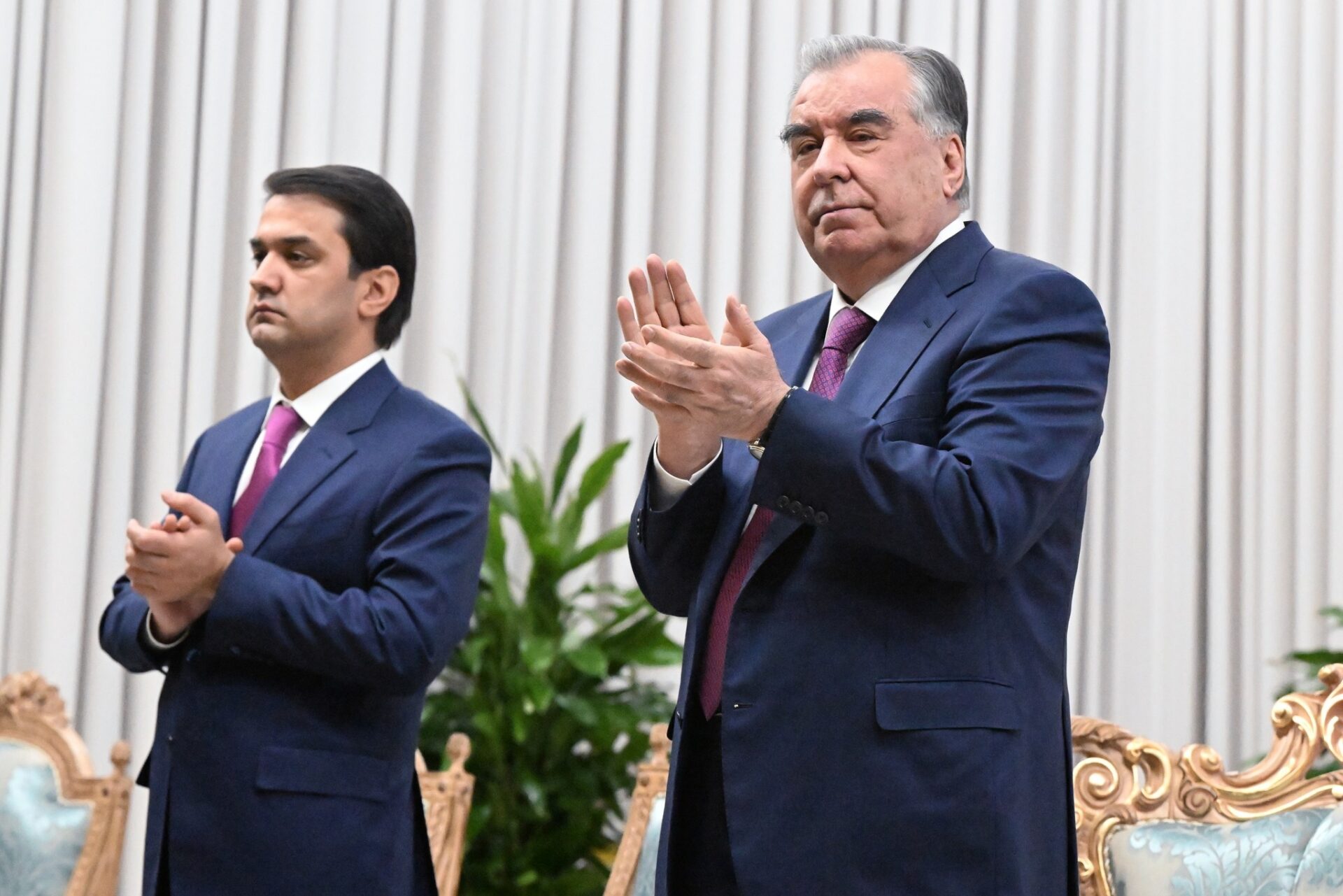
On February 3, Kazakh President Kassym-Jomart Tokayev arrived in Pakistan on his first state visit, marking a turning point in Kazakhstan–Pakistan relations. Tokayev is the first Kazakh president to visit Pakistan in 23 years since President Nursultan Nazarbayev travelled to Islamabad in 2003. Tokayev was accompanied by a high-level delegation comprising senior cabinet ministers, and the two countries signed 37 agreements for mutual cooperation in different sectors (Dawn, February 3; The Times of Central Asia, February 6). Tokayev’s visit elevated the longstanding friendly relations between the two countries to the level of a strategic partnership. The strategic partnership declaration stressed countries’ role as transit hubs connecting Central and South Asia to intercontinental corridors spanning Eurasia, the Persian Gulf, Africa, and Southeast Asia, and established intent for joint transit infrastructure development (Pakistan Ministry of Foreign Affairs, February 4).
Tokayev’s visit comes at a time when Russia’s war against Ukraine has caused disruptions to traditional Eurasian supply chains. As a landlocked country, Kazakhstan seeks to diversify access to maritime trade and reduce dependence on overland routes. Pakistan’s location at the confluence of South, Central, and West Asia is attractive to Astana (Eurasianet, February 4). Regional connectivity underpinned discussions during Tokayev’s visit. The joint declaration expressed both leaders’ commitment to further promotion of international multimodal transport corridors connecting Kazakhstan to Pakistan: through Turkmenistan and Afghanistan, through Uzbekistan and Afghanistan, and through Kyrgyzstan and the People’s Republic of China (PRC) to Pakistan (Pakistan Ministry of Foreign Affairs, February 4).
Tokayev told a Pakistani media outlet that connectivity had risen to the top of the bilateral agenda and that Kazakhstan was prepared to participate in building up the Kazakhstan–Turkmenistan–Afghanistan–Pakistan corridor. He noted that Pakistan had shown a “very positive approach toward close coordination” on the project (Geo TV, February 4).
The two countries are making an effort to establish well-defined trade routes, contracts, market access, logistics and transit. According to Manarbek Kabaziyev, Deputy Chairman of the Board of the Institute for Foreign Policy Studies under Kazakhstan’s Ministry of Foreign Affairs, the visit reflects a broader regional diplomatic and economic transformation, and Kazakhstan’s need to integrate its southern trade routes as fully as it has its northern and eastern ones. “Pakistan has a specific competitive advantage,” he said, “namely access to ports and developed infrastructure that can become part of international supply chains” (Qazinform, February 3).
Pakistan recognized Kazakhstan’s independence in 1991 and established diplomatic relations in 1992. Despite a longstanding relationship, bilateral trade remained limited for most of this period. Trade turnover, however, increased from $53.7 million in 2024 to $239 million in 2025. Islamabad and Astana set a goal to increase bilateral trade turnover to $1 billion per year in the “near future” (Dawn, February 1; Astana Times, February 2). Tokayev’s February visit produced concrete steps towards that goal. At the Kazakhstan–Pakistan business forum held alongside the state visit, Kazakh manufacturer Falcon EuroBus signed a $108 million contract to supply 600 electric buses to Pakistani carrier OGCC International, with deliveries scheduled to begin in April (The Times of Central Asia, February 5).
Pakistan can serve as a land bridge connecting Central and South Asia. For Kazakhstan, Pakistani ports can facilitate its international trade with South and Southeast Asia, as well as the Middle East, amid turbulence in Eurasia in the wake of Russia’s full-scale invasion of Ukraine. Kazakhstan’s geographical position offers Pakistan access to Russian, Central Asian, and Eastern European markets (Dawn, February 1). Pakistan has offered Kazakhstan access to its Arabian Sea ports. The two countries plan to sign the Pakistan–Kazakhstan Transit Trade Agreement (TTA) with an aim to enhance regional connectivity by linking Central Asia with South Asia through road, rail, and seaports (Astana Times, February 2).
A recently established $7 billion railway project plan would connect Kazakhstan to the Pakistani ports of Karachi and Gwadar via Afghanistan and Turkmenistan. The project will extend through the border city of Chaman in Pakistan near the Afghan border, linking into Pakistan’s broader transport network (Eurasianet, February 4). The project, which is expected to be completed within three years, will facilitate cross-border trade and improve transport connectivity across the region, making Pakistan a transit hub for Central Asian markets (Pakistan Today, January 23). In January, Kazakhstan’s Ambassador to Pakistan Yerzhan Kistafin and Pakistani Federal Minister for Railways Muhammad Hanif Abbasi discussed the project. The memorandum of understanding on the rail project was formally signed during Tokayev’s visit in February.
Astana sees Pakistan both as a market and as a transit platform. Astana needs a sustainable corridor with predictable costs and timelines. It also needs multimodal routes through Afghanistan and Iran to reach Pakistani ports of Karachi and Gwadar. Proposals are under discussion for linking Kazakhstan’s transit capabilities with the infrastructure of the PRC–Pakistan Economic Corridor (CPEC), a flagship project of the PRC’s One Belt One Road (OBOR) initiative in the region (Qazinform, February 3). Kazakhstan and Pakistan can position their partnership as a model of cooperation between Central and South Asia. According to Khalid Taimur Akram, a Pakistani expert on international relations, CPEC’s railways, highways, and Gwadar Port offer Kazakhstan an alternative route to South Asian and global markets (Astana Times, February 2).
For Kazakhstan, economic partnership with Pakistan presents an opportunity to diversify its international cooperation amid Russia’s global isolation. Renewed tensions and clashes between Afghanistan and Pakistan, however, cast some uncertainty over the sustainability and security of Kazakhstan’s envisioned southbound trade routes. Still, the relationship between Kazakhstan and Pakistan could facilitate the development of more reliable, faster, and cost-effective southbound trade routes amid rapidly changing geopolitical realities and shifting logistical constraints across Eurasia. Kazakhstan’s growing interest in Pakistan reflects Astana’s growing interest in connectivity (The Times of Central Asia, February 6).