War Crimes, Gold Mines and Mutiny in the North-East Congo: A Profile of General Bosco Ntaganda
War Crimes, Gold Mines and Mutiny in the North-East Congo: A Profile of General Bosco Ntaganda
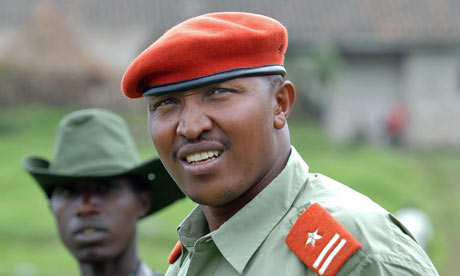
Over 22 years of fighting for a variety of rebel-movements and national governments, General Bosco “The Terminator” Ntaganda has established himself as the leading warlord in the little-known Nord-Kivu province of the Democratic Republic of the Congo (DRC). The Nord-Kivu region is at the heart of seething Hutu-Tutsi ethnic tensions that have already exploded into one genocide in Rwanda and two vast conflicts in the DRC that have claimed millions of lives. Further contributing to insecurity in the region is the presence of gunmen and insurgents from Uganda, Rwanda and Burundi.
The commercial and political capital of Nord-Kivu is Goma, situated on the north side of Lake Kivu on the border with Rwanda. Goma’s political volatility is accentuated by the looming presence just outside the town of Nyiragongo, an active volcano that destroyed 40% of the city in 2002. Goma is also threatened by a vast pool of poisonous gas under Lake Kivu that awaits only a volcano-related event known as a “limnic eruption” to surface and poison everyone in the region (as happened with two similar lakes in Cameroon in the early 1980s, killing nearly 2,000 people). Ntaganda currently operates out of the nearby Virunga National Park, a Mountain Gorilla refuge and a popular haven for various guerrilla movements operating in the Rwanda-Uganda border region.
The Rwandan Patriotic Army
A Rwandan Tutsi, General Ntaganda was forced to flee tribal violence to the eastern DRC with his family from their Rwandan home of Kiningi while still a teenager. In 1990 he began his long military career at age 17 by joining the military arm of the Uganda-based Rwandan Patriotic Front, a movement of Tutsi exiles determined to end Hutu domination of Rwanda and restore Tutsi rule. Ntaganda remained with the Rwandan Patriotic Army (RPA – built largely around Tutsi deserters from the Ugandan Army) through a difficult campaign against national army units supported by French and Zaïrean detachments. Led by Paul Kagame, the FPA eventually expelled the génocidaire Hutu government in 1994 after a nation-wide massacre had killed some 800,000 Tutsis and politically moderate Hutus. Nearly one million Hutu fled across the border into what was then northeastern Zaire, where many have remained as refugees or as members of extremist Hutu Interhamwe militias that have conducted cross-border attacks and carried out atrocities against the local Banyamulenge and Banyarwanda Tutsi communities. With the Tutsis back in power in Rwanda, the RPA became the Rwanda Defense Forces (RDF), the new national army.
The failure of President Mobutu Sese Seko’s Zaïre to prevent Hutu attacks launched from Nord-Kivu and Sud-Kivu led to the First Congo War (1996-1997), which ended with Rwanda’s invasion of the region and Mobutu’s overthrow by Rwandan and Ugandan-supported rebel forces under Laurent Kabila.
The Terminator Emerges in the FPLC
After the First Congo War, Ntaganda became military deputy chief of the Forces Patriotiques pour la Libération du Congo (FPLC), the military wing of the Union des Patriotes Congolais (UPC). Formed by Thomas Lubanga Dyilo near the end of the Second Congo War (1998-2003), the FPLC was backed by Rwanda and Uganda despite a notorious reputation for human rights abuses, including a 2002 massacres of civilians in Mongbwalu (Ituri district) and the murder of nine Bangladeshi peacekeepers in 2005. As an FPLC commander, Ntaganda was directly implicated in the kidnapping of a Moroccan peacekeeper and the killing of a Kenyan peacekeeper as well as being a suspect in the murders of two aid workers. [1] The Second Congo War had begun when Rwanda crossed into Nord-Kivu again in support of the Banyamulenge Tutsi, attacking refugee camps hosting the notorious Hutu militia known as the Forces démocratiques de libération du Rwanda (FDLR).
Ntaganda took orders from General Floribert Kisembo Bahemuka, who was Lubanga’s chief of staff before breaking away from the movement in 2003. Kisembo became a leading general in the Congolese national army, the Forces Armées de la République Démocratique du Congo (FARDC), but after splitting with President Joseph Kabila he was assassinated by DRC troops in May, 2011 (Radio Okapi [Kinshasha], May 1, 2011). As the movement collapsed with Lubanga’s arrest by Rwanda and the arrival of a new peace settlement Ntaganda was offered the post of general in FARDC in December, 2004, but declined the offer.
During the period 2002-2003, Ntaganda is accused of running FPLC recruitment and training centers for child soldiers under 15 years of age as well as commanding troops accused of killing 800 civilians in the Ituri district in 2002 as his forces seized control of local gold mines (BBC, May 15, 2012). Ntaganda has attempted to downplay his involvement in the FPLC, insisting he was only “the fourth ranking member” of the movement, while suggesting that “Even Thomas Lubanga was just trying to defend himself” (AFP, May 2, 2012).
Joining “The Chairman” in the CNDP
Though once close, the relationship between Ntaganda and Lubanga began to deteriorate and Ntaganda decided to leave the FPLC in 2006 for the Nord-Kivu-based Congrès national pour la défense du peuple (CNDP), a new movement being organized by Congolese Tutsi General Laurent “The Chairman” Nkunda. Ntaganda became chief of operations as the CNDP’s chief-of-staff under Nkunda. It was in this capacity that Ntaganda oversaw the massacre of an estimated 150 civilians at Kiwanja in Nord-Kivu on November 4-5, 2008. UN peacekeepers nearby did not interfere with the massacre according to a report issued by the Office of the UN High Commissioner of Human Rights (Radio France Internationale, September 10, 2009). The CNDP offensive of late 2008 brought the movement as far as the outskirts of Goma, but though the garrison had fled after looting the city, Nkunda failed to give the order to occupy Goma, causing dissension within the movement (The Times [London], October 30, 2008; AFP, January 7, 2009).
Ntaganda’s close CNDP colleague, Colonel Innocent Zimurinda, was the field commander who implemented Ntaganda’s orders in the Kiwanja massacre and was further accused of responsibility for a similar massacre at Shalio (Nord-Kivu) the following month during the Kimia II offensive against the FDLR in which some 50 refugees in a camp near a FDLR base were slaughtered, with the survivors reporting gang rapes and mutilation. An FDLR revenge massacre killed 97 ethnic-Tutsis in a neighboring village (BBC, October 16, 2009).
A growing dispute between Ntaganda and Nkunda over the movement’s leadership became public in January, 2009, with Nkunda promising Ntaganda would be charged with “high treason” and Ntaganda claiming he had dismissed Nkunda (AFP, January 6, 2009; January 8, 2009; BBC, January 6, 2009). There was speculation at the time that Ntaganda’s Bagogwe Tutsi followers from the Masisi region had grown tired of the prominence enjoyed in the movement by Nkunda’s Tutsi followers from Rutshuru (AFP, January 8, 2009).
Charged by the ICC
An International Criminal Court (ICC) warrant for Ntaganda’s arrest for charges relating to the use of child soldiers was filed under seal in August, 2006, but was only made public on April 29, 2008 (AFP, April 29, 2008). Nkunda dismissed appeals to turn Ntaganda over to the ICC, arguing that his military commander was only a “small fish” compared to government officials involved in various atrocities. Nkunda further awarded himself sovereign status when he argued that he was not a signatory to the Rome Statute that established the ICC and was therefore under no obligation to turn over Ntaganda (Rwanda News Agency, June 21, 2008).
A second warrant released on July 13, 2012 included additional counts of crimes against humanity, including murder, rape, pillaging, persecution and sexual slavery. Thomas Lubanga, Ntaganda’s former commander in the FPLC, was sentenced to 14 years in prison by the ICC in July for recruiting and using child soldiers in the early 2000’s. Two other DRC nationals, Germain Katanga and Mathieu Ngudjolo Chui have already been extradited and await trial in The Hague. Despite the strong possibility he may follow these commanders to The Hague for trial, Ntaganda recently declared: "If the ICC has questions to ask me I can answer them because I don’t blame myself for anything” (AFP, May 2, 2012).
Ntaganda’s Commercial Empire
Wielding ultimate power in Nord-Kivu allowed General Ntaganda to build his own economic structure in the region, one that placed him atop a financial pyramid in which the illegal sale of raw materials and minerals and “taxes” imposed by his men on markets, charcoal production, vehicle checkpoints and anything else that can be taxed have permitted Ntaganda to invest in a flour factory, a bar, a ranch outside Goma and a hotel on the Rwandan border (Le Potentiel [Kinshasha], Februry 7, 2011).
In 2011, Ntaganda is reported to have run a sophisticated gold-sales scam using former NBA basketball star Dikembe Mutombo as a front-man. Mutombo convinced controversial Nigerian-American businessman Kase Lawal (owner of Houston-based energy firm CAMAC) and Houston diamond merchant Carlos St. Mary that 4.5 tons of gold could be obtained in Africa for a hugely discounted $10 million in cash, a third of the real value. St. Mary gave half the money to middlemen in Nairobi, then went on to Goma, where Ntaganda, still a general in the national army, relieved St. Mary of $3 million, with the balance going to the local Customs department. When asked to return the missing cash to DRC Customs, Ntaganda is alleged to have turned in a suitcase containing $3 million in counterfeit bills printed on yellow copy paper and all bearing the same serial number (Mail & Guardian [Johannesburg], August 10, 2012). [2]
Integration into the Congolese National Army
The CNDP’s independent existence came to an abrupt end in what appeared to be a pre-planned scenario in January, 2009, as General Nkunda was arrested by Rwandan authorities on the border with the DRC and Ntaganda stepped up to take control of the movement, announcing that the CNDP would now fight alongside its former FARDC enemy against Hutu rebel movements in the eastern DRC (AFP, October 23, 2010). In a surprising development, former enemies Rwanda and the DRC now began effective joint operations in the northeastern Congo against Hutu rebels, though President Kabila was criticized for “inviting foreign troops” into the DRC (East African [Nairobi], March 2, 2009).
Ntaganda agreed to integrate his forces with FARDC according to the terms of the March 23, 2009 peace agreement, ensuring that Kinshasha would not pursue the ICC warrants against Ntaganda and other CNDP officers. Though officially tasked with reintegration duties at Kinshasha, Ntaganda quickly became a principal planner and advisor on a FARDC offensive against Hutu extremists (though this has been denied by Kinshasha – see Agence Congolaise Presse, October 10, 2009). He was also accused of planning at least eight assassinations of opponents in Nord-Kivu during this time (Jeune Afrique, October 29, 2010). Ntaganda’s role as a leading commander in the anti-FDLR Amani Leo operation caused intense embarrassment to the UN’s peacekeeping mission, the Mission de l’Organisation des Nations Unies en République démocratique du Congo (MONUC), which was an active participant in the operation.
Until his desertion from FARDC in April of this year, Ntaganda was living openly in a house in Goma and was commonly seen in that city wearing a large cowboy hat and Western-style clothing, playing tennis or dining in Goma’s best restaurants (La Flamme du Congo, April 13, 2012).
M23 – New Threat in Nord-Kivu
On April 11, President Kabila said he resented international pressure to issue a warrant for General Ntaganda: "We have more than a hundred reasons to arrest him and we don’t lack the force or the means to arrest him, but I will not work under pressure from the international community” (AFP, April 12, 2012). However, with the ICC fugitive clearly acting as part of the DRC regular army and Kinshasha subsequently risking being cited for complicity in the Ntaganda case, word began to circulate in mid-April that Kabila had finally issued the order to arrest the Tutsi warlord. Though the UN mission had no mandate to arrest war criminals, it pledged to assist government efforts to detain the warlord (Le Potentiel [Kinshasha], April 12, 2012; Le Phare [Kinshasha], March 19, 2012; April 12, 2012). The DRC later clarified that Ntaganda would face charges in Kinshasha first: "He will be judged according to our laws, and it is our justice that will determine if he should be extradited or not… "We have our own grievances against the general Ntaganda, who was associated at one moment with the peace process and who has committed an act of felony, compounded by several blood crimes against both our army and civilians… We intend to catch him and try him in our country" (AFP, May 14, 2012). On May 9, 2012, government troops discovered 25 metric tons of arms and ammunition on Ntaganda’s farm in the Masisi region of Nord-Kivu, including mortars, recoilless rifles and small arms (Le Potentiel [Kinshasha], May 11, 2012; AFP, May 9, 2012).
With pressure growing against Ntaganda, ex-rebels of the CNDP integrated into FARDC mutinied in mid-April (La Tempete des Tropiques [Kinshasha], April 11, 2012). As the number of desertions increased, Ntaganda at first issued vehement denials of involvement in M23, the armed group formed by the mutineers (AFP, May 2, 2012). Colonel Sultani Makenga, a former CNDP commander tied to the 2008 Kiwanja massacre and the 2007 Buramba massacre, was named the official head of M23. Despite Makenga’s own record, it was no doubt considered safer to place M23 under his nominal command rather than admit the movement was led by an individual wanted by the ICC. At the time of his desertion in May, Colonel Makenga was the second-in-command of DRC operations against the FDLR. As the mutineers abandoned positions in Nord-Kivu, they were quickly replaced in some villages by members of the FDLR under its Hutu military commander Sylvestre Mudacumura (also charged by the ICC with nine counts of crimes against humanity in July) and an allied militia known as the Patriotic Army for a Free and Sovereign Congo (APCLS) (L’Observateur [Kinshasha], April 5, 2012). Not all the men under Ntagana’s command joined the mutiny – several hundred appear to have taken advantage of an amnesty offered by FARDC in May (AFP, May 10, 2012). President Kabila suspended the joint operations with Rwanda after the scale of the desertions in Nord-Kivu became apparent.
M23 took its name from its principal demand – the full implementation of the March 23, 2009 accord that called for full integration of the former CNDP into the DRC political and military structure. The demand was slightly facetious; during his time in FARDC, Ntaganda created a parallel chain of command in Nord-Kivu and Sud-Kivu, much to the annoyance of the FARDC general staff (Jeune Afrique, April 3). His Tutsi troops also avoided mixing with other elements of the national army. While M23 spokesmen cited various other reasons for the group’s formation, including military mismanagement, poor living conditions and the release of CNDP prisoners, the most important reason was Ntaganda’s fear he would soon be brought to trial in the DRC or, worse, be extradited to face the ICC charges. This called for a quick (and apparently well-planned and financed) exit from FARDC, where he was vulnerable, and a return to his loyalists in the hills of Nord-Kivu to flex some muscle and negotiate a new deal with Kinshasha providing for his personal security.
The Addendum to the draft UN Experts Report released in June cites Rwanda for direct assistance to M23 through the provision and transport of weapons and soldiers and direct military intervention in the DRC in support of the mutineers. [3] Despite the growing evidence collected by the UN that Rwanda is supporting Ntaganda and M23, Rwandan president Paul Kagame’s denials have grown even louder, recently telling a group of Rwandan officers: that not a single bullet had been supplied to the mutineers, adding that the UN “screwed up the case of the Congo and are instead [trying] to put it on our shoulders” (Rwandan News Agency, August 7, 2012; Africa Review [Nairobi], August 7, 2012).
In May a DRC government spokesman said they were sure that Ntaganda and his men would not be allowed to take refuge in Rwanda, adding that there were “good reasons” why the warlord had not been arrested earlier: “It was to consolidate the peace process to which he has contributed” (Digitalcongo.net [Kinshasha], May 16, 2012).
Conclusion
Despite all the turmoil in Nord-Kivu, some things have changed little. Human rights organizations active in the DRC have reported Ntaganda has returned to the recruitment of child soldiers in Nord-Kivu and the Tutsi warlord’s forces are once again poised outside of Goma, where an assault is expected soon by a garrison of 3,000 men reinforced by artillery, mortars, armor and rocket launchers (AFP, May 16, 2012; August 6, 2012).
Inability to contain Ntaganda may destabilize the regime in Kinshasha, which is already the target of growing protests over FARDC’s failures in the northeast and the perceived support provided by Rwanda to M23. However, Rwanda cannot be seen to be supporting a sanctioned individual. If Rwanda has indeed backed Ntaganda, it will be placed in a bind if a Congolese offensive should push Ntaganda and the M23 up against the border. If Rwanda allows Ntaganda to cross into its territory, it will inevitably become the immediate target of international criticism and will open Kagame up to charges of abetting war crimes. If, however, Ntaganda is captured there is a danger he might be extradited to The Hague for ICC prosecution, where he might decide to describe the exact nature of his relationship with Kagame and the Rwandan government. A remaining possibility would be Ntaganda’s arrest and quiet imprisonment in the Congo. However, the weaknesses of FARDC, including indiscipline, poor morale and shortages in food, ammunition and salaries do not encourage optimism in this latter result. For the moment, “the Terminator” appears to have the upper hand in Nord-Kivu.
Notes
1. Trial Watch, Geneva, https://www.trial-ch.org/en/ressources/trial-watch/trial-watch/profils/profile/761/action/show/controller/Profile.html.
2. See Armin Rosen, “The Warlord and the Basketball Star: A Story of Congo’s Corrupt Gold Trade,” The Atlantic, March 1, 2012, https://www.theatlantic.com/international/archive/2012/03/the-warlord-and-the-basketball-star-a-story-of-congos-corrupt-gold-trade/253813/2/.
3. UN Security Council, S/2012/348/Add.1, Letter dated June 26, 2012 from the Chair of the Security Council Committee established pursuant to resolution 1533 (2004) concerning the Democratic Republic of the Congo addressed to the President of the Security Council, www.un.org/ga/search/view_doc.asp.