Moscow Targeting Ukrainian Civilians to Break Kyiv
Moscow Targeting Ukrainian Civilians to Break Kyiv
Executive Summary:
- After months of a slogging advance against the Ukrainian army and the seizure of small villages in the east without significant territorial gains, Russia has expanded its drone and rocket attacks against major Ukrainian cities, including Kyiv.
- Moscow is trying to break the will of the Ukrainian people, government, and international community by inflicting harm on politically sensitive cities.
- There is evidence that this strategy is backfiring, with Russian attacks on cities making Ukrainians even more willing to fight and convincing the European Union to provide more assistance.
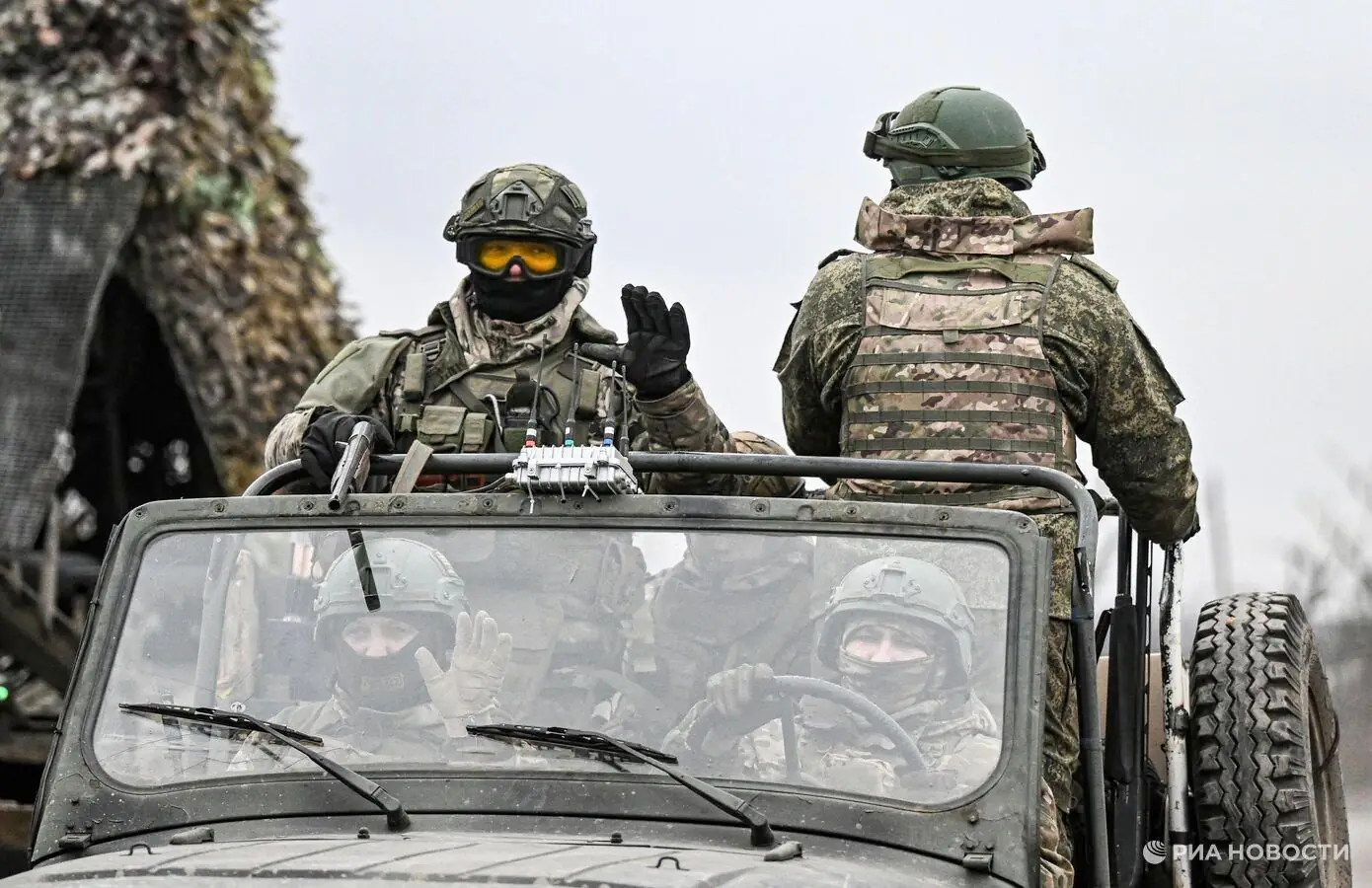
Russian President Vladimir Putin’s expanded war against Ukraine has now lasted longer than the Great Fatherland War (the Russian term for Soviet participation in World War II). The Kremlin’s war against Ukraine is rapidly approaching its fourth anniversary, in stark contrast to the Kremlin’s initial claims that its “special military operation” would end with an overwhelming Russian victory in less than a week. In the years since 2022, the Russian military has suffered massive losses, has sometimes been forced to retreat into Russian territory, and made only small advances against hitherto unknown villages in eastern Ukraine. Moscow officials and some in the West now treat these small advances as major victories, despite the enormous costs in lives and property for Russia. These losses highlight the success of continuing Ukrainian resistance and the prospect that the war is not going to end anytime soon (MOST.media, January 15; Meduza, January 16). Facing sluggish military advancement, mounting economic problems, and political tension at home, Moscow has adopted a new approach for Ukraine (see EDM, December 22, 2025, January 13). Russia is targeting Ukrainian civilians—particularly in major cities—with lethal drone and rocket attacks in the hope that these will force the Ukrainian government to agree to Putin’s maximalist peace terms (Meduza, January 11; Radio Echo, January 12; MOST.media, January 15). This strategy, however, appears to be backfiring. Most Ukrainians are increasingly outraged by Moscow’s behavior and are still firmly committed to continuing the fight. European countries are ready to provide the assistance Ukrainians need to sustain their resistance (RFI, January 16).
Earlier this month, at a time when the onset of winter had slowed Russian military actions in many places in Ukraine, Moscow launched hundreds of drones and missiles against Ukrainian cities, first and foremost against the Ukrainian capital of Kyiv. These attacks left thousands without power and light, and many without water, at a time when temperatures plunged to well below zero. Some residents died because of the low temperatures and the lack of heat; more are likely to succumb in the coming days, adding to the record number of Ukrainian civilians killed by Russian forces. In 2025, Ukrainian civilian deaths rose by 30 percent compared to 2024 (Radio Echo, January 12). This outrage prompted Ukrainian President Volodymyr Zelenskyy to denounce the Kremlin’s actions. He wrote that Russian attacks over one January week involved approximately 1,100 attack drones, more than 890 guided aerial bombs, and over 50 missiles. According to the Ukrainian leader, the Russians “deliberately waited for freezing weather to make things worse for our people,” a decision that he suggested represented “a deliberate and cynical Russian terror specifically against civilians” (X/@ZelenskyyUa, January 11).
With each passing day, details are coming out about how bad things are in Kyiv and in other Ukrainian cities that Moscow has attacked. The situation in Ukrainian cities is far worse than at any point since Putin began his expanded war. One survey of these reports noted that many residents have been without light, central heating, or water for more than a week (Readovka, January 18). Some have sought to cope by setting up tents within their apartments. In many neighborhoods, people have taken to the streets, standing around fires where Christmas trees are being burned. In many apartment buildings, people have been forced to stay in their residences because the elevators do not work. The stairways are now too icy to go anywhere. The situation has become so difficult for residents that Kyiv Mayor Vitaly Klichko called on residents to temporarily leave the city if they could to reduce the demands on what is left of the energy system. He said that after the Russian attacks, the city was getting only about half of the electricity it needed. He promised that officials were working around the clock to try to restore power and heat.
Unsurprisingly, many Ukrainians are frightened. Few, however, are prepared to agree to Moscow’s demands that they give up what they believe is rightfully theirs—the right to act as an independent country rather than become a vassal of the Kremlin. Instead, as a new poll shows, most still reject Putin’s onerous territorial and political demands and are prepared to fight on. Such attitudes suggest that the latest Russian attacks on Ukrainian cities and Ukrainian civilians are having precisely the opposite effect that Putin intends (RFI, January 16). This is not surprising. On the one hand, the Ukrainian people have fought well against this latest Russian invasion despite widespread predictions that they would collapse in the face of such a display of Russian power. They have a long tradition of being willing to fight Moscow even when they lack outside support, as they demonstrated in resisting Stalin’s reimposition of Soviet power after World War II (Window on Eurasia, August 23, 2025). On the other hand, investigations of different wars, including, most famously, the U.S. Strategic Bombing Survey, conducted at the end of World War II, show that while such attacks may be decisive as far as production and logistics are concerned, they often do not have the intended effect on morale (The United States Strategic Bombing Surveys, October 1987).
In the wake of the latest Russian attacks on Ukrainian cities, the European Union and its member countries approved a massive aid program that will help Ukraine fight on even if the United States ends its support (European Commission, January 14). That does not mean that the way forward is going to be easy for Ukraine. It does mean, however, that those who see the latest Russian attacks as presaging the collapse of Ukraine and forcing Kyiv to agree to Putin’s terms are likely to find their expectations dashed.