Abu Okash al-Iraqi: AQ’s Arab Broker in North Waziristan
Abu Okash al-Iraqi: AQ’s Arab Broker in North Waziristan
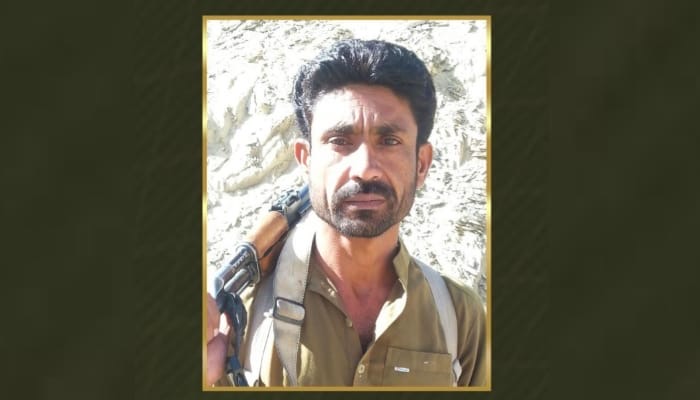
The North Waziristan Agency (NWA) became a vortex of foreign and local militants after they fled Afghanistan, following the post-9/11 invasion of the country led by the U.S. coalition and took refuge in the Federally Administered Tribal Areas (FATA) of Pakistan. These foreign militant groups are numerous and exhibit varying behavioral patterns within the territory. For example, the Central Asian militants move freely within the Waziristan region and regularly socialize with the common people. On the other hand, Arab militants, mainly associated with al-Qaeda, largely remain underground and deal only with Taliban militant leadership while shunning intermingling with ordinary tribesmen. However, one Arab individual known among the locals as Abu Okash al-Iraqi, or Arab Malang (Urdu for mystic), has earned enormous fame by not only moving openly throughout the area but also frequently socializing with the locals.
Abu Okash al-Iraqi’s real name is Abdul Rehman (sometimes reported as Abdur Rehman) but he goes by various aliases such as Abu Akasha, Abu Kasha, Bokash Haji, Haji Akash, Akash Khan and Arab Malang (Reuters, November 1, 2008; Dawn, November 1, 2008). Sporting a long beard, Abu Okash, currently in his late 40s, came to North Waziristan from Iraq during his adolescent years with the aim to join the Afghan and Pakistani mujahideen who were fighting against the Russian invaders in Afghanistan during the 1980s. He learned Pashto, Urdu and Saraiki, and is reported to have participated in various battles until Moscow pulled out its troops in 1989 under the Geneva Accord. The ensuing infighting for power in Kabul among various Afghan mujahideen factions and the emergence of “warlord-ism” in Afghanistan kept Okash aloof. Eventually, the unrelenting power struggle among mujahideen groups facilitated the rise of the Taliban in 1994 backed by the second term of Prime Minister Benazir Bhutto in Pakistan. Okash hastened to join the Afghan Taliban in order to help consolidate the hold of Mullah Omar’s government in Kabul. Okash remained in Kabul until the United States toppled the Taliban government in the fall of 2001.
Being an Iraqi national, Okash was left with no choice but to flee to Pakistan, where he found refuge in Mosakai village near Mir Ali, the second largest town of the North Waziristan Agency (NWA) (The News International [Karachi], October 13, 2006). The Mir Ali area, including Mosakai village, is inhabited by the Daur tribe, which is known for its religious conservatism in comparison to the neighboring Uthmanzai Wazirs. After his arrival in the Agency, Abu Okash passionately concentrated on encouraging unity and brotherhood amongst the villagers he lived with. For a brief period of time, he is reported to have also directed road traffic and fined erring motorists (Dawn, op. cit.).
Bestowed with a charismatic personality, Okash started advising the locals on how to resolve their mutual disputes. Through his mediating he won the hearts and minds of many tribesmen. He is believed to have a unique capacity for settling old feuds among various families. Some local tribesmen even feel that Okash possesses exceptional “spiritual powers” that have also given him control over the weather and have ensured good yields of crops in the area (The Post [Lahore], November 6, 2006). His fame as a pious individual spread throughout the area in early 2006, after Pakistani security forces attempted to demolish his rented mud-made house in the Agency. According to a government official, “We exploded six dynamites and then hit the walls with heavy shelling, but the building remained intact, forcing us to leave the place in desperation.” An army officer was also astonished to find that explosives and cannons did not complete the job and asked his troops to withdraw. “The cannon rounds only made a hole in the wall,” according to the official. The incident increased Okash’s stature in the area and people started comparing him with Faqir of Eppi, a legendary North Waziri freedom fighter who fought against the forces of the British Raj from 1937-1947 and was locally known to have performed miracles such as reportedly converting bullets fired at him into stones. Local people with superstitious tendencies believe that Okash can perform miracles. According to a local tribesman, “One can hardly have direct eye contact with Abu Okash for a long time, as there is a strange force in his eyes and looks” (The News International [Karachi], October 12, 2006).
Life was going smoothly for Okash until July-August 2006, when the North Waziristan Taliban under the leadership of Wazir Hafiz Gul Bahadur and his deputy, Maulana Sadiq Noor Daur, announced a ceasefire with the Pakistani Army and initiated talks to reach a peace agreement to end armed confrontation in NWA. Okash and other foreign militants were genuinely frightened by one of the terms laid down by the Pakistani government, which required the Pakistani Taliban to hand over the foreign militants or purge them out from the Agency. [1] Since both Bahadur and Sadiq Noor were supportive of foreign militants in the Agency, they repeatedly denied the presence of such groups, particularly ethnic-Arab al-Qaeda militants. However, they were seemingly irked by some Arab al-Qaeda members, like Okash and Abu Nasir al-Qahtani, who were visibly roaming throughout the area despite the leaders’ defense of conditions to the contrary. The openness of the Arab militants allowed the Pakistani government to unequivocally prove the existence of foreign militants in the region. Tension then started mounting between North Waziristan Taliban leadership and Okash, since the latter annoyed them by increasingly interfering in domestic issues such as attending local jirgas between various families and clans regarding old disputes and attempting to mediate between the parties. In the words of Maulana Sadiq Noor, “We are telling the authorities that no foreigner is staying in North Waziristan, and Abu Okash is attending local Jirgas to broker deals among the tribals” (The News International [Karachi], August 1, 2006).
In their desire to reach a peace deal with Pakistani authorities, local tribal elders and the North Waziristan Taliban leadership worked to push the foreign militants, especially those belonging to the Islamic Movement of Uzbekistan (IMU), out of NWA. This was due to the fact that Central Asian militants were not only large in numbers but were also interfering in local tribal affairs and were active in fighting the Pakistan Army. Though never told to leave, Okash felt insecure in the emerging scenario and decided to leave NWA. According to locals, “Abu Okash had already conveyed to Hafiz Gul Bahadur and Maulana Sadiq Noor that he would not stay in North Waziristan if the tribesmen agreed with the government to sign a peace deal conditional to the expulsion of foreigners” (The News International [Karachi], October 12, 2006).
Okash quietly moved to Wana in August 2006, the headquarters of the South Waziristan Agency (SWA). Okash returned to Mir Ali in November 2006 to bode farewell to his supporters and inform them that he was leaving Pakistan for good. His departure came as a surprise to a large number of Mir Ali residents who wanted the revered Okash to live amongst with them for the rest of his life. Persistent beseeching by his friends and well wishers failed to change Okash’s mind and he left them in tears after distributing turbans, caps, rosaries and handkerchiefs as souvenirs to them (The Post [Lahore], op. cit.).
However, Okash returned again to Mir Ali from Wana sometime in early 2007. It seems his return was driven by rising tensions between the local Ahmadzai Wazir tribe and IMU militants over the issue of interference in local tribal affairs and involvement in the killing of tribal elders known as maliks. The Uzbeks were later evicted, in April 2007, from Wana and adjoining areas by the Mullah Nazir-led Ahmadzai Wazir Taliban with tribal support (Daily Times [Lahore], April 22, 2007; RFE/RL, April 6, 2007). In March 2007, soon after his return, Okash ran into serious confrontation with Hafiz Gul Bahadur, after the latter raised the issue of removing tinted windows from all vehicles in Miranshah and Mir Ali. Bahadur felt it a necessary procedure due to the fact that militants and criminals alike were using heavily-tinted vehicles to conduct kidnappings, robberies, and killing of maliks and ordinary tribesmen. The Taliban groups in Mir Ali threw their support behind Okash, which created challenges for the North Waziristan Taliban leadership based in Miranshah. Both the sides took positions over hilltop, causing panic among locals. In the end, timely intervention by late Baitullah Mahsud of the Mahsud Taliban in SWA calmed both sides and averted a clash over the issue (Dawn, March 11, 2007).
Okash is reported to be a second tier al-Qaeda commander. According to an unnamed security official, “he is a mid-level al-Qaeda man who was leading a high-profile life in Mir Ali” (Reuters, op. cit.). Pakistani officials erroneously reported Okash dead in initial reports of a drone strike on October 31, 2008. His 20-year old son, Abu Bakar, died in November 2005 in a U.S. drone strike in the Miranshah area of NWA along with then al-Qaeda leader of external operations Abu Hamza al-Rabiyya (Dawn, August 8, 2009). According to media reports, Bakar was fluent in English, Pashto, Urdu and Farsi dialects (The News International [Karachi], November 1, 2008). According to a Pakistani security official, “Okash was controlling the finances of al-Qaeda in Iraq” (Pajhwok Afghan News, November 1, 2008). Some believe Okash was perhaps a public relations man for al-Qaeda, who was doing his job in a befitting way (The News International [Karachi], October 12, 2006).
Okash parted ways with mainstream al-Qaeda at some point in late 2005 because he was “not happy with al-Qaeda people and often complained that the network had been hijacked by the Egyptians” (The News International [Karachi], op. cit.). His personal relations with some al-Qaeda leaders, however, cannot be wholly ruled out. Okash announced the formation of his own militant group, Jaish-i-Khurasan al-Islami (the Islamic Army of Khorasan) in July 2008, and appointed Hamza Deobandiwal as its spokesman. According to Okash, “Our main objective in Afghanistan is to fight coalition forces led by [the] U.S.” He has also branded democratic countries (i.e. Afghanistan and Pakistan) as “infidels.” Okash pledged to recruit young men on both sides of the Durand Line. Spokesman Deobandiwal said the group has “around 160 fighters comprised of Arabs, Pakistanis and Central Asian militants in Waziristan and Greater Paktia (meaning Paktia, Paktika and Khost provinces of Afghanistan)” (The Frontier Post, July 3, 2008).
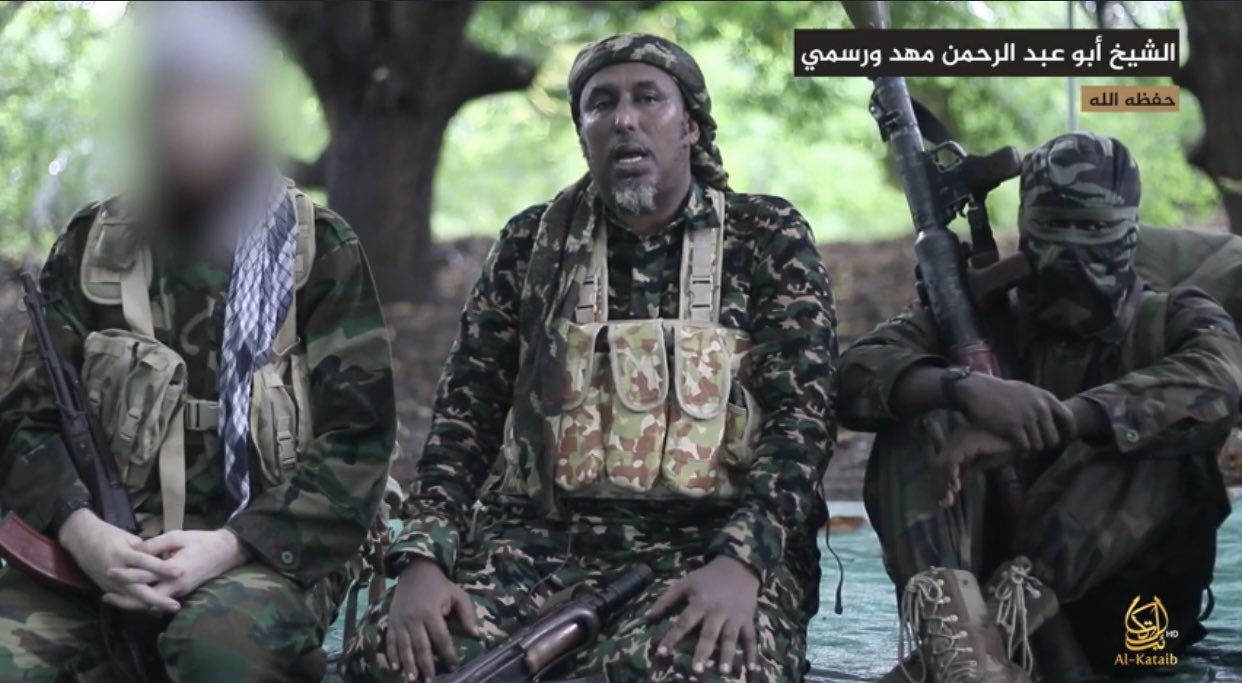
The establishment of the militant group followed the release of a video by Okash in April 2008 in which he vowed to continue jihad against U.S. forces in the region (Dawn, November 1, 2008). However, local sources say he is not very active in jihad. Rather, militants belonging to his group were fighting across the border in Afghanistan against the ISAF-NATO forces involved in stabilization and counterinsurgency operations. Okash, on the other hand, spends most of his time meeting with prominent people in the Mir Ali area and attending jirgas (tribal assemblies). [2] Okash has previously fought against the Pakistan Army in NWA and was injured in October 2007 during a military operation codenamed “Operation al-Mizan” (The Post [Lahore], October 17, 2007). The operation was launched when the North Waziristan Agreement of September 2006 broke down after both the government and the Taliban accused each other of violating the pact. In said operation, 50 Pakistani soldiers along with some 200 militants were killed, including 50 foreigners, 25 of them Uzbeks and the rest from Tajikistan, Afghanistan and a mix of Arab nationals (Daily Times [Lahore], October 12, 2007).
Okash is also reported to have grown tremendously in his influence with the local Taliban and foreign militant groups based in the Mir Ali area. Locals say he heads the main council (guiding body) of the Taliban in the Mir Ali area (BBC News, March 7, 2007). Two powerful local Taliban commanders, Imanullah Daur and Haq Nawaz Daur, operate under his command. Okash also maintains a working relationship and close communication with both the IMU and the Islamic Jihad Union (IJU) (Daily Times [Lahore], January 9, 2007). Similarly, he maintains close ties with the Haqqani Network and Tehrik-e-Taliban Pakistan (TTP)—a conglomerate of Pakistani Taliban groups headed by Hakimullah Mahsud, who is exclusively focused on conducting terrorist attacks in Pakistan.
Okash miraculously survived a US drone attack on October 30, 2009, which had targeted a vehicle and the house of a local Daur tribesman, Amanullah Daur, in Esori village near Mir Ali (The News International [Karachi], November 1, 2009). According to locals, Okash had just arrived and disembarked from the vehicle when the attack took place. The attack killed Abu Jihad al-Masri, a leading al-Qaeda operative, and three local Taliban militants (The News International [Karachi], November 2, 2008).
Okash currently lives in the Mir Ali area. He continues to preside over jirgas to resolve monetary, property and old-blood feuds between families in Mir Ali. After he solves their problems, he asks the families to donate money for the sake of jihad in Afghanistan, usually in hefty amounts. Through this method, he not only earns his livelihood but also finances his militant activities. When he arrived in North Waziristan in 2001, Okash had an Iraqi wife and many children, including three sons (The News International [Karachi], November 1, 2008). Like other foreign militants, Okash strove to build blood bonds with local tribesmen by marrying a native girl and thus married the granddaughter of Maulana Deendar in early 2010. Deendar is from the Daur Tribe and hails from Hassukhel village near Mir Ali. He is a prominent local cleric and member of the Jamiat Ulema-e-Islam Fazal (JUI-F), a Deobandi religious-political party whose affiliates include the Taliban in the wider Waziristan region. Deendar had previously served as a member of National Assembly (MNA), the lower house of the Pakistani parliament, from 2007 to 2009. Deendar also plays a key role as a mediator between the government and the North Waziristan Taliban in maintaining peace in the area. Okash’s marriage to Deendar’s granddaughter has further strengthened his ties with the Daur. This development may not sit well with the North Waziristan Taliban leadership based in Miranshah, as they want only the staunchest pro-Taliban religious clerics to maintain sway in the area by adjudicating disputes between local tribesmen. Apart from this, Okash has also authored a book entitled Jihad-e-Khorasan (Jihad in Khorasan), which is available in Arabic and Urdu in North Waziristan. [3]
Notes
1. Rohan Gunaratna and Syed Adnan Ali Shah Bukhari, “Making Peace With Pakistani Taliban to Isolate Al-Qaeda: Success and Failures,” Peace and Security Review, Vol.1, No.2, Second Quarter, 2008.
2. Author interview with local tribesmen from Mir Ali, North Waziristan Agency, Peshawar, February 2.
3. Author interview with elder from the Daur tribe on September 22.