C5+1 Reframing Russia’s Position in Central Asia
C5+1 Reframing Russia’s Position in Central Asia
Executive Summary:
- C5+1, the U.S. government’s platform to jointly engage all five Central Asian governments, has transformed from a consultative-level forum to a more operationally oriented framework focusing on economic diversification, connectivity, and critical minerals.
- The C5+1 shift toward “pragmatic and more deliverable goals” brings new channels for economic and logistical growth via external investment in Central Asia, challenging Russia’s long-standing economic hegemony in the region.
- Azerbaijan has deepened its involvement in Central Asian meetings, extending the framework’s operational geography beyond Central Asia, in which Azerbaijan works to facilitate the platform’s economic and connectivity projects.
In November 2025, U.S. officials and delegates from all five Central Asian countries reiterated their commitment to advance cooperation under the C5+1 format, established in 2015, by focusing on critical materials, transport links, and economic resilience (The Astana Times, November 8, 2025). The November 6, 2025, summit in Washington marked the second time a U.S. president attended a C5+1 meeting (see EDM, November 20, 2025). At the November 2025 meetings, the U.S. Department of Commerce announced deals estimated at $25 billion in aviation, critical minerals, logistics, and industry. These projects include a tungsten mining venture in Kazakhstan that advanced with a non-binding U.S. Export–Import Bank (EXIM) Letter of Interest for up to $900 million in funding, as well as preliminary agreements with U.S. firms for rare earth mining in Uzbekistan (Reuters, November 6, 2025; The Times of Central Asia, November 10, 2025). Uzbekistan, Tajikistan, and Kazakhstan all announced deals to buy U.S. aircraft, and Kyrgyzstan discussed hydropower, transport, and IT development (The Times of Central Asia, November 10, 2025).
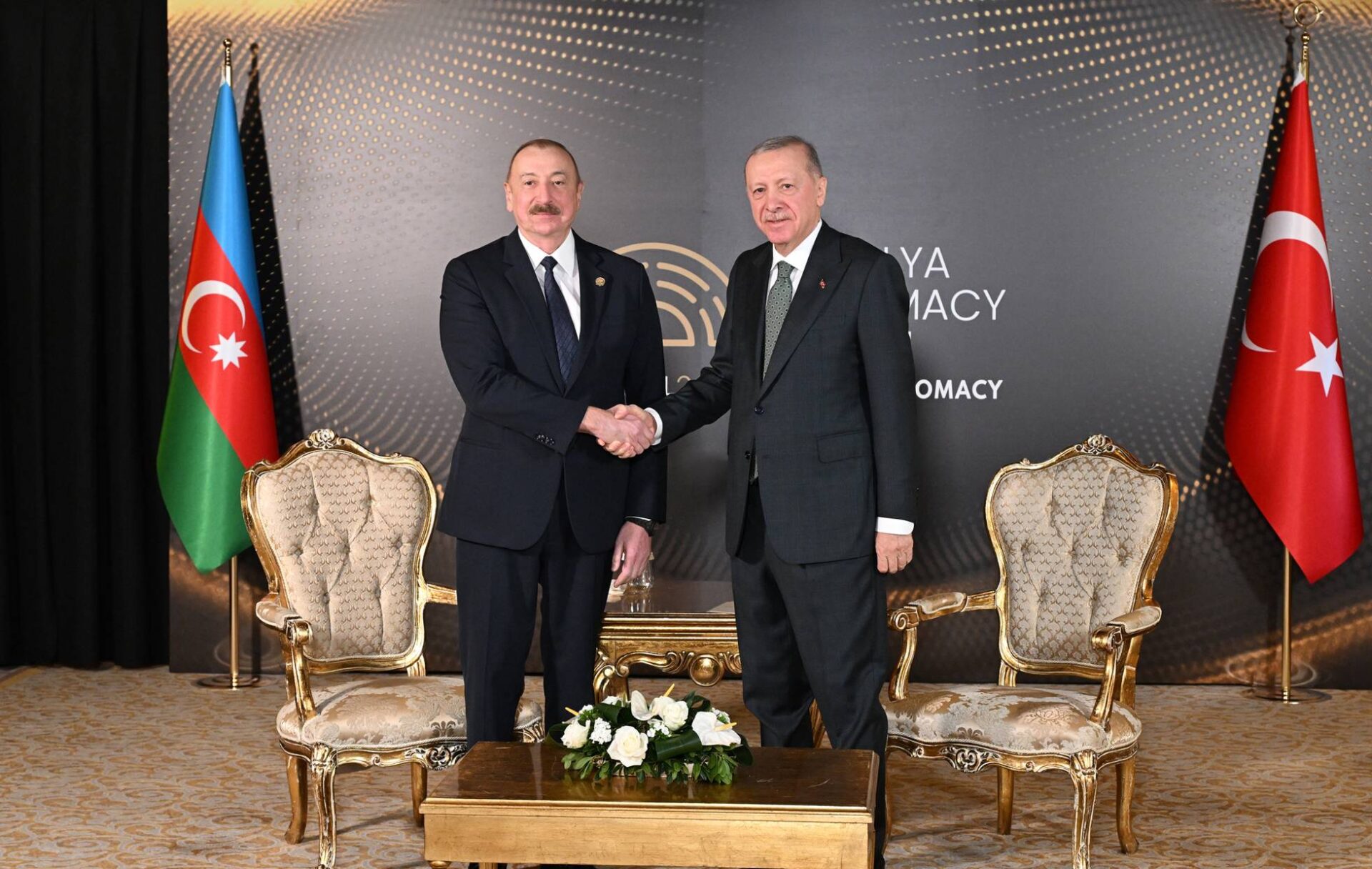
The C5+1 agenda increasingly prioritizes transport corridors, regulatory harmonization, and critical supply chains, with connectivity projects extending beyond Central Asia (Aircenter.az, September 8, 2025; Trend News Agency, November 5, 2025). On November 16, 2025, Azerbaijan’s President Ilham Aliyev formally joined the 7th Consultative Meeting of the Heads of State of Central Asia, after previously attending as an “honored guest” in 2023 and 2024, demonstrating Azerbaijan’s growing role in Central Asia (see EDM, January 21). Although Azerbaijan is not a Central Asian country in the classical geographical sense, its ever-increasing role as a connectivity bridge between Central Asia, the South Caucasus, and Europe makes it well-positioned to contribute to C5+1’s economic and logistical priorities (Caliber.az, November 7, 2025). Azerbaijani commentators and think tanks have recently argued for Baku’s future inclusion in C5+1 meetings based on its role in the Trans-Caspian International Trade Route (TITR or Middle Corridor) (Center of Analysis of International Relations, September 8, 2025). They, along with some commentators within Central Asia, believe that Azerbaijan’s role in Central Asian connectivity can diversify the region’s transport options and decrease transit dependency on Russia (Exclusive.kz, May 28, 2025; Caliber.az, November 7, 2025).
Russia’s presence in Central Asia has been based on trade, the vast flows of migrant workers, energy transport corridors, and the Soviet Union’s institutional and political legacy. The Kremlin has viewed Central Asia’s other international partners as secondary (Minval.az, November 5, 2025; @ Novosti, November 7, 2025). The Valdai Discussion Club, a prominent Russian think tank, asserts that Central Asia’s increasingly multi-vector foreign policy is limited but worth considering. In an article published with the Valdai Discussion Club, Rashid Alimov says, “The ‘C5+1’ format has not transformed into an effective platform for coordinating interests, particularly in the economic and investment spheres” (Valdai Discussion Club, October 3, 2025). The fact that one of Moscow’s premier, regime-aligned think tanks is discussing Central Asia’s multi-vector foreign policy demonstrates that Russian foreign policy experts no longer take Moscow’s primacy in Central Asia for granted. These analysts take increased U.S. involvement in Central Asia as a sign that Russian presence, which still far outstrips any other foreign investment, needs to be actively constructed and maintained (@ Novosti, November 7, 2025; Check-point.kz, December 11, 2025). Russia’s war against Ukraine has limited Russia’s foreign policy capacity in Central Asia (@ Novosti, November 7, 2025). Even though the region remains important to Russia, the scope of its military, economic, and political investment in its war against Ukraine constrains its ability to engage with, monitor, and respond to developments in its near abroad (The Kyiv Post, November 7, 2025).
Some Russian media have begun to take C5+1 more seriously. Previous commentary downplayed its relevance, but some more recent analyses consider it a constant, albeit secondary, factor underpinning the regional landscape (The Caspian Post, November 20, 2025). Kommersant, for example, claims that C5+1 does not replace existing alliances but complicates the economic landscape (Kommersant, November 7, 2025). Overtly alarmist or confrontational narratives regarding C5+1 remain limited within mainstream Russian media. The prevailing emphasis is instead on adjustment and adaptation to increased U.S. economic involvement in Central Asia. Russian media discourse mirrors broader policy debates in Russia that recognize Central Asia’s expanding external partnerships as a manageable reality—one that calls for responsiveness and engagement rather than simple opposition (News.ru, November 6, 2025).
Kazakhstan’s Ministry of Foreign Affairs has stated that C5+1 is intended to increase Central Asian economic resilience and market access (Qazinform, November 8, 2025). Uzbekistan also views its involvement in C5+1 as part of regional economic development, rather than a geopolitical strategy shift (Government of Uzbekistan, November 11, 2025). This pragmatic approach highlights that Central Asia’s involvement with C5+1 is driven by domestic development priorities and economic pragmatism, not openly by opposition to Russia (Qazinform, November 8, 2025). The format’s appeal lies in its flexibility, project-based orientation, and absence of binding political conditions, allowing Central Asian governments to selectively engage in areas that support national objectives while preserving balanced relations across an increasingly multi-polar regional and global environment (The Astana Times, November 8, 2025).
Previous U.S. initiatives in Central Asia often struggled to produce sustained economic outcomes. C5+1 differs in its implementation-focused design. Rather than emphasizing political signaling, it concentrates on technical and economic cooperation aligned with local priorities. Central Asian economic diversification will occur through accumulation rather than disruption of existing political arrangements (Government of Uzbekistan, November 11, 2025). Infrastructure routes, supply chains, and regulatory frameworks evolve incrementally, producing long-term effects without dramatic political events.
This presents Russia with a structural rather than ideological challenge. The C5+1’s significance lies not in confrontation but in its capacity to reshape economic and connectivity partnerships slowly. It signals that Central Asia’s economic future will likely involve multiple external partners operating in parallel (The Astana Times, November 8, 2025). The growing role of C5+1 may mean that Moscow will need to recalibrate rather than openly object, taking into account the growing diversity of the economic landscape in Central Asia (Caliber.az, October 30, 2025). Russian analysts are discussing how to adjust to the new multi-polar regional environment (Caliber.az, October 30, 2025; News.mail.ru, November 7, 2025; The Astana Times, November 21, 2025).
The evolution of C5+1 demonstrates a clear shift from a symbolic, dialogue-oriented initiative into a pragmatic, project-driven economic coordination framework that incrementally reshapes Central Asia’s economic and connectivity landscape without actively challenging existing security or political architectures (The Asia Today, December 3, 2025). Its growing focus on transport corridors, critical minerals, and supply-chain resilience reflects domestic development priorities in Central Asian states (The Times of Central Asia, November 8, 2025). Baku’s growing role in Central Asian meetings represents a recognition of the wider economic and connectivity ecosystem required for Central Asian economic development (Center of Analysis of International Relations, November 2025). C5+1 also dilutes Russia’s economic dominance in Central Asia. The format’s maturity ultimately underscores a broader multi-vector reality in which influence in Central Asia is increasingly exercised through economic and logistical cooperation rather than through political alignment or zero-sum competition (1news.az, November 13, 2025).