Central Asia Building New Cities
Central Asia Building New Cities
Executive Summary:
- Four Central Asian countries are constructing major new cities designed for hundreds of thousands of residents—Kyrgyzstan’s Asman, Kazakhstan’s Alatau, Uzbekistan’s New Tashkent, and Turkmenistan’s Arkadağ.
- These cities aim to solve urban population pressures and economic challenges by offering state-of-the-art facilities to attract foreign direct investment, prevent brain drain, and accommodate rural-to-urban migration, though corruption issues complicate fundraising efforts.
- The new cities reflect Central Asia’s post-Soviet integration into wider global markets, as they seek investment from countries including the People’s Republic of China, Türkiye, India, the United Arab Emirates, and Qatar, while so far lacking Russian participation.
Kyrgyzstan, Kazakhstan, Uzbekistan, and Turkmenistan have taken numerous steps over the past several months to advance the construction of new modern cities (Forbes.kz, December 2, 2025; Economist.kg, January 15; Gazeta.uz, January 16). These four Central Asian countries have been building these metropolises designed for hundreds of thousands of residents for several years. Kyrgyzstan is building Asman, Kazakhstan—Alatau, Uzbekistan—New Tashkent, and Turkmenistan— Arkadağ. All are major projects, designed for initial populations of approximately 250,000. All four states are attempting to replace outdated Soviet-era infrastructure and increase international investment by providing state-of-the-art facilities and services for foreign companies. Central Asia will also need more urban facilities to accommodate a growing population, which the United Nations predicts will grow from about 84 million today to over 114 million by 2050 (ASIA-Plus, May 2, 2025; UNICEF, November 7, 2025).
The new urban centers are meant to facilitate and project Central Asia’s modernization. In 2023, Kyrgyz President Sadyr Japarov laid the groundwork for Asman’s construction, saying that foreign direct investment (FDI) would cover the entire cost (24.kg; Tsentr Aziia, June 30, 2023). In 2021, the Kyrgyz government started discussing the construction of Asman (Kyrgyz for “sky”). Bishkek planned to build Asman on the northwestern shore of Lake Issyk-Kul for up to 700,000 inhabitants at an estimated cost of $20 billion, in a design that resembles a Kyrgyz musical instrument, the komuz (Izvestiia, January 9). Japarov claimed that it was cheaper and easier to create a new city than to update any of the existing ones. Bishkek suspended the project in 2023 after international partners proposed changes aimed at creating a “green city,” requiring additional time to revise the concept (24 KG, November 3, 2025).
In November 2025, Bishkek resumed the project and held a construction start ceremony. Kyrgyzstan’s National Investment Agency Director Ravshan Sabirov said that Asman would be built in stages, saying, “One company was allocated 100 hectares [247 acres] of land, the other, 80 [198 acres]. We invite all companies to participate in the project; the conditions are the same for everyone” (24 KG, November 3, 2025). Previous reporting indicated that the first company, Kyrgyzstan-based Elite House, received the 247 acres for development, and an unnamed company based in the People’s Republic of China (PRC) was named as the general partner of the project, which received 50 hectares (123 acres) (24 KG, November 3, 2025).
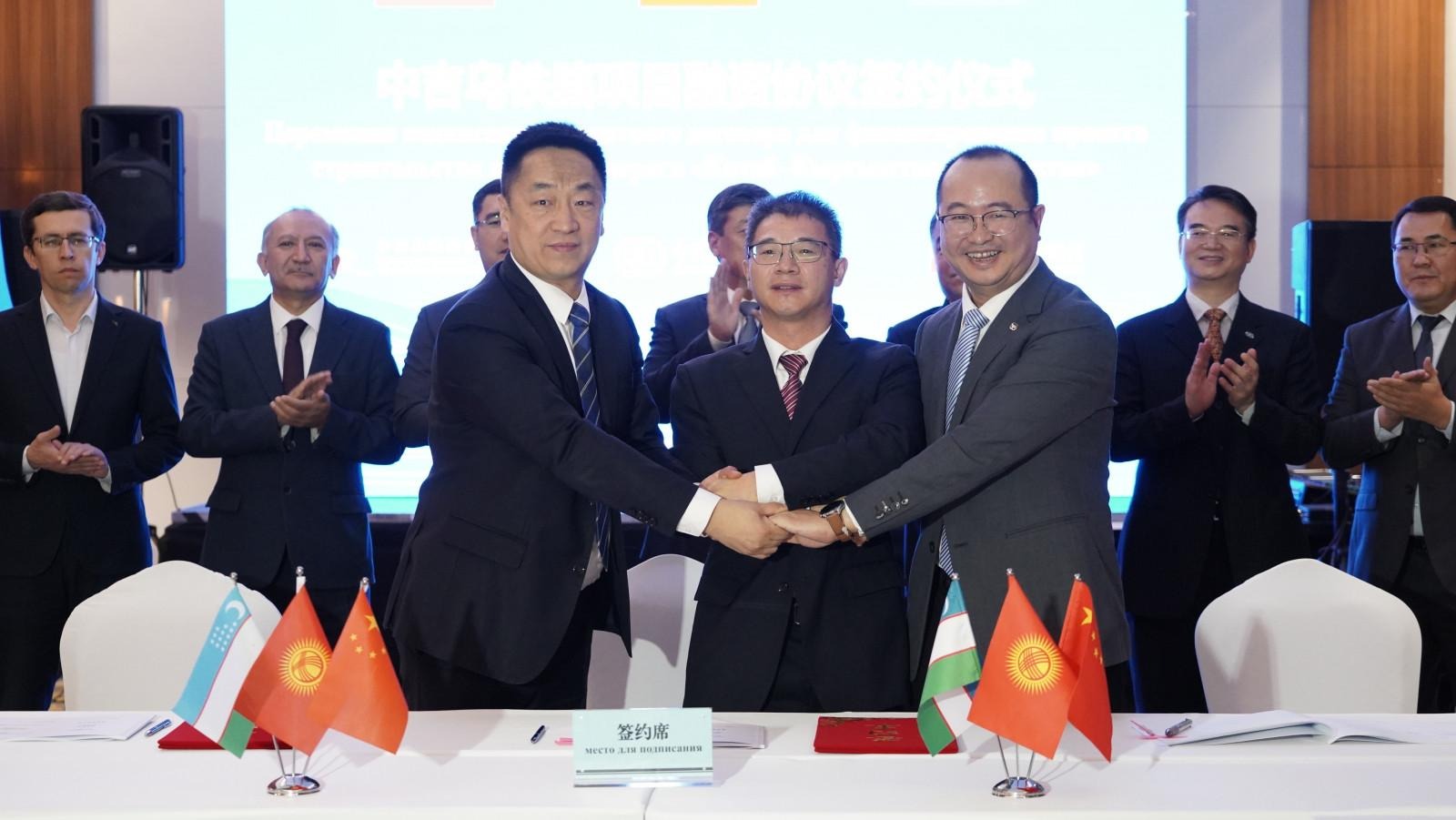
Bishkek’s other massive infrastructure projects, such as the Kumtor gold mine or the China–Kyrgyzstan–Uzbekistan railway, required significant FDI (see EDM, July 31, 2018, July 17, 2024, November 19, 2025, January 27). Japarov promised that no government funds would be spent on Asman, since “there are foreign investors who are interested in participating in the implementation of such a large project” (Central Asian Light, June 30, 2023). Asman is planned to be a “smart city” featuring alternative energy sources, resource-efficient consumption, and green municipal transport. Investors in the eco-city include companies from Türkiye, PRC, India, the United Arab Emirates, and Qatar, specializing in “city of the future” projects, technology, and tourism development. Construction of Asman is expected to take seven to ten years and will be divided into several zones—commercial, entertainment, and sports (EurAsia Daily, November 11, 2025).
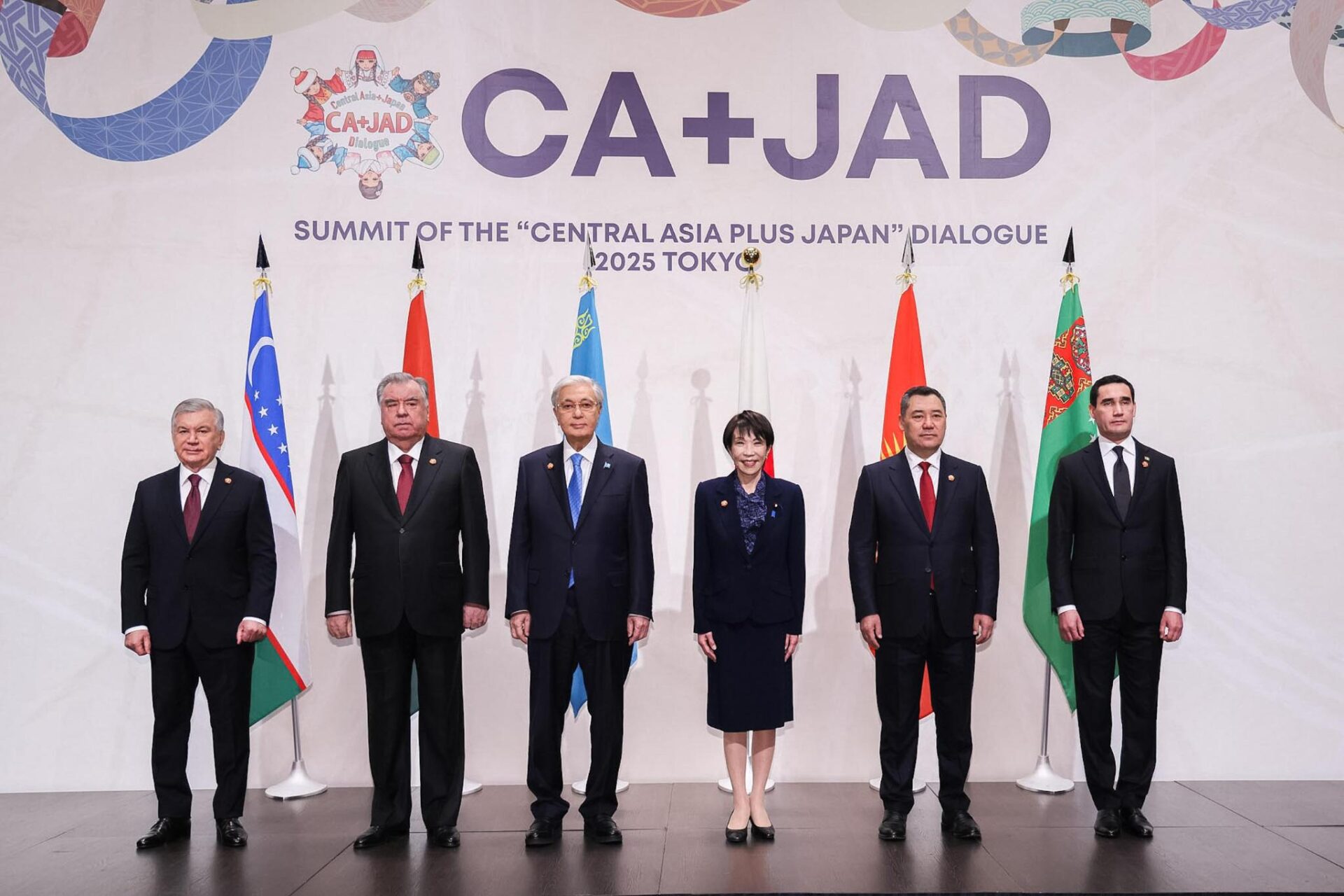
Central Asia’s search for FDI for large infrastructure projects is made more difficult by pervasive corruption. Kyrgyzstan’s Asman has proven no exception. The director of construction for Asman changed several times. Founder of the Kyrgyz construction company Elite House, Timur Faziev, who the government appointed director of construction, was implicated in a criminal corruption case involving land purchases in Bishkek and illegal construction. He was removed from overseeing the Asman project four months after his appointment (Azattyk Asiia, October 12, 2023). Construction of Asman is moving forward as Japarov continues to seek FDI despite these impediments. At the first Summit of the “Central Asia plus Japan” dialog in December 2025, Japarov’s press service said:
The President noted that, due to its favorable geographic location at the heart of Eurasia, Kyrgyzstan has the potential to become a regional hub for transport, trade, and financial flows. Improving connectivity, modernizing infrastructure, and introducing modern transport technologies will help reduce business costs and strengthen the country’s position in regional logistics (Open.kg, November 20, 2025).
On January 15, representatives of the National Investment Agency under the President of the Kyrgyz Republic paid a working visit to the PRC. They made similar claims to potential investors in Shanghai and Nanjing (Economist.kg, January 15).
Kazakhstan has an advantage over its neighbors’ municipal construction efforts, as it has experience in constructing most of its capital, Astana, between 1994 and 1998. Astana is located on the site of the former Akmola settlement in the northern Kazakh steppe, 604 miles north of Almaty. The Kazakh government is now building a new city, Alatau, for an initial population of 247,000, 31 miles north of the former capital, Almaty, which remains the largest and most prominent city in Kazakhstan. Astana hopes that the new metropolis will serve as a Central Asian “Singapore,” and aims to reach 2 million residents by 2050 (The Astana Times, May 24, 2024; Qazinform, September 26, 2025).
Alatau’s proponents claim that it will solve Almaty’s overpopulation and ecological problems. In January 2024, Kazakh President Kassym-Jomart Tokayev signed a decree on the creation of the settlement, stating, “We intend to build a completely new metropolis in the style of Singapore, which will become a leading international business hub that meets world standards” (Nur.kz, May 23, 2024). Alatau’s first phase, for 247,000–401,000 inhabitants, will be ready by 2030, with projected population of 1.02–2 million by the end of the third phase in 2050 (The Astana Times, May 24, 2024; Politik.uz, February 7, 2025; Qazinform, September 26, 2025; Forbes.kz, December 2, 2025).
The city will be divided into four large districts. In addition to residences, each region will include a business center, an educational and medical hub, a tourist cluster, and a trade and logistics zone. The Kazakhstan government is optimistic about the future of the new city. In late 2025, the Ministry of National Economy of Kazakhstan said:
According to preliminary forecasts of financial and economic effects, with the full implementation of the project for the development of the city of Alatau, including all stages, the total contribution to the GDP of the Republic of Kazakhstan’s GDP may amount to about $40–50 billion over 30 years … In the third phase (2041–2050), the city’s population is expected to reach 1.02 million people, jobs will amount to 500.9 thousand, tax revenues will reach $18.25 billion, and Alatau’s Gross Regional Product [GRP] will grow to $197.8 billion (Forbes.kz, December 2, 2025).
Uzbekistan is similarly constructing New Tashkent to relieve population pressures on its capital, Tashkent, the largest city in Central Asia (New Tashkent, accessed February 4). The territory of New Tashkent adjoins Tashkent’s eastern border as delineated by highway 4R12 and will be on the territory of the Urtachirchik and Iukorichirchik districts. The new metropolis is planned for a population of up to two million, with key elements including several giant skyscrapers and an administrative center for government agencies. Other planned features include a national library and university. Uzbek President Shavkat Mirziyoyev told Uzbek businessmen that “a modern infrastructure based entirely on green technologies will serve your new ideas and initiatives. Know that the gates of New Tashkent are always open to all entrepreneurs who want to do business” (Kursiv, August 20, 2025). The city will also host the New Tashkent International Airport. Uzbekistan decided to build an airport because passenger traffic at Tashkent Airport has tripled since 2017, reaching 9 million passengers annually, a figure projected to exceed 24 million by 2040. Berk Albayrak will oversee construction. Albayrak previously served as the Chief Executive Officer ofSabiha Gökçen International Airport in İstanbul, the city’s secondary international airport, and as the project director for the new Kuwait Airport (Gazeta.uz, January 16).
New Tashkent is also designed to be environmentally friendly. The head of the press service of the Yangi Tashkent Directorate, Shakhnoza Nurmatova, announced in May 2025 that 30 percent of New Tashkent is allocated for parks and squares (Gazeta.uz, May 14, 2025). Solar and hydroelectric power plants will supply the city with more than one gigawatt of green energy. Energy storage systems will be installed to ensure an uninterrupted power supply. The New Uzbekistan University, founded in 2021, will be New Tashkent’s academic jewel. The university is building a 50-hectare (123-acre) campus for 10,000 students in New Tashkent at an estimated cost of $200 million. The Turkish company Özgüven is scheduled to complete the project in 2027. According to the presidential press service, a new building of the National Library of Uzbekistan is also being built next to the university (Kun.uz, January 2).
Energy-rich Turkmenistan’s Arkadağ is the farthest along of the projects, with the government having spent $3.3 billion on construction on the first stage of development, which opened in 2023 (Oreanda News, June 29, 2023). Turkmenistan’s new city is completely self-financed from the country’s massive natural gas revenues. In the fall of 2018, then-President Gurbanguly Berdymukhamedov—father of current Turkmen President Serdar Berdymukhamedov—announced the construction of Arkadağ, saying, “Over time, the city should become no less impressive in its architecture than our white marble capital Ashgabat” (Izvestiia, June 22, 2023). Arkadağ—meaning “Protector” in Turkmen, an honorific given to Gurbanguly Berdymukhamedov—became the regional capital of Ahal Province in December 2022. Located 19 miles from the capital, Ashgabat, Arkadağ’s first phase was opened in June 2023, with the government having already spent $3.3 billion on construction (Izvestiia, June 22, 2023). Berdymukhamedov Sr. was involved in every aspect of Arkadağ’s construction, personally approving its development plans, the buildings’ architecture, and the smallest details of their external and internal decorative design, including the choice of material, the shade of glass on the windows, patterns on the front doors, the design of lampposts, street signs, traffic lights, fences, benches, trash cans, curbs, sewer hatches, and other urban infrastructure (Khronika Turkmenistana, March 8, 2023).
All four countries have chosen to build new cities rather than to upgrade other deteriorating urban centers, some of which predate the Soviet era. These governments hope that new cities will attract significant FDI to facilities built to European standards, while reducing the risk of brain drain and easing urban population pressures as rural dwellers move to cities in search of improved lives. While three of the four new urban centers are actively soliciting Chinese FDI, no Russian investment appears to be involved yet. A century after first falling under Soviet influence, the new cities are just one aspect of Central Asia’s efforts to integrate into the larger world economy.