Defense Minister Dong Jun Leading Contender for CMC Seat
Defense Minister Dong Jun Leading Contender for CMC Seat
Executive Summary:
- As Xi Jinping looks to rebuild the Central Military Commission (CMC), Defense Minister Dong Jun is a strong contender for elevation to the military’s highest decision-making body.
- Dong’s has operational experience as deputy commander of the Eastern Theater Command Navy, deputy commander of the Southern Theater Command, and commander of the PLA Navy, where he likely oversaw gray zone activities.
- Dong also has ties to Xi via the “Fujian Clique”—officers Xi worked with while a junior official in the southeastern province. Though the clique’s most prominent members, He Weidong and Miao Hua, were purged from the CMC in October, Xi nevertheless appears to trust Dong, who remains the only three-star flag officer to reemerge intact after being placed under investigation.
- Xi selected Dong in 2014 to receive professional military training in Russia, another sign that Xi has previously seen him as both loyal and competent.
- Beyond Dong, another contender is Major General Zhou Hongxu, head of the trusted Central Guards Bureau. One- and two-star flag officers may also be under consideration.
Chinese leader Xi Jinping has decimated the Central Military Commission (CMC). In 2012, the military’s highest decision-making body comprised 10 individuals, in addition to Xi himself. Today, that figure is down to one. The most recent stage in Xi’s purge, removing CMC vice chair Zhang Youxia (张又侠) and Joint Staff Department chief Liu Zhenli (刘振立), marks one of the most consequential rounds of elite military discipline in years (Ministry of National Defense, January 24). This development has significant ramifications on how the PLA will move forward with force modernization.
The most likely next step for Xi is to set about rebuilding the CMC, not least to remedy a sense of anxiety pervading the military that even he has implicitly acknowledged (People’s Daily, February 6; China Military Online, February 11). In doing so, he will need officers with operational command experience in combat arms branches within their respective service. But he will require those officers to be sufficiently loyal (China Brief, February 11). This may lead him to turn to individuals he knew when he was a provincial official. He might also look to the PLA Air Force or Navy, as any PLA Army officers would likely be close to Zhang Youxia and Liu Zhenli, given the two generals’ respective backgrounds. Another possibility is that Xi selects officers who have been sent to Russian command and general staff colleges for professional military education. Xi has already handpicked these officers once for their competence and loyalty; he might be inclined to do so again (LinkedIn/Dennis Wilder, February 1). Surveying senior PLA officers, only one individual meets all of the above criteria and therefore should be considered a strong contender for elevation to a new-look CMC. That individual is the current defense minister, Admiral Dong Jun (董军).
Defense Minister Top Candidate for New CMC
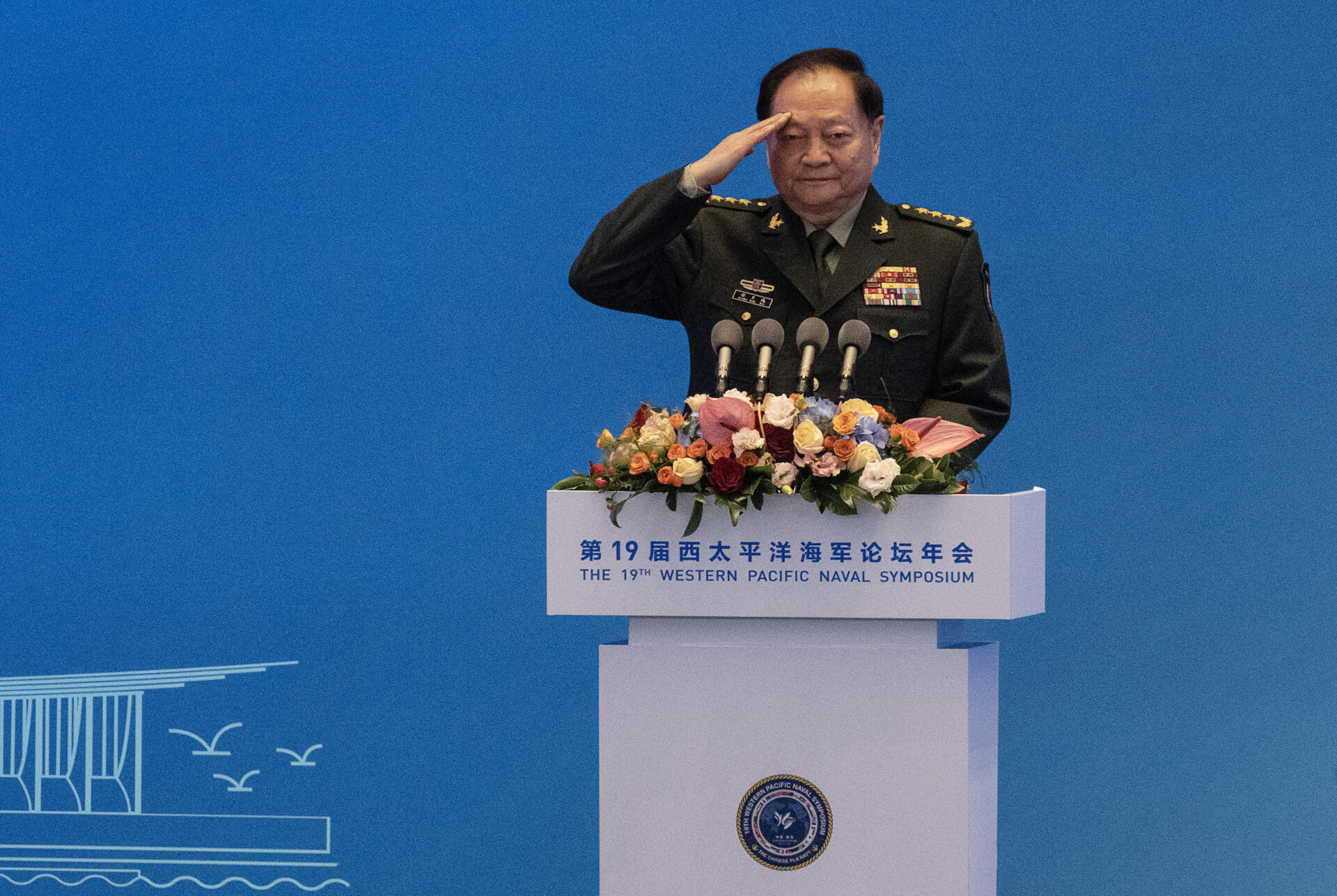
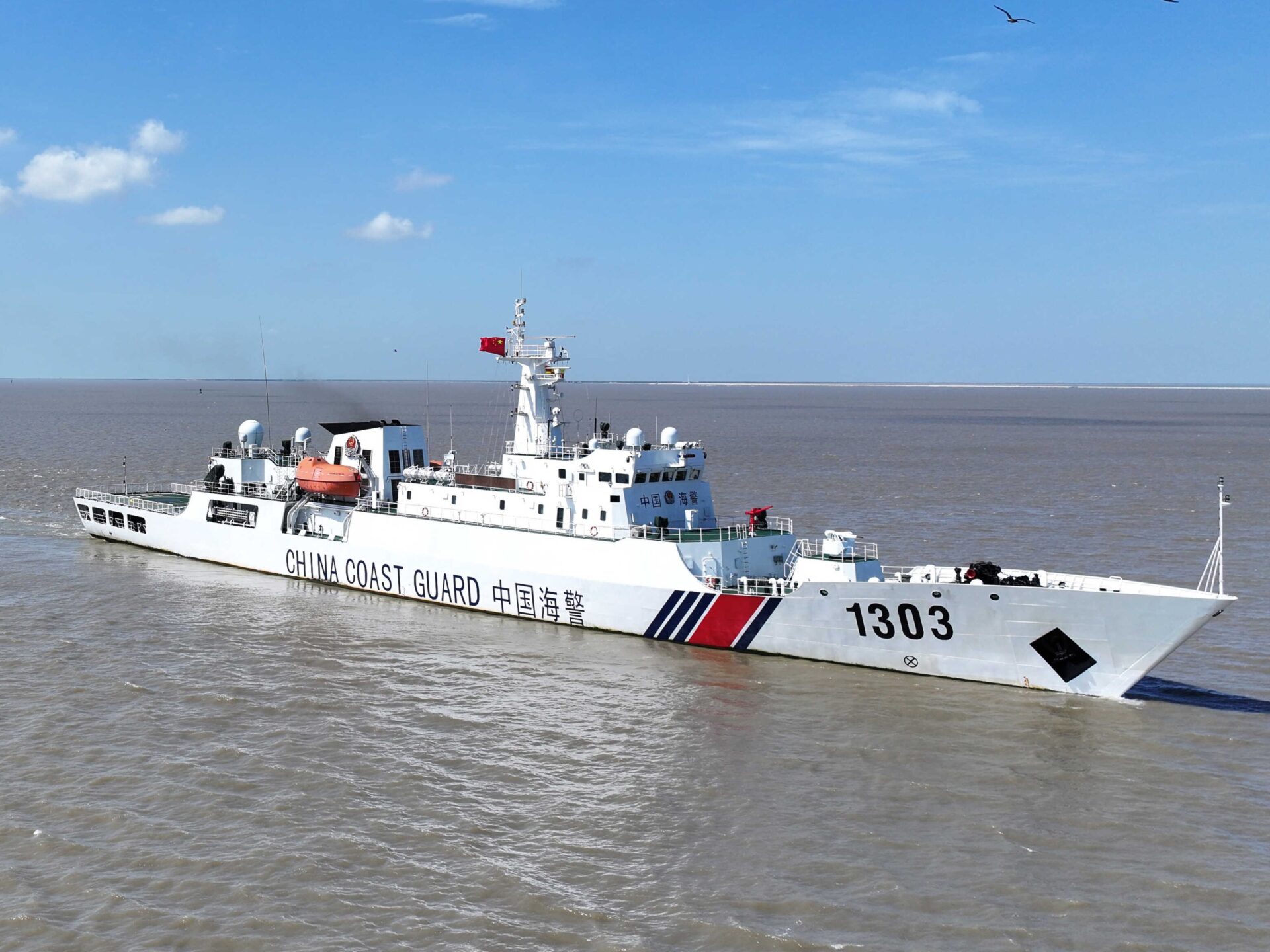
Dong Jun’s professional résumé makes him a suitable candidate for the CMC. He was previously deputy commander of the Eastern Theater Command Navy, deputy commander of the Southern Theater Command, and commander of the PLA Navy (China Brief, February 2, 2024). His assignments with strategically vital theater commands handling the PRC’s most salient national security interests make him a desired candidate for promotion by conventional force standards alone. Dong also has extensive experience overseeing gray zone activities, which are often conducted by the PLA Navy in the eastern and southern theater commands’ areas of responsibility (Irregular Warfare Initiative, July 25, 2024). The ability to execute aggressive gray zone operations facilitates conventional force development by practicing applicable skills that can be transferred to kinetic combat scenarios (China Brief, March 25, 2022). If Dong were moved from his current, largely ceremonial role, his experience suggests he could help enhance PLA combat power generation.
Another reason why Xi might be willing to elevate Dong Jun to the CMC is that he seems to have a level of trust in his defense minister. Dong is the only three-star flag officer who appears to have reemerged with his position intact after being placed under investigation. [1] Dong’s naval background also insulates him from Zhang Youxia’s camp, which is composed of ground force, logistics/acquisitions, and rocket force personnel. He is also insulated by his ties to the “Fujian Clique” (福建系), a patronage network of officers whom Xi has personally cultivated since working with them while a provincial official in Fujian (China Brief, March 15, 2025). This clique, however, was associated with He Weidong (何卫东) and Miao Hua (苗华), whom Xi purged from the CMC in October 2025.
The notion that Xi trusts Dong might therefore seem counterintuitive. It also contrasts with the analytic consensus when he was appointed to defense minister at the end of 2023. A common argument at the time was that Xi’s decision not to include him as a member on the CMC or as a state councilor indicated a lack of trust (China Brief, January 17, 2025). But the decision not to promote Dong to the CMC earlier is not necessarily an indication of a lack of trust. It could reflect an intentional act to downgrade the office of the Minister of National Defense, perhaps out of a desire to signal that military diplomacy, especially with the United States, is a low priority (RAND, August 14, 2024; China Brief, October 4, 2024). In this reading, Dong Jun is not distrusted; rather, he simply has assumed a position whose duties have been limited to suit changing priorities.
Dong also meets the niche potential criterion of being an officer selected to attend professional military education courses in Russia. During his tenure as deputy chief of staff of the navy in 2014, Xi selected him to attend the Military Academy of the General Staff of the Armed Forces of the Russian Federation (China Times, February 8, 2024; Radio Free Asia, February 12, 2024). The analyst Dennis Wilder has argued that officers chosen to attend Russian command and general staff colleges exhibit clear leadership ability (LinkedIn/Dennis Wilder, February 1). No complete list of PLA officers selected for these professional military education opportunities exists in open sources, but Dong is the most senior officer known to have studied in Russia.
Beyond Dong Jun, Major General Zhou Hongxu (周洪许) stands out as another potential addition. Xi broke precedent in selecting Zhou to lead the Central Guards Bureau in 2021. Zhou also was reportedly responsible for the arrest of Zhang Youxia (LinkedIn/Dennis Wilder, February 1; China Brief, August 23, 2021). The bureau he leads is responsible for protecting the Party leadership and is therefore considered highly trusted (Sohu, January 7, 2025; Baidu Baike/中央警卫局, accessed February 12).
Xi could also elevate a younger generation of officers to the CMC. Purges have depleted the pool of three-star flag officers, requiring him to reach into the ranks of one- and two-star generals and admirals to backfill theater command, staff, and CMC positions.
Conclusion
The removal of all but one military member of the CMC leaves a hollow institution that Xi Jinping can shape as he desires. He may decide not to fill it to capacity at seven personnel (as he did in 2017 and 2022) or with exclusively military personnel. Dong Jun is the most likely candidate among the limited pool of remaining flag officers, though other possibilities include Zhou Hongxu and generals of lower grade and rank. Full confirmation will have to wait until the next plenary session of the Central Committee later this year. In the meantime, deeper study of the PLA’s stock of senior officers should yield further insights into what the future of the Chinese military leadership might look like.
The views expressed are solely personal and do not necessarily represent the official policy or position of the United States Military Academy at West Point, the U.S. Army, the Department of Defense, or the U.S. government.
Notes
[1] In late 2024, Western media reported, based on U.S. government sources, that Dong was being investigated. This reporting was substantiated by Dong’s absence from certain duties (China Maritime Studies Institute, November 29, 2024). PRC officials denied that this was the case, however, and Dong later resumed his role as minister of defense. This episode could indicate that Xi feels able to trust Dong.