Hussam Abdullah Sabbagh: The Most Powerful Salafist Street Commander in Tripoli
Hussam Abdullah Sabbagh: The Most Powerful Salafist Street Commander in Tripoli
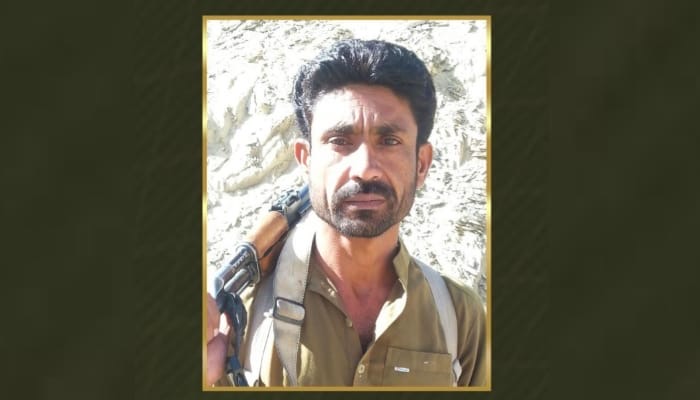
Hussam Abdullah Sabbagh (a.k.a. “Abu Hassan”) is an important anti-Assad Lebanese Salafist commander in the northern Lebanese city of Tripoli. A popular commander of Salafist fighters in Tripoli’s northern, impoverished and restive Sunni neighborhoods, Sabbagh is reported to have been named the amir of the majority of the armed Salafist organizations in Tripoli and its surrounding regions in northern Lebanon (ash-Sharq [Riyadh], December 9, 2012). As amir of the majority of Tripoli’s Salafist fighters, Sabbagh is reported to have been coordinating and leading these organizations’ attacks on Tripoli’s Alawite-majority, pro-Assad neighborhood of Jebel Mohsen (al-Akhbar, January 17).
Sabbagh is believed to be one of the foremost Lebanese Salafist leaders seeking to establish a caliphate in the Levant and to have been named the Lebanese “representative” of the increasingly powerful Syrian Salafist organization Jabhat al-Nusrah (Daily Star, January 15). In addition to holding the title of amir of the Salafist fighting forces in northern Lebanon, Sabbagh is reported to command the battalion-sized “Strike Force,” composed of northern Lebanese, Syrian, and Egyptian Salafist fighters inspired by the organization of armed Syrian Salafist groups fighting against the al-Assad government (al-Akhbar, January 17).
Sabbagh is a native of Tripoli’s impoverished and restive Bab al-Tabbaneh neighborhood. He is believed to have a long history of fighting against the al-Assad government of Syria. His anti-Assad political activism is reported to have begun during the Lebanese Civil War as a member of the Iraqi branch of the Ba’ath Party, and later as a fighter for the Lebanese Muslim Brotherhood-inspired militia Jama’at Islamiya in Tripoli (al-Jadeed, January 2). He is also stated to have fought with the Salafist Tawhid Movement of the Bab al-Tabbaneh commander Khalilk Akkawi against the Syrian occupation of Tripoli in the 1980s prior to immigrating to Australia (Daily Star, January 15). Sabbagh is reported to have lived in Australia from the mid-1980s until 2005 and holds dual Lebanese-Australian citizenship (al-Jadeed, January 2).
He is wanted for arrest by both the Lebanese and the Australian governments for his connection to the international jihadist organization Fatah al-Islam, for radicalizing and training young Sunni men from northern Lebanon and for attempting to recruit Lebanese expatriates in Australia to wage jihad in Iraq (ash-Sharq, December 9, 2012). The Lebanese army also accuses him of providing weapons and safe houses for expatriate and northern Lebanese Salafist fighters linked to Fatah al-Islam in Tripoli (al-Mustabbal, September 19, 2009). In addition, Sabbagh is believed to have been the main liaison for Saudi jihadists seeking to join Fatah al-Islam (al-Watan [Riyadh], August 5, 2012).
Sabbagh is reportedly a member of al-Qaeda (al-Khaleej [Sharjah], August 27, 2012). It is also asserted that he was a combatant with international jihadist organizations in Chechnya and Afghanistan (Daily Star, January 15). In his capacity as amir of many of Tripoli’s armed Salafist organizations, Sabbagh is accused of establishing close ties with the Libyan jihadist group Ansar al-Shari’a and to have assisted it in moving weapons and fighters into Syria via northern Lebanon. He is also believed to have invited the Libyan organization to base some of its fighters in Tripoli to help establish Salafist control of the city and northern Lebanon (Syrian Telegraph, December 22, 2012).
Although wanted for arrest by the Lebanese government, Sabbagh avoided arrest due to his close personal connections with Lebanese security officials in northern Lebanon (al-Akhbar, November 29, 2012). Sabbagh is also reportedly in active contact with several important public figures in Tripoli, such as the popular anti-Assad Tripolian Salafist preacher Shaykh Salam al-Rifa’i and two members of the Lebanese Parliament from the Sunni-majority Future Movement, former Lebanese Army Colonel ‘Ameed Hammood and Mahmood Kabbara (al-Jadeed, January 2). Sabbagh is considered to be a personal friend of al-Rifa’i, and both Sabbagh and Shaykh Salam al-Rifa’i are allegedly promoting a military battle in the Levant—starting in northern Lebanon and in Syria—in order to establish an Islamic state (al-Akhbar, May 30, 2012).
Although believed to be committed to establishing an Islamic state through jihad, Sabbagh and Salam al-Rifa’i have also demonstrated pragmatism in relations with their local, Sunni rivals in Tripoli. Following months of disagreement and occasional armed conflict, Sabbagh and al-Rifa’i agreed to an “Eid al-Fitr” pact with their Sunni rivals, which affirmed that all Lebanese Sunnis were co-religionists, fellow countrymen and were not to harm one another (as-Safir, August 15, 2012). In spite of their aggressively anti-Assad position in support of the armed Islamist Syrian opposition inside of Syria and their support for defeating and overrunning Jebel Mohsen, Sabbagh and al-Rifa’i are reported to have argued against other militant Salafists in Tripoli by disavowing attacks against the Lebanese Army at the present time (ash-Sharq [Riyadh], December 30, 2012). Both Sabbagh and Shaykh Salam al-Rifa’i supposedly oppose Lebanese Salafists fighting in Syria and instead advocate for these Lebanese fighters to wage jihad against their pro-Assad Alawite enemies in Lebanon (al-Akhbar, January 4).
As a leader, Sabbagh is reported to be a dedicated and charismatic commander who is concerned with the battlefield capabilities of the fighters under his command (al-Akhbar, May 30, 2012). Sabbagh is also stated to be wary of contact with the media and to be an active commander that changes his base of operations in and around Tripoli frequently (al-Akhbar, November 29, 2012). As a result of his seriousness of purpose, personal connections and willingness to fight, Sabbagh is reported to be an increasingly popular commander amongst Tripoli’s armed Salafists who is attracting fighters under his authority from other Salafist groups in the city, including fighters loyal to the Lebanese Prime Minister Najib Miqati and the Tawhid Movement (ash-Sharq [Riyadh], December 30, 2012).