Russia and India Formalize Arctic Partnership
Russia and India Formalize Arctic Partnership
Executive Summary:
- During Russian President Vladimir Putin’s December 2025 visit to New Delhi, Russia formalized Indian military access to Arctic naval ports, training in polar operations, and logistics support under a five-year agreement, deepening Russia–India military cooperation in the Arctic.
- The two countries also committed to developing key transport routes, including the Northern Sea Route, the International North–South Transport Corridor, and the Chennai–Vladivostok Eastern Maritime Corridor, aiming to shorten shipping distances between Europe and Asia.
- India and Russia’s Arctic cooperation balances Russia’s reliance on the People’s Republic of China (PRC), strengthens bilateral ties, and allows India access to Arctic trade routes.
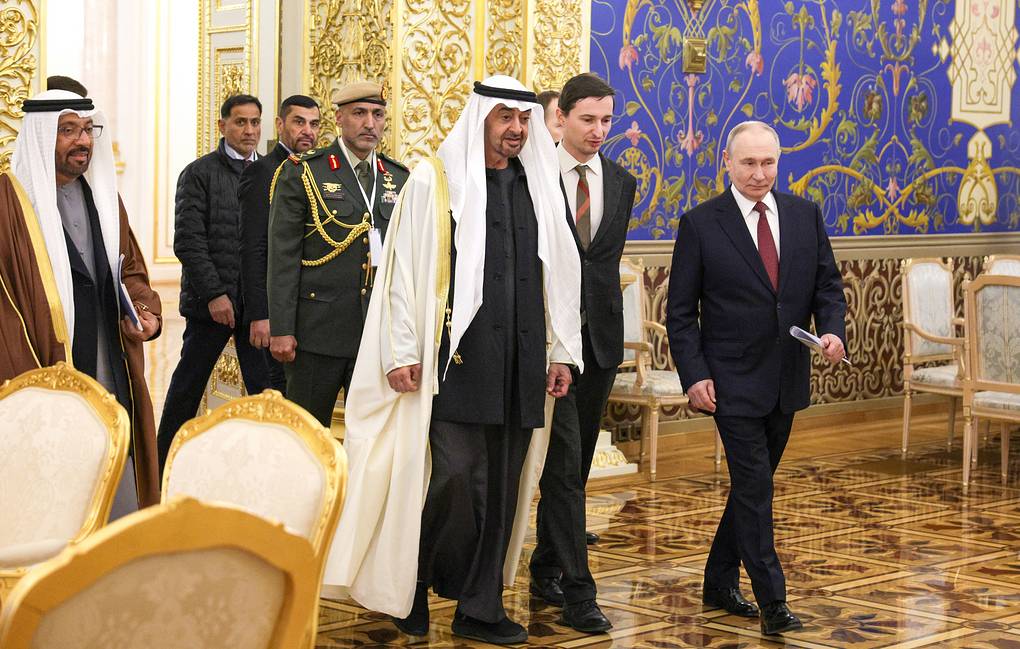
Russian President Vladimir Putin signed an agreement during his December 4–5, 2025, state visit to New Delhi, formalizing Indian military access to naval ports along Russia’s Arctic coastline (President of Russia, December 4, 2025). The visit was Putin’s first since he began his war against Ukraine in February 2022 and comes as the United States continues pressuring India to stop buying Russian oil. Russia will also help train Indian mariners to operate in polar waters, deepening its alliance with the South Asian country. India is interested in the commercial benefits of a shorter maritime route between Asia and Europe via Russia’s Northern Sea Route (NSR), in diversifying its trade routes and strengthening its economy through Russian Arctic oil.
On February 18, 2025, the Russian State Duma ratified the “Reciprocal Exchange of Logistics Support” military agreement, granting India access to Russian naval ports along its Northern Sea Route (NSR). The NSR is an Arctic shortcut that connects Europe and Asia via the Bering Strait, which is increasingly accessible due to global warming, thereby cutting the distance from Northern Europe to the People’s Republic of China (PRC) (Russian State Duma, February 18, 2025; Arctic Review, accessed January 13). Following the agreement’s ratification, State Duma Chairman Viacheslav Volodin said, “Russia’s relations with India are strategic, comprehensive. We value them, we understand that … ratifying the agreement … is another step on the path of reciprocity, openness, and development of relations” (Russian State Duma, February 18, 2025).
On the last day of Putin’s New Delhi visit, his presidential website published a 70-item “Joint statement on the results of the XXIII Russian-Indian Annual Summit” (President of Russia, December 5, 2025). Significant items include the twelfth point, which sets a target to hit $100 billion bilateral trade by 2030, and the nineteenth point, which agrees to expand logistics links to develop the International North-South Transport Corridor (INSTC), the Chennai–Vladivostok corridor (also known as the Eastern Maritime Corridor (EMC)), and the NSR. The twenty-first point confirms India and Russia’s “readiness to intensify trade and investment cooperation in the Far East and the Arctic zone of the Russian Federation,” and the twenty-second point affirms the importance of holding regular bilateral meetings on Arctic-related issues, including the NSR (President of Russia, December 5, 2025). The bilateral agreement permits each country to have five warships, ten aircraft, and 3,000 personnel simultaneously on the other’s territory, and is valid for five years, with the possibility of renewal (RBC, December 2, 2025).
Present-day cooperation may extend to joint polar ship building. At the first meeting of the working group on NSR cooperation held on October 10, 2024, representatives of Russia’s state firm Rosatom, builder of Russian icebreakers, and Indian officials discussed possible joint shipbuilding projects for reinforced Arctic merchantmen (Interfaks, October 11, 2024).
Transportation figured heavily during discussions between Putin and the Indian Prime Minister Narendra Modi. With his “dear friend” Modi standing beside him, Putin said that cooperation on the 3,500-mile NSR, the 4,500-mile INSTC, and the 6,450-mile EMC would accelerate under the new bilateral agreement. Of the trio of transport projects that India is developing with Russia, the EMC has the oldest antecedents. During the late 1960s, a maritime route connecting the Soviet Union’s Vladivostok to India’s Madras (now Chennai) became operational, though use later declined due to shifting geopolitics and logistical constraints (The Diplomatist, September 20, 2025). Russian–Indian transport cooperation began in 1956, when the Soviet Union and India established a regular steamship line between their ports. After the 1991 collapse of the Soviet Union, Russia and India continued to implement joint projects, laying the foundation for current cooperation (Rossiiskaia Gazeta, October 30, 2025).
Indian officials assert that improved bilateral maritime cooperation will open new transport routes, as New Delhi seeks alternatives to traditional southern maritime lanes, such as the Suez Canal. Connecting the NSR and the EMC to create a unified northeastern transport system linking the Arctic with the Indian Ocean could cut Northern Europe–Indo-Pacific shipping distances by up to 40 percent by offering shorter supply routes. These routes could also be safer than those currently disrupted by geopolitical conflicts, including the Suez Canal, which is currently endangered by Yemen’s Houthi insurrection in the Red Sea and Black Sea disruptions from the Kremlin’s war against Ukraine. The NSR, however, is not as profitable for India as it is for the PRC, which is closer to the NSR. India is still dependent on the Suez Canal because it relies on its closer southeastern trade routes.
The Arctic Ocean is not Russia’s sole purview. Seven other countries share the subarctic zone, and all are members of the North Atlantic Treaty Organization (NATO)—Denmark, Iceland, Canada, Norway, the United States, Finland, and Sweden. Together with Russia, they are members of the Arctic Council, an association that Russian commentators sometimes refer to as the Arctic’s “shadow government.” Since Russia’s full-scale invasion of Ukraine, the council’s activities have been largely paralyzed as NATO members have paused their cooperation with Moscow (Kommersant, May 17, 2022).
The Arctic Council continues to meet in a limited capacity, holding some working groups since 2022. On December 17, 2025, Russian Foreign Minister Sergei Lavrov said that Russia continues to promote Arctic cooperation with fellow council countries and that one of the Kremlin’s priorities in the Arctic Council is to expand the NSR’s transport potential. Lavrov remarked:
We are not only working to preserve this important structure but also, together with the relevant departments, contributing to the development of cooperation in the Arctic with extra-regional countries interested in responsible, equal interaction in high latitudes. First of all, I will mention China and India. Relevant working groups have been established with each of these countries (RIA Novosti, December 16, 2025).
Lavrov’s remarks allude to the PRC’s increasing interest in the NSR. This collaboration would be pivotal for Russia, which initially developed the NSR to transport Russian oil and gas from its Arctic projects to European markets, trade that shriveled under the West’s sanctions. The PRC, which initially included the NSR in its “One Belt, One Road” (OBOR) initiative, ships consumer goods in containerized ships to the same European markets that previously bought Russian energy (RIA Novosti, October 19, 2025). India’s present Arctic interests, in contrast, are presently more military than commercial. Russia responded to the 2014 sanctions after invading Crimea, attempting to insulate the development of its Arctic region and resources from Western sanctions. The Kremlin adopted new regulations emphasizing self-reliance and partnership with Asian countries over the West, which allowed the PRC to invest heavily in energy projects and become Russia’s largest foreign partner in the Arctic. In 2025, the PRC significantly expanded its use of the NSR, completing 14 container ship voyages between Asia and Europe, three more than in 2024 and double the seven dispatched in 2023 (gCaptain, December 18, 2025).
Moscow would benefit from an increased Indian presence in the Arctic because it would diversify its investor portfolio, reduce its reliance on the PRC, and catalyze defense ties with New Delhi. Moscow may also view India as a less ambiguous and less ambitious partner compared to the PRC. Since 2022, India has become Russia’s largest buyer of seaborne oil, though Indian refiners paused new orders in December 2025 following fresh U.S. sanctions on top Russian energy firms. Putin said during his state visit, however, that Russia would continue “uninterrupted shipments” of fuel to India despite sanctions (Rossiiskaia Gazeta, December 7, 2025).
The PRC is expanding its use of the NSR, turning the route into an international trade corridor (see EDM, October 22, 2025). The NSR is of increasing interest to India and is taking on the appearance of a full-fledged trade corridor on a par with the Suez and Malacca routes. Considering the United States’ recent seizure of the Russian-flagged Marinera tanker, India could consider sending warships to Russia’s Arctic waters to protect future “shadow fleet” tankers carrying Russian crude to India.