Russia Bets on Nuclear Energy Diplomacy in Hungary
Executive Summary:
- Hungary’s Paks-2 nuclear power plant project is creating durable financial, technological, and institutional dependencies on Russia and proving to be a prime case of how Moscow uses nuclear energy as a foreign policy instrument.
- Russia exploits what it perceives as vulnerabilities in Hungary’s nuclear regulatory inconsistencies and lack of coherence in EU and U.S. sanctions exemptions.
- Hungary’s deepening integration into Russia’s nuclear ecosystem poses domestic economic, technological, and financial risks, as well as long-term geopolitical risks to the European Union and the North Atlantic Treaty Organization (NATO), given Hungary’s membership and influence in both.
- While Paks-2 expands Russia’s energy footprint in Europe, it also exposes the Kremlin’s reliance on a narrow set of tools that may erode as political and economic realities shift.
On November 5, the Hungarian Atomic Energy Authority issued an official license to Russia’s state-owned nuclear corporation, Rosatom, to begin construction of the country’s Paks‑2 nuclear power plant (NPP) project (Kommersant, November 5). Construction work is scheduled to start in February 2026. Hungary’s existing Paks NPP was connected to the grid in the 1980s and currently supplies nearly half of Hungary’s electricity. The two new reactors that make up the Paks-2 project are expected to roughly double the country’s nuclear generating capacity. On November 21, following the licensing announcement, the U.S. Department of the Treasury, through the Office of Foreign Assets Control (OFAC), issued License No. 132, allowing Russian banks to participate in financing the Paks-2 project (Kommersant; U.S. Department of the Treasury, November 21).
Hungary is one of the most illustrative examples of how Russia uses nuclear energy as a diplomatic tool within the European Union. A green light for the Paks-2 project demonstrates the intersection of energy, financial, regulatory, and political dimensions, as well as Moscow’s ability to maintain influence even under sanctions and increasing pressure from the European Union and the United States.
Since Soviet times, Moscow has viewed nuclear energy as more than just electricity-generation technology. The 2023 Concept of the Foreign Policy of the Russian Federation implicitly mentions nuclear energy as one of the tools of Russian foreign policy and a means to strengthen its international image (Russian Ministry of Foreign Affairs, March 31, 2023). Nuclear energy is now a central instrument of Russian foreign policy and a core pillar of the Kremlin’s broader “nuclear energy diplomacy” (diplomatiya v yadernoi energetike; дипломатия в ядерной энергетике), a specialized domain in which diplomatic and sector-specific institutions coordinate to leverage energy projects in pursuit of geopolitical objectives. Russian analysts have defined the concept as “a functional sphere of diplomatic activity aimed at advancing a state’s external energy policy through negotiations, formal agreements, and the involvement of state-owned enterprises and international organizations” (Cyberleninka, accessed December 5).
Moscow has achieved substantial progress between the early 2000s—when Russia’s energy diplomacy relied primarily on non-renewable energy resources—and the 2020s, when the nuclear sector emerged as a self-sufficient pillar of Russia’s international influence. Rosatom is the world’s leading constructor and exporter of nuclear reactors (World Nuclear Industry Status Report, accessed December 5). It is supplying 26 out of the 59 reactors under construction globally as of mid-2024. Rosatom is constructing at least 20 of these units outside Russia, with clients including Bangladesh, the People’s Republic of China (PRC), Egypt, India, and Türkiye (see EDM, September 19; World Nuclear Industry Status Report, accessed December 5).
Nuclear energy diplomacy, unlike other forms of energy diplomacy, provides Russia with three competitive advantages (Technosuveren.ru, January 6). First, nuclear energy projects have exceptionally long life cycles. The construction, operation, and decommissioning stages of an NPP stretch across 60–80 years (International Atomic Energy Agency, accessed December 9). Intergovernmental nuclear energy agreements create a dense network of obligations and regular political and technical interactions. Second, the technological complexity of fuel supply, maintenance services, personnel training, participation in International Atomic Energy Agency (IAEA) and Organisation for Economic Co-operation and Development (OECD) research programs, as well as joint research and development initiatives, expands cooperation to several supporting industries and areas of partnership. Third, despite Russia’s general disregard for environmental sustainability, nuclear energy, as a low-carbon energy source, is inseparable from the broader agenda of sustainable development and decarbonization (IAEA, accessed December 9). Consequently, this allows Russia to use nuclear energy as a part of its “soft power” by training personnel and offering educational programs for students and specialists in Russian universities. It also encompasses joint scientific projects and participation in international conferences on energy diplomacy. Additionally, it involves engagement with public opinion—such as Rosatom-themed outreach events, delegation visits to operating nuclear power plants, and various media projects (Rosatomtech.com, September 11; Atommedia.online, September 19).
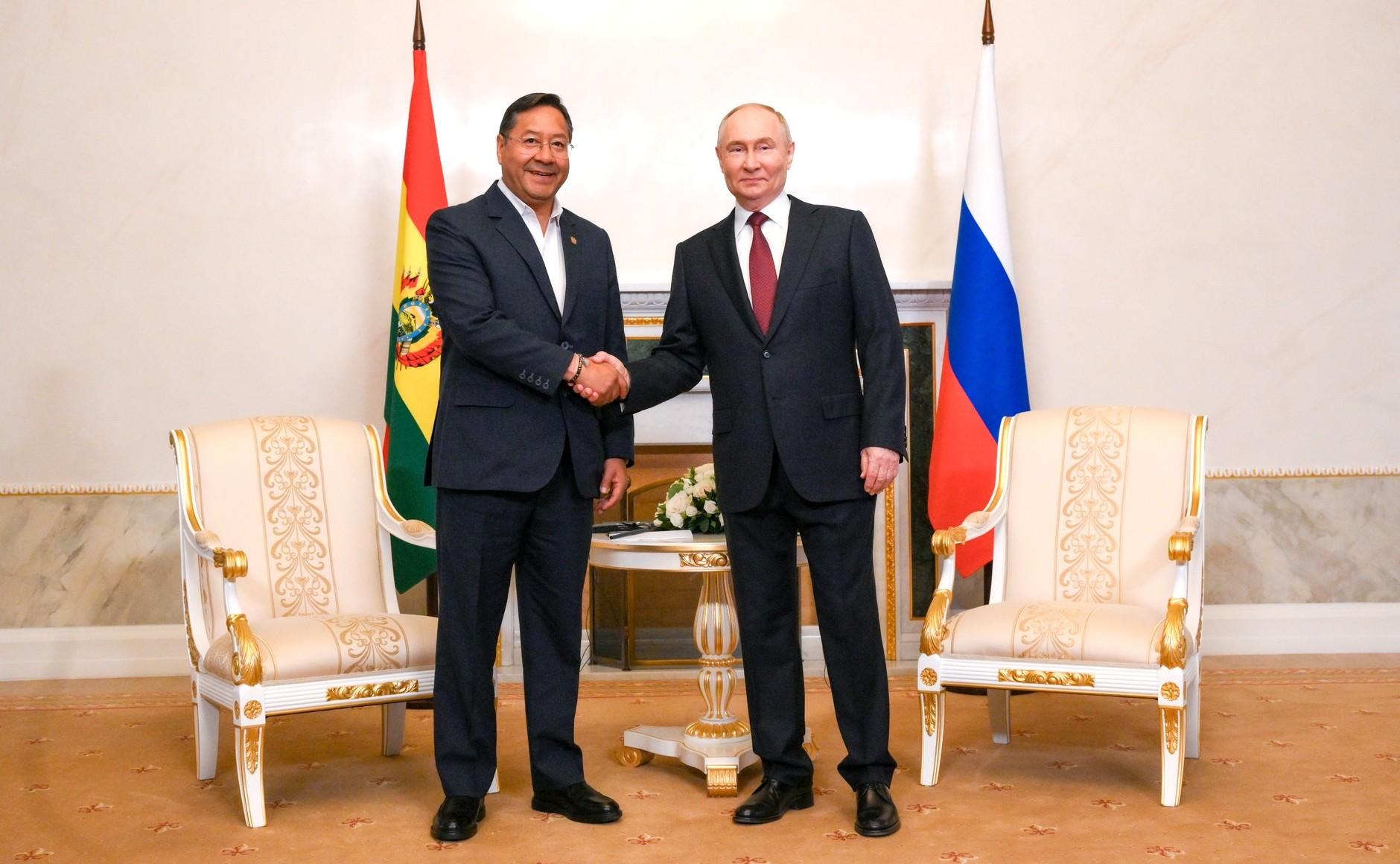
The Paks-2 project has a long and complex history. Hungary’s parliament initially approved the construction of two new reactor units at the Paks site in 2009, but implementation was delayed due to prolonged proceedings with the European Commission and ongoing debates within the European Union regarding state aid rules and procurement procedures (EnergyLand.info, November 6). In 2014, Russia and Hungary signed an intergovernmental agreement on the construction of Paks-2, along with a package of core contracts naming Rosatom as the general contractor. The plan envisioned the construction of two VVER-1200 reactor units with a total capacity of 2,400 megawatts, financed through a Russian state loan of up to 10 billion euros (Atomic Energy 2.0, February 7, 2014). For Viktor Orbán’s government, Paks-2 became a symbol of Hungary’s “energy sovereignty” (Kommersant, November 28). Aside from purely economic considerations, this project has a deeply symbolic meaning for the Hungarian political leadership, serving to strengthen the country’s sovereignty and autonomy within the European Union, dominated by actors such as Germany and France (Ru.reseauinternational.net, November 7).
The Kremlin has exploited controversies and disagreements within the European Union over Rosatom’s involvement in the Paks-2 project. In 2017, the European Commission approved Hungary’s state financing scheme for the project. In 2025, however, the EU Court of Justice annulled this decision, ruling that the European Commission had not sufficiently assessed whether the state-aid mechanism complied with EU competition and public procurement rules (Euro News, September 11). In return, the Hungarian government, along with the Russian ambassador to Hungary, stated that the court’s ruling would not affect the project’s implementation and that it would instead be taken into account when adjusting the financing mechanisms (NTV, September 11; Prime, November 24). This creates a potential precedent that Moscow can leverage in its engagements with other partners, arguing for the “separate” and non-sanctioned status of civilian nuclear energy.
The Paks-2 project cannot be viewed in isolation from Rosatom’s other overseas ventures in Türkiye, Bangladesh, India, Egypt, and elsewhere (see EDM, September 5). Taken together, these initiatives form a kind of “nuclear network” of Russian interests (Radio Azattyk, October 16, 2024). Unlike many of Russia’s other nuclear projects, however, Paks-2 is being implemented within the European Union, under the scrutiny of EU regulators and amid a period of sharp political confrontation with Brussels. This creates specific opportunities for Moscow to reinforce Russia’s status as an indispensable technology supplier for parts of the European market and demonstrate the competitiveness of its reactor designs and project-management models. Consequently, the project provides Russia with an opportunity to cultivate yet another form of EU dependence—albeit currently limited to individual member states—centered on nuclear energy. It serves as a justification for policies of “technological sovereignty” and “energy diplomacy under sanctions,” as reflected in the materials of sector-specific conferences and in public statements by representatives of the Ministry of Energy and Rosatom (Atomic Energy 2.0, November 24).
If completed as planned, the Paks-2 NPP project creates three types of dependencies that will further place Hungary within Russia’s orbit along three main lines. First, Hungary will be financially dependent on Russia. Unless any force majeure circumstances arise, a significant share of the plant’s costs is covered by a long-term Russian state loan. This creates a stable bilateral agenda for decades ahead and narrows the room for any abrupt political rupture. Second, Hungary will be technologically dependent on Russia by opting for Russia-supplied VVER-1200 reactors—the flagship reactor of Russia’s modern nuclear industry, serving as the “gold standard” for new NPPs in Russia as well as for export projects (TASS, accessed December 5). This creates a decades-long (up to 60 years) dependency on Russia, including service and maintenance support. Third, and arguably most important, Budapest’s choice is likely to lead to long-term strategic dependence on knowledge and expertise. As a result, emerging networks (both formal and informal), as well as the training of Hungarian specialists, exchanges of expertise, and delegation visits from Paks-2 to Russian nuclear facilities (such as the Leningrad NPP-2 and Concern Titan-2), help create horizontal linkages and durable professional communities.
Russia’s potential ability to draw Hungary into its orbit of influence poses a serious threat to European solidarity and cohesion. Strengthening ties between Moscow and Budapest, which has remained one of Russia’s key supporters within the bloc since 2022, will also make Paks-2 an international and intra-European project rather than a strictly bilateral project between Russia and Hungary. Russian sources have already boasted that, in addition to the Russian general contractor, the construction involves several U.S., German, French, Swedish, Austrian, and 94 Hungarian companies (Euro News, September 11). If no major geopolitical shifts occur, this emerging configuration may gradually weaken cohesion among Europeans and the overall effect of the existing economic sanctions regime against Russia.
The role of nuclear energy in Russia’s diplomacy extends far beyond the sector’s commercial interests. It has become one of the key channels through which Russia maintains a presence in the global energy architecture, not least because nuclear projects create long-term and difficult-to-reverse linkages. The case of Paks-2 illustrates the real dangers associated with Russia’s strengthening of its stance in Europe’s energy security, now through different channels. The long duration of nuclear partnerships will anchor Hungary to Russia for decades through technology standards, fuel supply, and service arrangements. While Paks-2 strengthens Russia’s leverage today, it also exposes the Kremlin’s reliance on a narrow set of tools that may erode as political and economic realities shift.